Attractions & Natural Wonders
What makes a sunset red, and why are some better than others?
Low sunlight crosses so much air that its blue is scattered away; clouds at the right height and fine particles high in the sky decide how brightly the red shows
By Globeway Editorial · 2 November 2026
The short answer
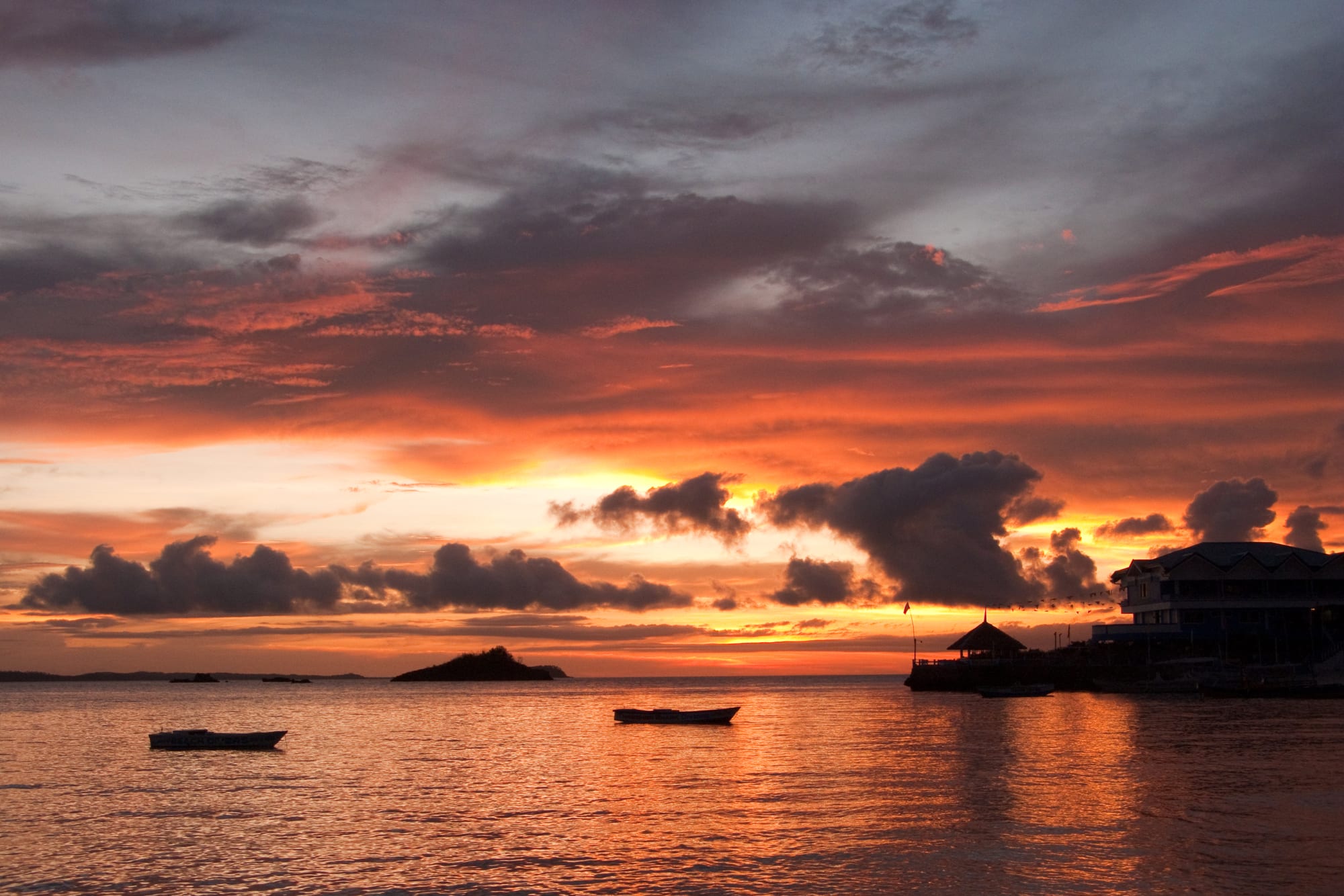
Sunlight is a mix of every colour, and the air sorts it. Molecules of nitrogen and oxygen scatter short wavelengths, blue and violet, much more strongly than long ones, red and orange. When the sun is low, its light reaches the eye only after a long, slanting journey through the atmosphere, about 38 times as much air as when the sun is straight overhead. Along the way almost all the blue and green is scattered out of the beam, and what survives is orange and red.
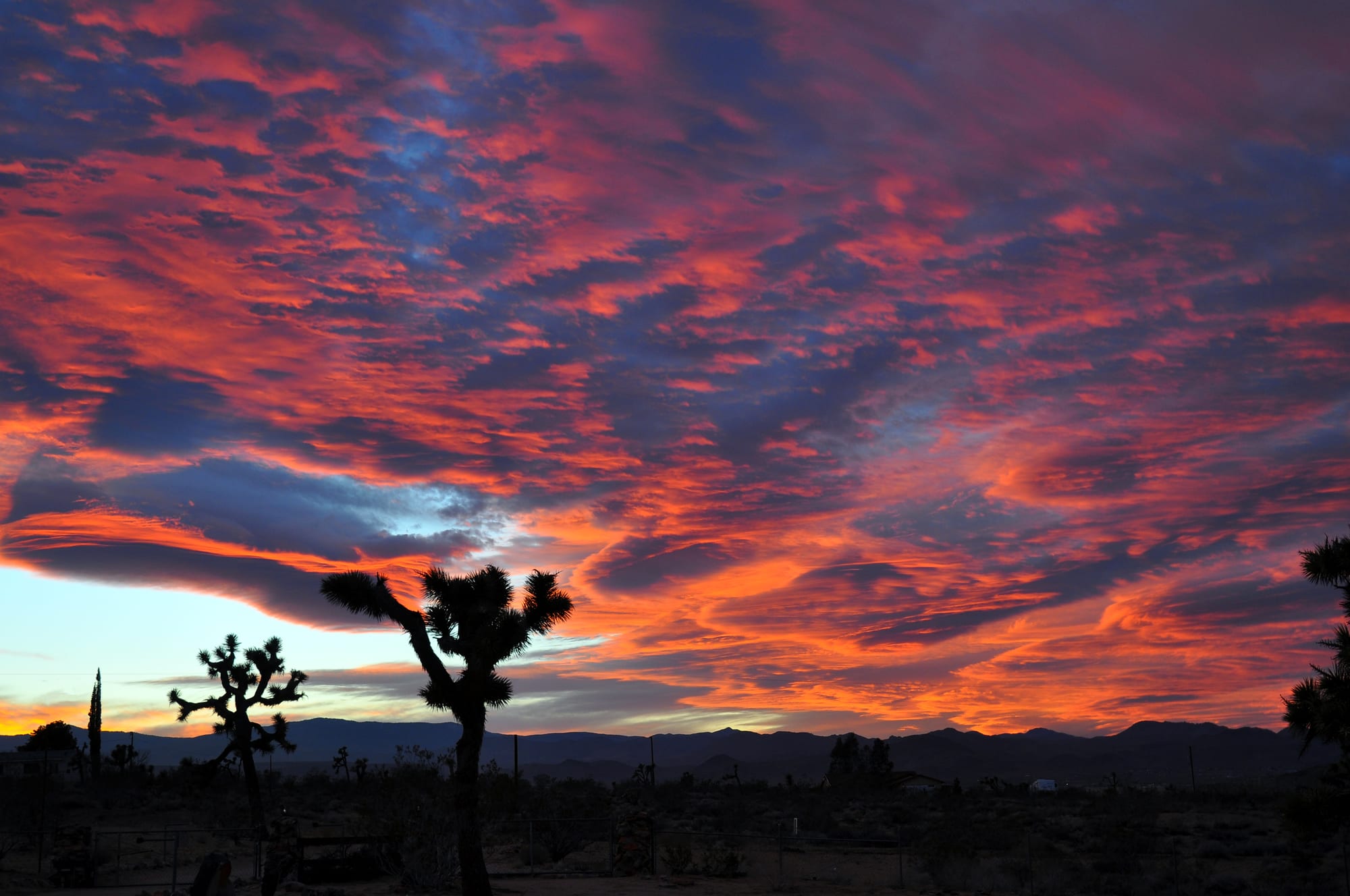
Every clear sunset is reddened in this way, but the great ones need something to catch that light and show it off. Clouds at the right height, especially middle-level clouds, turn rose and scarlet. Fine particles lifted high into the sky by volcanoes or distant fires can deepen the colours for months. Thick low haze or a solid overcast does the opposite, dulling the show or hiding it altogether.
Why the daytime sky is blue first
A sunset is the other half of a question scientists asked for centuries: why is the sky blue? Leonardo da Vinci guessed, around 1506 to 1510, that tiny particles in the air scattered sunlight and tinted the sky. In 1869 the physicist John Tyndall saw that bright light passing through air full of very fine particles took on a faint blue tint, but he could not say why blue was favoured. Lord Rayleigh worked it out in papers from 1871 onwards, and by 1899 had shown that individual gas molecules do the work.
The rule now named after him is steep. For particles far smaller than a wavelength of light, the amount of scattering rises with the inverse fourth power of the wavelength, so halving the wavelength multiplies the scattering sixteen times. Blue light, with its shorter waves, is thrown sideways out of the sun's beam and bounces around the whole sky. Looking away from the sun, the eye sees that scattered blue. Looking towards a low sun, it sees what is left over.
The long road through the air
When the sun is straight overhead, its light crosses the atmosphere by the shortest possible route. As the sun sinks, the path lengthens; astronomers call the thickness of air a beam must cross the "air mass", and at the horizon it reaches about 38 times the overhead value. By then the blue and green components of the light are removed almost completely, which leaves the sun itself, and anything it shines on, orange to red.
Two kinds of scattering share the work. Rayleigh scattering, by molecules and particles smaller than about 50 nanometres, is strongly colour-selective and strips out the blue. Mie scattering, by cloud droplets and particles roughly the size of a light wave or larger, treats all colours much the same. That second process is why clouds look white at midday: they reflect whatever light falls on them. At sunset, the light falling on them is already red.
Clouds, haze and the evening advantage
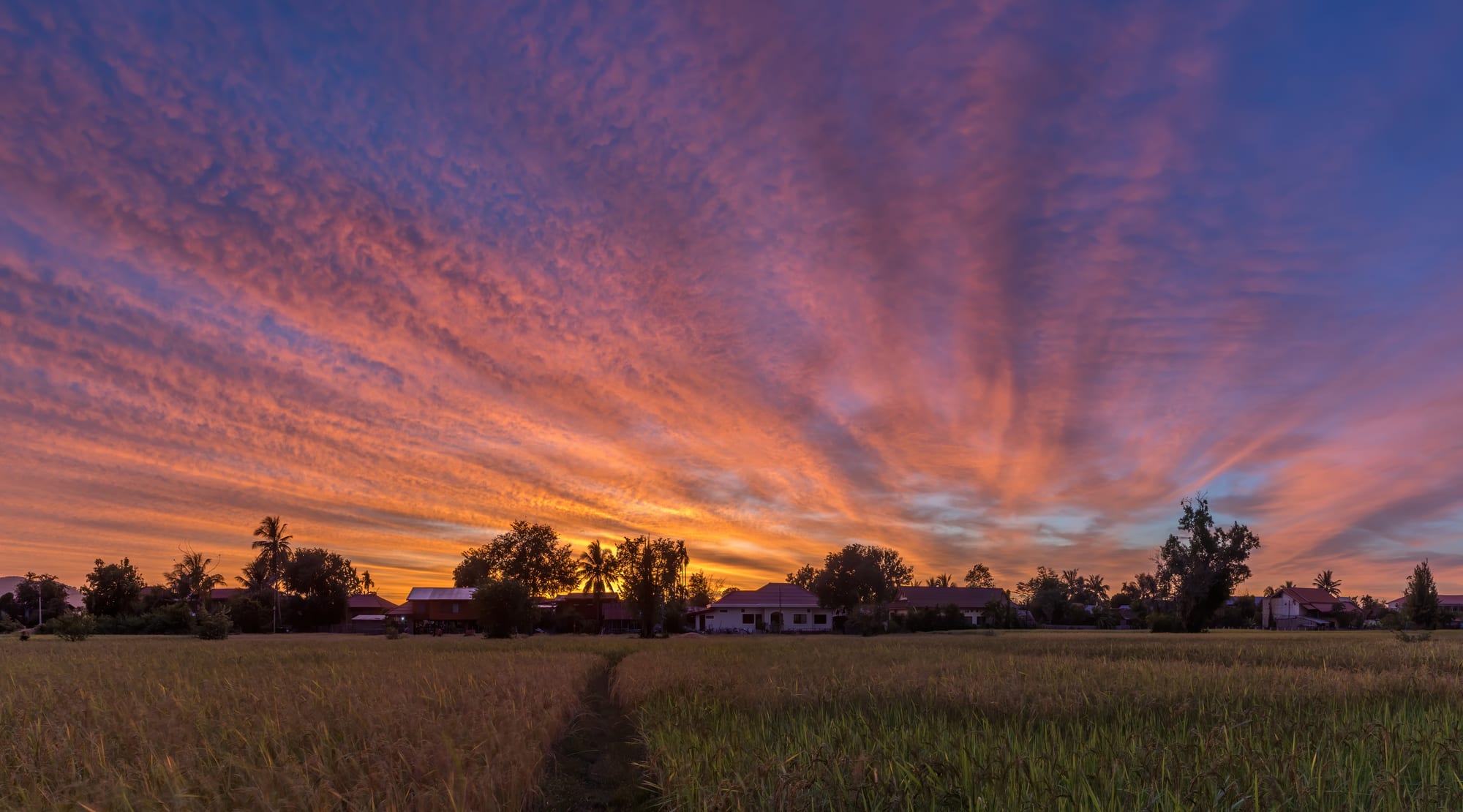
Clouds are the canvas, and their height matters. A cloud usually takes on the colour of the light falling on it, so red, orange and pink clouds appear almost only around sunrise and sunset. Once the sun has dipped just below the horizon, low clouds turn grey, middle clouds glow rose, and the highest clouds stay white or off-white. A sky with plenty of middle-level cloud is the one most likely to light up.
Too much cloud kills the effect. Under a full overcast there is essentially no direct sunlight at all, only grey, diffuse light filtered through the cloud. Haze, a veil of dust, smoke and other dry particles hanging in the air, works more subtly: it scatters light across a long path, so sunset colours look subdued on hazy days, and in thick haze the sun can fade away before it even reaches the horizon.
There is also a daily rhythm. Sunset colours are typically more brilliant than sunrise colours, because the evening air holds more particles than the morning air. Weather lore made use of that long before the physics was known. "Red sky at night" works in middle latitudes, where weather systems travel from west to east: a red evening sky means stable, high-pressure air lies to the west, with fair weather on its way. Nearer the equator, where prevailing winds blow from east to west, the rhyme generally fails.
When volcanoes paint the sky
The most extraordinary sunsets on record followed great eruptions. When Krakatoa, in the strait between Java and Sumatra, exploded in August 1883, it blasted an enormous amount of very fine dust high into the atmosphere, where winds spread it around the globe. For many months spectacular sunsets appeared worldwide. In the United States they were so vividly red that fire engines were called out in New York, Poughkeepsie and New Haven to fight what looked like a great blaze. The British artist William Ascroft made thousands of colour sketches of the red skies. In 2004 an astronomer suggested that the blood-red sky in Edvard Munch's 1893 painting The Scream records the afterglow over Norway, though scholars have proposed other explanations too.
The pattern holds for other eruptions. Mount Tambora, on the Indonesian island of Sumbawa, erupted in April 1815, and a haze hung in the sky for years afterwards, giving rich red hues to sunsets. A 2007 study of paintings made between 1500 and 1900 found a link between volcanic activity and the amount of red artists used, and the vivid skies of J. M. W. Turner may owe something to Tambora. The 1991 eruption of Mount Pinatubo in the Philippines brought similar sunsets as far away as the West Coast of the United States.
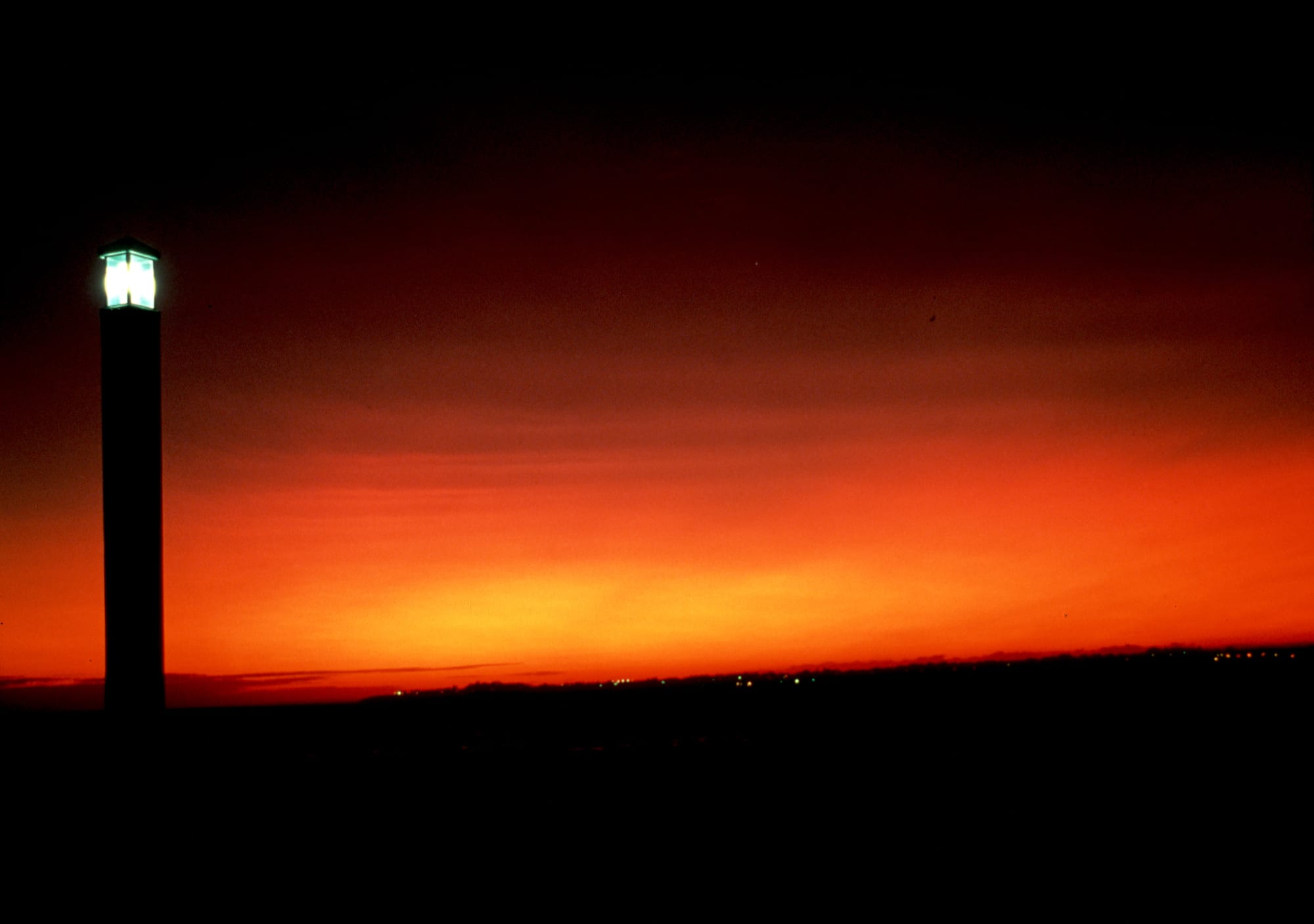
Smoke can do something similar when it rides high. During Canada's huge wildfire season of 2023, smoke carried across the Atlantic stayed high in the atmosphere, and forecasters in Europe predicted hazy skies with more vivid sunrises and sunsets rather than poor air at ground level.
The show after the sun has gone
The best colour often comes after the sun has set. In the photographer's "golden hour" before sunset the light is already redder and softer. Then, while the sun is between about 2 and 6 degrees below the horizon, fine particles high in the air can catch the last reddened light and mix it with the blue of the darkening sky, producing a broad pinkish-purple arch known as the afterglow, or purple light. After big eruptions this effect becomes so strong it has its own name: volcanic purple light. Then comes the "blue hour", when the scattered blue of twilight takes over.
Turning around is worthwhile too. Opposite the sunset, a band of pink called the Belt of Venus rises 10 to 20 degrees above the eastern horizon, with the dark blue shadow of the Earth itself creeping up beneath it. It often looks a more vivid pink in winter, while in summer it can appear faded and dim.