Attractions & Natural Wonders
Why are some beaches white, some black and some pink?
A beach is the colour of whatever it is made from, whether quartz, crushed shell and coral, shattered lava or the red shells of tiny sea creatures.
By Globeway Editorial · 2 November 2026
The short answer
Sand is simply rock, shell and skeleton broken into tiny grains, so a beach takes the colour of whatever is being broken down nearby. Outside the tropics, most beach sand is made of quartz, a hard, durable mineral that survives long after softer minerals have worn away. The dazzling white beaches of the tropics are mostly limestone: crushed coral, shells and the skeletons of marine creatures, some of it ground up and excreted by reef fish.
Black beaches form where a volcano meets the sea: lava hitting cold water shatters into fragments of dark basalt. Pink beaches are usually white sand with a blush of red, often from the crushed shells of tiny single-celled sea creatures. And in a few rare spots, a green volcanic mineral called olivine turns the beach olive green. The colour of a beach is, in effect, a map of its geology.
Quartz: the survivor
Away from the tropics, the most common ingredient of sand is silica, usually in the form of quartz. It is chemically inert and very hard, which makes it the most common mineral that resists weathering. The rock that most often breaks down into sand is granite. As granite weathers, its feldspar minerals dissolve faster than its quartz, so the rock falls apart into small pieces and the quartz is left behind. Many sands, especially in southern Europe, have traces of iron inside their quartz crystals, which gives them a deep yellow colour.
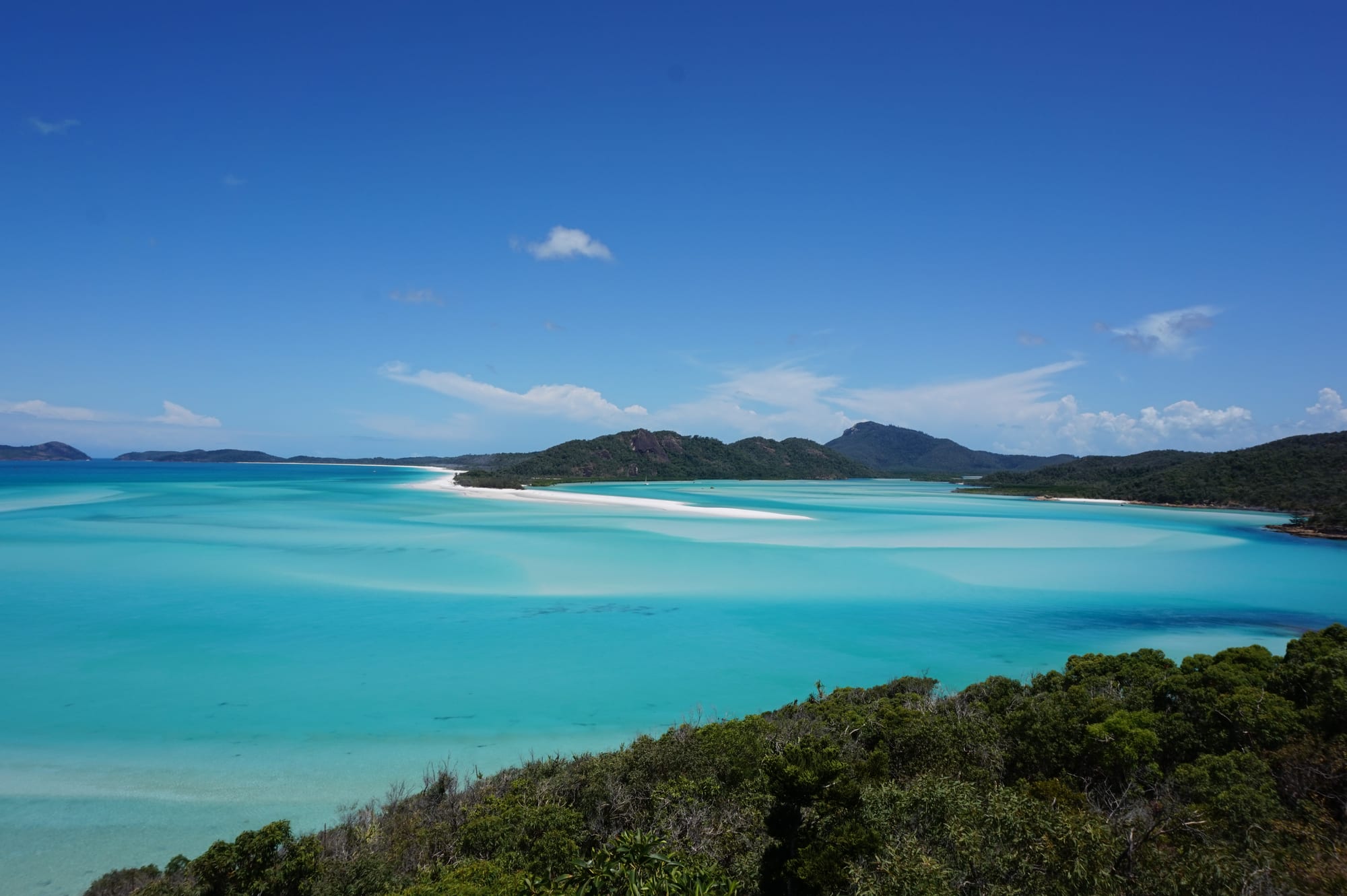
Very pure silica sand can be strikingly white. Whitehaven Beach, which runs for seven kilometres (about four miles) along Whitsunday Island in Queensland, Australia, is famous for its bright white sand, which is 98 per cent pure silica. That silica is not found in the island's own rocks, so it is thought to have been carried to the beach by ocean currents over millions of years.
White: a beach made by living things
The bright white sands of tropical and subtropical coasts are usually made of something else entirely: limestone, broken down from coral and shell fragments and other material made by living organisms. This is often called coral sand, although the name is loose. Coral is not usually the main ingredient. Most of the grains come from the skeletons of foraminifera (single-celled creatures that build tiny shells), calcareous algae, molluscs and crustaceans, along with coral itself. All of it is calcium carbonate, which after quartz is the second most common type of sand.
Parrotfish, named for their beak-like mouths, are among the busiest sand-makers. Their teeth are packed into a mosaic that forms a beak for scraping algae off coral and rock, and the hard material they bite off is ground up between a second set of teeth in the throat. After digesting the edible parts, they excrete the rest as sand, helping to build small islands and sandy beaches. A single humphead parrotfish can produce 90 kilograms (200 pounds) of sand a year.
Black: lava meets the sea
When lava flows into the ocean it cools so fast that it shatters into sand and debris of all sizes. A large lava flow can build a new black sand beach almost overnight. Many of Hawaiʻi's black beaches, such as Punaluʻu and Kehena on the island of Hawaiʻi, were created virtually instantly by the violent meeting of hot lava and seawater. Iceland is another stronghold: Reynisfjara, near the village of Vík í Mýrdal on the south coast, is famous for its black sand and basalt sea stacks.
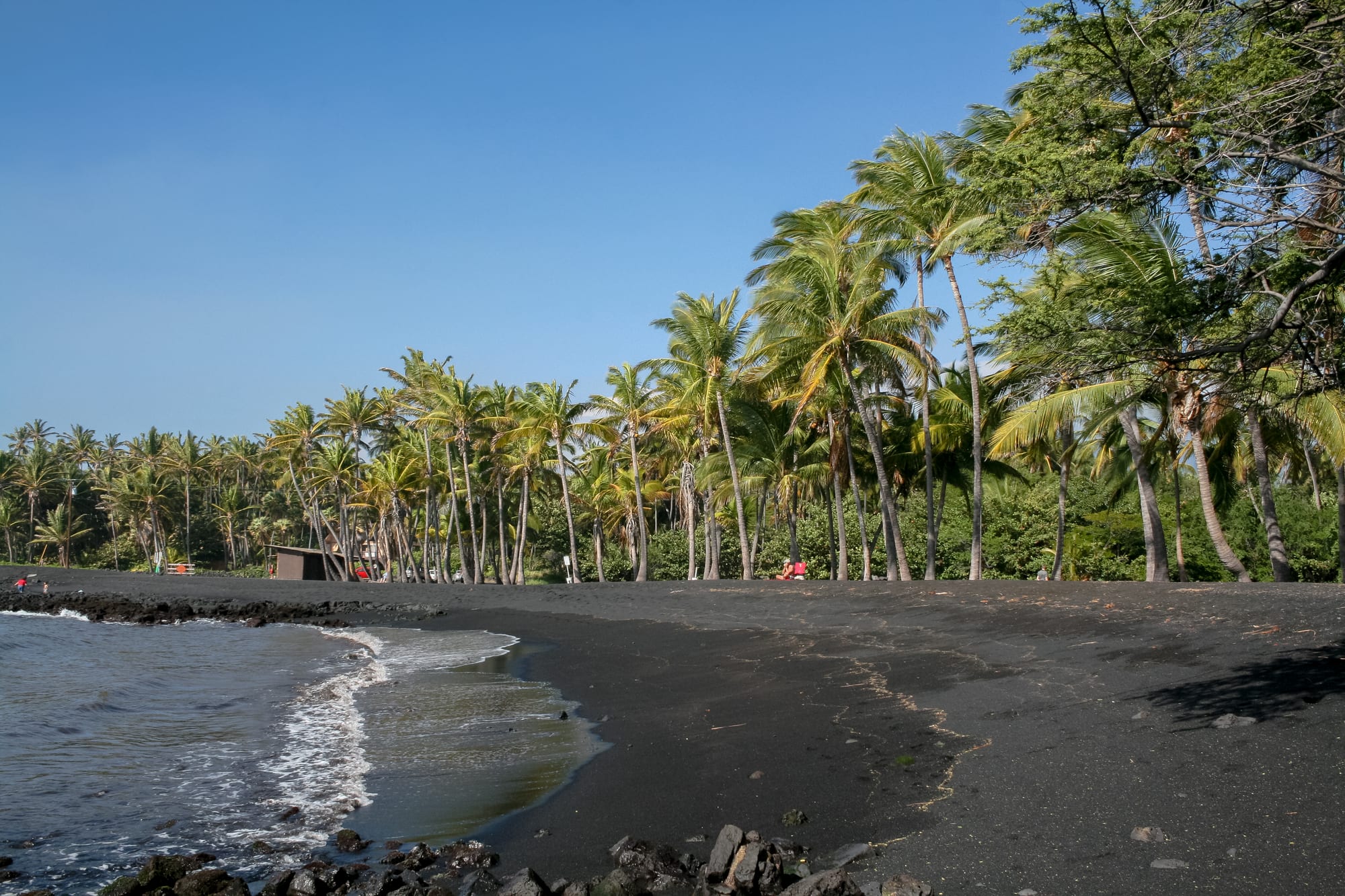
Endangered hawksbill and green turtles often bask on the black sand at Punaluʻu.
Because a beach like this is made in a single event, it is often short-lived. Nothing replaces the sand if currents or storms carry it into deeper water, which is why the state of Hawaii has made it illegal to remove black sand from its beaches. Lava can also take away what lava created: Kaimū, on the island of Hawaiʻi, was buried by a lava flow in 1990, and a new black beach is now forming there.
Not every black beach is volcanic. Sands rich in magnetite, a heavy, partly magnetic iron mineral, are also dark to black, and Langkawi in Malaysia has a black sand beach of this non-volcanic kind.
Pink: the work of tiny red shells
A pink beach is usually a white one with a little red mixed in. In Bermuda the colour comes from Homotrema rubrum, a strongly red foraminifer that grows on coral rubble on the crest of the reef. When the surf grinds it into sand-sized pieces, it mixes with the island's fine white sand. At Horseshoe Bay on Bermuda's south coast, the result is the pink-tinted sand that made the beach famous.
The same trick is played elsewhere by different organisms. On the Mediterranean island of Budelli, off northern Sardinia, the Spiaggia Rosa, or Pink Beach, owes its colour to microscopic fragments of coral and to the shells of tiny sea creatures, including the foraminifer Miniacina miniacea. At Elafonisi, off the southwest corner of Crete, the pink tint is created by deposits of pigmented microorganisms that live in partnership with the local seaweed, washed up by the tides and waves.
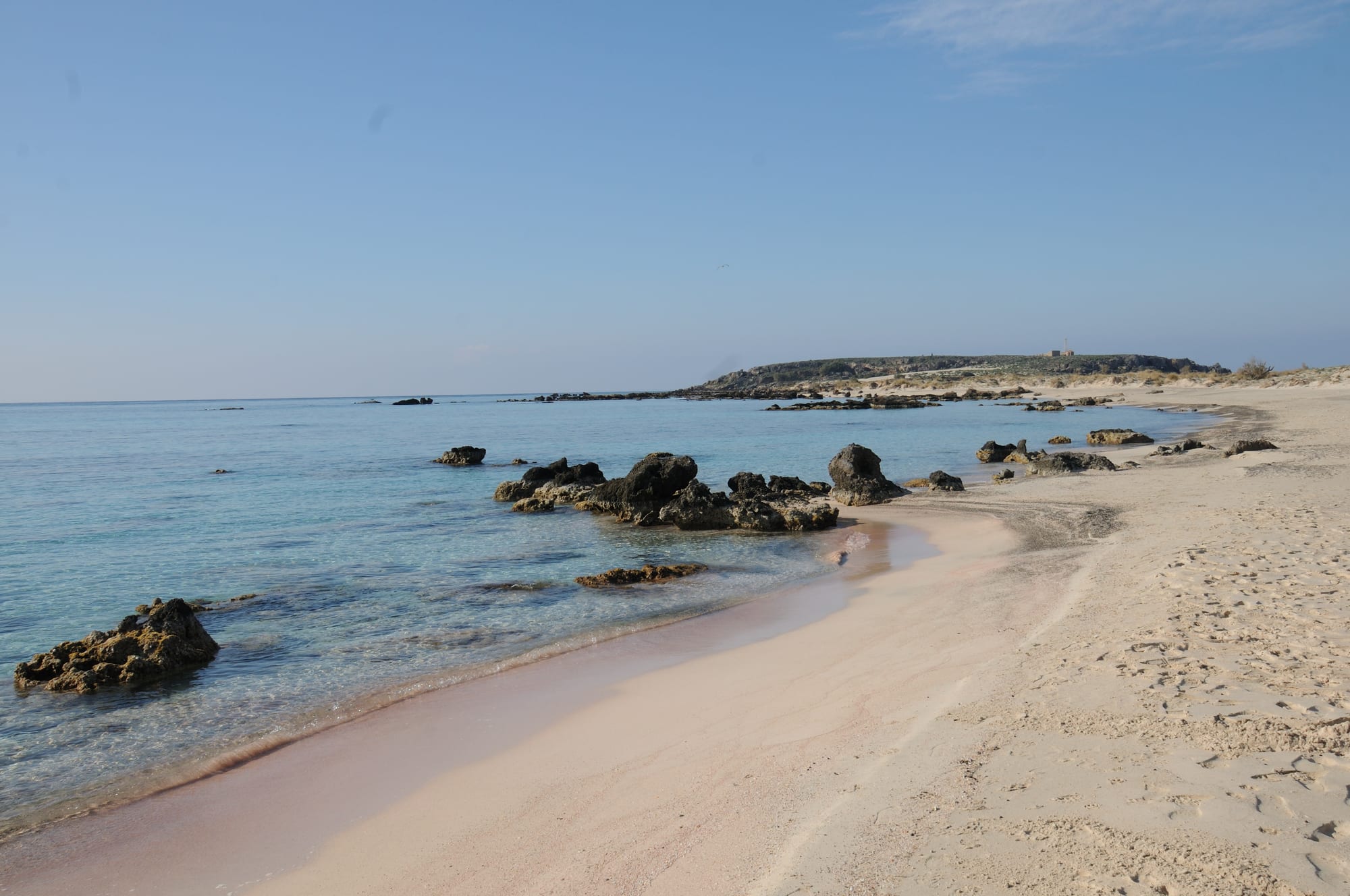
Elafonisi is a protected nature reserve, and in fine weather it is possible to walk out to the island through the shallow water.
Green, and the rarest colours
Olivine, a silicate mineral containing iron and magnesium, is one of the first crystals to form as magma cools, and in gem quality it is called peridot. Sands derived from basaltic lava with a high olivine content are green. Papakōlea Beach, near South Point on the island of Hawaiʻi, sits in a bay half circled by Puʻu Mahana, a volcanic cone of ash formed more than 49,000 years ago. As the sea erodes the cone, it frees the olivine crystals. Being denser than the ash around them, they stay on the beach while the lighter volcanic sand is swept out to sea, leaving a shore that is distinctly green.
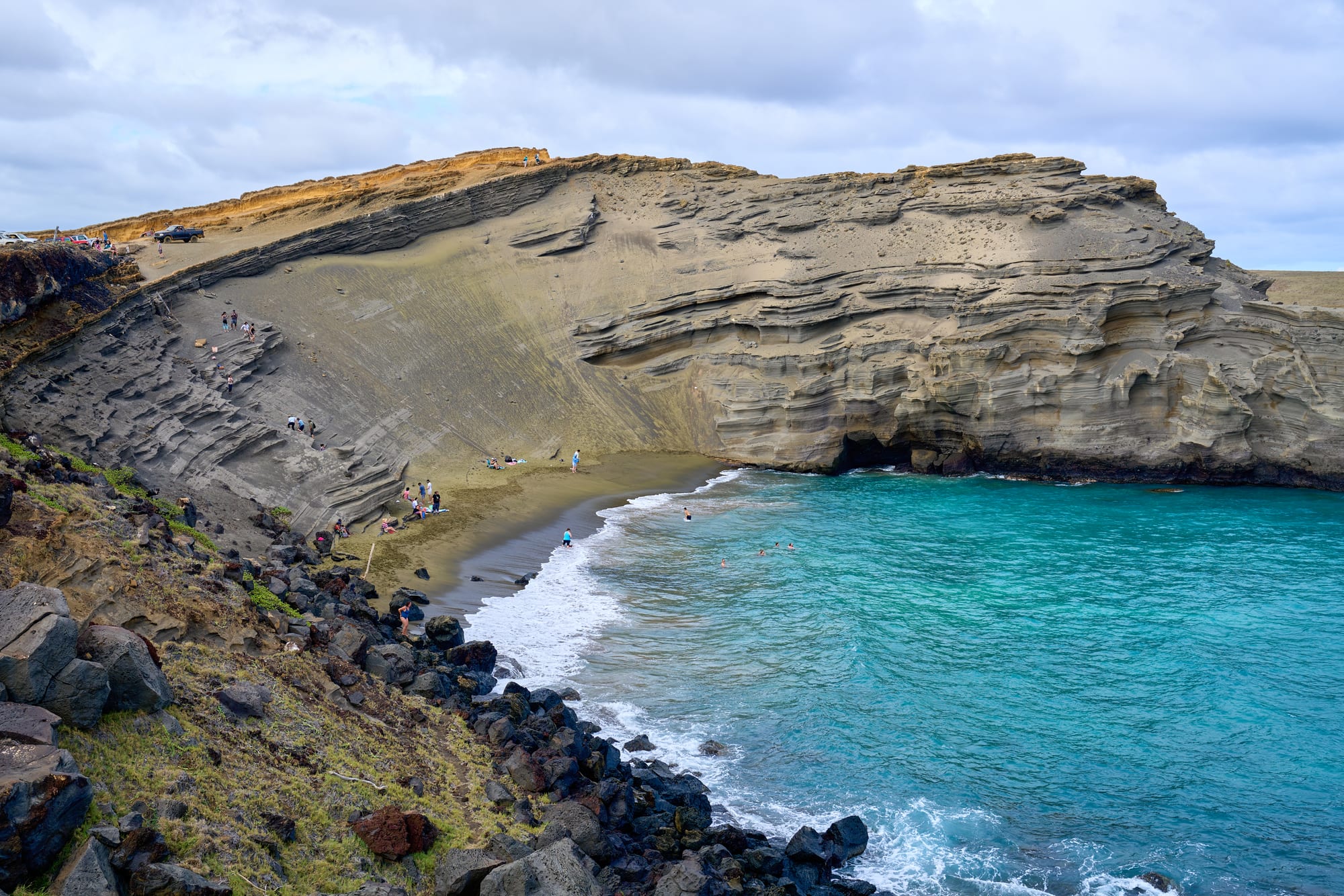
Elsewhere on the island the olivine is locked inside solid lava rock, so it weathers away instead of collecting as sand.
Other minerals add their own shades. Sands containing chlorite or glauconite are typically green too, and some deposits contain garnets and even small gemstones. Inland, sand can be made of gypsum, which is why the dunes of White Sands National Park in New Mexico are famously bright white, far from any sea.
Reading a beach
Seen this way, every beach is a clue to its surroundings. Pale gold usually means quartz, often from weathered granite; brilliant white on a tropical coast points to a reef and the creatures that live on it; black usually means a volcano not far away; pink means a reef rich in red foraminifera; and green means an eroding volcanic cone full of olivine. Sand is never just sand: it is the landscape around it, ground small.