Attractions & Natural Wonders
Why are there no summers and winters at the equator?
The equator has no real summer or winter because the Sun stays high all year, but it does have seasons of rain, set by a wandering belt of storms.
By Globeway Editorial · 2 November 2026
The short answer
The equator does have seasons, just not the summer and winter of higher latitudes. Those come from the tilt of the Earth's axis, which turns each hemisphere towards the Sun for half the year and away for the other half. At the equator that tilt makes little difference. The midday Sun is never more than about 23 degrees from straight overhead, day and night are both about 12 hours long all year round, and the temperature barely changes from month to month.
What does change is the rain. A belt of clouds and thunderstorms circling the globe near the equator, the Intertropical Convergence Zone, drifts north and south through the year, and wherever it passes it brings a wet season. So equatorial places mark their year by wet and dry seasons rather than warm and cold ones, and some get two rainy seasons a year. In Quito, the dry months are even called summer and the wet months winter.
What makes a season
Seasons exist because the Earth's axis is tilted, currently by about 23.4 degrees, relative to the plane of its orbit around the Sun. As the Earth travels round, the Northern and Southern hemispheres are turned alternately towards the Sun and away from it. The hemisphere tilted towards the Sun has the Sun higher in the sky and longer days, receives more sunlight, and has its summer; the other has its winter. The tilt accounts for most of the seasonal change in climate in both hemispheres. The Earth's slightly oval-shaped orbit, by contrast, contributes little.
The further from the equator, the bigger the swing. In winter, daylight lasts less than 12 hours, and in summer it lasts more; near the poles the Sun stays up for months at a time in summer. At the equator, the day always lasts about 12 hours, whatever the season.
Why the tilt barely touches the equator
On and near the equator the noon Sun is almost directly overhead every day of the year. Twice a year, at the March and September equinoxes, it passes exactly overhead at midday. This turns the usual pattern on its head: an equatorial place receives its most intense sunlight at the equinoxes, when higher latitudes are having spring and autumn, and its least at both solstices, in June and December. But even at the solstices the Earth's tilt is not enough to weaken the Sun's rays significantly, so temperatures stay high all year. High year-round temperatures extend to about 25 degrees north and south of the equator.
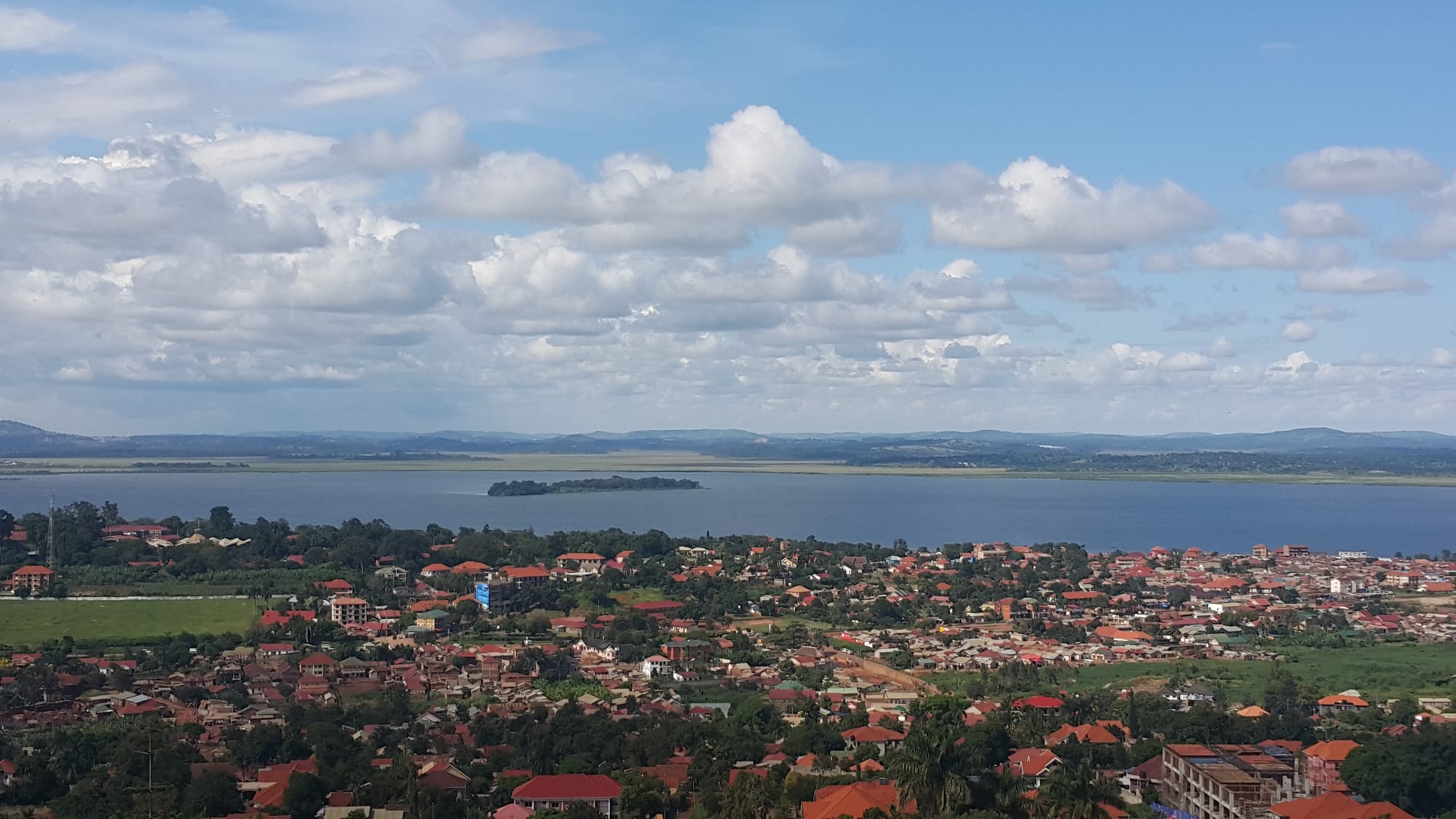
The numbers show how even it is. In equatorial lowlands, average temperatures over the year are around 31 °C (88 °F) in the afternoon and 23 °C (73 °F) around sunrise. The difference between day and night can be larger than the difference between the seasons. Kampala, the capital of Uganda, a country with an equatorial climate, has average highs between about 25 and 29 °C (77 and 84 °F) in every month of the year.
The rain belt that makes the seasons
Near the equator there is little temperature change through the year, but there may be dramatic differences in rainfall and humidity. The cause is the Intertropical Convergence Zone, where the trade winds from the two hemispheres meet. It appears as a band of clouds, typically thunderstorms, around the globe near the equator, and its position shifts with the seasons, roughly following the zone where the Sun heats the Earth most strongly. When the zone lies north of the equator, the northern tropics have their wet season and the southern tropics their dry season; when it moves south, the pattern reverses.
Most places have only one wet season, but because the rain belt can pass over a place in the tropics twice a year, some get two. Kampala has two wetter seasons, with heavier rain from February to June and again from August to December. It has no true dry month, and April is the wettest, with an average of around 169 millimetres (6.7 inches) of rain.
Where the rain belt dominates all year, there is hardly a dry season at all. Lowlands near the equator generally have a tropical rainforest climate, also called an equatorial climate, with 2,500 to 3,500 millimetres (100 to 140 inches) of rain a year and about 200 rainy days.
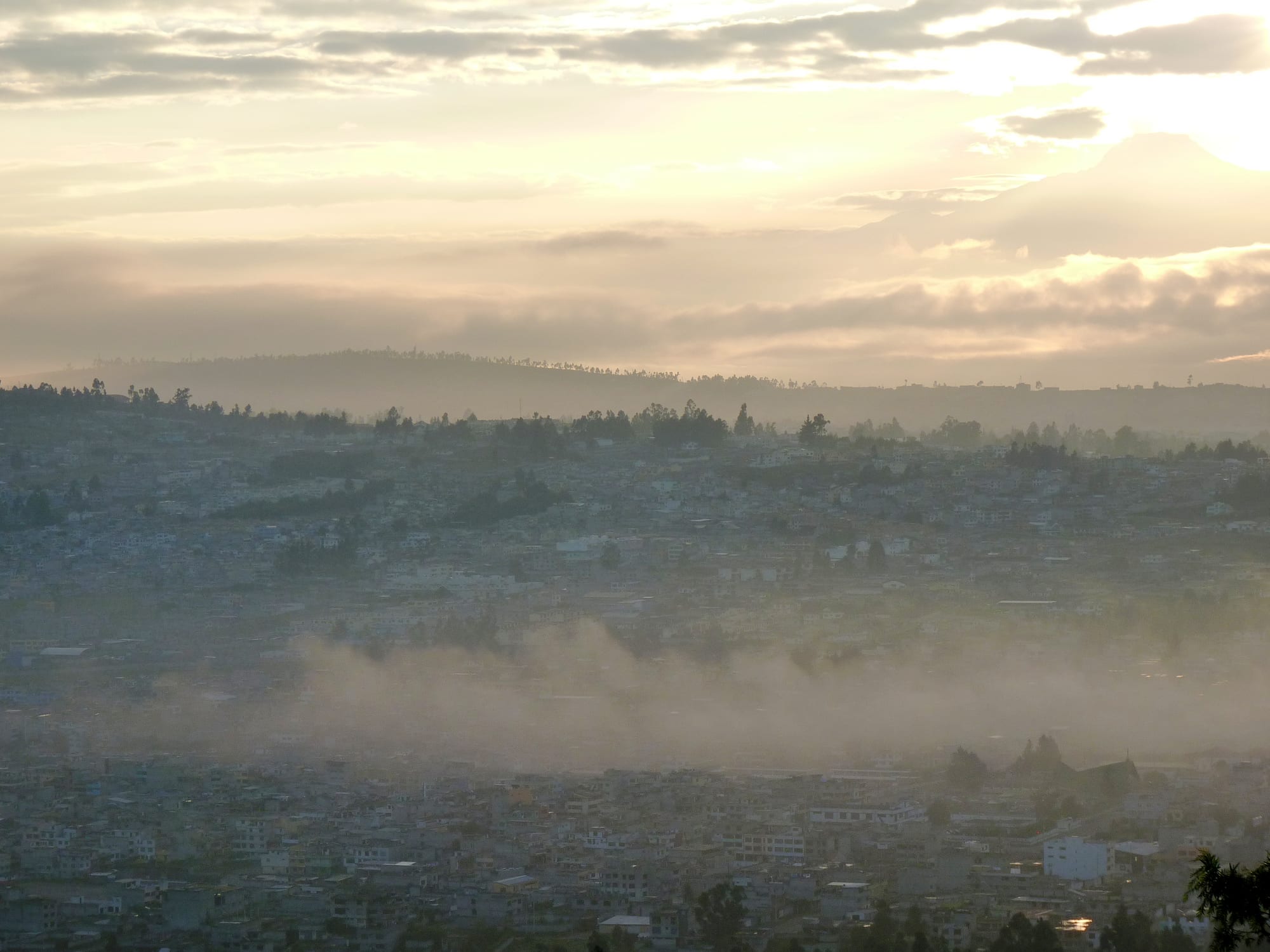
Quito's wet season runs from September to May, and its dry season from June to August.
Summer and winter, by another name
Calendars in most of the world divide the year into four seasons, but in the tropics winter is not observed in that sense. In Ecuador's capital, the old names have simply moved to the new seasons. Quito is the capital city closest to the equator, which runs through the northern part of its metropolitan area, and it sits at an altitude of about 2,850 metres (9,350 feet). There the dry season, June to August, is referred to as summer, and the wet season, September to May, as winter.
Neither feels much like its namesake. Because of its altitude and its position on the equator, Quito has a fairly constant cool but comfortable climate. Its average daily high stays between about 20 and 22 °C (68 and 71 °F) in every month, and its average overnight low between about 8 and 9 °C (47 and 48 °F). A Quito morning and a Quito afternoon differ by around 12 degrees, while one month differs from the next by barely one.
Cold without winter
Altitude, not season, is what brings cold to the equator. Despite high year-round temperatures at sea level, some mountains on or near the equator, in the Andes and on Mount Kilimanjaro, carry glaciers. The highest point on the equator itself is at 4,690 metres (15,387 feet) on the southern slopes of Cayambe, a volcano in Ecuador whose summit reaches 5,790 metres (18,996 feet). It lies slightly above the snow line, and it is the only place on the equator where snow lies on the ground.
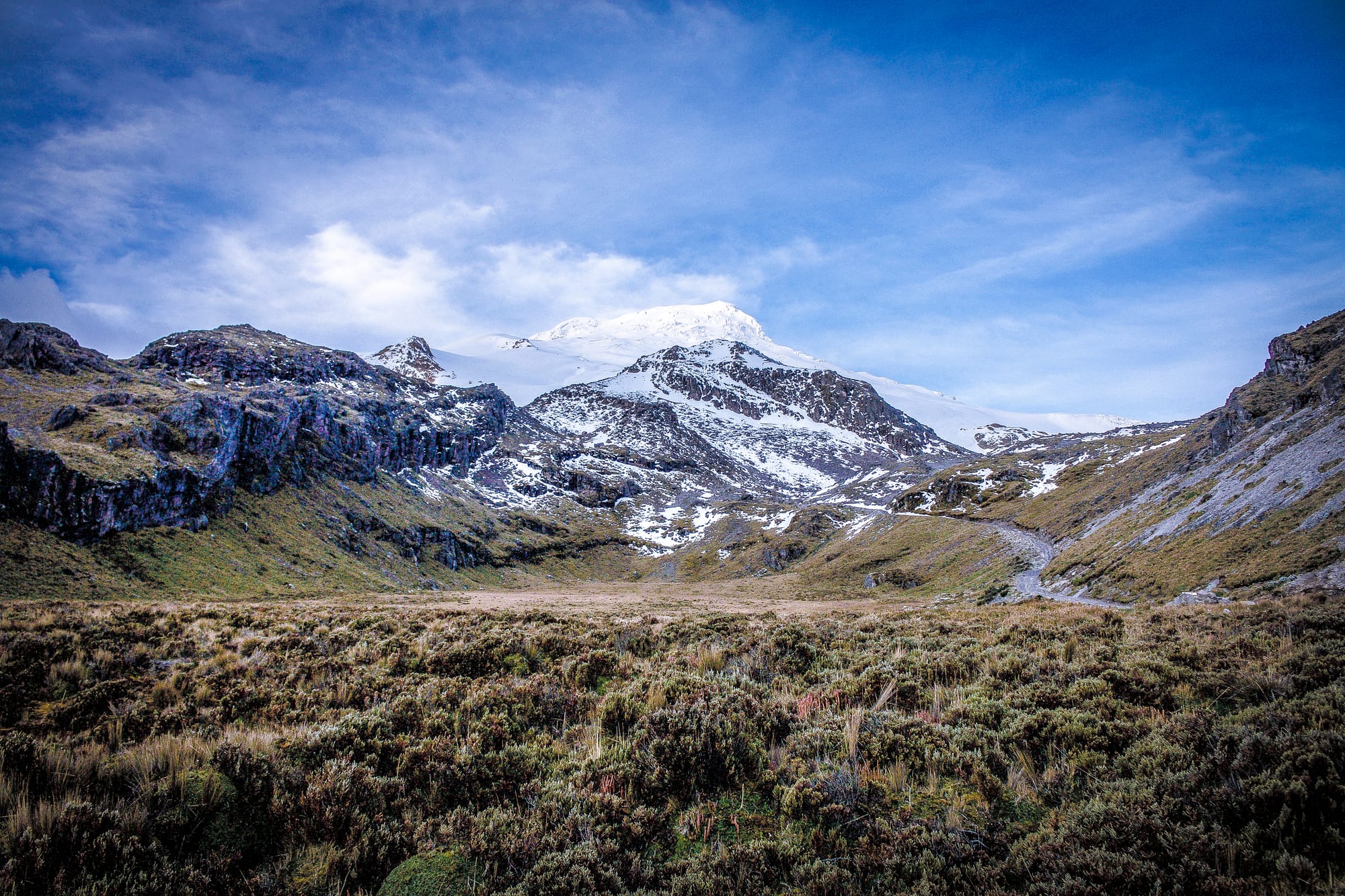
At the equator the snow line is around 1,000 metres (3,300 feet) lower than on Mount Everest.
Planning around the rain
For anyone travelling near the equator, the useful question is not whether it will be warm, since it almost always is in the lowlands, but whether it will be wet. Because the rain belt's timing varies from place to place, the rainy months in one equatorial country may be the dry ones in another, and a single place may have two wet seasons a year. The local calendar of rain, not the calendar of summer and winter, is the one that matters there.