Daily Life
Why are there so many different plug sockets around the world?
Electricity spread country by country before anyone agreed a standard, and once millions of sockets were in the walls, changing them became too costly.
By Globeway Editorial · 2 November 2026
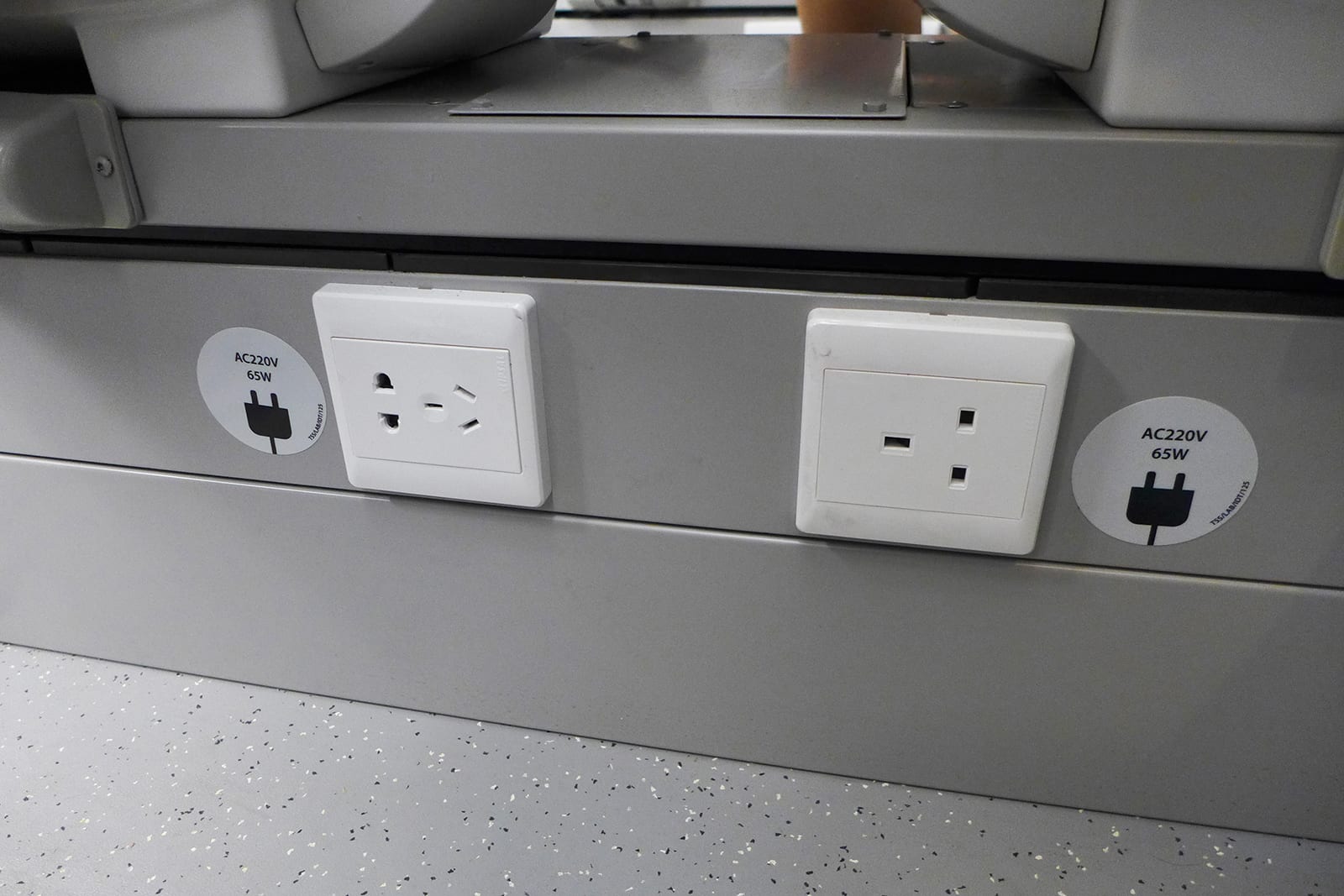
The short answer
Plugs and sockets were invented in the 1880s and 1890s, when electricity was a local business. Each power company chose its own voltage and frequency, and manufacturers in each country designed their own fittings. As safety worries grew, governments wrote national rules, and each solved the same problems, such as how to connect an earth wire or protect a cable, in its own way. Britain, Germany, France, Italy, Switzerland, Denmark and the United States all ended up with different designs.
Those designs then spread along lines of trade and empire, which is why British-style sockets turn up in Malaysia and Saudi Arabia and an American-born plug shape is used in Australia and China. Once millions of sockets were built into walls, replacing them became more expensive than living with the muddle. A single world plug was designed in 1986, but almost nobody adopted it. The International Electrotechnical Commission (IEC), the global standards body, labels the main families with letters running from A to O.
Electricity arrived before anyone agreed on anything
When commercial electric power appeared in the 1880s it was used mainly for light. Vacuum cleaners, fans and smoothing irons were simply screwed into light-bulb sockets. As early as 1885 a two-pin plug and wall socket was on sale in Britain, and in the United States Harvey Hubbell patented a plug in
- He patented a plug with two
parallel blades of equal width in 1913, and in 1916 a version with one blade longer and wider than the other, so that it could only go in one way.
The electricity behind the sockets was just as unsettled. In the early days of electrification so many frequencies were in use that no single one prevailed. Westinghouse settled on 60 hertz (cycles per second) in 1890, judging that it suited arc lamps slightly better, while the German company AEG raised its standard to 50 hertz in 1891 after seeing lamps flicker at 40. AEG had a near monopoly, and its choice spread across Europe. In 1899 a Berlin utility switched to 220 volts to carry more power through the same wires, and that became the European model, while North America stayed close to the 110 volts of Thomas Edison's first systems.
Different voltages made different plugs useful. A plug that will not fit a foreign socket also stops an appliance built for one voltage from being plugged into another.
Every country solved safety its own way
By about 1910 the first three-pin earthed plugs had appeared, with a third contact that carries current safely to the ground if an appliance's insulation fails. Britain enacted one of the first national plug standards in 1915. From there, countries took separate paths.
In Germany, the Bavarian manufacturer Albert Büttner is credited with the Schuko plug, believed to date from 1925, which earths through metal clips on the sides of a round recess. A rival design, most likely from Belgium around 1930, put an earth pin on the socket instead of the plug. It was never patented, so Czechoslovakia, Poland and France adopted it. The two look similar but do not fit each other, which is why a hybrid plug was later designed to fit both.
Italy ended up with two sizes of plug because many regions once had two separate supplies, one for lighting and one for everything else, at different voltages. Switzerland built a hierarchy in which a socket accepts any plug with the same number of pins or fewer and the same rating or lower, including a socket for three-phase power that still takes ordinary plugs. Denmark put a D-shaped earth pin on the plug.
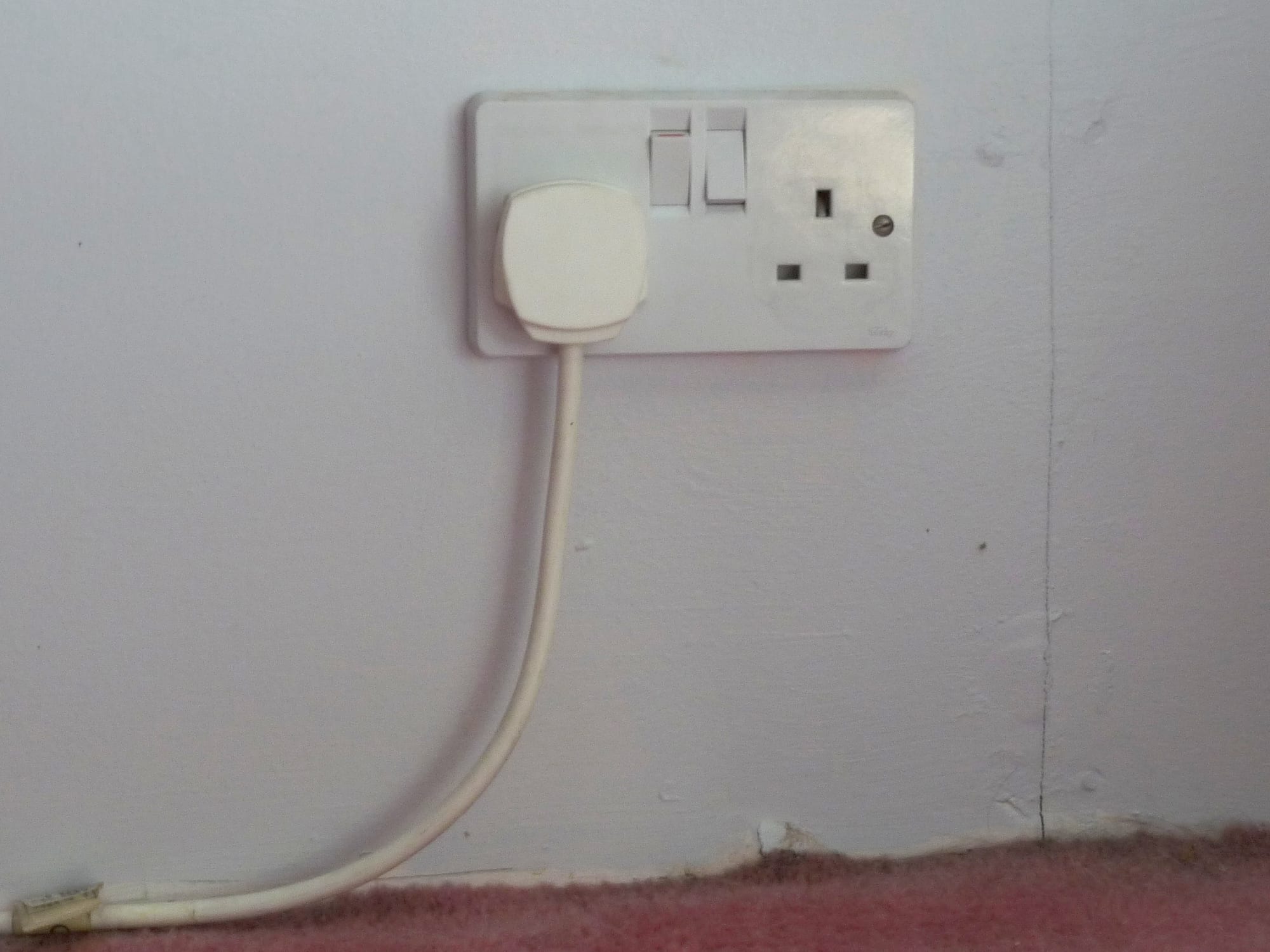
The large top pin on a British plug is the earth, and it also pushes open the shutters that cover the other two holes.
Britain's chunky three-pin plug came out of post-war rebuilding. Before the Second World War the country used round-pin sockets in 2, 5 and 15 amp sizes that did not fit each other. In July 1944 a committee planning post-war building proposed a single all-purpose socket, with a replaceable fuse in each plug, and the standard BS 1363 followed in 1947. The same report recommended the ring circuit, in which a loop of cable feeds many sockets and can deliver more current than a thin appliance flex can safely carry. The fuse in the plug exists to protect that flex.
Empires and trade carried the shapes abroad
The British BS 1363 socket is used far beyond the United Kingdom, from Ireland, Malta and Cyprus to Malaysia, Singapore, Hong Kong and the United Arab Emirates. India kept the older British round-pin system instead, and the IEC counts about 40 countries using that type. Ireland itself installed German-style Schuko sockets until the 1960s, then switched to the British design, partly to match Northern Ireland.
Hubbell's 1916 design for a plug with three blades travelled furthest. In the 1930s Australian regulators and manufacturers adopted it as their national standard, and it was also taken up in New Zealand, Argentina and, with minor variations, China. Argentina wires the same shape with live and neutral reversed.
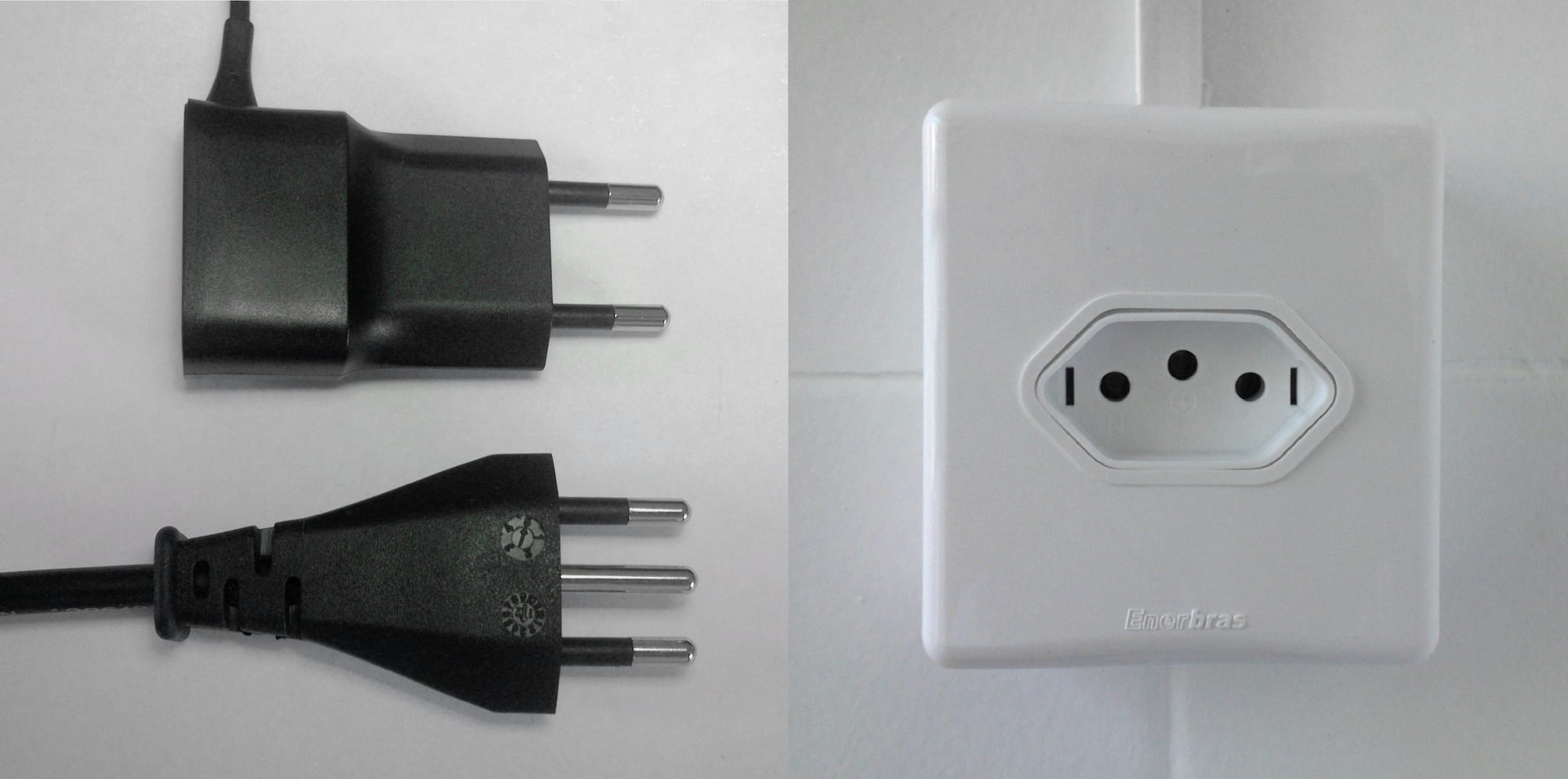
Brazil's version differs from the international design in pin size and current rating, and it is also used on 127 volt circuits.
The world plug that almost nobody adopted
In 1986 the IEC published IEC 60906-1, a compact 16 amp, 250 volt plug and socket that it hoped many countries would one day accept as their national standard. Its pins sit 19 mm (0.75 in) apart, the same spacing as most European plugs, so that a gradual changeover would be possible. A European attempt to agree a single plug system was abandoned in 1995.
As of March 2025, only South Africa and Paraguay had national standards closely based on it, and only South Africa had made the sockets mandatory. Brazil adopted a variant in 1998 and made it compulsory from 2010, but its pins and ratings do not match the international design. In 2017 an analysis published by the European Union advised against harmonising plugs at all, arguing that the existing systems were already reasonably safe and that replacing them would cause huge costs and unnecessary electrical waste.
That is the real reason the variety persists. A plug standard is not just a shape but every socket already in the walls and every appliance already sold with a matching cord. Changing it gains little for anyone who stays at home.
What it means for travellers
A plug adaptor changes only the shape. It does not change the voltage or frequency, and adaptors are not covered by most standards, so they have no formal quality requirements. Many modern chargers accept anything from 100 to 240 volts at 50 or 60 hertz, which means they work almost anywhere with the right adaptor. Older or simpler appliances may need a voltage converter.
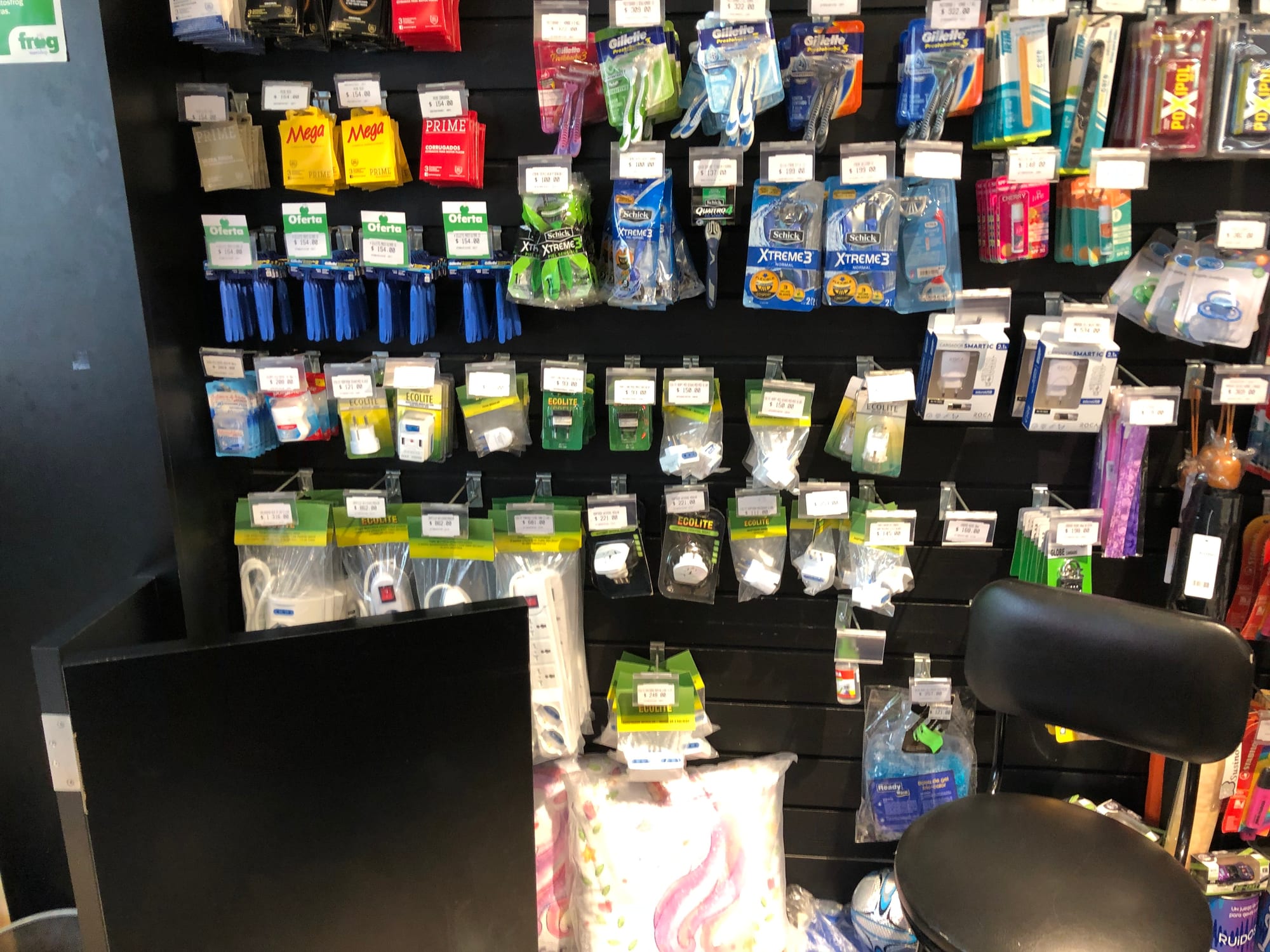
Uruguay uses both German-style Schuko sockets and the Italian Type L.
Some countries offer "universal" or hybrid sockets that take several plug shapes, but some accept certain plugs unsafely, leaving live pins exposed or making no earth connection. China banned new installations of its own dual sockets in a 2021 revision of its standard, though many are still in use.