History · Guam
Why did a Japanese soldier hide in Guam's jungle for 28 years?
Sergeant Shoichi Yokoi knew the war was over by 1952, but a code that called capture a disgrace, and plain fear, kept him in hiding until 1972.
By Globeway Editorial · 2 November 2026
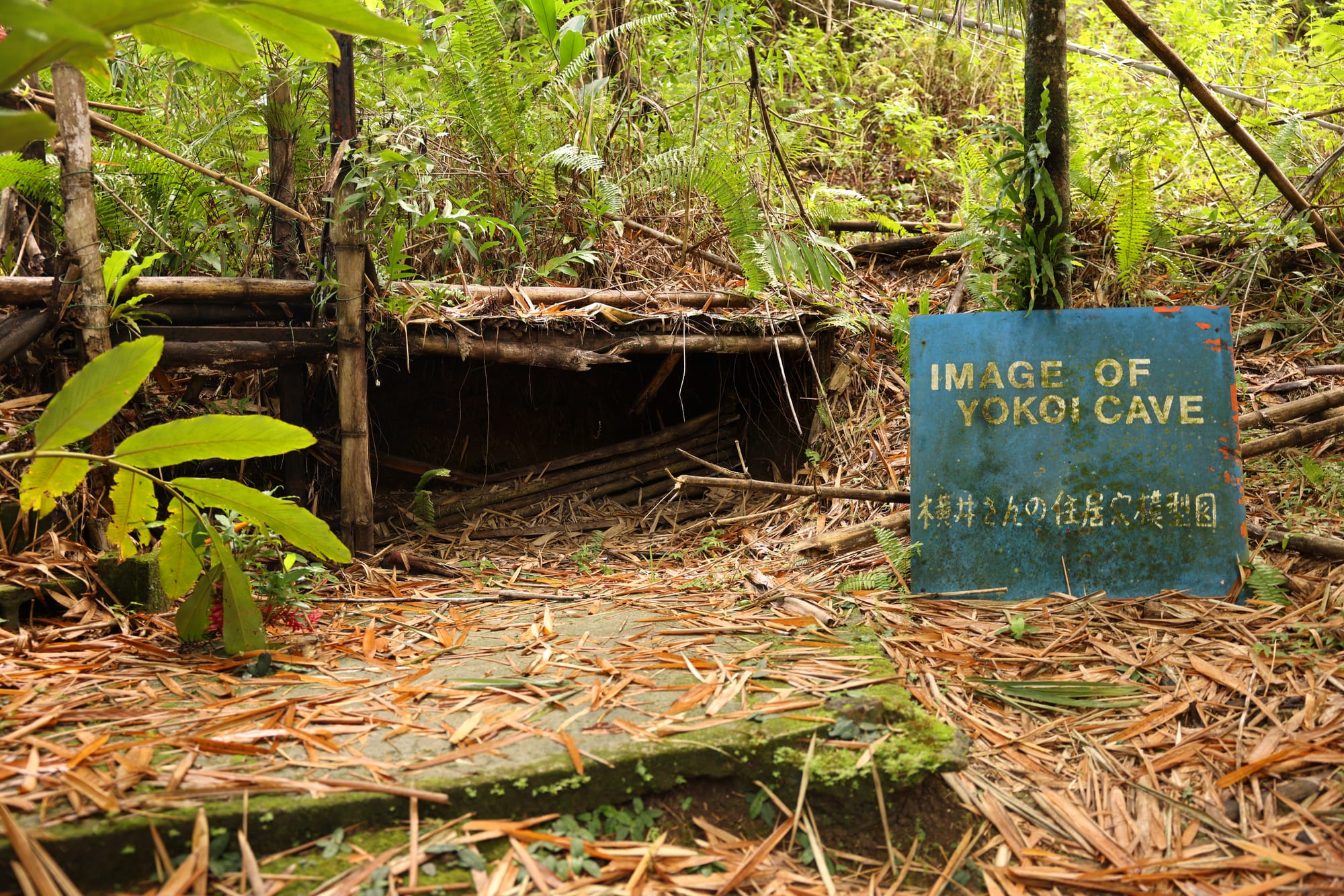
The short answer
Sergeant Shoichi Yokoi stayed hidden because he had been taught that being captured alive was worse than death. When American forces retook Guam in 1944, he and other Japanese soldiers fled into the jungle rather than surrender. He later said he had known since 1952 that the war was over, but he was afraid to come out. "We Japanese soldiers were told to prefer death to the disgrace of getting captured alive," he explained.
So he survived alone for years in a jungle cave near Talofofo, living on what he could catch and gather, until two local men stumbled on him on 24 January 1972. By then almost 28 years had passed since the island's recapture. He went home to Japan a celebrity, and is remembered as one of the last Japanese holdouts of the Second World War.
An island fought over twice
Guam, a United States territory in the Mariana Islands, was captured by Japan on 10 December 1941, days after the attack on Pearl Harbor. The occupiers renamed it Ōmiya-Jima, "Great Shrine Island". For the indigenous Chamorro people the occupation brought forced labour and, near its end, forced marches of 10,000 to 15,000 people to camps in the central and southern jungle.
Yokoi, an apprentice tailor from Aichi Prefecture, had been conscripted in
- After serving with the 29th Infantry Division in Manchukuo, he reached
Guam with the 38th Regiment in February 1943. On 21 July 1944 American forces landed, and by 10 August organised Japanese resistance had ended. But the Japanese garrison had numbered about 18,500, and with just over 11,000 counted dead, thousands of soldiers were still loose in the island's thick jungle. Yokoi went into hiding with nine others.
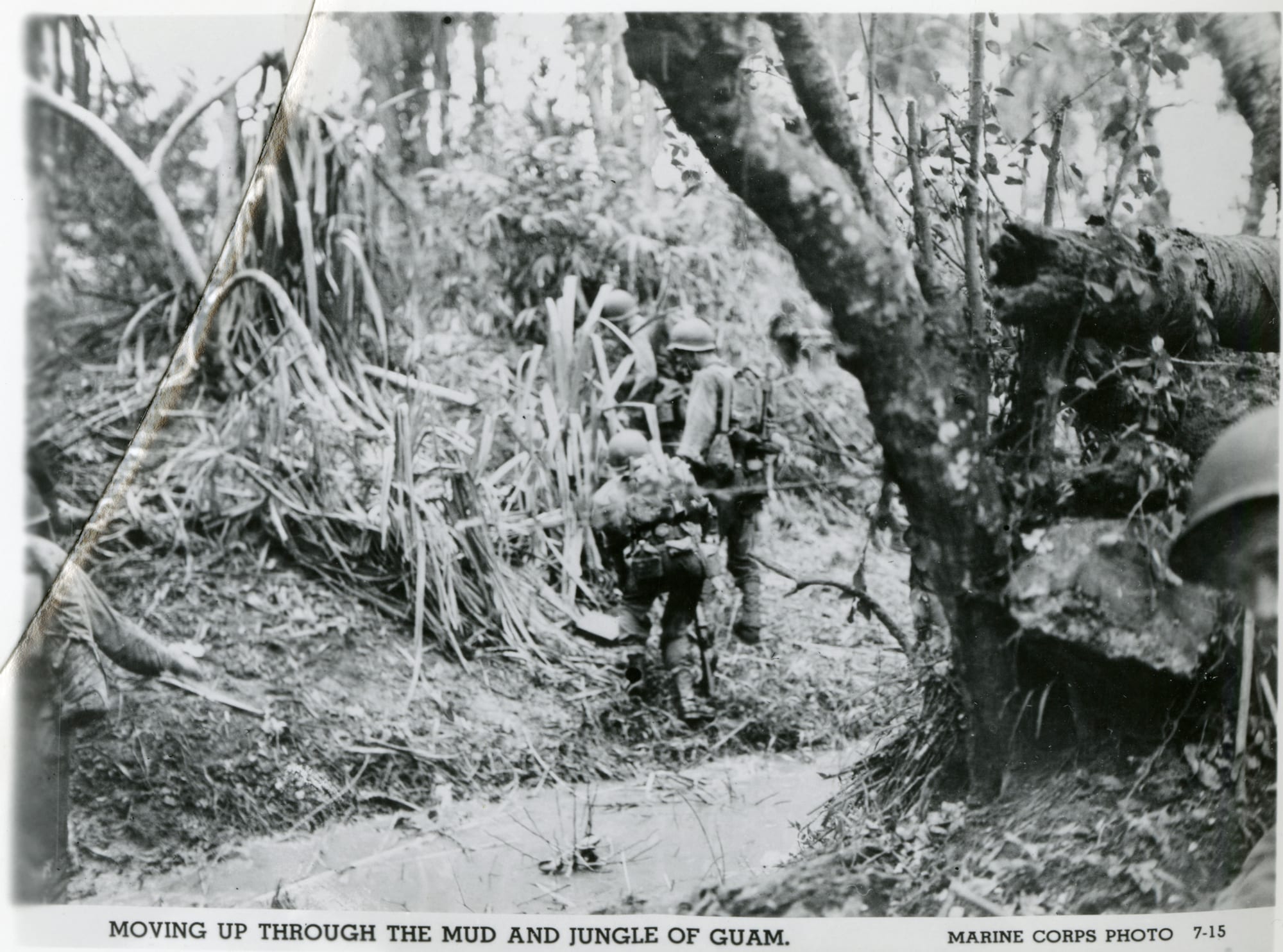
"Never live to experience shame as a prisoner"
In January 1941 the Japanese army had issued every soldier a pocket-sized code, the Senjinkun or Instructions for the Battlefield, in the name of War Minister Hideki Tojo. It forbade retreat or surrender, and one line, "Never live to experience shame as a prisoner", was repeatedly cited as the cause of suicides by soldiers and civilians. Japanese ground forces surrendered in extremely small numbers as a result.
Holdouts across Asia and the Pacific kept fighting or hiding for many reasons. Some doubted that Japan had really surrendered, some never heard the news because their communications had been cut, some feared they would be executed if they gave themselves up, and others felt bound by honour never to surrender. Yokoi's own words point to the last two: shame, and the fear of what would happen if he walked out of the forest.
On Guam the danger was real. After Japan surrendered in 1945, leaflets ordered the remaining soldiers to give up, and by January 1946 more than 1,500 had been taken prisoner. But a Guam Police Combat Patrol hunted the stragglers who stayed out; by the time it was disbanded at the end of 1948 it had captured five Japanese soldiers and killed 117.
From ten men to one
Of the ten men who went into hiding together, seven eventually moved away. The three who remained, Yokoi among them, lived apart but visited each other until about 1964, when the other two died in a flood. Yokoi spent his last eight years in the jungle entirely alone. He was not the only one who held out so long: another soldier on Guam, Sergeant Masashi Itō, gave himself up only on 23 May 1960.
Survival took skill and patience. Yokoi hunted mainly at night. He lived on wild nuts, mangoes, papaya, shrimp, snails, frogs and rats, and made his clothes, bedding and storage containers from native plants, keeping them carefully hidden in his cave.
- 1941
Shoichi Yokoi is conscripted into the Imperial Japanese Army.
- February 1943
Yokoi arrives on Guam with the 38th Regiment.
- 21 July 1944
American forces land to retake Guam.
- 10 August 1944
Organised Japanese resistance ends; Yokoi stays in hiding.
- 1952
Yokoi learns that the war is over but stays hidden.
- About 1964
His last two companions die in a flood.
- 24 January 1972
Two local men find Yokoi near Talofofo.
- March 1972
Yokoi returns to Japan.
Found by the shrimp traps
On the evening of 24 January 1972, two local men, one of them Jesus Duenas, were checking shrimp traps along a small river in Talofofo when they came across a stranger they took for a villager. Yokoi, believing his life was in danger, attacked them. They overpowered him and carried him out of the jungle. He expected to be killed; instead, they gave him hot soup at home before handing him over to the authorities. Doctors at Guam Memorial Hospital found him in fairly good health, though slightly anaemic from a diet without salt.
Back in Japan in March 1972, he said, "It is with much embarrassment that I return", and the line became a popular saying. He married, settled in rural Aichi, became a television personality and a champion of simple living, and died in 1997, aged 82. He was not quite the last: Hiroo Onoda came out of the Philippine jungle in 1974, and Private Teruo Nakamura surrendered on the Indonesian island of Morotai later that year.
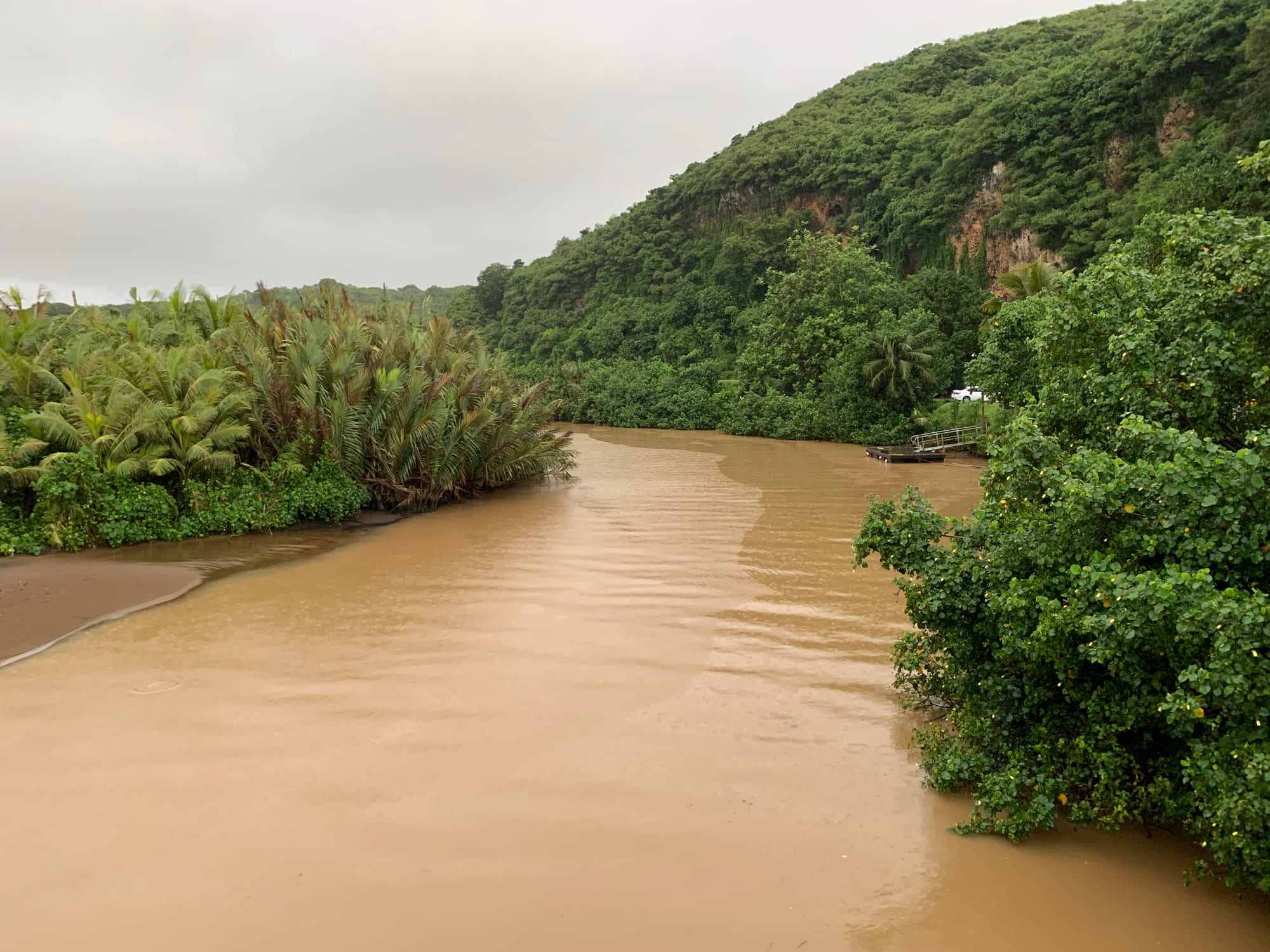
Yokoi's cave today
The story has become part of Guam's landscape. A re-creation of Yokoi's hideout stands at Talofofo Falls Resort Park in the south of the island, and the Talo'fo'fo area also has caves, river cruises and the falls themselves. Guam marks the end of the occupation every year on Liberation Day, 21 July, the anniversary of the American landings, a reminder that for the island's own people the war that Yokoi hid from had been a time of hardship.