Culture & Customs · Faroe Islands
Why do houses in the Faroe Islands have grass growing on their roofs?
Turf roofs came with the Norse settlers; on treeless, wet, windy islands, free living sod kept houses warm, weighted and sealed.
By Globeway Editorial · 2 November 2026
The short answer
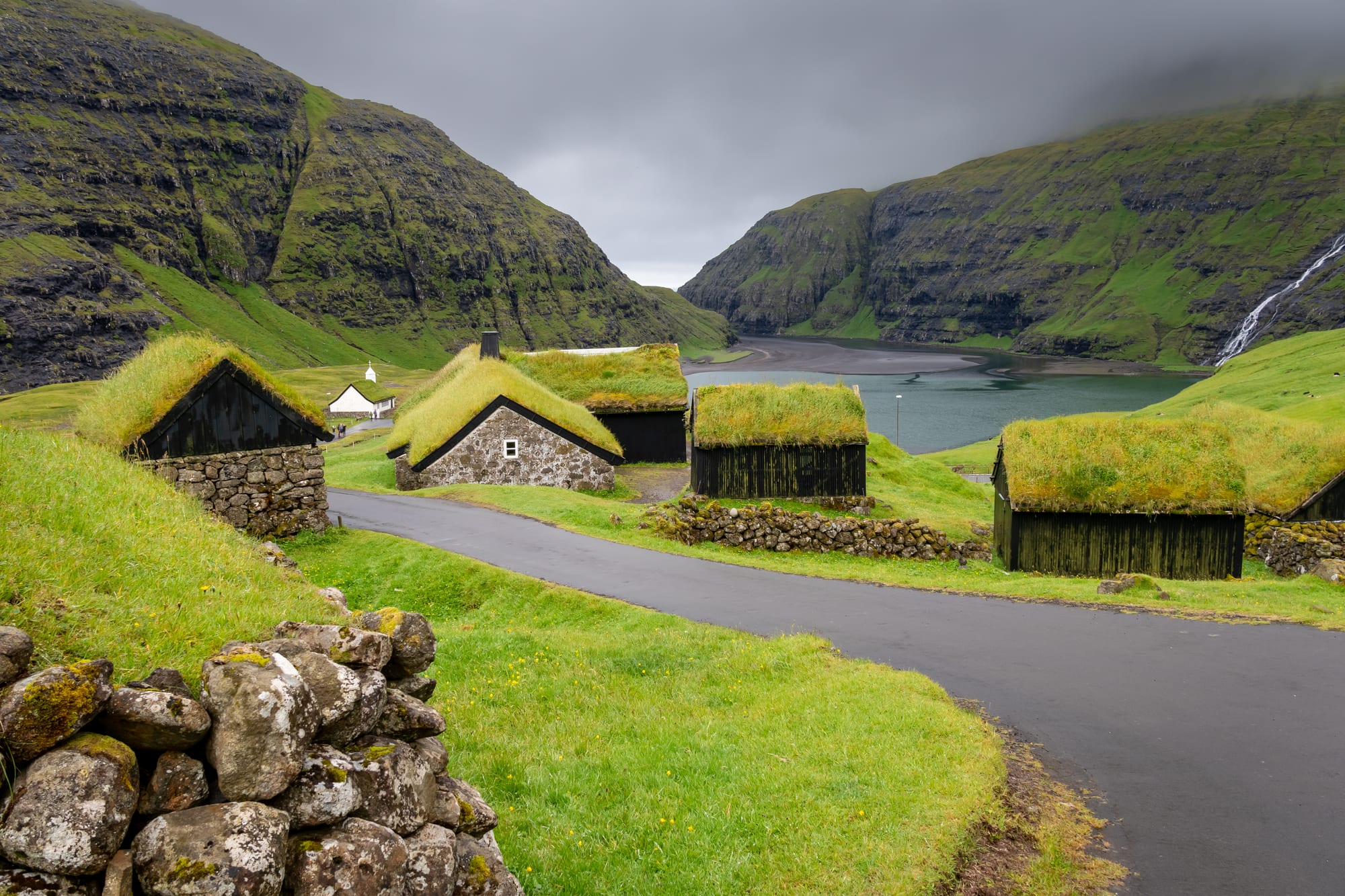
The grass on Faroese roofs is turf: thick slabs of living sod, cut from pasture and laid over a waterproof layer. The custom came with the Norse settlers who reached the islands in the early 9th century, and it belongs to a tradition found across Scandinavia and Iceland since the Viking Age. A sod roof was built from materials that cost nothing, insulated the house against cold and wind, and its weight helped hold the building together.
On the Faroes those advantages counted double. The islands have almost no trees, so wood had to be imported or gathered as driftwood and was too precious to waste, while the climate is cool, damp and windy all year. Turf roofs became part of how the islands look, and they are still kept on old farmhouses, churches and the historic quarter of Tórshavn, and even on some modern buildings.
A Norse habit carried across the sea
According to the Færeyinga saga and the medieval writer Dicuil, Norse settlement of the Faroes began in the early 9th century, with Grímur Kamban recorded as the first permanent settler. The newcomers brought the building customs of the Norse world. In Scandinavia, roofs had probably been covered with birch bark and sod since prehistory, and during the Viking Age and the Middle Ages most houses had them. Iceland, settled in the same era, developed its own turf houses for similar reasons.
In rural Scandinavia sod roofs were almost universal until the early 18th century, before tiles and later corrugated iron replaced many of them. On the Faroes, turf still covers old farmhouses, churches and town houses that are in use today.
A roof that is really made of bark
The name is a little misleading. In the traditional Scandinavian method the part of the roof that keeps the rain out is not the grass but a layer of birch bark beneath it, laid in sheets that overlap like shingles, often six layers deep. The bark is strong and water-resistant enough to last for generations. The sod's first job is simply to hold the bark down so that it cannot curl up or blow away.
Builders cut turf from good pasture into squares about 30 centimetres across and 7.5 centimetres thick. The first layer went on grass side down, so that the wilting grass protected the bark and acted as a drain; the second went grass side up. Over time the roots knit the two layers into one solid mat about 15 centimetres deep, enough to survive a dry spell, and a heavy timber along the eaves stopped it sliding off. The finished roof, in time, looked like a meadow. Modern turf roofs replace the bark with bitumen roofing felt and a dimpled plastic drainage sheet, with the turf laid on top.
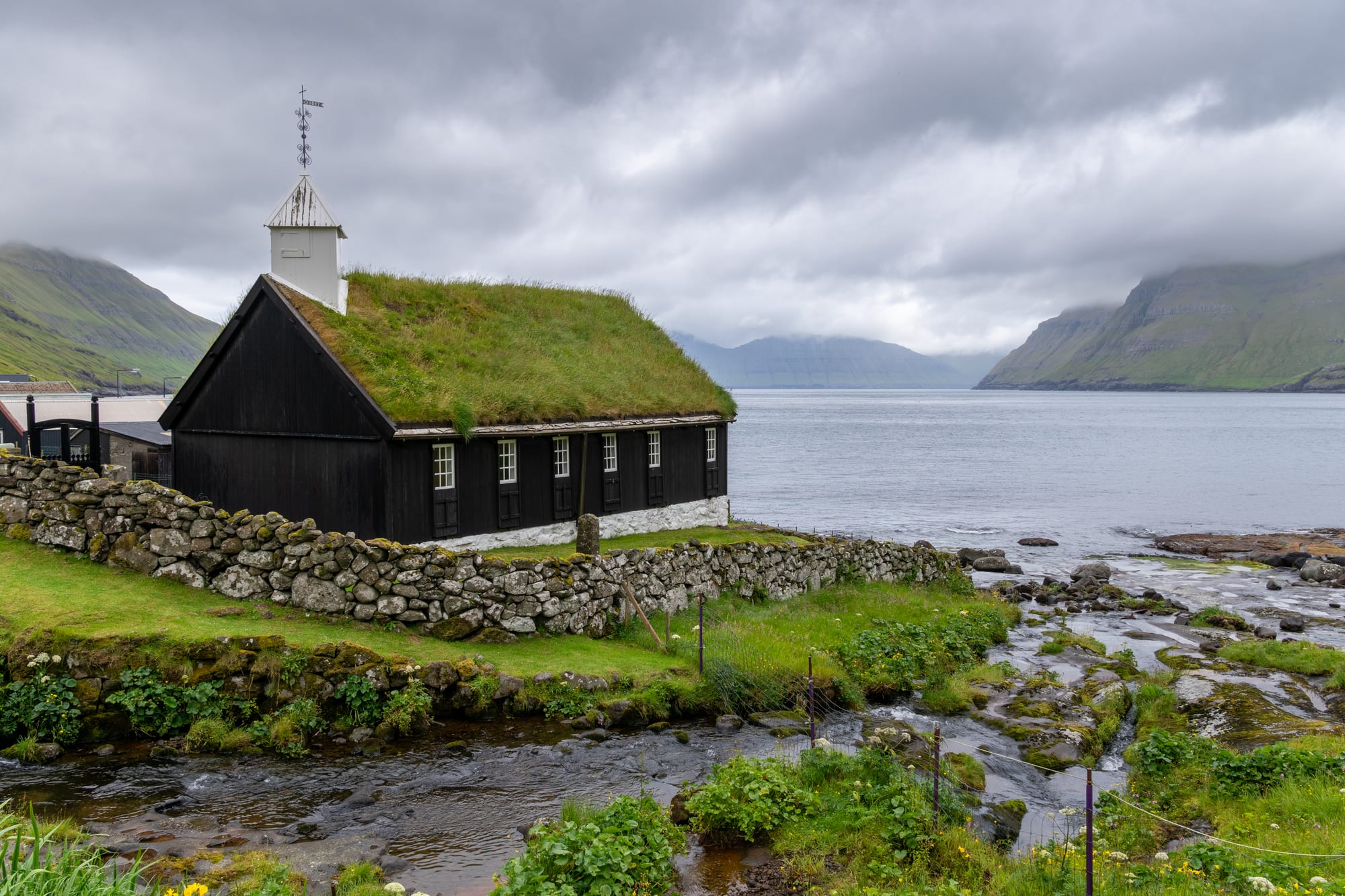
It is one of ten traditional wooden churches built in the islands between 1829 and 1847 that still stand.
Why turf suited treeless, stormy islands
The Faroes have no natural forest. Timber had to come by ship, and vessels from Bergen in Norway regularly brought salt, grain and wood to Tórshavn. Driftwood was a precious building material, and islanders dug peat from the outfields for fuel. A legend about the old farmhouse at Kirkjubøur says its timber arrived as driftwood from Norway, already bundled and numbered for assembly. In such a place, a roof covering that could be cut from the ground outside the door made obvious sense.
The weather gave further reasons. The islands are windy, cloudy and cool throughout the year, with an average of 210 days of rain or snow, and storms can strike in any season. Winters are mild, with mean temperatures of 3 to 4°C, but summers are cool, around 9.5 to 11.2°C. Sod is a reasonably efficient insulator in a cold climate, and a sod roof is heavy, about 250 kilograms per square metre, a load that helps press the timbers of a log building together and make the walls more draught-proof.
The work was hard but the materials were free. Across Scandinavia, neighbours were typically invited to help lay a roof, a shared effort known in Norway as dugnad. A well-made roof was expected to last around 30 years.
Where the old grass roofs still grow
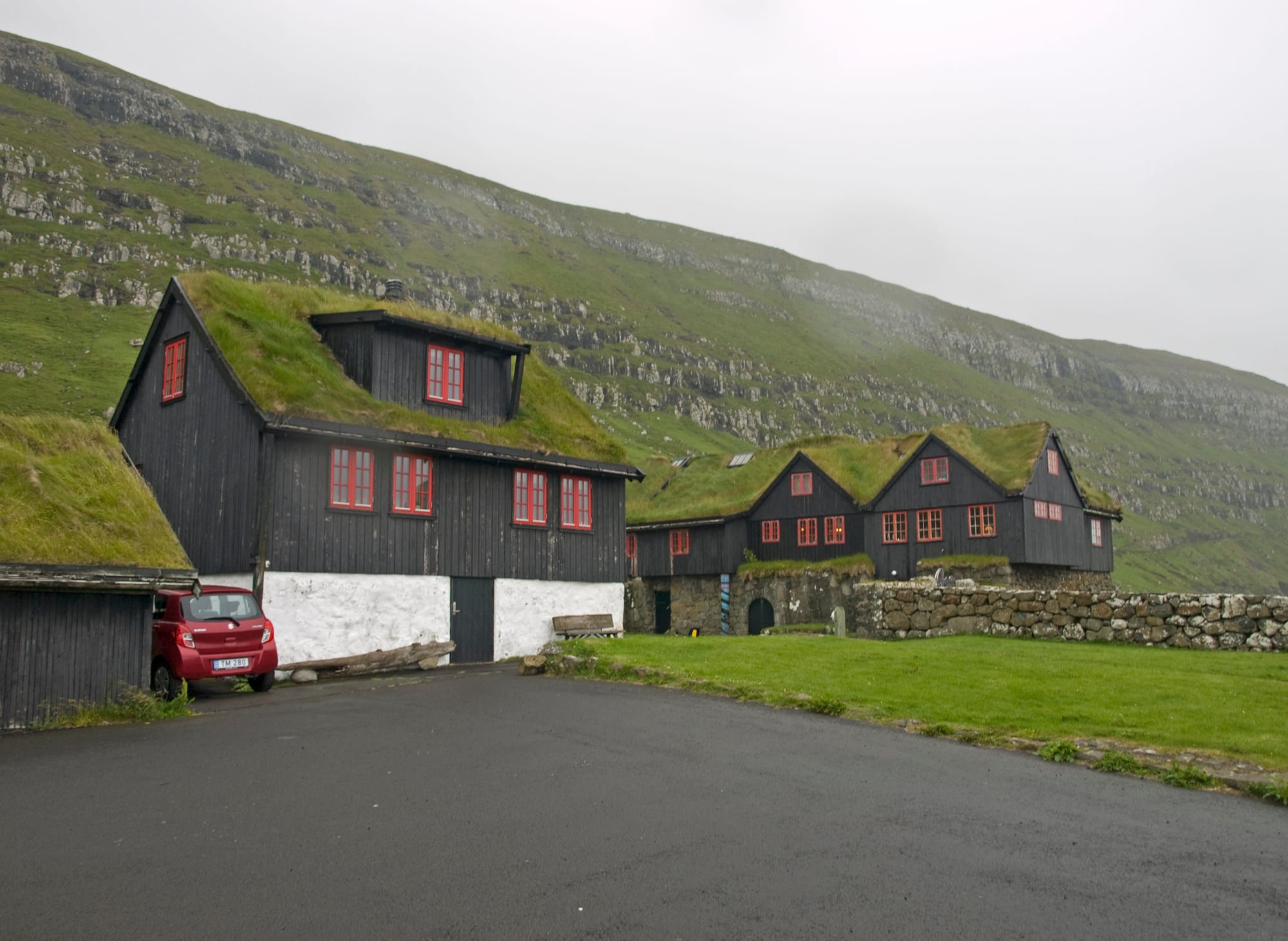
The Patursson family has lived on the farm since 1550 and still does.
Among the oldest is Kirkjubøargarður, the farmhouse at Kirkjubøur on Streymoy, one of the oldest still-inhabited wooden houses in the world. Its oldest part is a roykstova, or smoke room. The farm was the residence of the bishops of the Faroes from about 1100.
In Tórshavn itself, the old quarter on the Tinganes peninsula, where Norse settlers held their assembly, is still made up of small wooden houses under turf roofs. Many were built in the 16th and 17th centuries and are still in use, and the Faroese government sits among them. At Saksun on Streymoy, the Dúvugarðar museum occupies a 17th-century farmhouse on a working sheep farm, and the village church was carried over the mountains from Tjørnuvík in 1858 and rebuilt there.
A tradition reinvented
The turf roof did not stay in the past. When the Nordic House, a cultural centre in Tórshavn, was designed after a competition in 1977 that drew 158 architects, the winning building was made to resemble a hill of elves from Faroese folklore. It opened in 1983 under a turf-covered roof of 2,000 square metres. Today green roofs are promoted worldwide for insulation and for soaking up rainwater, and they draw on centuries of Scandinavian experience.
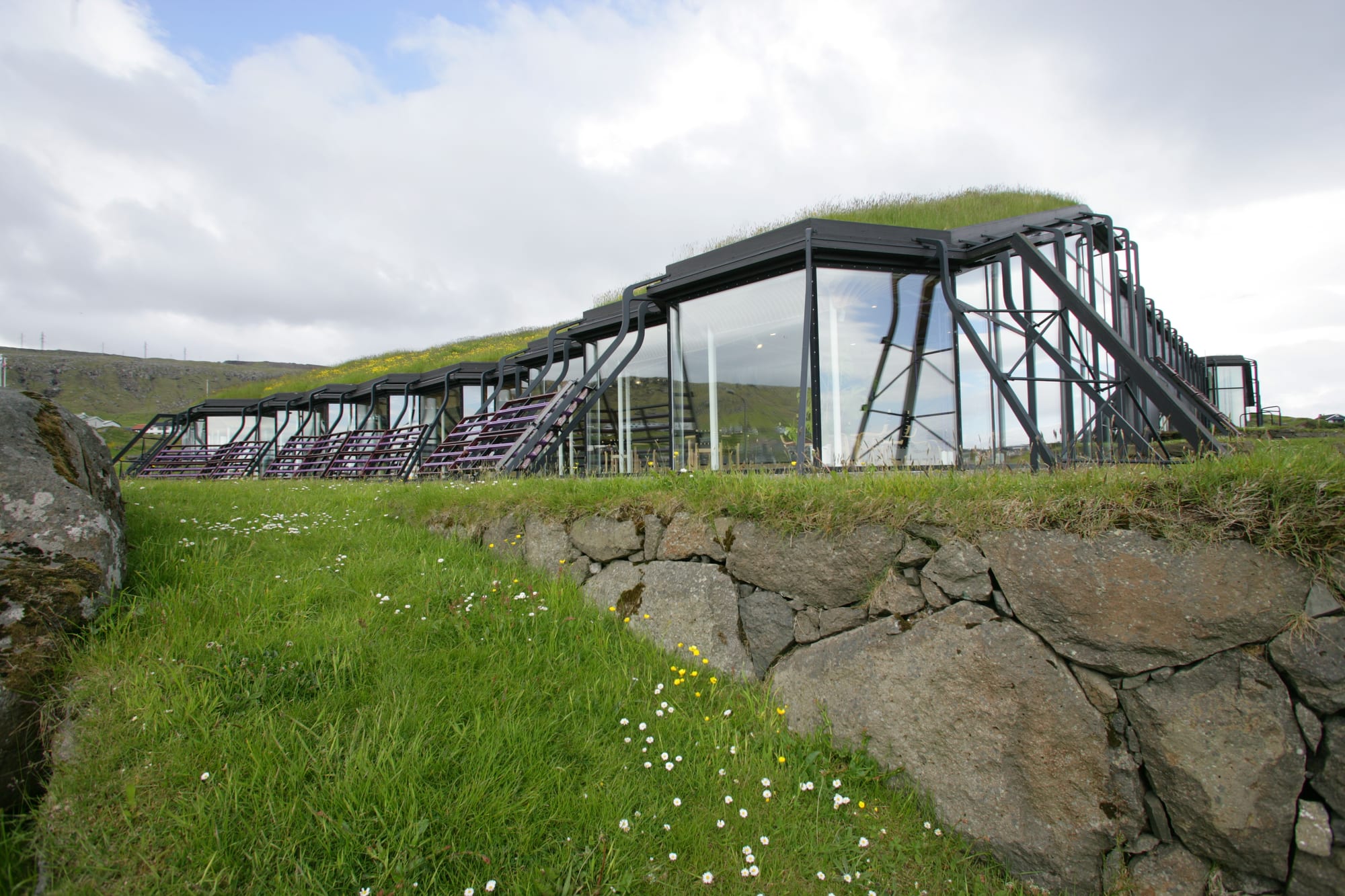
The struts brace the turf-covered roof against the strain of the hurricane winds that often strike the islands.