Culture & Customs
Why do most passports come in just four colours?
No rule sets the colour of a passport; regional blocs, history and symbolism push most into red, blue, green or black, and plenty of exceptions exist
By Globeway Editorial · 2 November 2026
The short answer
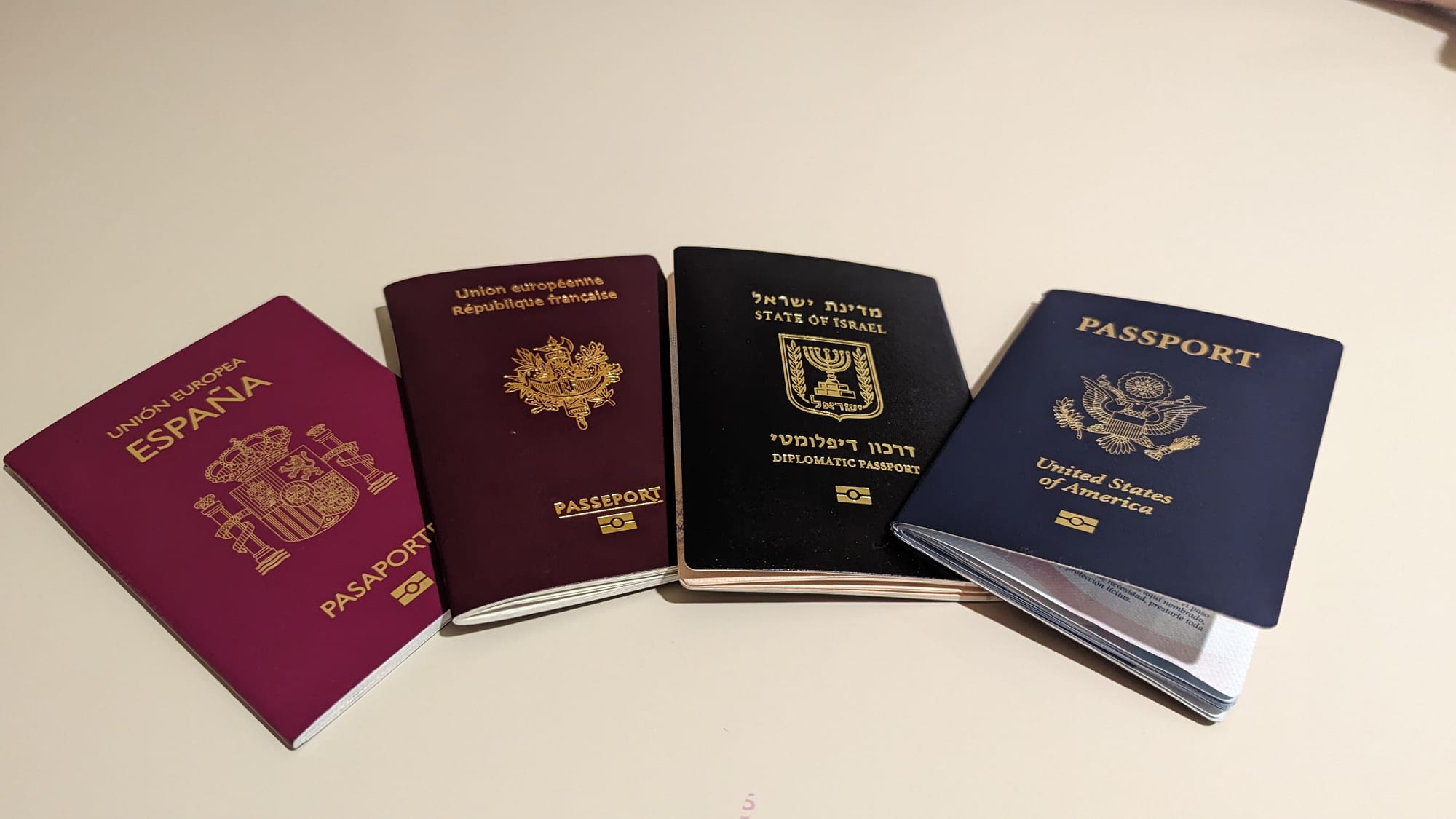
They do not, strictly. No international rule says what colour a passport must be. The global standards that every country follows cover the size of the booklet, the machine-readable data page and the electronic chip; colour is each government's choice. Most ordinary passports do fall into four families, shades of red, blue, green and black, and the reasons are mostly about belonging: neighbours in a regional bloc agree on one colour, countries keep colours inherited from their history, and some choose a colour for what it symbolises.
Look past ordinary passports, and the palette widens. The United States issues grey service passports and purple emergency ones. Turkey has a grey service passport, and Japan issues dark brown diplomatic passports and a white single-use document for citizens abroad who need to return home in an emergency. Even within the big four, the shades range from crimson to maroon and from navy to the turquoise green of Indonesia.
Standards for everything but colour
The modern passport is about a century old. In 1920 the League of Nations held a conference in Paris that produced guidelines and a common booklet design, followed by further conferences in 1926 and 1927. It even recommended that passports be printed in French, then the language of diplomacy, plus one other language. Real standardisation came in 1980, under the International Civil Aviation Organization (ICAO), whose document 9303 sets out the machine-readable passport: the strip of characters on the photo page that border scanners read. Later standards added the biometric chip.
None of this dictates the cover. The one near-universal feature of the front is the national coat of arms, and even that is a custom rather than an internationally recognised requirement. Countries are free to choose, and they have changed their minds often. Switzerland's passport was grey-green in 1915, brown in 1932 and red only from 1959.
Blocs that share a colour
The single biggest reason for the clustering is regional groups choosing a common look. The members of the European Community agreed in the mid-1970s to work towards a common passport, and a 1981 resolution set its colour as burgundy red, with the community's name on the cover. The resolution was not binding, but nearly all followed. Today every EU member uses burgundy for ordinary passports except Croatia, which kept dark blue when it updated its passport in 2015.
Other blocs did the same. Andean Community members Bolivia, Ecuador and Peru adopted a common burgundy passport from 2005. The Mercosur countries of South America use dark blue; Brazil switched from its old dark green model to the blue Mercosur design from 2006. Guatemala, El Salvador, Honduras and Nicaragua share a navy-blue Central American passport with a map of the region on the cover, the issuing country picked out in gold. The Caribbean Community uses dark blue for citizens, green for government officials and red for diplomats. The nations of the Economic Community of West African States agreed on green for ordinary passports, blue for service and burgundy for diplomatic ones. Kenya's light blue is the official colour of the East African Community.
Green for faith, blue for tradition
Some colours carry meaning. Green is the historic colour of Islam, representing the lush vegetation of Paradise, and it was the colour of the banner of the Prophet Muhammad. It appears on the flags of nearly all Islamic countries, and passports from several Muslim-majority countries follow suit: ordinary Pakistani passports have rich green covers, and Saudi Arabia's new passport of 2022 uses a darker green than before. Indonesia's ordinary passport is turquoise green.
Others are about heritage. From 1921 until the late 1980s, British passports were navy blue hardbacks bearing the royal coat of arms in gold, and the format spread across the empire, with "British Passport" printed on the covers of Australian passports until 1967. Canada's ordinary passport is still navy blue. When the United Kingdom moved to machine-readable passports, it adopted the European Community's burgundy, issuing the first on 15 August 1988 in Glasgow. After Brexit the old colour became a symbol, and blue passports returned in March 2020. Even the printer had a practical argument: it said the coat of arms would "contrast better on navy blue".
- 1921
Britain issues its first navy blue hardback passports.
- 1981
European Community members agree on a burgundy passport.
- 15 August 1988
Glasgow issues the first burgundy British passport.
- 2006
Brazil adopts the dark blue Mercosur design.
- 2015
Croatia keeps a dark blue cover, the only EU member not to use burgundy.
- March 2020
Blue British passports return after Brexit.
Colours that mark rank and purpose
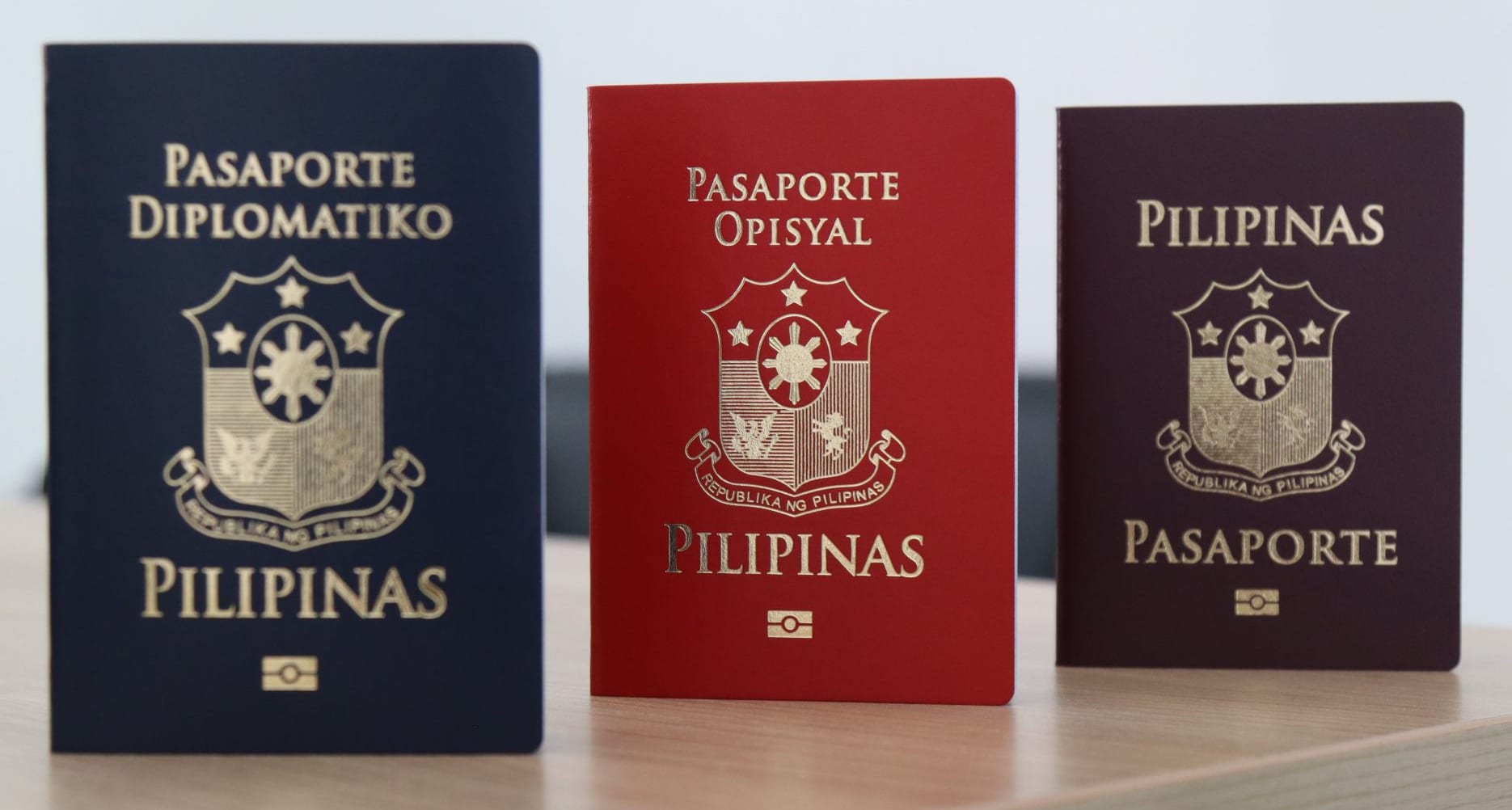
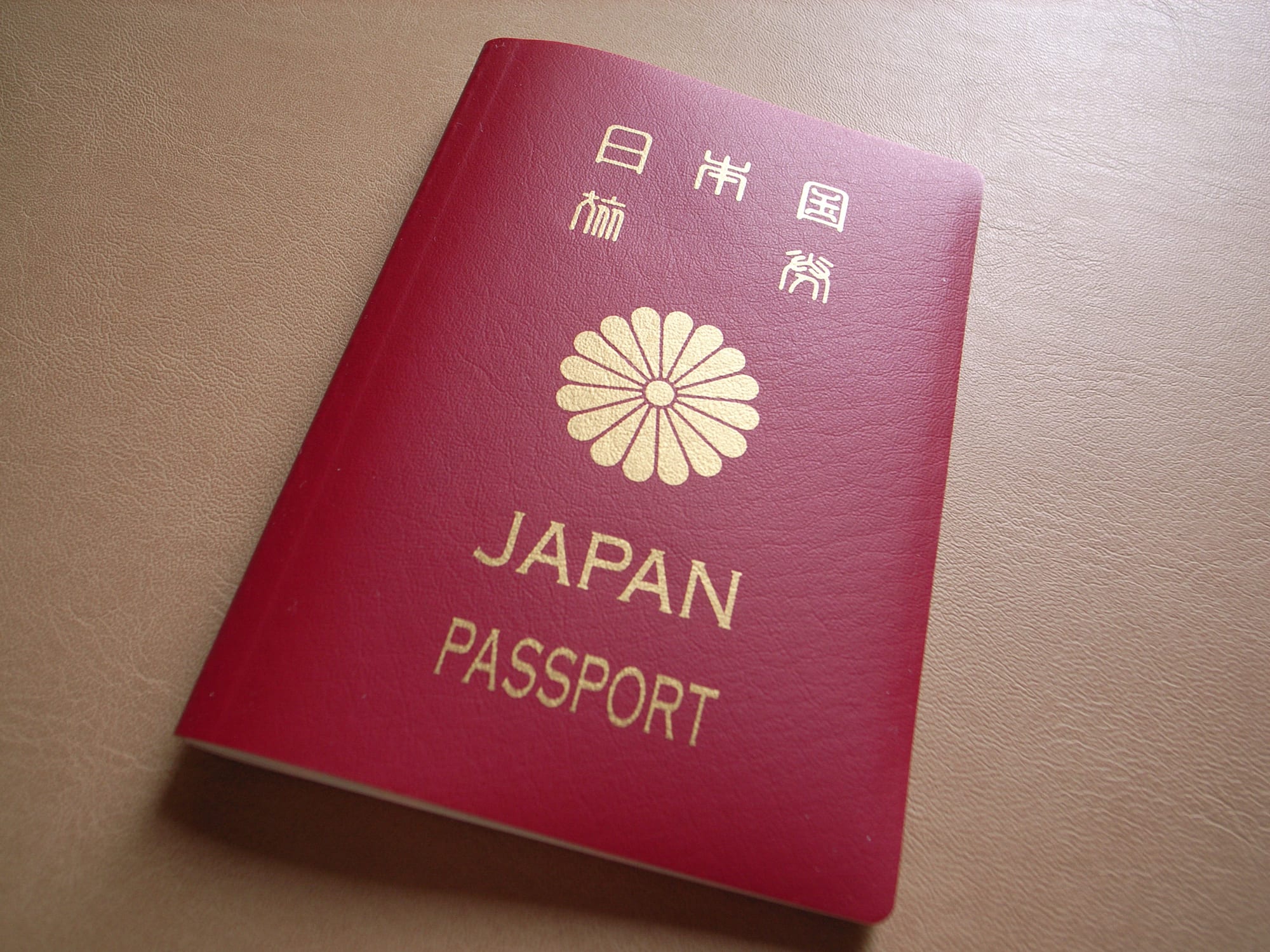
Within a single country, colour is the quickest way for a border officer to tell passport types apart. The United States began using distinct colours in 1961, and today a regular passport is blue, an official one maroon, a diplomatic one black, a service passport grey and an emergency passport purple. Turkey's ordinary passport is maroon, its special passport green, its service passport grey and its diplomatic passport black. Russia uses red for ordinary passports, green for diplomats and blue for service. Japan even uses colour for duration: ordinary passports valid for five years are dark blue, and ten-year passports are crimson.
Black is the boldest choice. New Zealand's ordinary passports were navy blue until 2009 and are now black, with the coat of arms in silver and silver ferns embossed along the edges of the covers.
Colours keep shifting. Indonesia planned a redesigned red passport, but on 17 July 2025 its immigration authority postponed it with no confirmed release date, citing efficiency and austerity. The four-colour pattern is a habit, not a law, and every redesign is a chance to break it.