Attractions & Natural Wonders
Why do some sand dunes sing?
When dry, rounded, evenly sized grains avalanche down a dune's steep face, the sliding sand sets the whole slope humming, in a way physicists still debate.
By Globeway Editorial · 2 November 2026
The short answer
A dune sings when a sheet of sand avalanches down its steep downwind face, either on its own in the wind or because someone has walked or slid near the crest. If the grains are just right, dry, rounded, clean and all about the same size, they do not tumble chaotically. They slide over one another in rhythm, and in one leading explanation the moving layer vibrates the air like the membrane of a loudspeaker. The result is a deep, steady rumble, sometimes louder than 100 decibels, that can last for several minutes.
Only a few dozen dunes in the world do it, because the conditions are so particular. Scientists agree on the basic picture, that the sound comes from avalanching sand, but still argue over exactly how a pile of loose grains produces a clear musical note rather than a hiss. Some beaches have a smaller version of the same gift: their dry sand squeaks or whistles underfoot.
A sound with a long history
People have puzzled over the noise for many centuries. The dunes outside Dunhuang, in Gansu Province in northwest China, were originally known as the Gods' Sand Dunes. The ancient Chinese historian Sima Qian wrote in his Records of the Grand Historian that their sound, in fine weather, was like listening to music. Under the Ming dynasty they took the name they still carry, Mingsha Shan, the Singing Sand Dunes.
Travellers on the desert routes heard the same thing. Marco Polo wrote of sands that sometimes filled the air with the sounds of musical instruments, drums and the clash of arms. To the Bedouin, the noise betrayed the presence of djinn, spirits believed to roam the desert, and Guy de Maupassant drew on the idea in his 1882 story La Peur ("Fear").
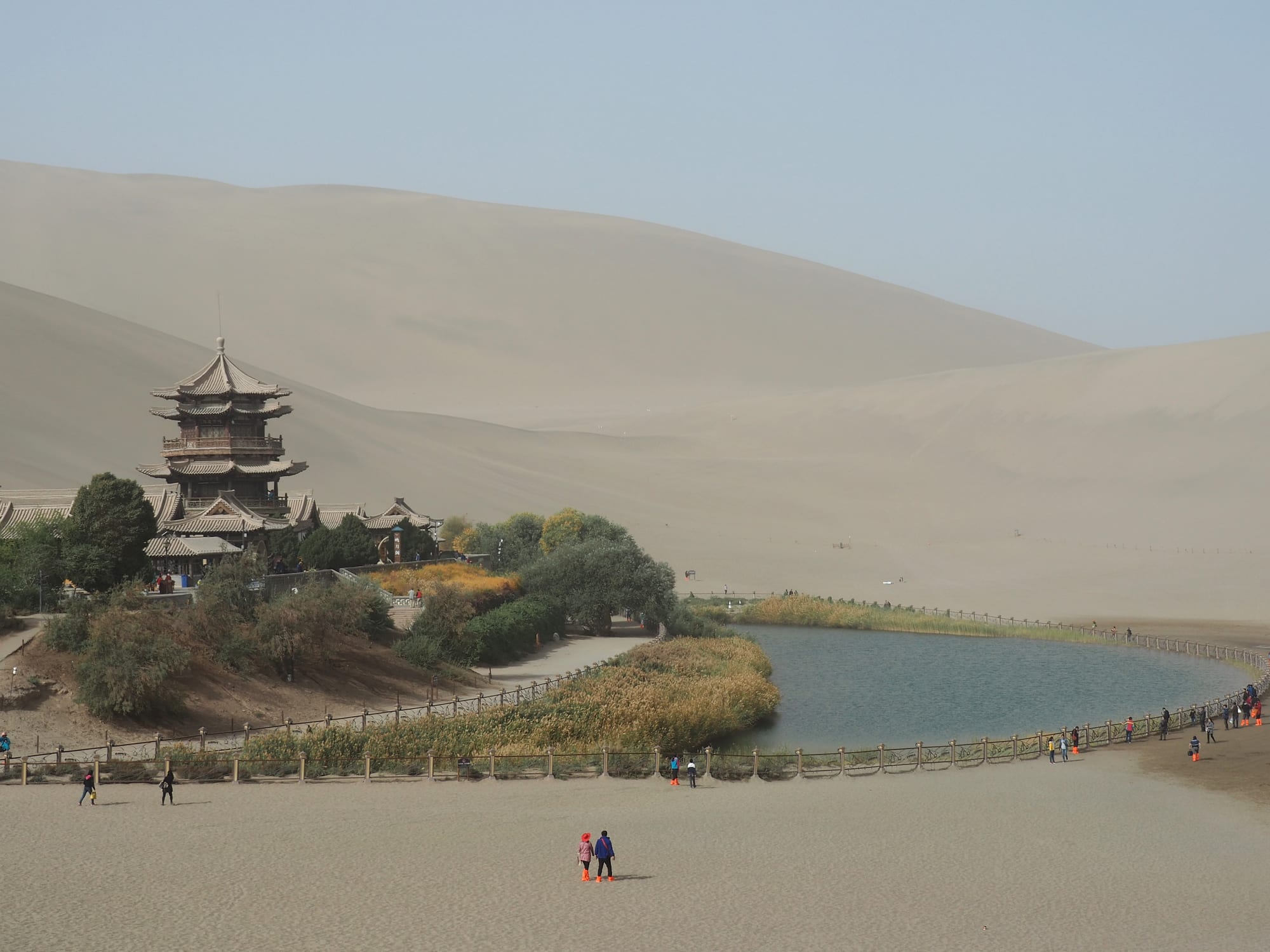
Dunhuang's dunes are among four well-known singing dune fields in China. Those at Hami are usually said to give the best sound of the four.
What it takes for a dune to sing
The ingredients are strict. The grains must be round and between about 0.1 and 0.5 millimetres across, and the sand must contain silica. They need to be well sorted, so that they are all of similar size, smooth, and free of dust. They must be loosely packed and dry: the booming of California's Kelso Dunes is much more pronounced when the dunes are extremely dry.
The shape of the dune matters too. The sound is described as roaring, booming or squeaking, and most often as a loud, low-pitched rumble, and it emanates from crescent-shaped dunes, known as barchans. These form a steep slip face on their downwind side, where sand piles up until it slumps. Estimates of how many dunes boom vary between about 30 and 40 sites worldwide. The note is low: its fundamental frequency lies between about 60 and 105 hertz depending on the size of the grains, and at the surface of the dune the sound can be louder than a high-speed train at full speed.
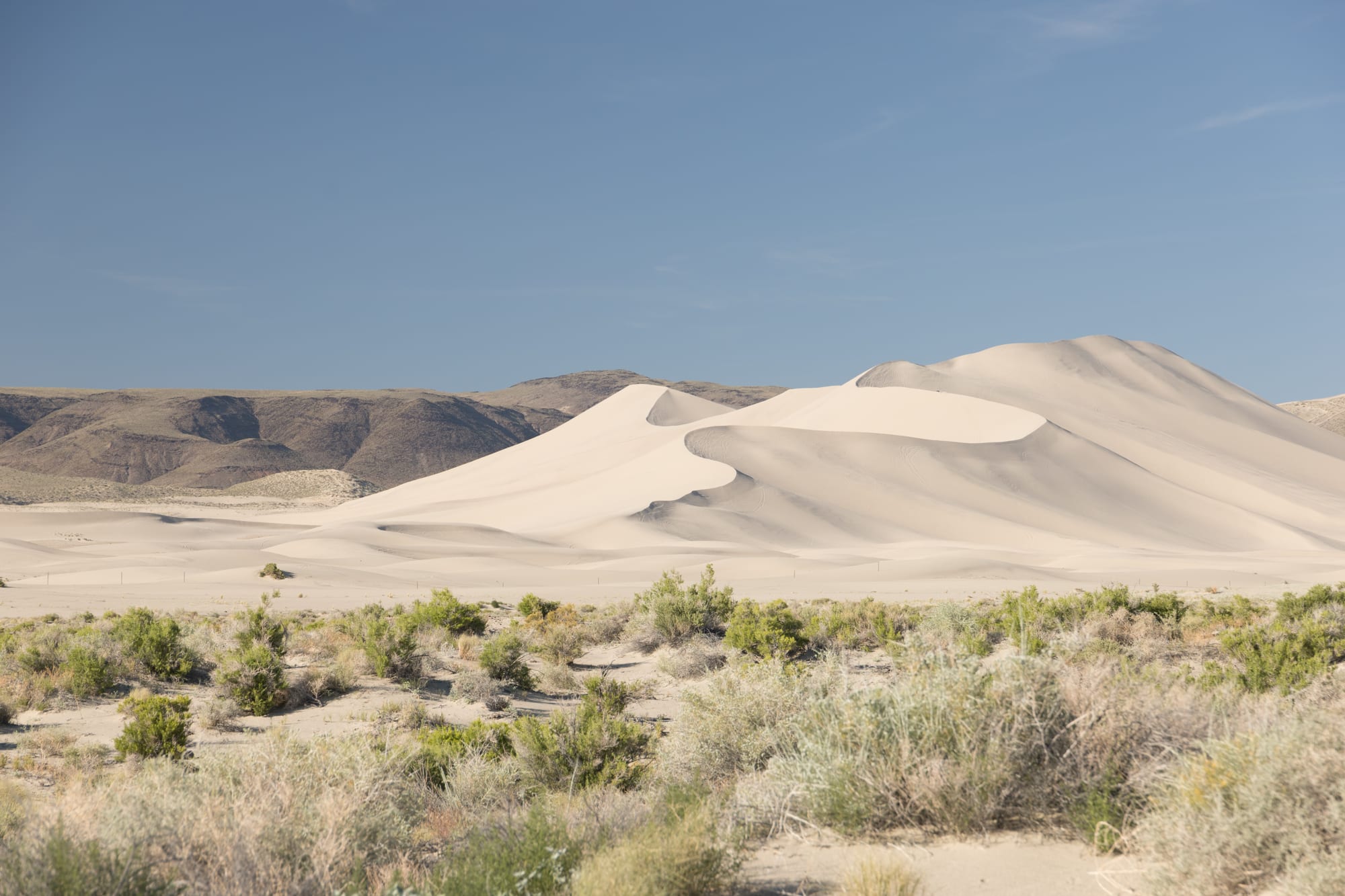
Sand Mountain is about two miles long and 600 feet (180 metres) high.
The physicists' argument
How the avalanche turns into a note is still debated, and several research teams have championed different answers. One group, at the French National Centre for Scientific Research (CNRS), concluded that the flowing layer of sand works like the membrane of a loudspeaker. The grains move in perfect synchrony, each giving the air the same push at the same moment, and it is this marching in step that produces the song. If they did not move in cadence, the dune would sound out of tune or stay silent. The physicist Stéphane Douady argued that the singing happens only when the grains are rounded and coated with a thin glaze known as desert varnish.
Other researchers point to the layers inside the dune. Successive avalanches build up layers of sand, and beneath the dry surface there is often a moister layer. In this view the sound waves bounce back and forth between the surface and the damp layer below, which act like the walls of an organ pipe and reinforce one particular note; that would explain why the pitch is so clearly defined. In 2007 a team led by Nathalie Vriend published a paper titled "Solving the mystery of booming sand dunes", and rival physicists answered with a published comment disputing it. In 2015 Vriend's team measured the seismic vibrations made by the moving grains and reported that the short bursts of sound and the long rumbles come from different kinds of waves travelling through the sand. Yet another theory holds that the note arises when the rhythm of grains hopping down the avalanche locks on to the natural vibration of the layers inside the dune.
Beaches that squeak and whistle
On some beaches, dry sand makes a singing, squeaking or whistling sound when someone scuffs or shuffles across it with enough force. The phenomenon is not completely understood, but quartz sand does it when its grains are highly spherical, similar in size and clean. The sound is thought to come from shear, as each layer of grains slides over the one beneath it in unison. Even small amounts of pollution on the grains can reduce the friction enough to silence the sand. Wet sand is usually silent, because the grains stick together, though a little water can raise the pitch.
Singing sand has been reported on 33 beaches in the British Isles, including the small Hebridean island of Eigg. Across the Atlantic there is Singing Beach in Manchester-by-the-Sea, Massachusetts, and the Singing Sands beach in Basin Head Provincial Park on Prince Edward Island. The best place to listen is usually the dry upper beach, above the normal high-tide line.

When it is dry, the smooth white sand of Porthor whistles or squeaks underfoot.
Hearing a dune sing
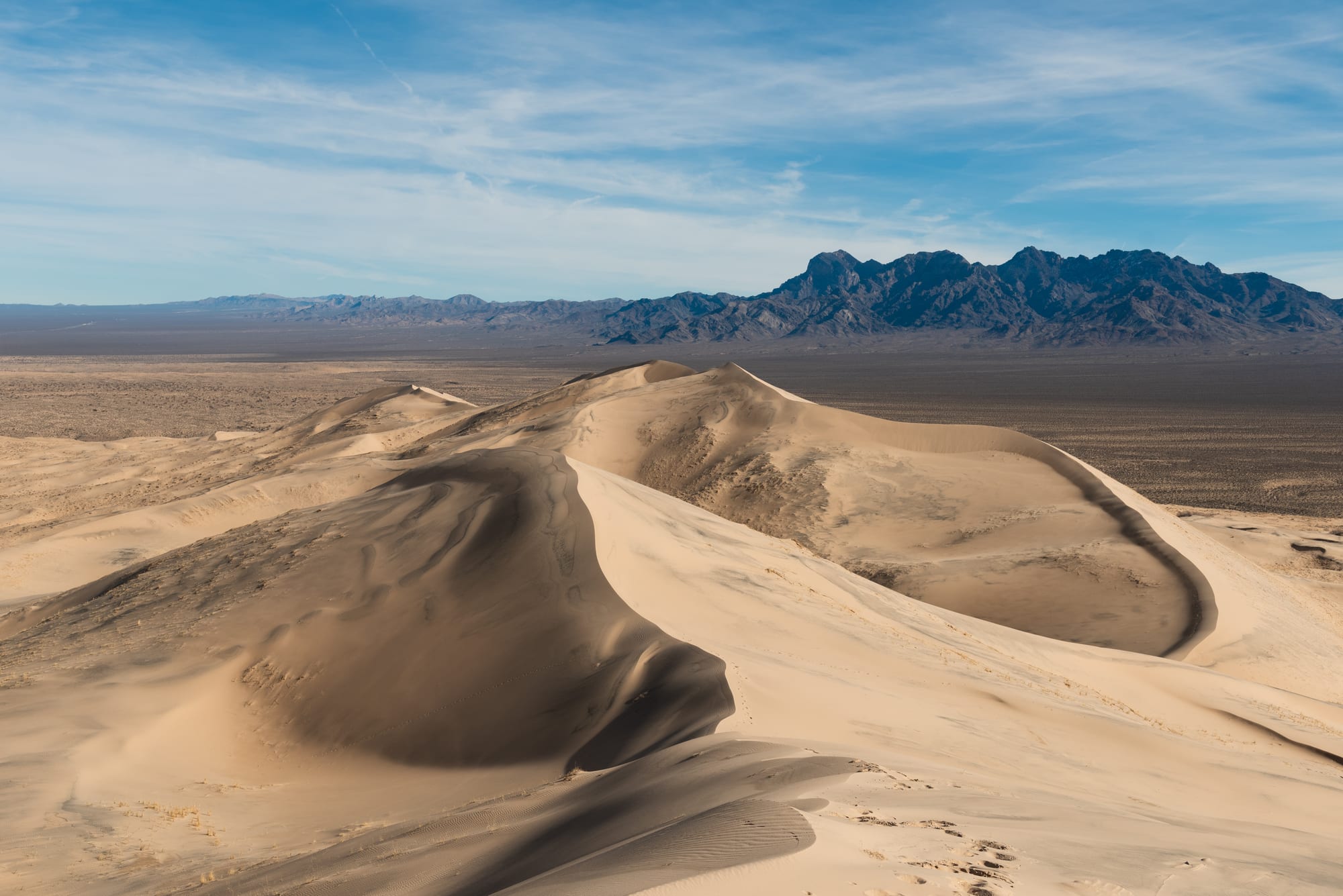
The dunes do not perform on demand, but they can be coaxed. The booming usually begins when the wind pushes sand over the crest, or when someone walks along the top of the slip face or slides down it, setting off an avalanche. Visitors to the Kelso Dunes in California's Mojave National Preserve, whose tallest dunes rise some 650 feet (200 metres) above the surrounding land, sometimes climb to the top and slide slowly down, producing a low rumble that can be felt as well as heard. Other well-known booming dunes include the Eureka Dunes in California, which have been compared to the drone of a distant propeller plane, Sand Mountain in Nevada, the Booming Dunes of the Namib Desert in Africa and the Singing Sand Dunes of Dunhuang. A dry spell gives the best chance of a performance: damp, dusty or compacted sand stays stubbornly quiet.