Attractions & Natural Wonders · Gabon
Why are the hippos of Gabon known as 'surfing hippos'?
Gabon's "surfing hippos" do not ride waves; they live on a wild coast where lagoon, grassland and Atlantic surf sit side by side.
By Globeway Editorial · 2 November 2026
The short answer
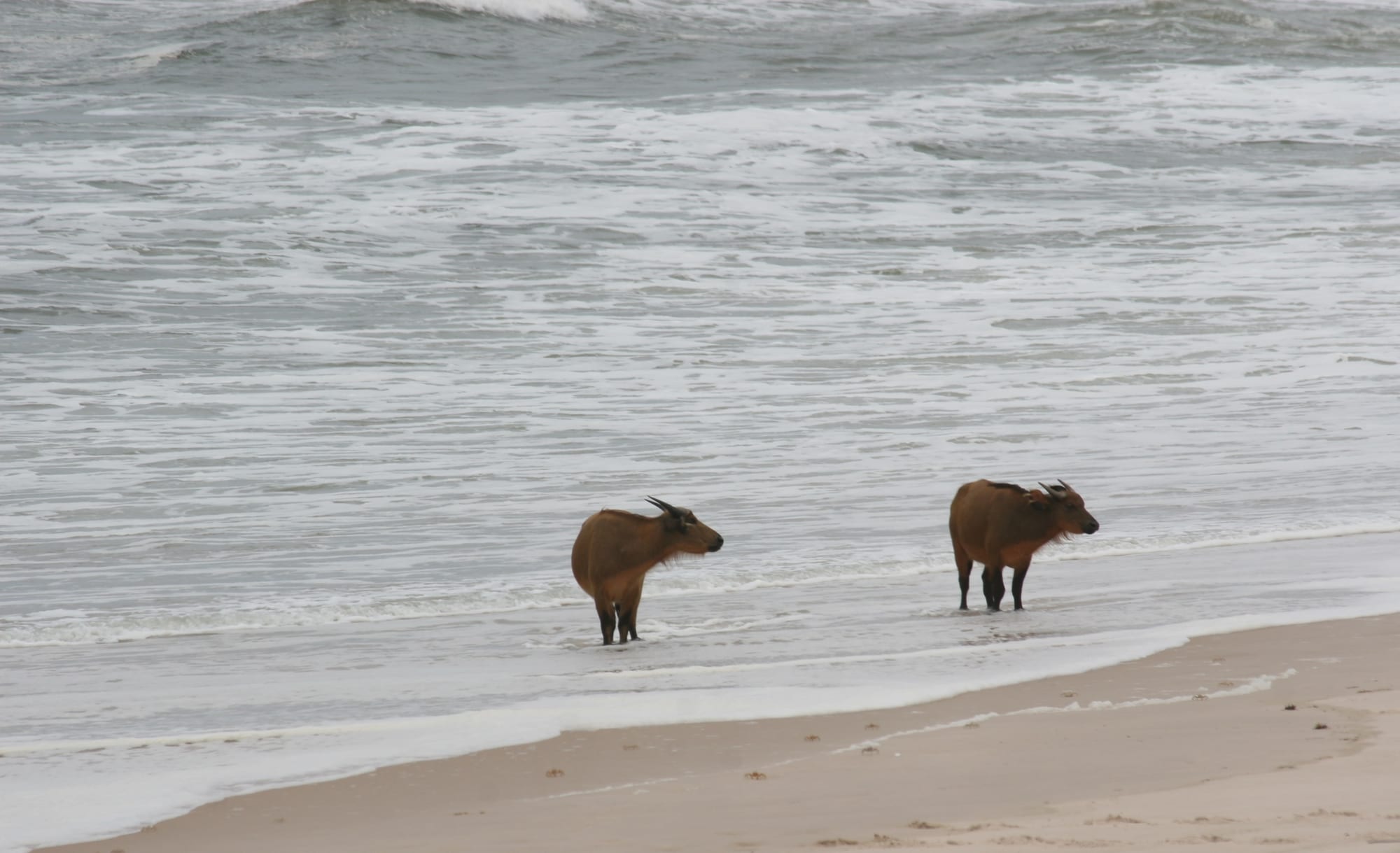
Gabon's hippos do not surf in any sporting sense. The name comes from photographs taken in Loango National Park, on Gabon's Atlantic coast, by the National Geographic photographer Michael "Nick" Nichols, which show hippos in the breaking waves of the ocean. One of them, Surfing Hippos, was later named by Time magazine among the most influential images of all time, and Nichols and the conservationist Mike Fay took to calling Loango the "land of surfing hippos".
The reason the animals are there at all is the place. A hippo needs water deep enough to sink into by day and grass to graze at night. Loango packs lagoons, savanna, forest, mangroves and an empty Atlantic beach into one stretch of coast, so the water nearest a hippo's grazing ground can be a lagoon or the sea itself. In the waves, as in a river, a hippo is not really swimming: it walks and bounces along the bottom. So "surfing" is a nickname, not a behaviour, and the better question is why these hippos use the ocean.
A coast where every habitat touches the sea
Loango National Park covers 1,550 square kilometres between the Nkomi and Ndogo lagoons, and it protects part of the 220-square-kilometre Iguéla Lagoon, the only significant example of a typical western African lagoon system protected within a national park. Its habitats run from open sea and seashore through coastal lagoons, mangroves and salt marsh to swamp forest, rainforest, savanna, rivers and papyrus swamp. More than 100 kilometres of its coastline are uninhabited, and very few villages lie inside the park.
That arrangement is what makes Loango famous. Elephants, buffalo, hippopotamuses, gorillas and leopards all venture out onto the beaches. The forest buffalo seen standing in the surf and the hippos in the waves are two versions of the same thing: large animals living on a shoreline that no road, town or fence separates from the ocean.
How a hippo really moves in water
The common hippopotamus is semiaquatic, and its needs are simple to state: it requires enough water to immerse itself in, close to grass. Hippos spend most of the day in water to stay cool and hydrated, and they prefer still water with gently sloping shores. They mostly live in fresh water but can also be found in estuaries, where rivers meet the sea.
Despite this life in water, it is debated whether hippos can swim at all. Their dense bones and low centre of gravity let them sink and move along the bottom, and they travel by walking or by pushing off the bottom in bounds, rarely entering deep water. An adult must surface to breathe at least every six minutes. On a gently shelving beach, where the waves break over shallow sand, those habits carry over: a hippo can stand, walk and bob in the surf much as it would in a river.
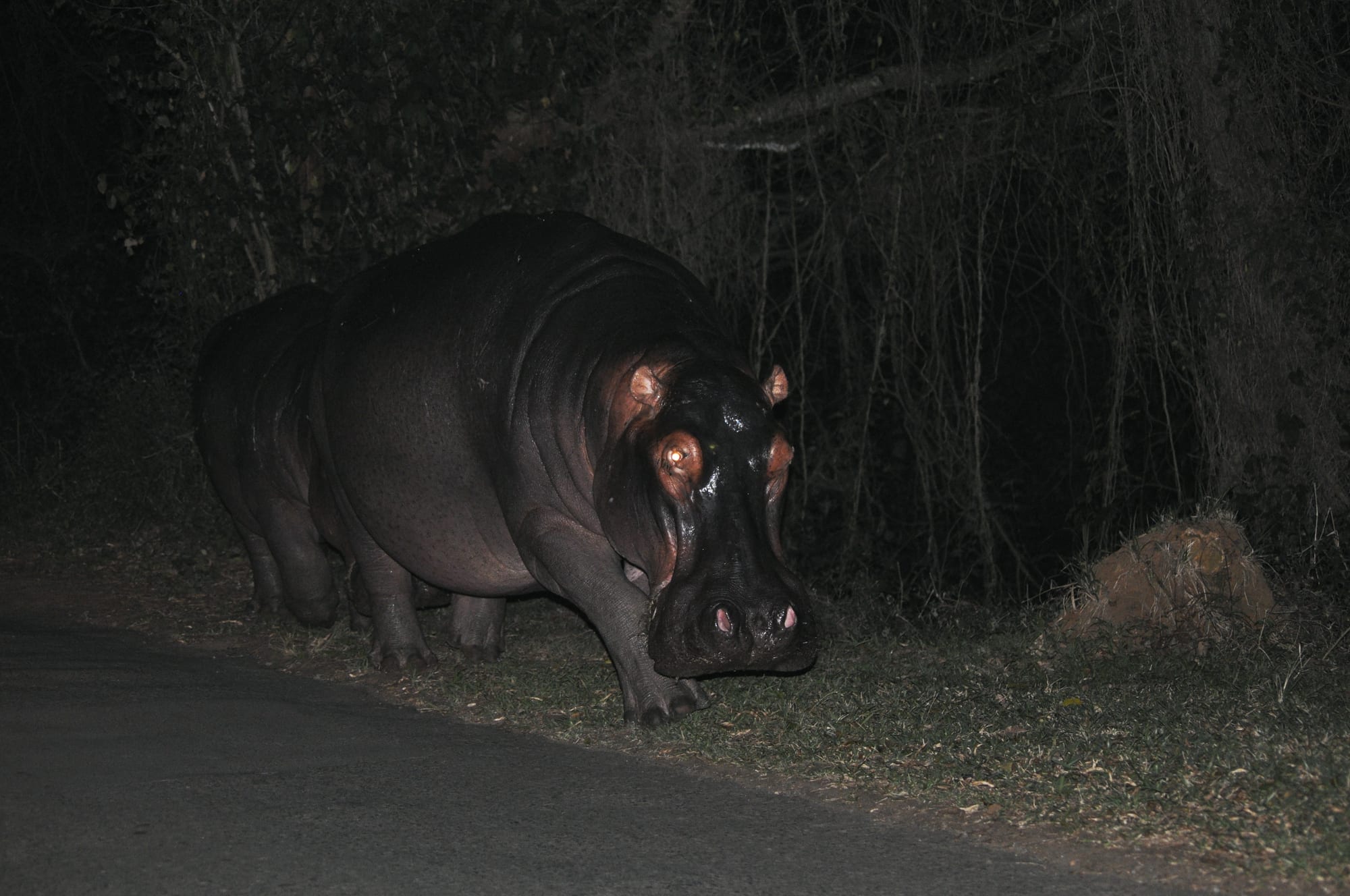
Hippos usually leave the water at dusk and graze alone, eating around 40 kilograms of grass in a night.
Grass by night, water by day
The daily routine explains why a hippo on this coast ends up on the beach. Just before nightfall, hippos leave the water to forage on land. A single hippo may travel 3 to 5 kilometres in a night, and because they use the same routes again and again, their heavy feet wear trails between the water and the grazing grounds, keeping them clear of vegetation.
Being out of the water too long is a real problem. Hippo skin is about 6 centimetres thick but nearly hairless, and although it secretes a red substance, sometimes called "blood sweat" though it is neither, that acts as a natural sunscreen and slows the growth of bacteria, it cannot stop the skin from cracking if the animal stays dry too long. On Loango's coast, where savanna grassland lies close to lagoons and the beach, the sea is simply another body of water within reach.
Gabon is not the only place where hippos meet salt water. On Orango, in the Bijagós Islands off Guinea-Bissau, hippos are known for living in salt water as well as fresh.
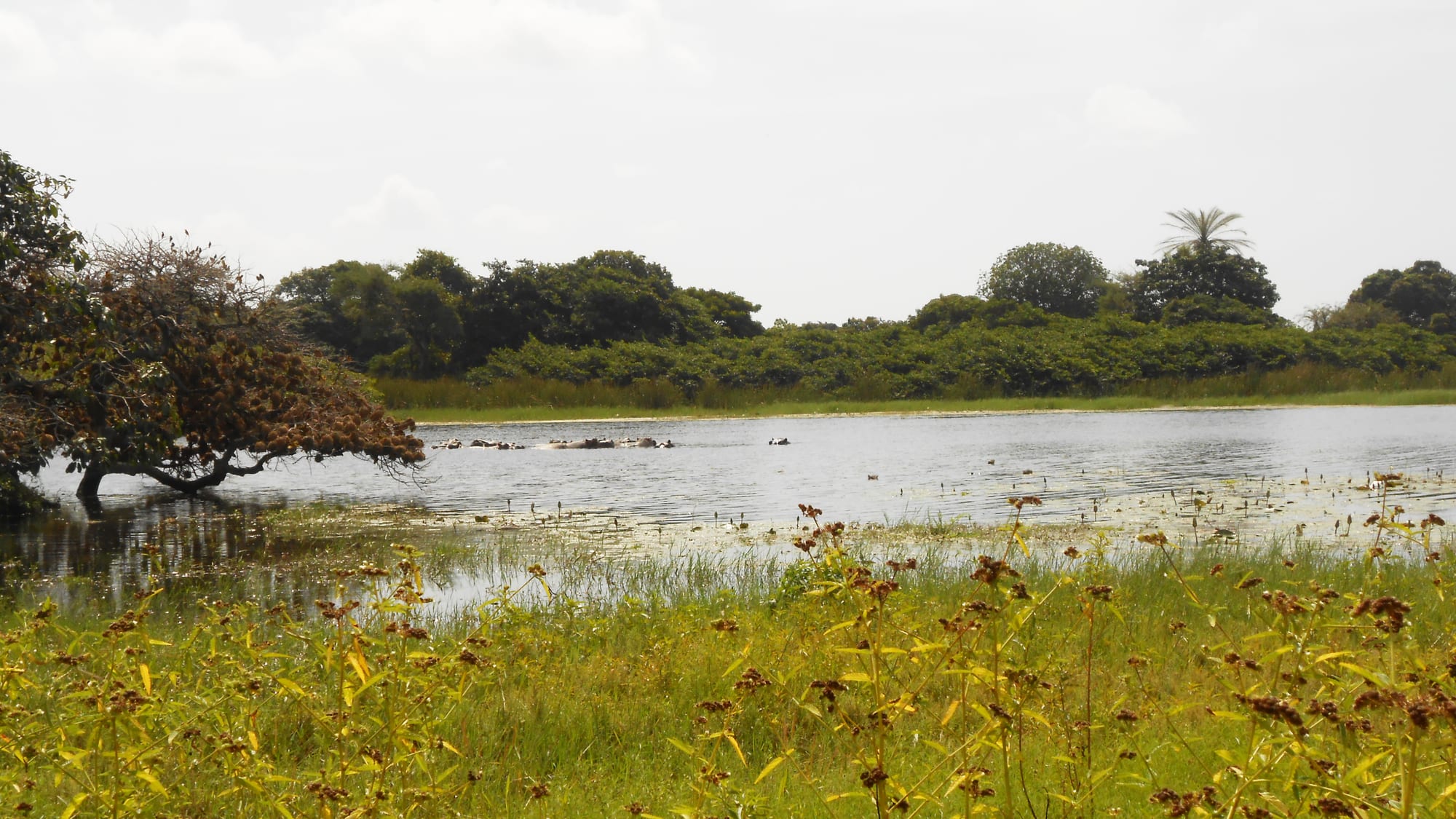
Hippos rest close together in the water by day, though grazing is a solitary business.
The walk that made a national park
The pictures that made the hippos famous belong to a larger story. The biologist J. Michael Fay spent 465 days on the MegaTransect, a walk of 2,000 miles (3,219 kilometres) across the Congo Basin to survey the condition of its forests and wildlife. Nichols met Fay in Central Africa and went on to visit 13 national parks in Gabon. Shortly after the walk, Fay lobbied alongside Gabon's president to create those parks, and in 2002 Gabon established Loango and 12 others, together covering about a tenth of the country. Fay called Loango "Africa's Last Eden".
Gabon lies on the equator, and 89.3 per cent of its land is forested. Off Loango's coast, humpback and killer whales swim past the same beaches where the hippos come down to the water.
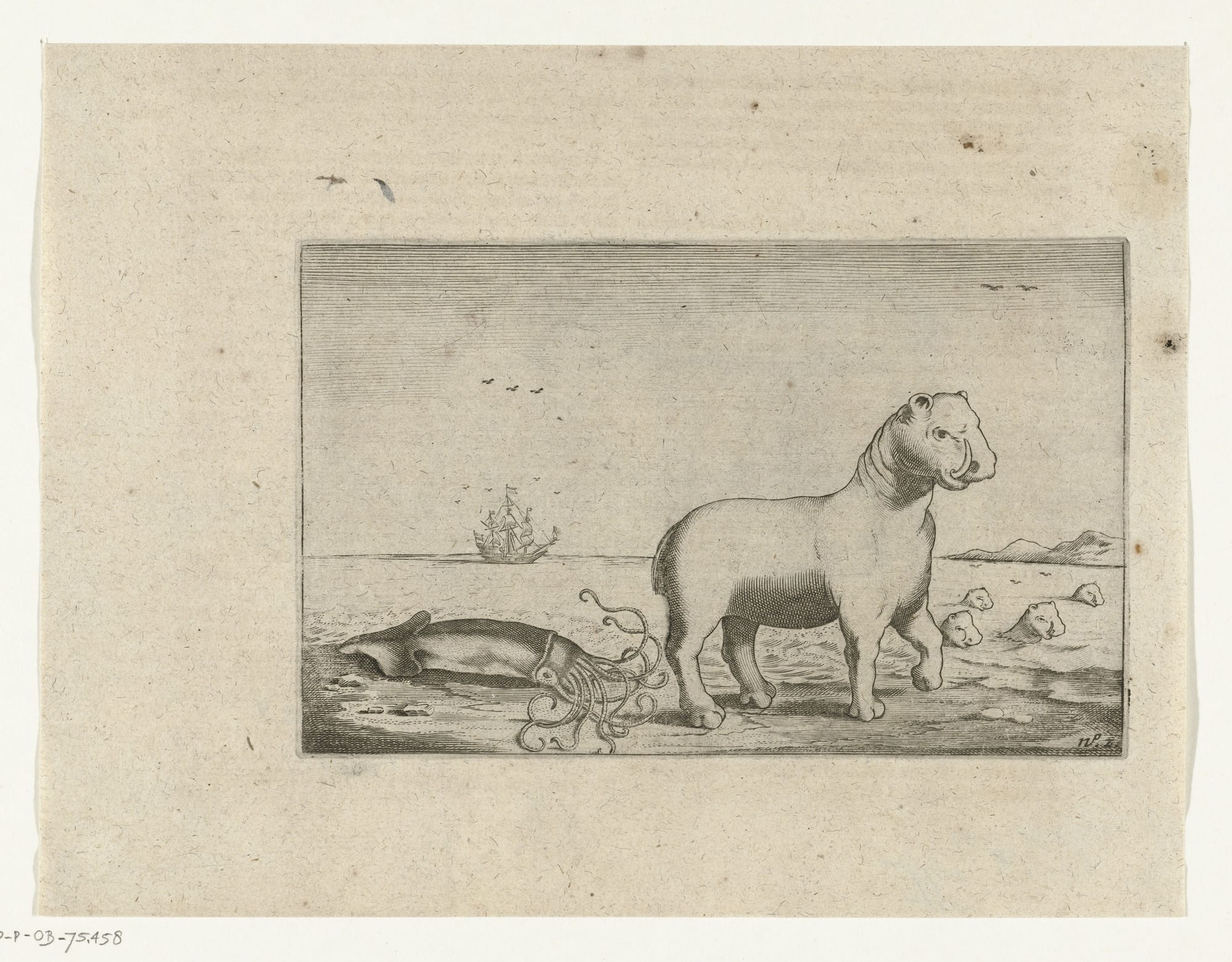
The Loango of the print was the coastal Kingdom of Loango, a state that covered parts of today's Republic of the Congo, southern Gabon and Cabinda.
Seeing Loango's beaches today
Visitors stay in lodges and eco-camps set in the forest, on the savanna and on the beach. The rains fall between October and April, with a short dry season in December and January. Beyond hippos, the park is home to forest elephants, red forest buffalo, red river hogs, slender-snouted crocodiles, sitatungas, western lowland gorillas and chimpanzees, and whales pass offshore in season. The sight of a hippo in the waves is never guaranteed; it depends on where the animals happen to be moving between lagoon, grass and sea.
Hippos are listed as vulnerable on the IUCN Red List, with an estimated 115,000 to 130,000 animals in 2017, and across Africa many are threatened by the loss of access to fresh water. A coast where they still roam freely between lagoon and ocean is increasingly rare.