Attractions & Natural Wonders · Bangladesh
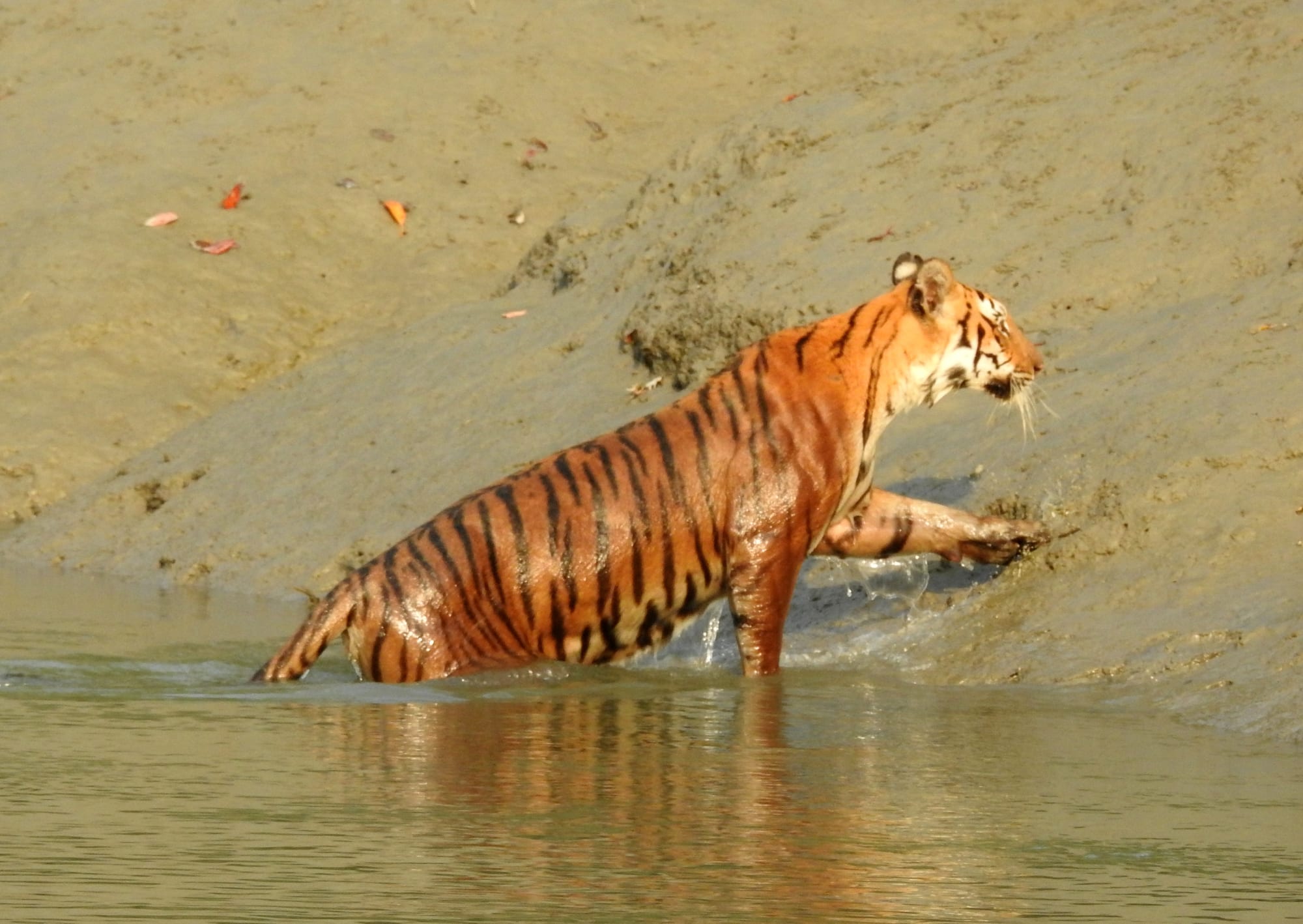
Why do the tigers of the Sundarbans swim between islands?
In the world's largest mangrove forest there is no unbroken ground to walk on, so a tiger that wants to eat has to cross the water.
By Globeway Editorial · 2 November 2026
The short answer
The Sundarbans is not a forest with rivers running through it so much as a scatter of muddy islands separated by water. It lies where the Ganges, Brahmaputra and Meghna rivers meet the Bay of Bengal, and a dense web of tidal channels cuts the land into a great many islands. There is no continuous stretch of dry ground for a tiger to patrol. To reach its prey or patrol its territory, a tiger has to cross water, and it does so often.
Tigers are also simply very good swimmers. Elsewhere in Asia they cool off in pools and cross rivers when they need to; in the Sundarbans that ordinary ability has become a way of life. The Bengal tigers of this delta, shared between Bangladesh and India, are the only tigers in the world that live in a mangrove forest, and swimming from island to island is how they make a living in it.
A forest that is half water
Spread across 10,277 square kilometres, the Sundarbans is the largest mangrove forest on Earth. About 6,017 square kilometres of it lie in Bangladesh's Khulna Division and the rest in the Indian state of West Bengal. Mangroves are trees that grow in salty or brackish water along tropical coasts, and here they stand on a constantly shifting delta of silt.
The tides shape everything. Two high tides and two low tides sweep through every 24 hours, and on the Indian side the difference between high and low water is 3 to 5 metres, reaching up to 8 metres in spring tides. The tides are so large that roughly a third of the land disappears under water and reappears every day. The same currents lay down silt that raises channel beds and builds brand-new islands and creeks, so the map is never quite finished.
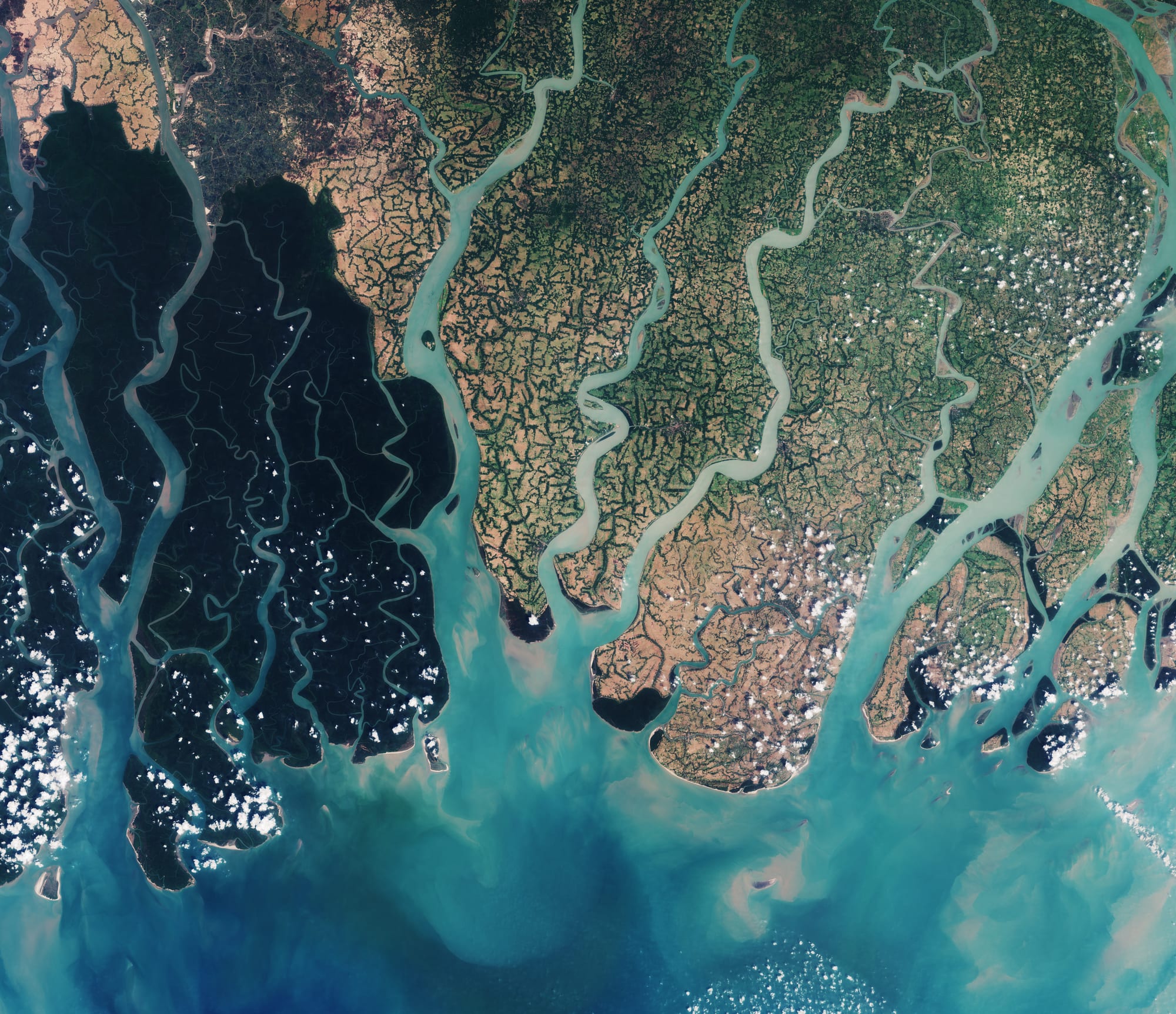
For a large land predator this is an unusual home. India's Sundarbans National Park, for instance, is made up of 54 small islands cut by distributaries of the Ganges, the channels into which a big river splits as it nears the sea. An animal that refused to swim would be stranded on a single island, however small, with whatever food happened to be on it.
Following thin and scattered prey
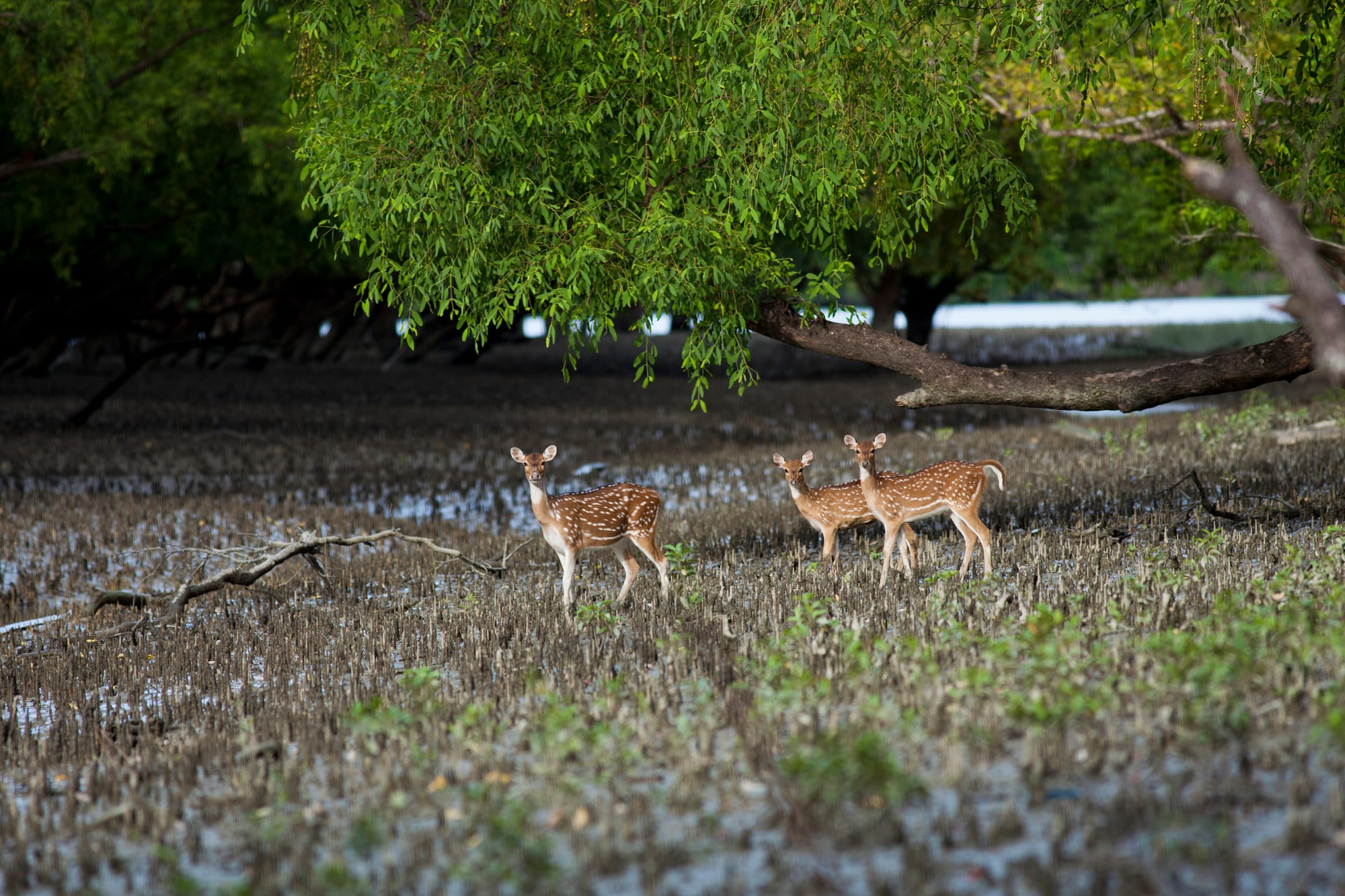
The main reason the tigers keep crossing is hunger. Prey in the Sundarbans is described as scarce. The tigers here hunt chital (spotted deer), Indian muntjac (barking deer), wild boar and rhesus macaques, and these animals are scattered across many separate islands. An estimated 30,000 spotted deer live in the area.
Examinations of what the tigers eat show how resourceful they have to be. Fish, crabs, an Asian water monitor, a king cobra and an Indian cobra have all turned up in the stomachs and droppings of Sundarbans tigers. Much of that menu lives in or beside the water, which keeps the tigers working along the channel edges and mudbanks.
The tigers themselves appear to have adapted. Those in the Bangladesh Sundarbans are the smallest Bengal tigers on record: adult females weigh around 75 to 80 kilograms (165 to 176 pounds). Their skulls and body weights differ from those of tigers in other habitats, and scientists think the small size probably reflects fierce competition between tigers and the small size of the prey available here. Two females fitted with tracking collars had home ranges of just 10.6 and 14.1 square kilometres, among the smallest recorded for any tiger. Even a small territory in this landscape, though, is laced with channels, so patrolling it means swimming.
Built for the water
Swimming comes naturally to tigers everywhere. The species is a powerful swimmer that can cross rivers as wide as 8 kilometres, and it likes to lie submerged in water on hot days. What sets the Sundarbans apart is how often the tigers must do it. The rivers and creeks that would be occasional obstacles elsewhere are, in the delta, simply the roads between one meal and the next.
That skill is part of why the tigers here are so feared. People who work in the forest, from fishermen to honey collectors and woodcutters, often travel in small boats, and even fishermen afloat have been attacked because the tigers swim so strongly; they are notorious for wrecking small wooden boats. Official records of the Bangladesh Forest Department attribute 1,396 human deaths to tiger attacks in the Sundarbans between 1935 and 2006. Between 35,000 and 140,000 workers move through the swamps and waterways, many collecting firewood and honey on the islands.
How many tigers still swim these channels
Estimates vary with the method. A 2015 census counted 106 tigers in the Bangladesh Sundarbans, and as of 2022 the Bangladesh population was put at around 125. On the Indian side, a 2022 survey by the National Tiger Conservation Authority photographed 100 individual tigers. Taken together, the delta holds one of the largest single tiger populations anywhere.
That population faces pressures from both land and sea. Habitat loss, the depletion of prey, poaching and conflict with people all threaten it. The forest is also becoming saltier as sea levels rise and less fresh water flows down the rivers, and the sundari tree, the species that probably gave the Sundarbans its name, is especially sensitive to salt. Cyclones add to the strain: Cyclone Sidr damaged around 40 per cent of the forest in 2007.
Seeing the Sundarbans today
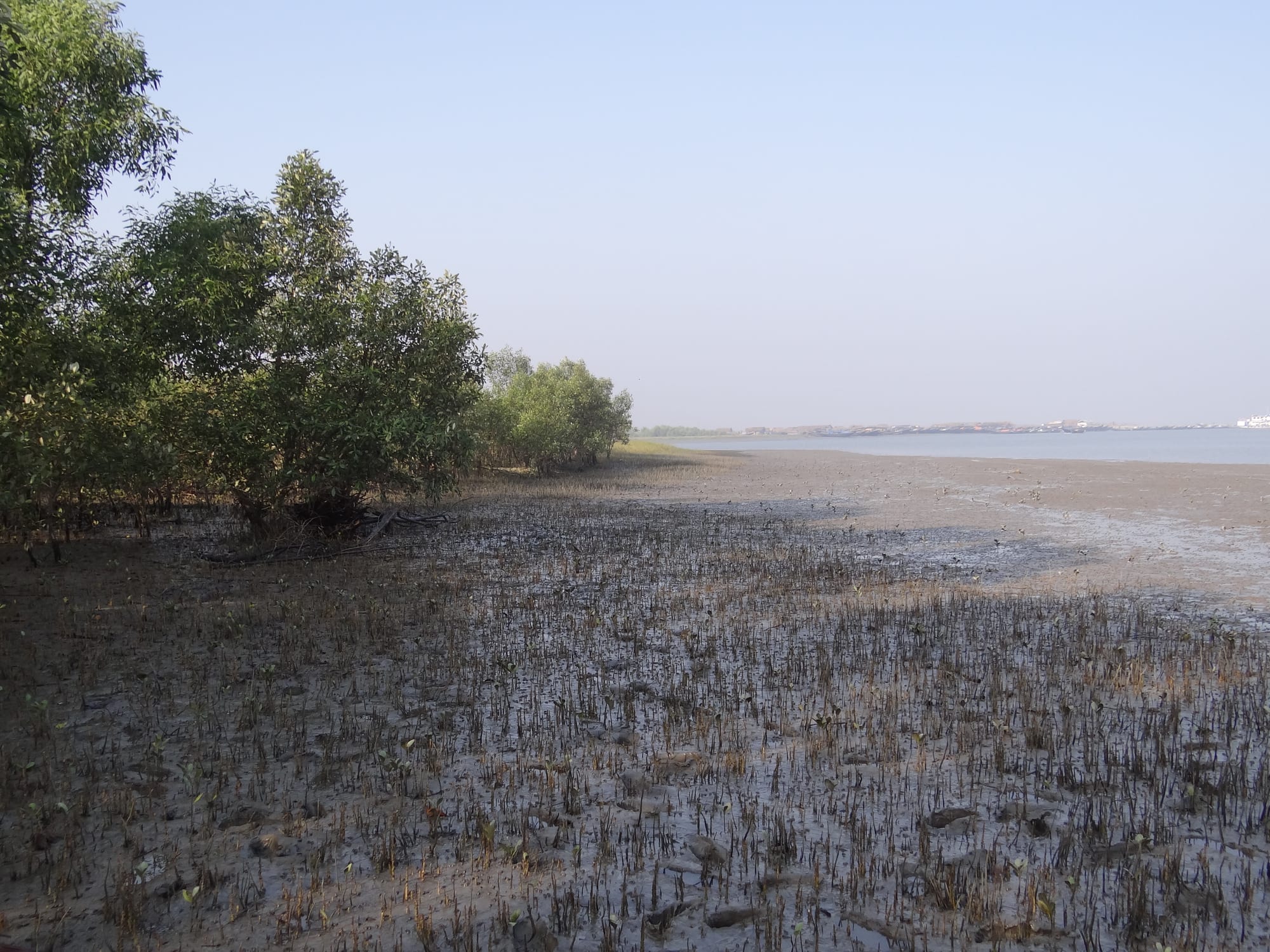
Most visitors explore the forest the way the tigers' human neighbours always have, by boat along the tidal channels. Four protected areas in the Sundarbans are UNESCO World Heritage Sites, including the Sundarbans West Wildlife Sanctuary in Bangladesh. Tigers are elusive here, and the forest's other inhabitants are easier to find: spotted deer at the forest edge, crocodiles, dolphins in the rivers, and the endless rows of pneumatophores, the pencil-like roots that grow upward out of the airless mud so the mangroves can breathe. For anyone hoping to see a tiger, timing matters: six radio-collared tigers in the Indian Sundarbans were most active from dawn into the early morning, peaking around seven o'clock.