History · Liberia
Why does Liberia's flag look like the American flag?
Liberia was founded by free Black Americans sent by an American society, and in 1847 its settlers stitched a Lone Star flag modelled on the one they had left.
By Globeway Editorial · 2 November 2026
The short answer
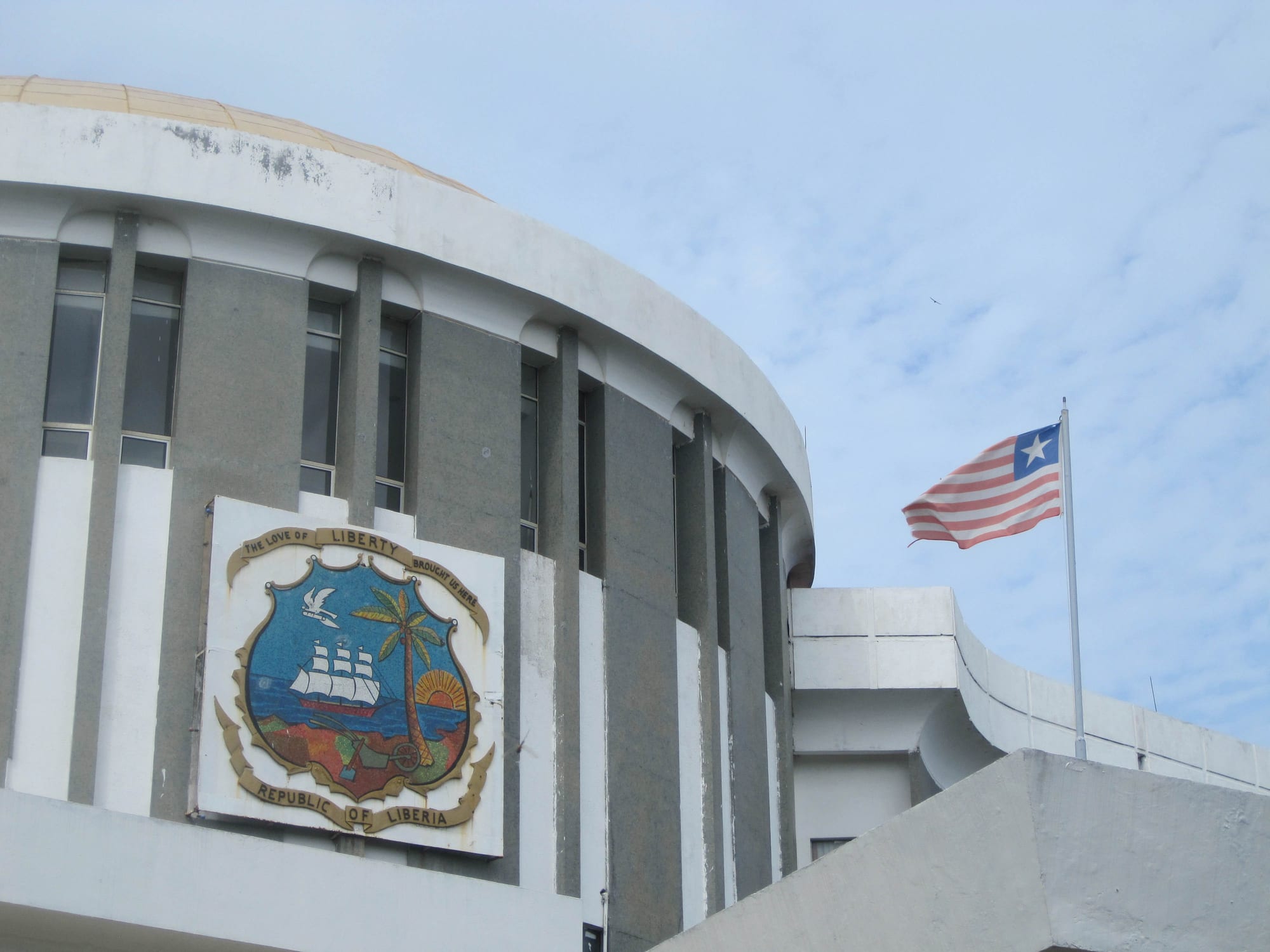
Liberia's flag looks like the American flag because Liberia was created by Americans. From 1822 the American Colonization Society, a private organisation in the United States, shipped free-born and formerly enslaved Black Americans to the West African coast to found a colony. When those settlers declared independence in 1847, a committee of seven American-born women in Monrovia sewed a new national flag modelled on the Stars and Stripes they had grown up with.
The design keeps the red and white stripes and the blue square in the corner, but has eleven stripes instead of thirteen and one large white star instead of many. It is sometimes called the Lone Star. The eleven stripes stand for the delegates who signed Liberia's Declaration of Independence, and the single star for the first independent republic in Africa.
A colony built from America
The American Colonization Society was founded in 1816 to move free Black people from the United States to Africa. Its supporters had mixed motives. Some believed that free Black people could never be integrated into American society; slave owners feared that free Black people might help enslaved people escape or rebel; and many white Americans simply wanted them gone. Most Black Americans and most abolitionists opposed the scheme, since their families had often lived in America for generations.
The society's first ship, the Elizabeth, left New York in February 1820 with 86 settlers. In January 1822 settlers landed on what is now Providence Island at the mouth of the Mesurado River, then went ashore at Cape Mesurado to found a settlement called Christopolis, renamed Monrovia in 1824 after President James Monroe, a supporter of the society. Between 1822 and 1861 more than 15,000 African Americans and 3,198 Afro-Caribbeans moved to Liberia. Tropical disease killed many of them: of the 4,571 emigrants who arrived between 1820 and 1843, only 1,819 survived.
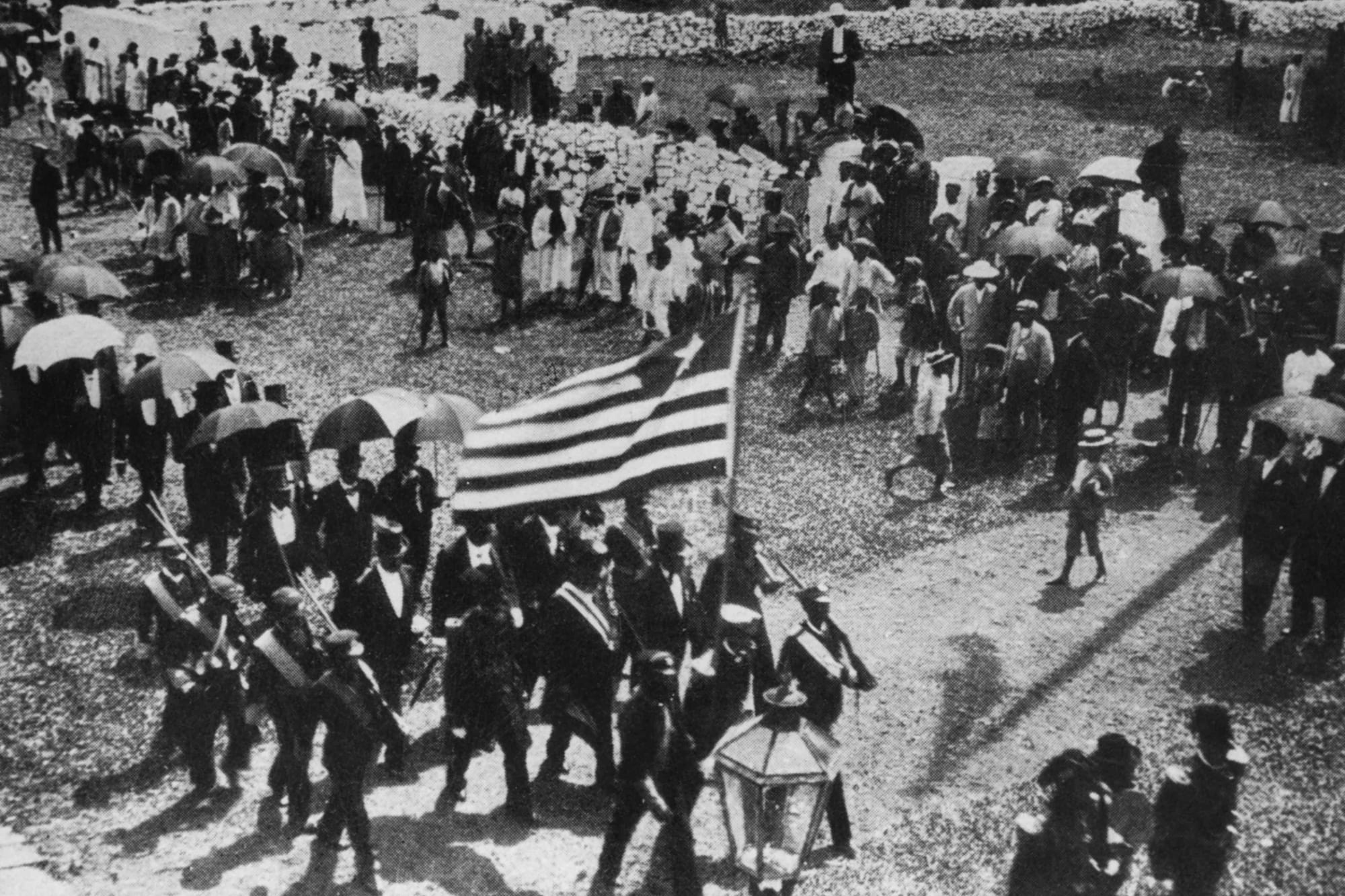
The settlers brought American habits, churches, laws and politics with them, and came to call themselves Americo-Liberians. Their first colonial flag, adopted in 1827, was simply the American flag with a white cross in place of the stars.
Seven women and a needle
By the 1840s the colony was ready to stand on its own. On 26 July 1847 eleven delegates gathered in the Providence Baptist Church in Monrovia and signed a Declaration of Independence from the American Colonization Society, creating the Republic of Liberia. Joseph Jenkins Roberts, born free in Norfolk, Virginia, became its first president.
A new country needed a new flag. On 10 July 1847, while preparing for independence, Roberts wrote to Susannah Elizabeth Lewis asking her to lead a committee to make one. She and six other women, all born in the United States, designed and hand-stitched it. It was raised in public for the first time at a celebration in Monrovia on 24 August 1847, about a month after independence, when Lewis gave a patriotic speech. That date is still Flag Day, a national holiday since 1915. In 2022 the women were honoured again, when a new 500-dollar Liberian banknote showed them at work on the flag.
The United States took its time in returning the compliment. It did not recognise Liberian independence until 5 February 1862.
What the stripes and star mean
The flag is described in a law of 1961: eleven alternating red and white stripes beginning and ending with red, and a square blue canton reaching down to the third red stripe, with a large five-pointed white star at its centre.
Its official meanings tie it to Liberia rather than the United States. The eleven stripes represent the signatories of the Declaration of Independence, whereas the thirteen American stripes stand for the original thirteen colonies. The red and white symbolise courage and moral excellence. The blue square represents the African continent, and the white star on it represents the first independent republic in Africa.
A flag for some Liberians
For most of Liberia's history, the American-style flag reflected who held power. The Americo-Liberians were a small minority, but they ran the country's politics, economy and society until 1980, while the indigenous peoples who made up the great majority largely lived separate lives with little say in government. Even the national motto, "The Love of Liberty Brought Us Here", describes the settlers' own journey.
In 1974 the legislature authorised a commission to re-examine the national symbols and remove divisive elements. President William Tolbert appointed 51 members, and in 1978 they suggested changing the motto to "Love, Liberty, Justice, Equality", but recommended no changes to the flag. In 1980 a coup brought Samuel Doe, Liberia's first indigenous leader, to power, ending Americo-Liberian rule and opening a period of upheaval that led to two civil wars, from 1989 to 1997 and from 1999 to 2003. The flag and the motto both survived it all unchanged.
The Lone Star around the world
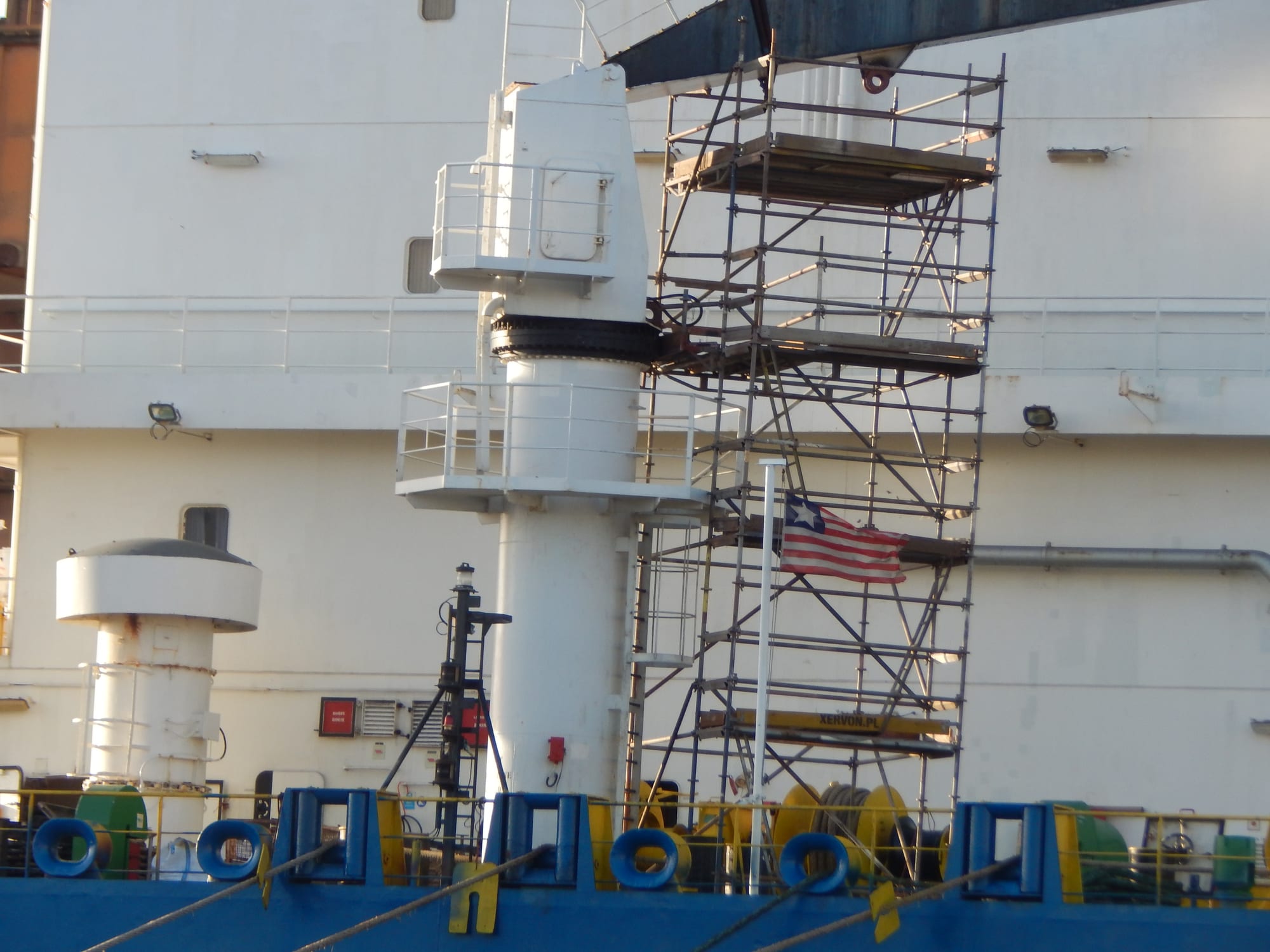
Today the flag is seen far beyond Liberia. Since 1948 Liberia has run an open ship register, which lets foreign-owned ships sail under its flag; Greek shipowner Stavros Niarchos registered the first, World Peace, in 1949. By 1968 Liberia had the world's largest register. Its register remains one of the two biggest in the world, alongside Panama's, thousands of foreign-owned ships fly the Lone Star, and as of 2025 the registries of Panama, Liberia and the Marshall Islands together accounted for about half the world fleet by deadweight tonnage.
In Monrovia, the flag flies over Capitol Hill, home to the Executive Mansion and the country's main government buildings, while Providence Island, where the first settlers landed, sits at the mouth of the Mesurado River.