Culture & Customs · Comoros
What does the Comoros have to do with the scent of Chanel No. 5?
Chanel No. 5 blends dozens of ingredients, but its main heart note, ylang-ylang, comes chiefly from the Comoros, the world's leading producer.
By Globeway Editorial · 2 November 2026
The short answer
Not all of it does. Chanel No. 5, launched in Paris in 1921, is a deliberately complex blend of more than 80 ingredients, built around synthetic aromas called aldehydes and natural oils such as jasmine and rose. But the main note at the heart of the perfume is ylang-ylang, an oil distilled from the flowers of a tropical tree, and the Comoros, an island nation in the Indian Ocean between Mozambique and Madagascar, is the world's largest producer of it. By one estimate some 80 per cent of the world's supply comes from there, most of it from the island of Anjouan.
So the Comoros supplies one of No. 5's defining ingredients, not the whole scent. The connection is a legacy of French colonial rule, when planters working for the perfume houses of France set up ylang-ylang plantations on French-held islands in the Indian Ocean. The crop stayed after independence in 1975, and it still links one of the world's poorest countries to one of its most famous luxury products.
A perfume that smells of no single flower
When Coco Chanel commissioned her first perfume from the French-Russian perfumer Ernest Beaux, she did not want it to smell of any one flower. At the time, respectable women favoured the essence of a single garden flower. Chanel asked instead for a perfume that was a composition, not a copy of any flower. Beaux presented her with numbered samples, and according to legend she chose number five. The perfume went on sale in her boutique on the rue Cambon on 5 May 1921.
Beaux's breakthrough was his use of aldehydes, synthetic compounds that act as boosters, lifting and brightening the natural oils beneath them. One of his students recalled that the aldehyde he used had a clean note of the Arctic. The story goes that a laboratory assistant, mistaking a full-strength mixture for a ten per cent dilution, added a dose of aldehyde larger than anyone had used before. Perfumers describe No. 5 in layers, or notes: aldehydes, neroli, lemon and bergamot at the top; ylang-ylang as the main heart note, with jasmine, May rose, iris and lily of the valley; and vetiver, sandalwood, musk, vanilla and cedar at the base.
Several of those natural ingredients come from France itself. During the Second World War, the perfume company's managers worked to keep its supply of jasmine and tuberose oils flowing from the fields of the Siagne valley above Grasse, the perfume town of the French Riviera.
From the Philippines to the Perfume Islands
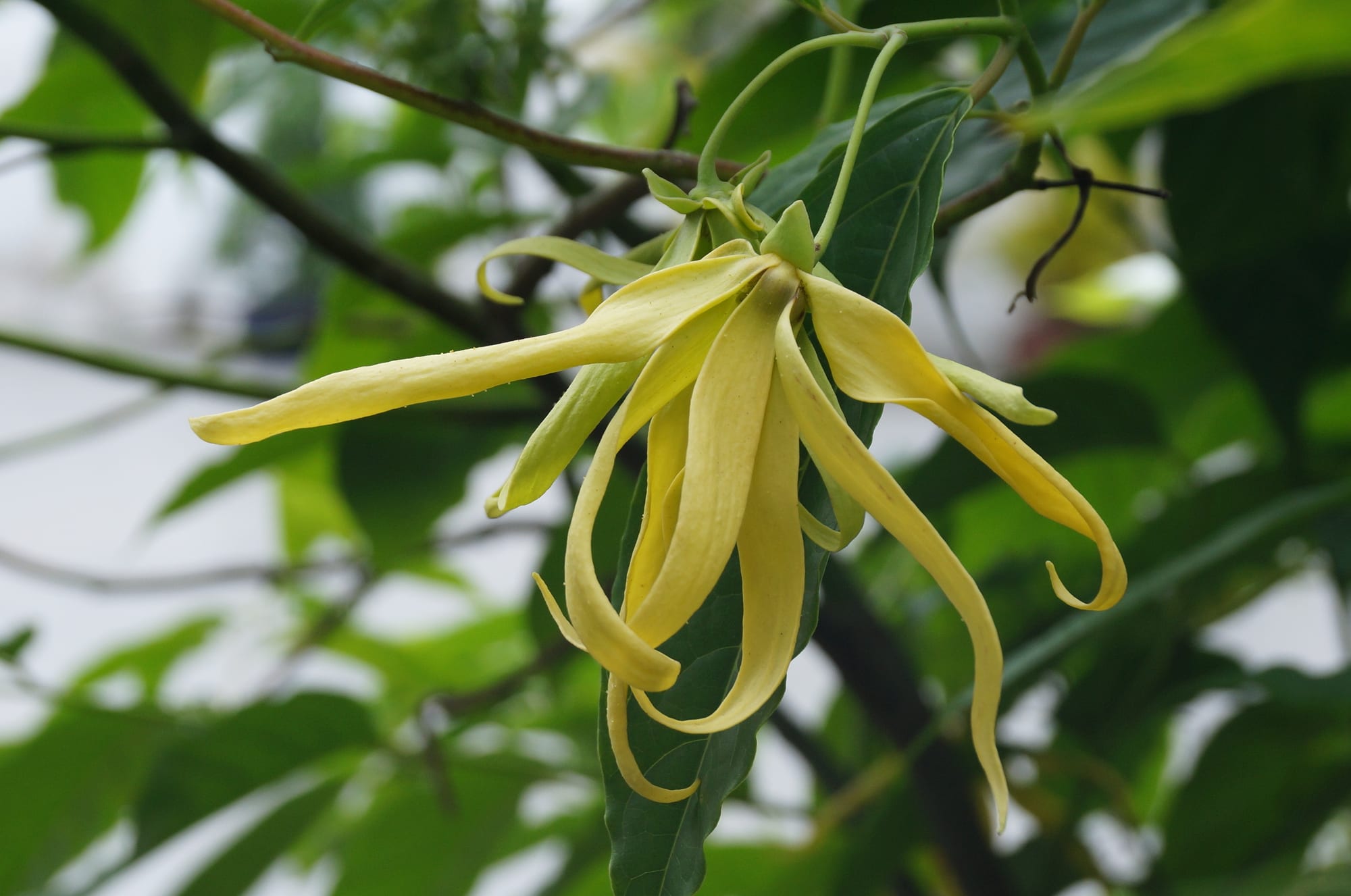
The ylang-ylang tree, Cananga odorata, is native to the humid tropics of Southeast Asia, and its name comes from Tagalog, the language of the Philippines. Its drooping flowers open white, turn greenish and then yellow, and give off a penetrating, spicy scent that recalls carnation, narcissus and jasmine. Distilling them began in Manila around 1860, reportedly when a sailor named Albert Schwenger travelled the countryside with a still.
French planters soon took up the crop in France's Indian Ocean possessions to supply French perfumers. Réunion had some 200,000 ylang-ylang trees in 1909, but frequent tropical cyclones led growers to give it up, and large-scale production moved to Nosy Be, off Madagascar, and to the Comoros, where the French introduced ylang-ylang alongside vanilla, cloves and other cash crops. The islands already had a fragrant reputation: Omani sailors were calling them the Perfume Islands as early as 933.
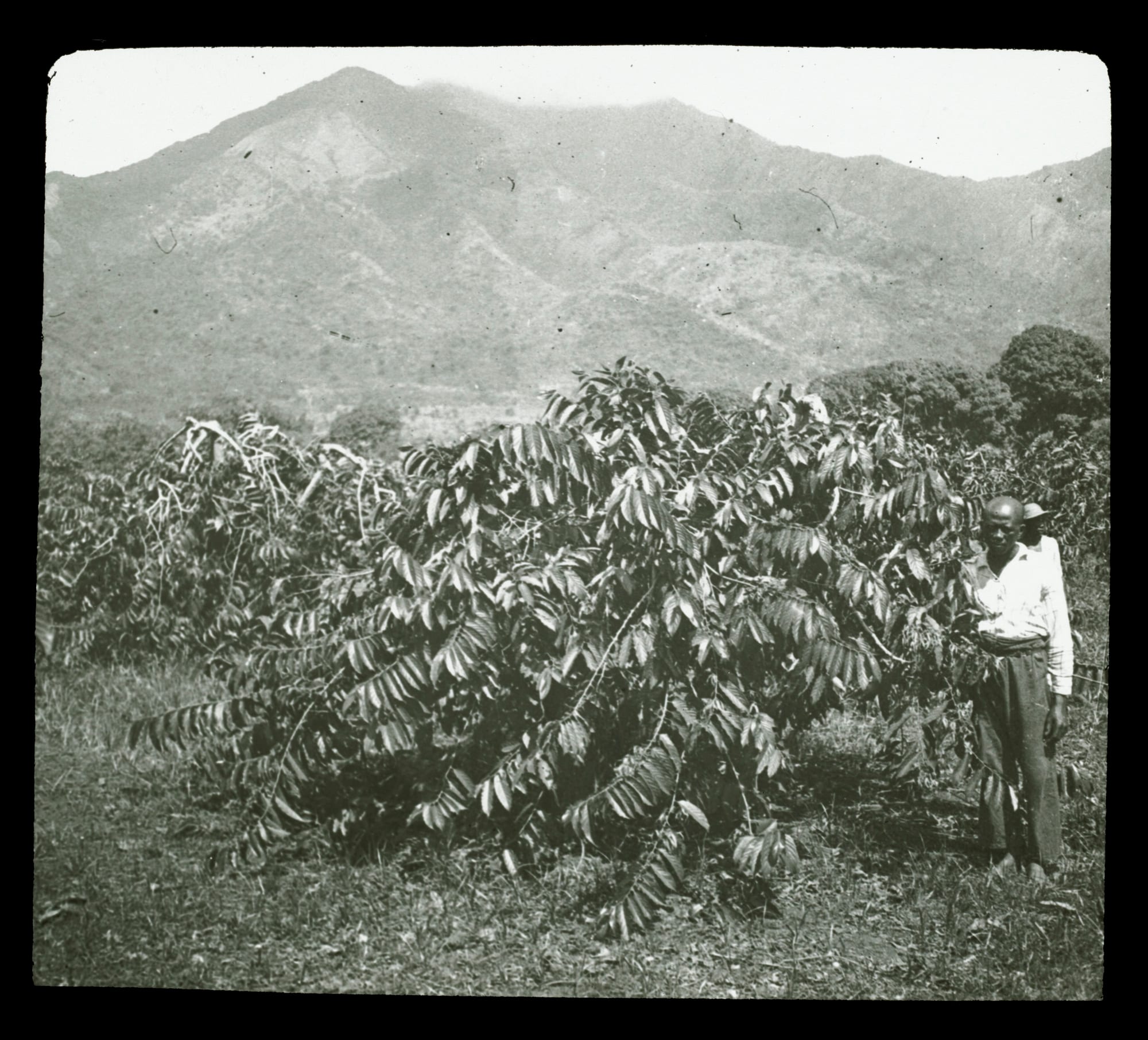
In the wild the tree can reach 25 to 30 metres, but on plantations it is pruned to 2 or 3 metres so that pickers can reach the flowers.
Ylang-ylang made its name in luxury perfumery in the following decades. Chanel used it prominently in Bois des Îles in 1926, and Jean Patou in Joy, created in 1929. It remains one of the most widely used natural fragrances in the perfume industry.
Twelve hours over a fire
Turning flowers into oil is slow work. Each tree yields 3 to 4 kilograms of flowers per harvest, and it takes about 100 kilograms of fresh flowers to make 2 kilograms of essence. The flowers are distilled with water in stills for 12 to 20 hours, with fresh flowers added as the work goes on, and the oil is collected in fractions. The first, finest fractions, drawn off in the first two hours, are graded Extra Supérieure, Extra and Première and go to luxury perfumers; the later grades, Deuxième and Troisième, go into cosmetics, soaps and detergents.
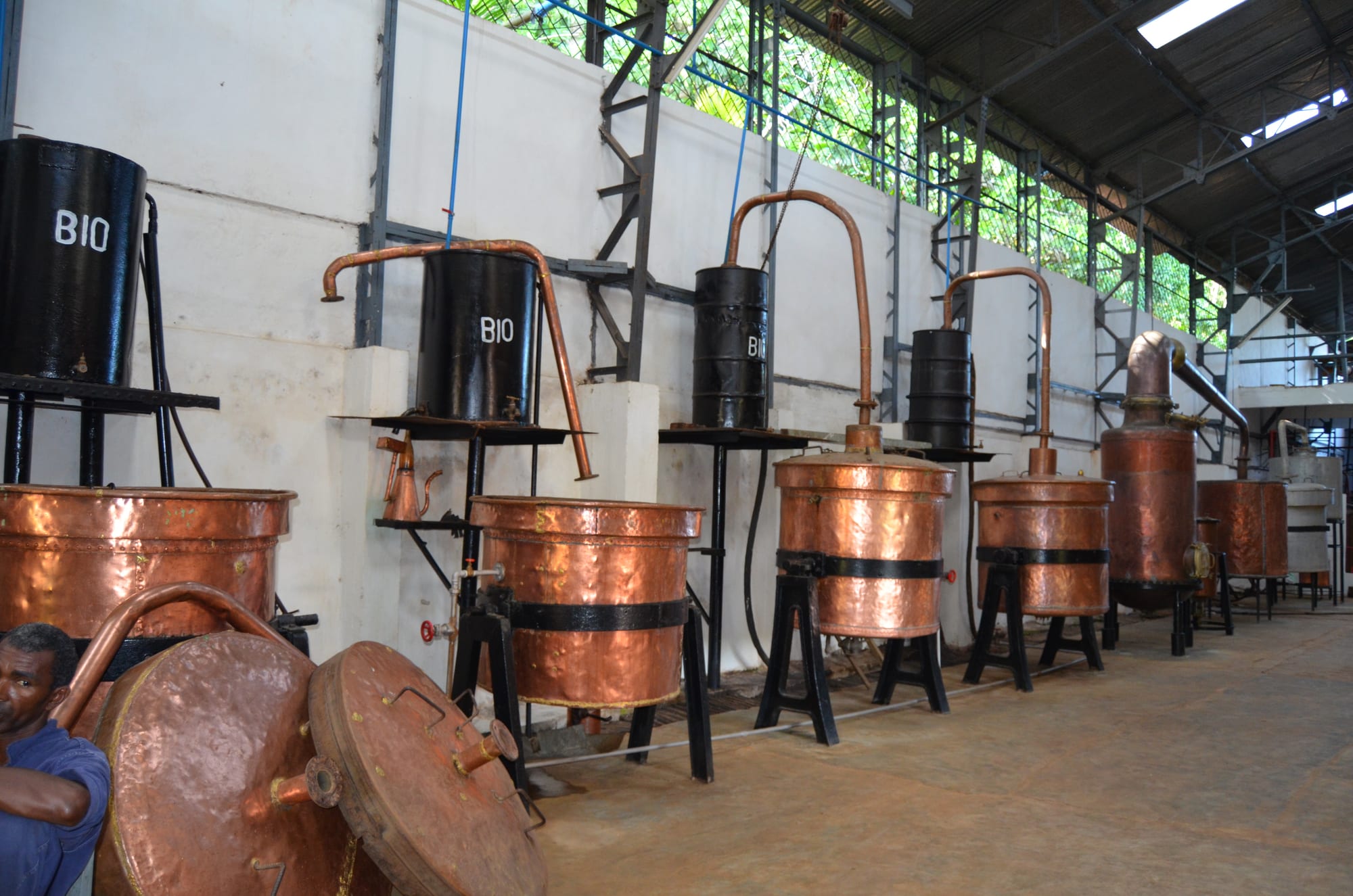
The oil is a yellow liquid; about a third of it is methyl benzoate, the same strong-smelling compound found in carnation oil.
The scale of the Comoros' lead is clear from estimates for 2006: 50 to 70 tonnes of essence a year, against 15 to 20 tonnes from Madagascar and about 7 tonnes from Mayotte, the neighbouring island that France administers and the Comoros claims. The Comoros' position was strengthened when Mayotte became a French department in 2011: as French labour law took effect there, producers including the perfume house Guerlain moved their ylang-ylang growing to Anjouan and Madagascar, where labour is cheaper.
What the trade means for the islands
For a small country, the flower matters a great deal. The Comoros covers just 1,659 square kilometres and is among the world's poorest nations, with an economy based on subsistence farming and fishing and heavily dependent on money sent home by Comorians abroad. In 1998 ylang-ylang oil made up 29 per cent of the country's exports. Cloves have since overtaken it, accounting for 64.9 per cent of exports in 2023, and ylang-ylang, vanilla and cloves together leave the islands exposed to swings in world prices.
The trade also has an environmental cost. Much of the Comoros' once-extensive rainforest has been cut down, and the distilling of ylang-ylang is one of the causes of lost forest cover. The government subsidises kerosene to reduce tree-cutting for fuel, and efforts are under way to replace forest lost to ylang-ylang distillation.
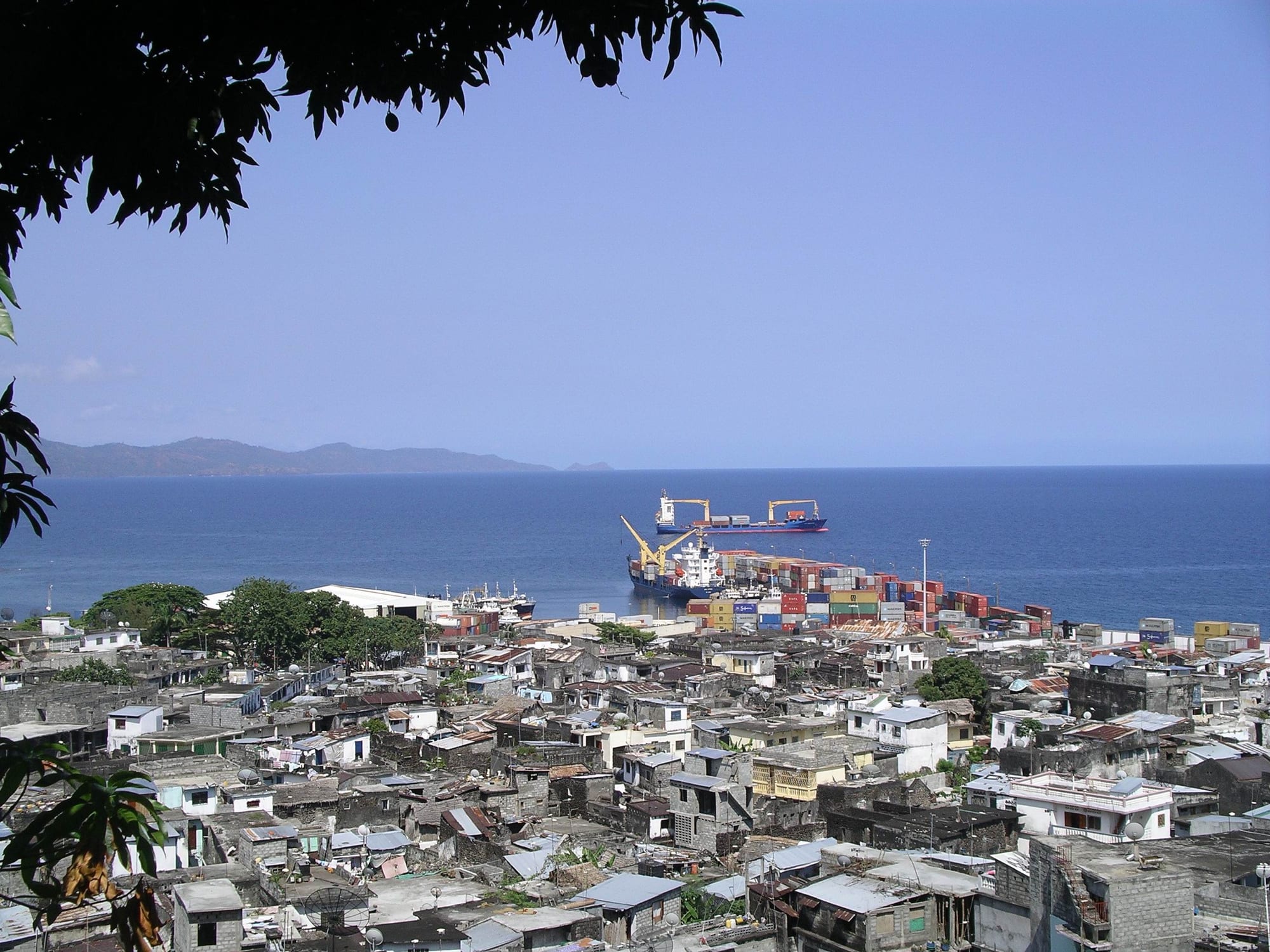
The only port in the Comoros that can take large cargo ships is on Anjouan.
On Anjouan, many families farm ylang-ylang alongside vanilla and cloves, and the Sima area is known for its many perfume-plant farms. A bottle of No. 5 on a department-store counter carries no hint of those hillsides, yet its heart note began as flowers picked by hand on a volcanic island off the coast of Africa.