Attractions & Natural Wonders · Trinidad and Tobago
Why does Trinidad have a lake made of asphalt?
Oil forced up along deep faults reaches the surface at La Brea, where the tropical sun and bacteria turn it into a thick lake of pitch.
By Globeway Editorial · 2 November 2026
The short answer
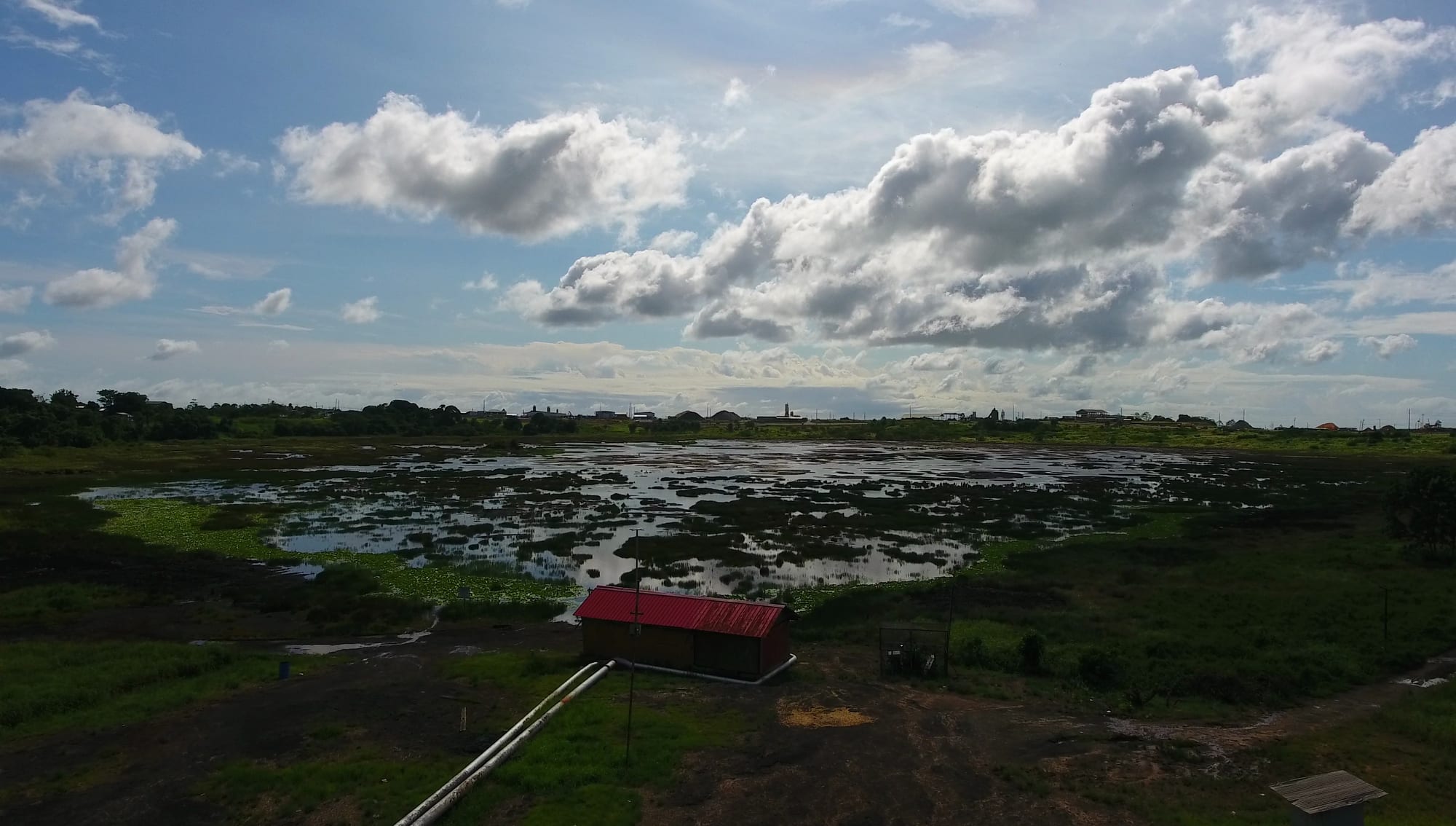
Trinidad has a lake of asphalt because it sits on top of oil, and at one spot that oil leaks all the way to the surface. The Pitch Lake, at La Brea in the south-west of the island, is believed to lie where two faults, deep cracks in the Earth's crust, cross. Those faults give oil from a deep reservoir a path upwards, and it is forced to the surface. There, the lighter parts of the oil evaporate in the hot tropical sun, leaving behind the heavy, tarry part: asphalt, also called bitumen or pitch.
The result is the largest natural deposit of bitumen in the world, estimated at 10 million tons. The lake covers about 40 hectares (100 acres) and is reported to be about 76 metres (250 feet) deep. It is firm enough for guided visitors to walk across, yet soft enough in places that a person standing still will slowly sink, and it has been dug for asphalt for well over a century.
Oil on the move beneath southern Trinidad
Southern Trinidad lies in a geologically restless corner of the Caribbean. The origin of the Pitch Lake is linked to deep faults connected with subduction, the process in which one of the Earth's plates slides beneath another, here under the Caribbean Plate. The region is marked by a line of ridges, folded rock layers and mud volcanoes, where gas-charged mud and shale squeeze up through the ground. The Pitch Lake is a different kind of the same phenomenon, in which gas and oil push up through asphalt mixed with clay.
Asphalt lakes are the largest examples of natural oil seeps. Oil is lighter than the groundwater around it, so it tends to migrate upwards. Usually it is trapped in rock layers deep underground. Where a path reaches the surface, as it does at La Brea, the oil keeps coming.
That buried oil made southern Trinidad an oil province. The first wells were drilled into the lake's oil seeps in 1866, and the first commercial well was drilled at the west end of the lake in 1903. Further oilfields followed, among them Forest Reserve in 1914 and Penal in 1941.
How oil turns into pitch
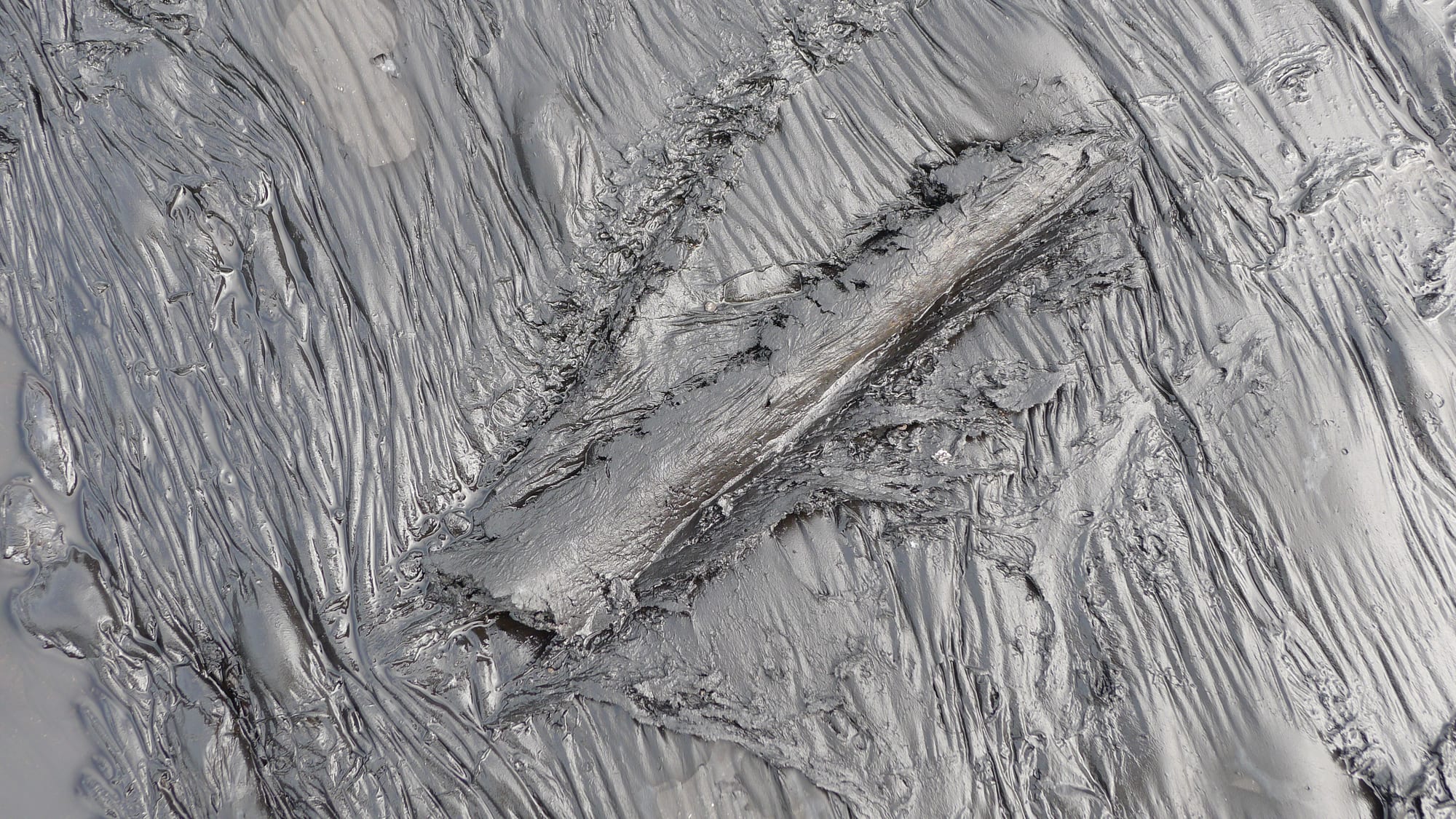
Crude oil is not asphalt. Two processes change it near the surface. The first is evaporation: the light, volatile parts of the oil escape into the hot air, leaving the heavy residue behind. The second is the work of microbes. Oil-eating bacteria thrive close to the surface, where it is cool enough for them and the oil meets fresh rainwater, and their feeding turns the oil tarry.
The lake is, surprisingly, full of life. Researchers have found active communities of bacteria and archaea, another group of single-celled microbes, living as extremophiles, at densities of millions of cells per gram of asphalt. Some are new species, and novel fungi have been found that can live on asphalt as their only source of food and energy. Their activity releases gas, mainly methane with a considerable share of carbon dioxide and some hydrogen sulphide.
A legend, a famous visitor and the roads of New York
The Amerindian people who lived around the lake had their own explanation for it. According to a story told locally, the people were celebrating a victory over a rival tribe and, carried away, cooked and ate the sacred hummingbird, which they believed held the souls of their ancestors. Their winged god punished them by opening the earth and calling up the pitch lake to swallow the whole village. Local villagers point to the Amerindian artefacts and a skull that have been found preserved in the pitch.
The same people told Sir Walter Raleigh where to find the lake when he reached Trinidad in 1595, on his expedition in search of the legendary "City of Gold". Raleigh used the pitch at once to caulk, or waterproof, his ship, and praised it as better than the pitch of Norway because it did not melt in the sun.
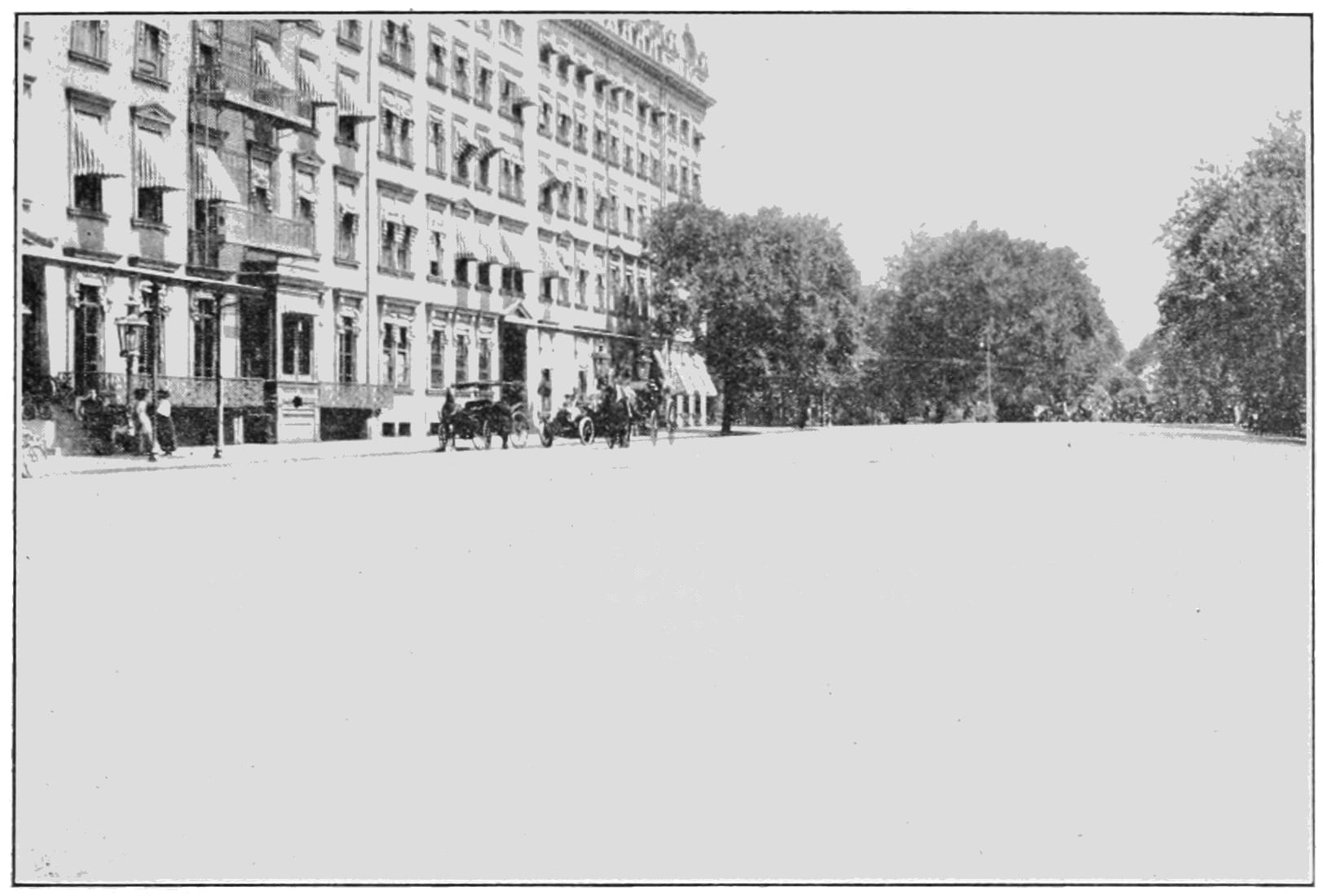
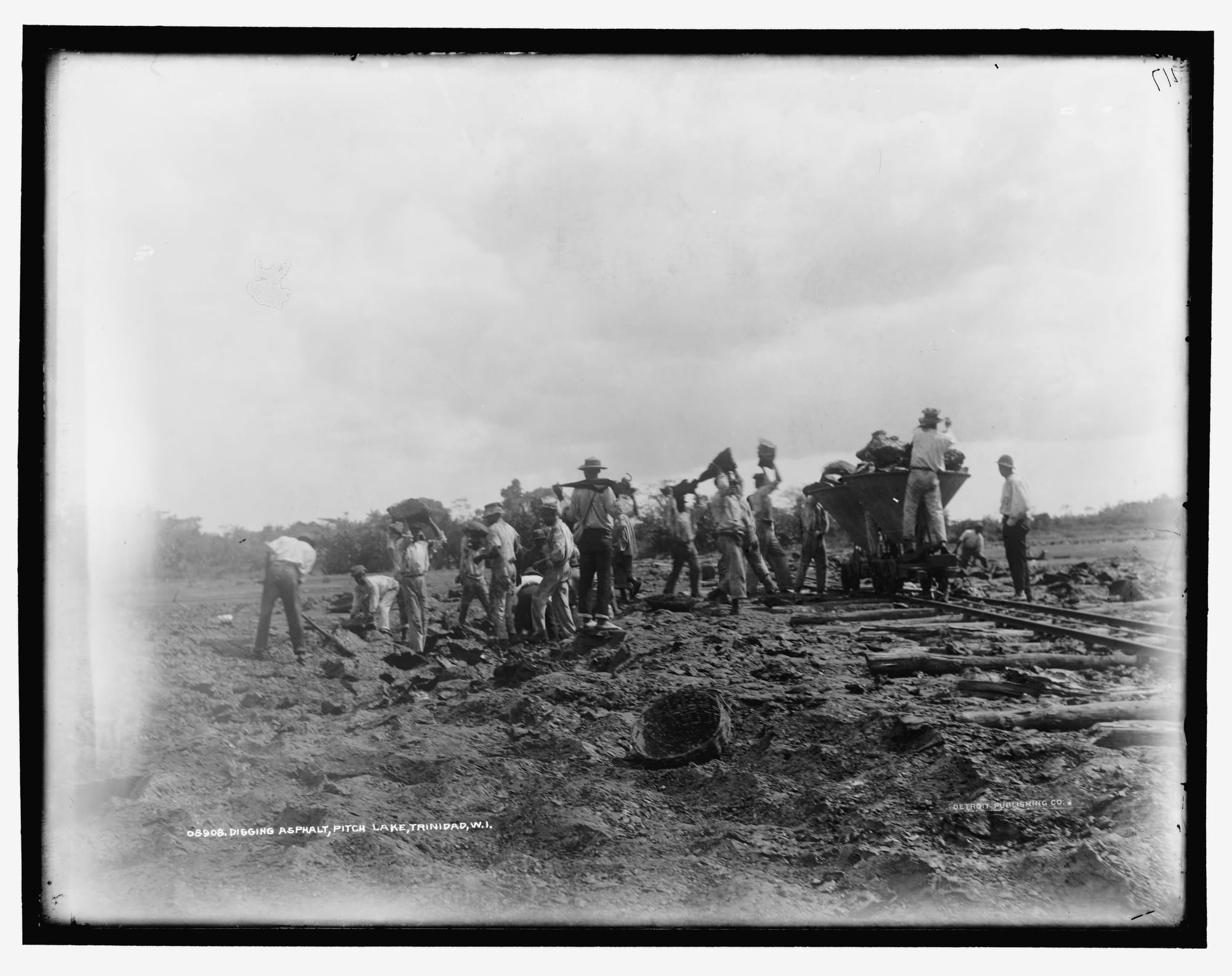
Industrial use came in the 19th century. A business founded in 1851 by the tenth Earl of Dundonald patented the use of asphalt from the lake, and in the late 1880s the American businessman Amzi Barber, known as "The Asphalt King", won a long monopoly concession from the British government. Asphalt from the Pitch Lake paved many of the first asphalt roads of New York City, Washington DC and other cities of the eastern United States.
Walking on the Pitch Lake today
The lake is still mined. The Government of Trinidad and Tobago took over the asphalt business in 1978, and today Lake Asphalt of Trinidad and Tobago, based in La Brea, sells Trinidad lake asphalt around the world as an additive that improves refinery bitumen. It is the town's largest industry. La Brea itself takes its name from the lake: in Spanish it means "the tar" or "the pitch".
The Pitch Lake is also a popular attraction, with a small museum from which official guides lead visitors across the surface. The lake lies in a dip in the landscape, a grey expanse of asphalt with reeds and pools. In places a stick pushed into the surface comes out coated in liquid tar. In the rainy season, from May to December, the pools fill with water that turns sulphurous from the gases rising through the asphalt, and mosquitoes breed in them; the dry season runs from January to May.