Attractions & Natural Wonders · Ukraine
Why do wolves and wild horses now thrive in the Chernobyl zone?
Wolves multiplied once people left, while the wild horses were released on purpose in 1998; for large animals, the absence of humans outweighs the radiation.
By Globeway Editorial · 2 November 2026
The short answer
The wolves did not so much move in as boom. Grey wolves were already native to the forests and marshes around Chernobyl, but after the 1986 nuclear disaster emptied the land of people, their numbers, along with those of boar, deer, moose and beavers, multiplied enormously. With no hunting, farming or traffic, the zone has become one of Europe's largest nature reserves in all but name.
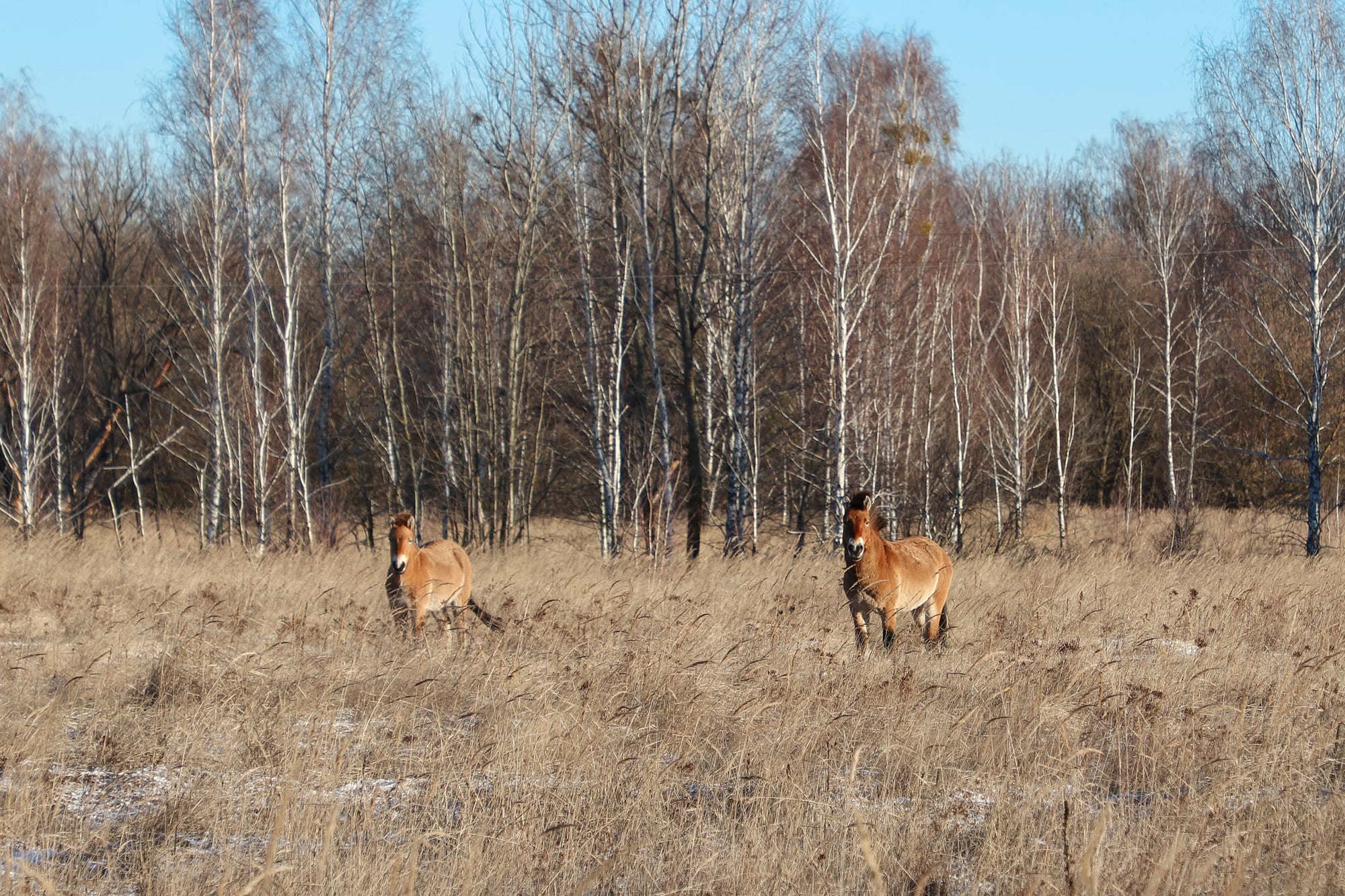
The wild horses are a different story: they were put there. From 1998, 31 Przewalski's horses, a rare wild horse from the steppes of Central Asia, were released into the empty zone, and despite poachers their numbers had grown to more than 100 by 2019. For large animals, it turns out, the absence of humans has mattered more than the radiation they left behind, although scientists still argue about the hidden damage.
A landscape emptied of people
On 2 May 1986, days after reactor 4 at the Chernobyl Nuclear Power Plant exploded, a Soviet government commission drew a circle with a radius of 30 kilometres around it and ordered it evacuated. The borders have changed since, but around 2,600 square kilometres of northern Ukraine, where contamination is highest, remain closed to normal life. About 91,200 people were eventually moved out of the zones around the plant, and the town of Pripyat and dozens of villages were abandoned.
The first effects on nature were brutal. A cloud of radioactive dust killed about 400 hectares of pine trees next to the plant, and their rust-coloured needles gave the place its name, the Red Forest. Radiation also killed soil invertebrates and mammals, and reduced how many young both plants and animals produced.
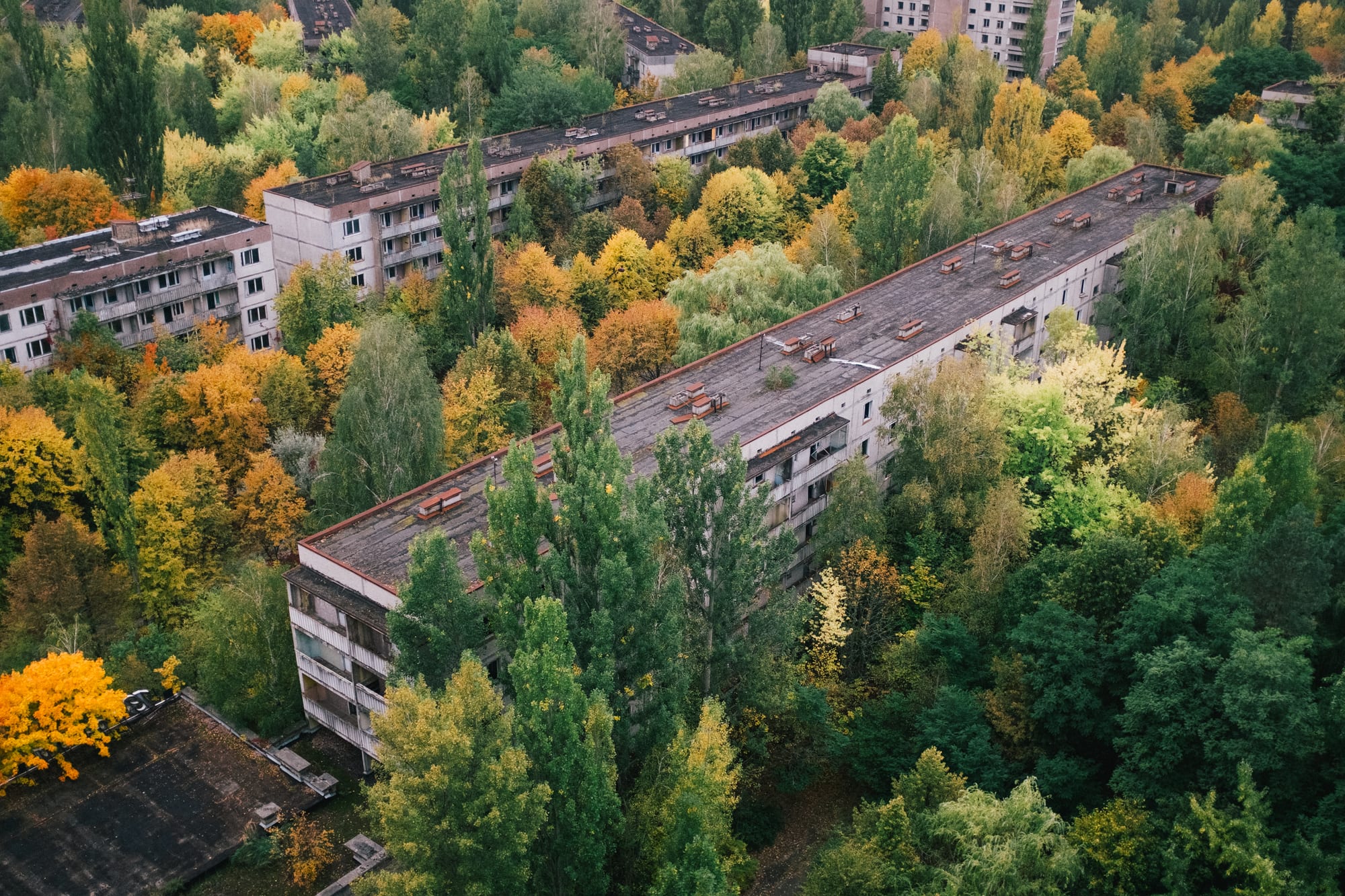
Yet the land recovered quickly. A young forest has grown where the Red Forest stood, and trees have spread through the abandoned towns. Only about 200 people live inside the zone: 197 elderly returnees, known as samosely, at the last estimate, and around 3,000 workers who come in on shifts but do not live there. Across most of the zone, for most of the time, there is no one.
Why the wolves flourished
For a large animal, people are usually the biggest danger: hunters, cars, farms that replace forest, and the steady disturbance of daily life. Remove them and the effect can outweigh even a nuclear accident. Wild boar multiplied eightfold between 1986 and 1988. The traditional animals of Polesia, the historical region that spans the border between Ukraine and Belarus, including grey wolves, badgers, roe and red deer, moose, beavers, white-tailed eagles and black storks, have multiplied enormously and begun spreading beyond the zone. Long-term data published in 2015 found no evidence that radiation was holding down the numbers of mammals.
Wolves sit at the top of this food web. Researchers including Marina Shkvyria of the National Academy of Sciences of Ukraine, Sergey Gaschak of the Chernobyl Centre and Jim Beasley of the University of Georgia have tracked them with camera traps. Strikingly, the wolves are concentrated in the higher-radiation areas near the centre of the zone, which makes them useful for studying how radiation, health and population numbers interact.
The recovery runs across the border. The Belarusian side of the contaminated area is protected as the Polesie State Radioecological Reserve, home to European bison, elk, golden eagles and white-tailed eagles. In 2016 Ukraine declared its part of the zone the Chernobyl Radiation and Environmental Biosphere Reserve.
The horses that came from Central Asia
Przewalski's horse is a short, sturdy wild horse originally native to the steppes of Central Asia. It came close to vanishing. The last one seen in its native habitat was a single stallion in 1969, and the species was classed as extinct in the wild for more than 30 years, surviving only in zoos and breeding centres. The largest captive herd was built up at the Askania-Nova reserve in southern Ukraine, which has been under Russian occupation since 2022.
These horses are not native to Chernobyl; the wild horse that once roamed Ukraine's forests and steppes was the tarpan, which is extinct. But the empty zone offered something rare: a large, unfenced area with almost no people. From 1998, 31 horses were released there, spreading across both the Ukrainian and Belarusian sides. In the zone they graze mainly on grasses and wildflowers.
Their main enemy has not been radiation but people. Numbers reportedly fell after 2005 because of poaching, and special game warden units now protect the zone's large animals. Even so, the herd had grown to an estimated 100 or more by 2019.
What the radiation still does
None of this means the radiation is harmless. Studies have reported partial albinism and other malformations in swallows, mutations in insects, smaller brains in birds from the most contaminated places, and fewer birds, insects and spiders where radiation is highest. Researchers such as Anders Pape Møller and Timothy Mousseau argue that birds and small animals such as voles may be particularly affected.
That work is contested, and strong opinions on both sides have made a scientific consensus hard to reach. The health of individual large animals has barely been studied, and no scientific study has yet tracked the population dynamics of the bison, horses and lynx. What most researchers agree on is the balance: Nick Beresford, an expert on the ecology of Chernobyl, has said that "the overall effect was positive" for the zone's wildlife.
The zone today
Tour operators brought visitors into the zone from 2011, always with guides, because radioactive hot spots remain. The Russian invasion of 2022 changed that: Russian forces captured the power plant on 24 February 2022, Ukrainian officials reported dozens of fires burning in the zone while they held it, and Ukrainian forces retook the plant on 3 April. The tours that ran before the war have stopped, and the zone, like most of Ukraine's sights, is for now largely out of reach.