Daily Life · Luxembourg
Why is public transport in Luxembourg free?
Gridlocked roads, a flood of cross-border commuters and tickets that barely paid the bills led Luxembourg to scrap fares nationwide in 2020.
By Globeway Editorial · 2 November 2026
The short answer
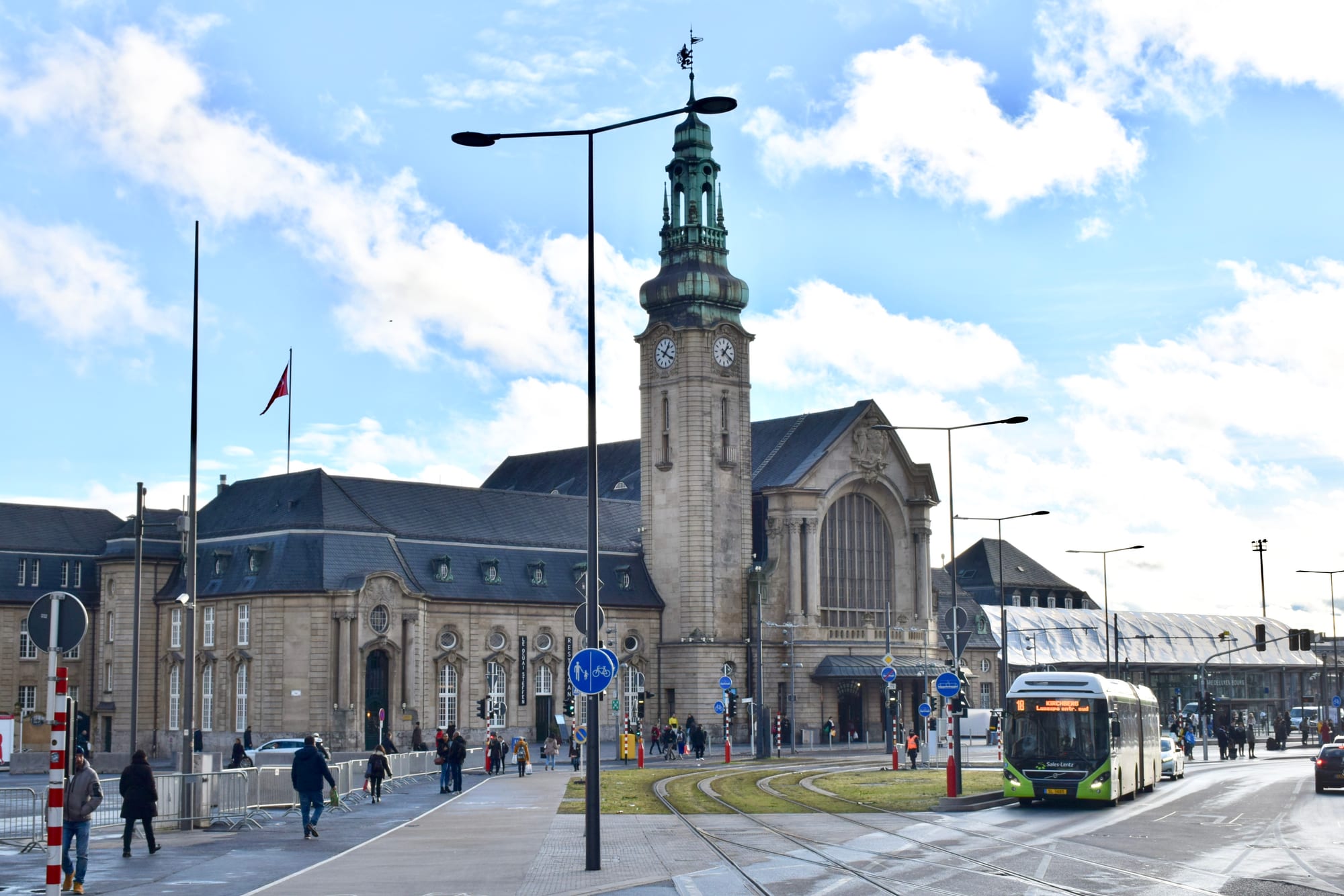
On 29 February 2020 Luxembourg became the first country in the world to make its buses, trams and trains free for everyone across the whole country, residents and visitors alike. The main reason was traffic: the small, wealthy country draws about 200,000 cross-border workers every day from France, Belgium and Germany, many of them driving in, and its roads were jammed. Free fares were one part of a wider plan to get people out of their cars.
There was also a simple sum behind it. Running the network cost about €500 million a year, and ticket sales covered only about €41 million of that, so scrapping fares was a modest extra bill for the state, now paid from general taxation. Not quite everything is free, though: first-class train seats and journeys beyond the border still cost money.
A small country with a commuter problem
Luxembourg had a population of 696,268 in 2026, yet its economy supports far more jobs than its own people can fill. Of about 445,000 jobs in the country, roughly 205,000 are held by cross-border commuters who live in the three neighbouring countries and travel in each day.
Most of them came by car. Luxembourg City is a major business and financial centre, and at peak hours the roads into it clog badly: tailbacks on the motorway from Belgium can stretch five kilometres or more over the border and take an hour or longer to clear. The country probably has the densest motorway network in Europe, and it was still not enough. Building more roads was not going to fix a problem made of too many cars.
Tickets that barely paid their way
Fares had never come close to covering the cost of public transport. Of the roughly €500 million a year needed to run the buses, trains and trams, ticket sales brought in about €41 million, well under a tenth. That made free transport unusually affordable for Luxembourg: the state was already paying for almost all of it.
Removing fares also removes the cost of collecting them. Operators that go fare-free save on ticketing equipment and the staff needed to sell and check tickets, and arguments between passengers and staff over fares disappear.
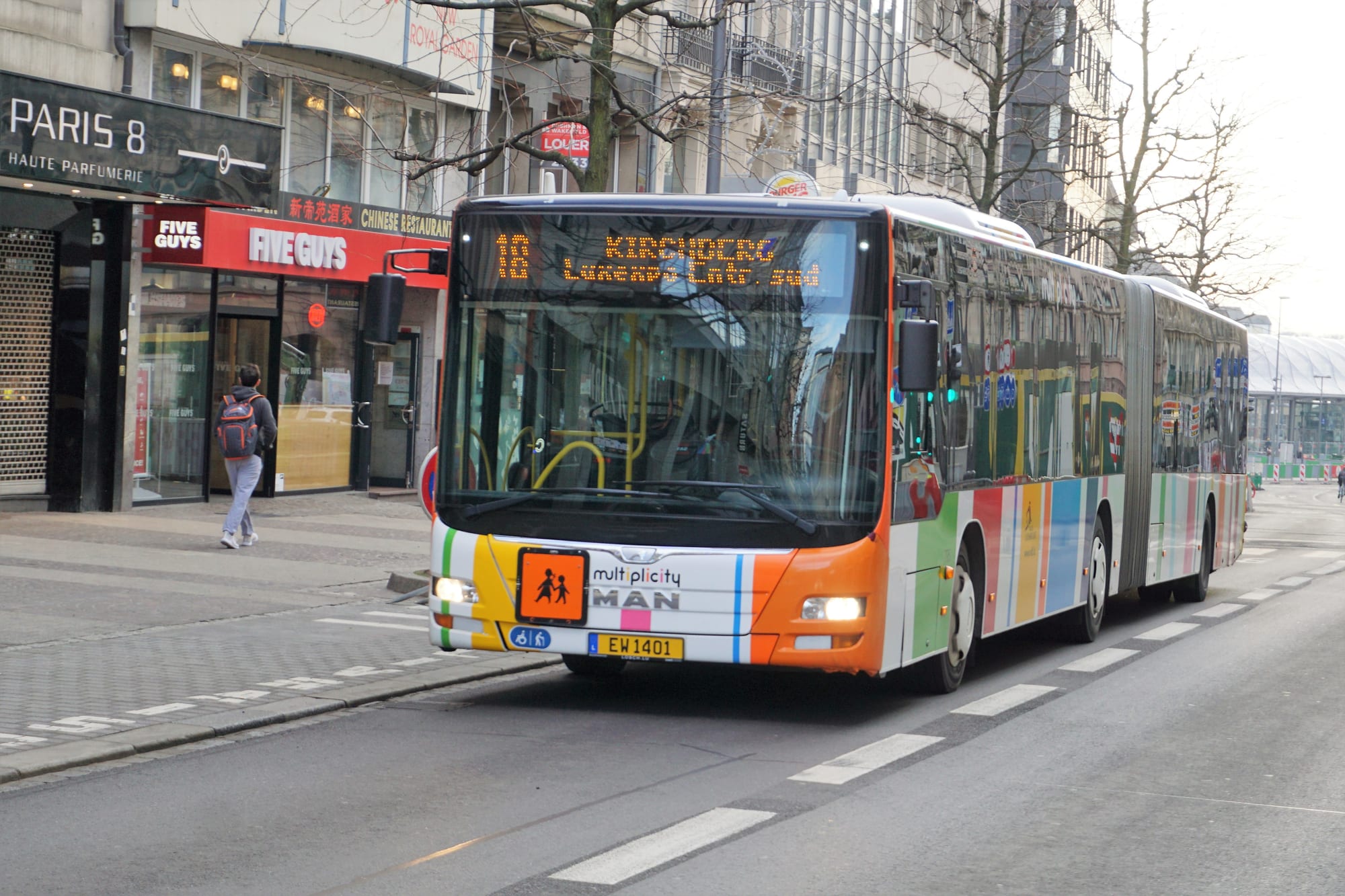
The change came in stages. From 1 August 2018 public transport was already free for everyone under 20. On 29 February 2020 the state-funded networks went free for all: the CFL railways, the RGTR national buses, the TICE buses around Esch-sur-Alzette and the Luxtram tram, along with Luxembourg City's own buses.
More trams, more trains, fewer cars
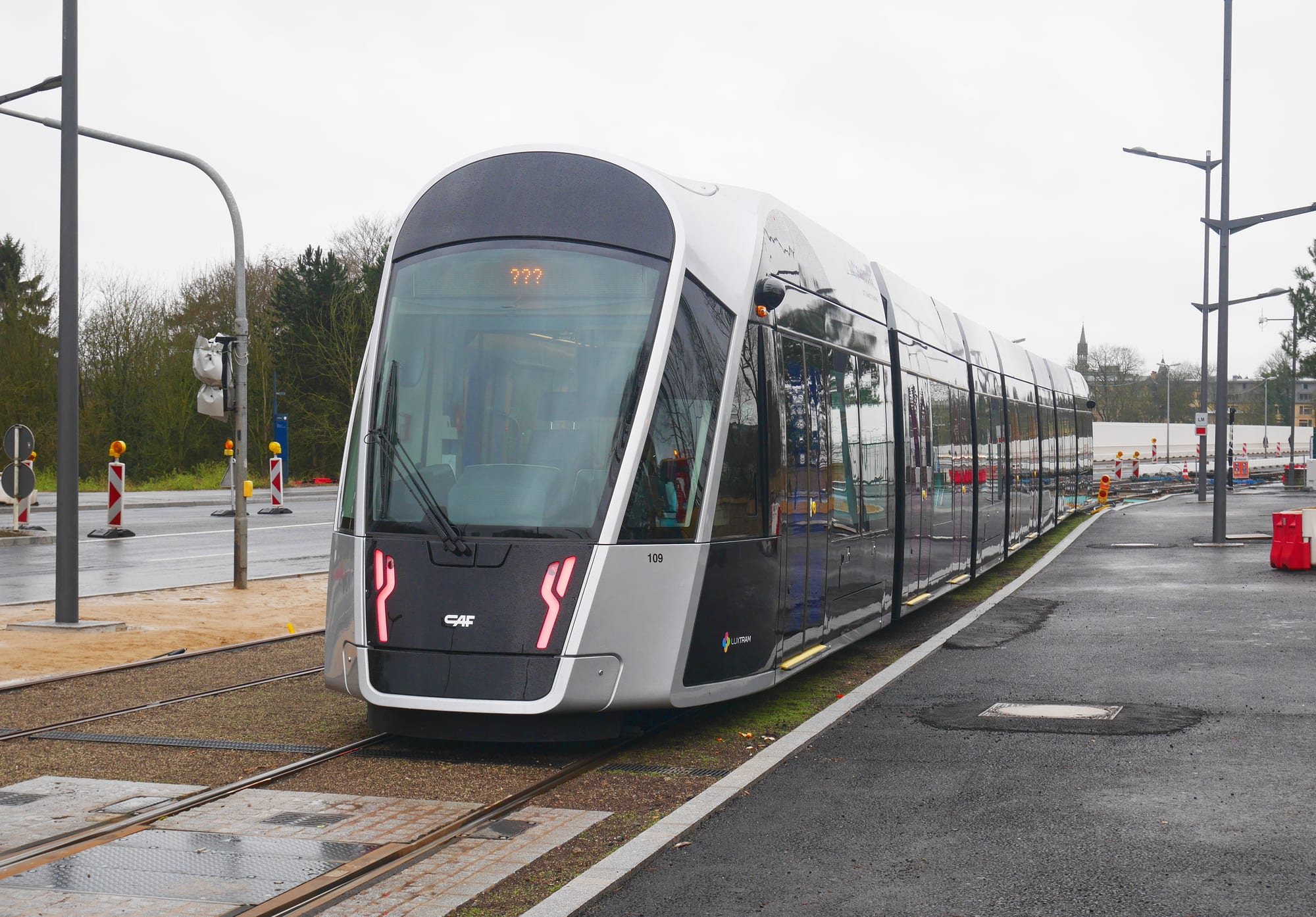
Free fares were never meant to work alone. They sit inside a much larger rebuilding of how people move around the country. Luxembourg City had scrapped its old trams in 1964, but in December 2017 it brought them back with a new line, T1, whose final section opened in March 2025. It now runs for 16 kilometres through 24 stations, linking the airport, the European institutions on the Kirchberg plateau, the city centre, the main station and the Cloche d'Or business district.
The politician most associated with the tram is François Bausch of the Greens, who was in charge of public transport as a city alderman from 2005 and as a government minister from 2013 to 2023, and is sometimes called the "father of the tramway". In 2022 his ministry drew up the National Mobility Plan 2035, which expects travel demand inside the country to grow by 40 per cent between 2017 and 2035 and aims to meet it with stronger public transport and cycle networks rather than more cars.
- 1964
Luxembourg City closes its old tram network.
- December 2017
Trams return to the capital with the first section of line T1.
- 1 August 2018
Public transport becomes free for everyone under 20.
- 29 February 2020
Buses, trams and trains become free for everyone nationwide.
- 2022
The National Mobility Plan 2035 is drawn up.
- March 2025
The final section of tram line T1 opens.
What still costs money, and what changed
"Free" has a few edges. First class on trains still needs a ticket, at €3 for two hours or €6 for a day. Journeys that cross into a neighbouring country are not free beyond the border.
Measuring the effect has been complicated by bad timing. Free fares arrived within days of the COVID-19 pandemic, and lockdowns and home working emptied the network: the tram fell from an average of 31,000 passengers a day to just 1,400 in March 2020 before climbing back to 38,000. By the end of 2020, rail journeys were still 39 per cent below the year before, for reasons that had nothing to do with fares.
The longer-term goal is a shift in habits rather than a single jump in ridership. The government wants cycling to reach 11 per cent of individual trips by 2035, up from 2 per cent in 2021, and is still extending the tram and planning lines out towards Esch-sur-Alzette. Other countries have since tried versions of the idea: Malta made most of its buses free in October 2022, but only for residents, unlike Luxembourg, where the offer extends to every traveller.
Riding for nothing today
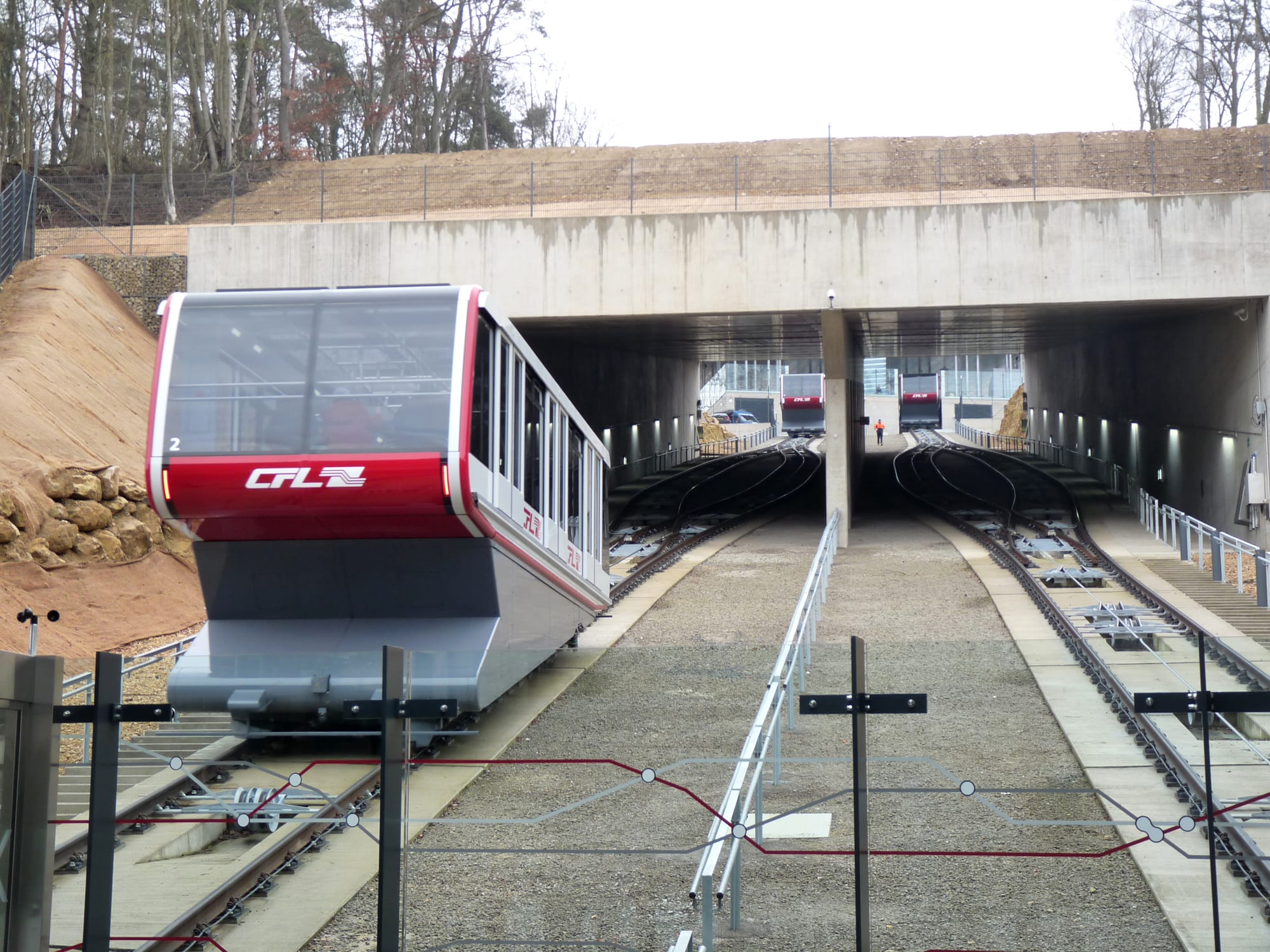
For a visitor the result is simple: there is no ticket to buy for an ordinary seat on a bus, tram or train inside Luxembourg. The railway network of 274 kilometres links Luxembourg City with Ettelbruck, Esch-sur-Alzette, Wasserbillig and Kleinbettingen, buses reach the smaller towns and villages, and in the capital a funicular railway climbs 38.7 metres from Pfaffenthal-Kirchberg station in the valley up to the tram on the Kirchberg plateau. It had carried 10 million passengers by April 2024.