History · Greenland
Why is Greenland called green when it is mostly ice?
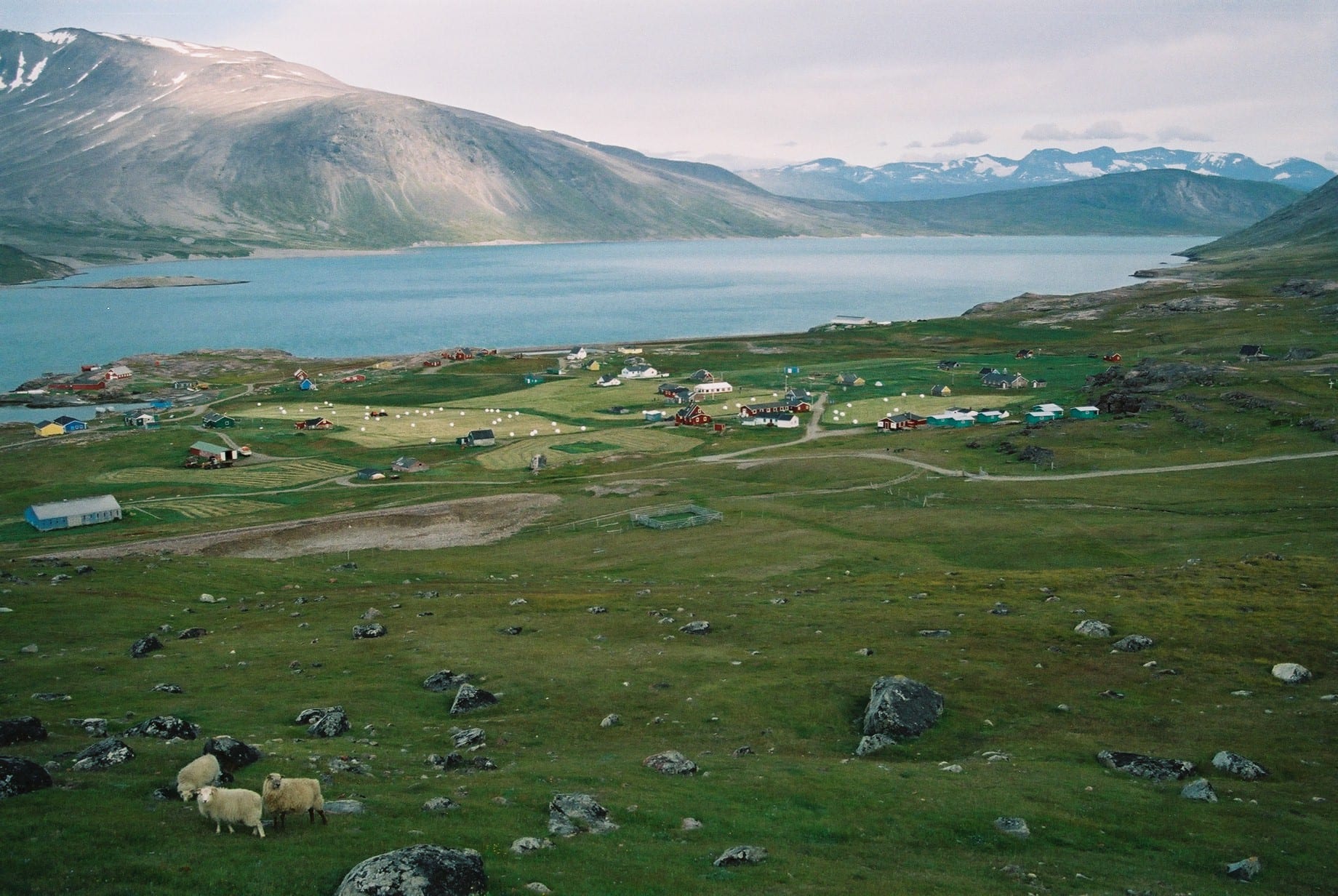
Erik the Red picked the name around 985 to lure settlers, and the sheltered southern fjords he farmed really were green while the ice stayed inland.
By Globeway Editorial · 2 November 2026
The short answer
Greenland got its name from a sales pitch. Around 982 a Norse farmer called Erik the Red was outlawed from Iceland for three years after a series of killings. He spent his exile exploring the great land to the west, found ice-free, grassy fjords on its south-western coast, and on his return called it Greenland. In the words of the Saga of Erik the Red, he did so "as he said people would be attracted there if it had a favourable name". It worked: in the summer of 985 a fleet of 25 ships set out to settle it.
The name was not a pure lie, though. The ice sheet covers about four-fifths of the island, but the sheltered heads of the southern fjords where the Norse farmed are green in summer, with grass, low shrubs and birch, and the centuries around their arrival were unusually mild in the North Atlantic. The settlers named the part they could live on. The ice, which had already covered most of the island for millions of years, was simply not what they were selling.
An outlaw with something to prove
Erik Thorvaldsson, nicknamed "the Red" most likely for the colour of his hair and beard, came from a family of exiles. His father had been banished from Norway for manslaughter and took the household to north-western Iceland. Erik followed the same path. After his slaves caused a landslide on a neighbour's farm, a feud left several men dead, and a second quarrel over a pair of inherited carved pillars ended with more killings. Around 982 the Thorsnes assembly outlawed him from Iceland for three years.
He did not discover Greenland. Tradition credits a sailor named Gunnbjörn Ulfsson with sighting it nearly a century earlier after storms blew him off course, and another outlaw, Snæbjörn galti, had tried and failed to settle there a few years before Erik. What Erik did was survey it properly. He rounded the southern tip, later called Cape Farewell, and sailed up the west coast, spending three years among fjords that seemed largely free of ice and offered conditions much like Iceland's.
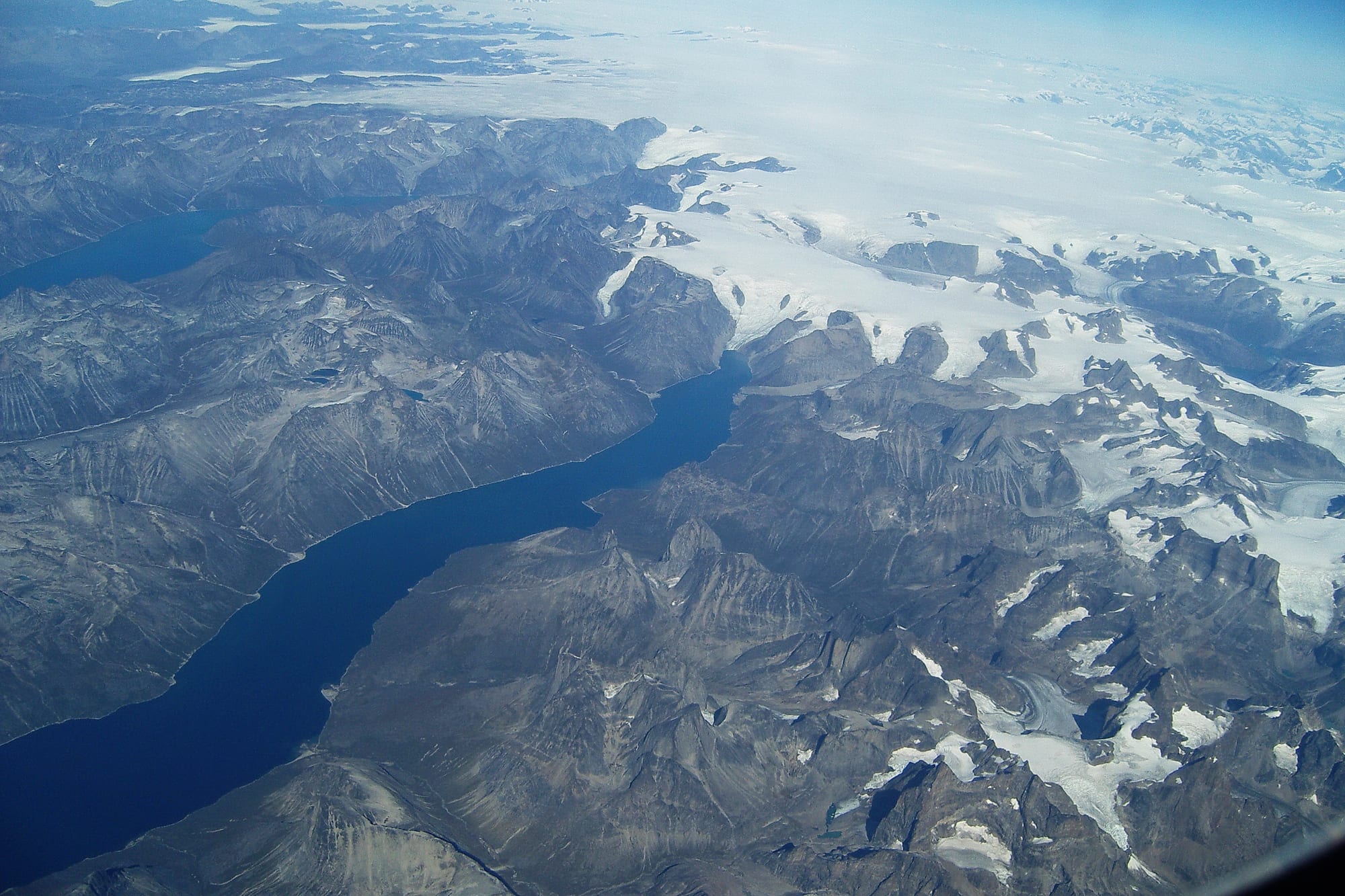
All of Greenland's towns and settlements lie along this ice-free coastal strip, and most of the population lives on the west coast.
A name built for recruiting
Erik needed people. A colony at the edge of the known world could survive only if enough families came with their livestock, and Iceland, where overcrowding was already pushing families to look elsewhere, had people to spare. The oldest written account, the Book of the Icelanders, set down by the priest Ari Þorgilsson between about 1122 and 1133, says plainly that Erik gave the country its pleasant name to encourage people to move there. The later Saga of Erik the Red, composed in the 13th century or after, adds the line about a favourable name attracting settlers.
The pitch succeeded, though the voyage was harsh. Of the 25 ships that left Iceland in 985, only 14 arrived; some turned back and others were probably lost. The newcomers founded an Eastern Settlement near today's Qaqortoq, which at its peak held around 4,000 people, and a smaller Western Settlement near present-day Nuuk. Erik built his farm, Brattahlíð, "the steep slope", at the inner end of Eriksfjord and became the colony's paramount chieftain.
There is a neat irony in the neighbouring name. More than a century earlier, a Norseman called Flóki Vilgerðarson had wintered in Iceland, climbed a mountain in spring, and seen a fjord choked with drift ice. He named the whole country Ísland, Iceland. One name was a disappointed first impression; the other was advertising.
The green that was really there
The settlers were farmers, and the southern fjords gave them something to farm. Brattahlíð still has some of the best farmland in Greenland, because the inner fjord shelters it from the cold fog and Arctic water of the outer coast. Greenland's plant life today is mostly grassland and small shrubs, with European white birch the most common native tree, along with willows, rowan and juniper.
The timing helped too. Ice cores and shells suggest that between about AD 800 and 1300 the southern fjords had a relatively mild climate, several degrees Celsius warmer than usual for the North Atlantic, with trees and herbaceous plants growing and livestock being farmed. Climate scientists call this the Medieval Warm Period, roughly 950 to 1250, and while it was not a worldwide event, western Europe, Iceland and Greenland were exceptionally warm. The Norse kept sheep, goats and cattle and cut hay for winter. Around 500 groups of farm ruins and 16 church ruins survive in the Eastern Settlement alone.
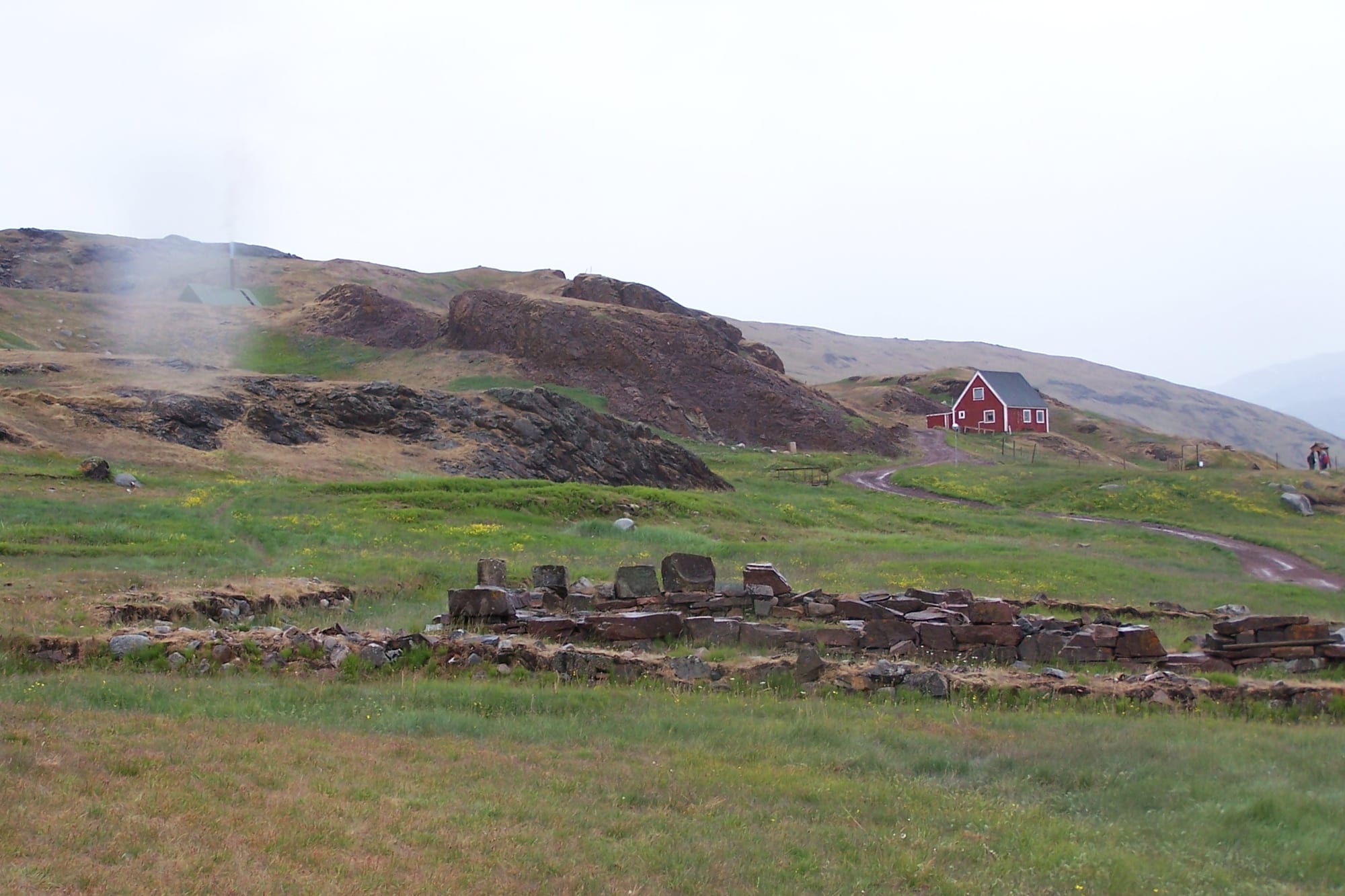
Qassiarsuk was founded on the same site in 1924 as Greenland's first sheep farm, carrying on the farming that began here a thousand years ago.
Where the green ended
Behind the coast lies the ice. The Greenland ice sheet covers about 1.76 million square kilometres, some 81 per cent of the island, and averages 1,673 metres thick, reaching more than 3,488 metres at its deepest. Greenland has had large glaciers for at least 18 million years, and a single ice sheet first covered most of it about 2.6 million years ago. The coldest temperature ever recorded in the Northern Hemisphere, −69.6 °C, was measured near its summit on 22 December 1991. Even in the capital, Nuuk, monthly average temperatures range only from about −9 °C in winter to 7 °C in summer.
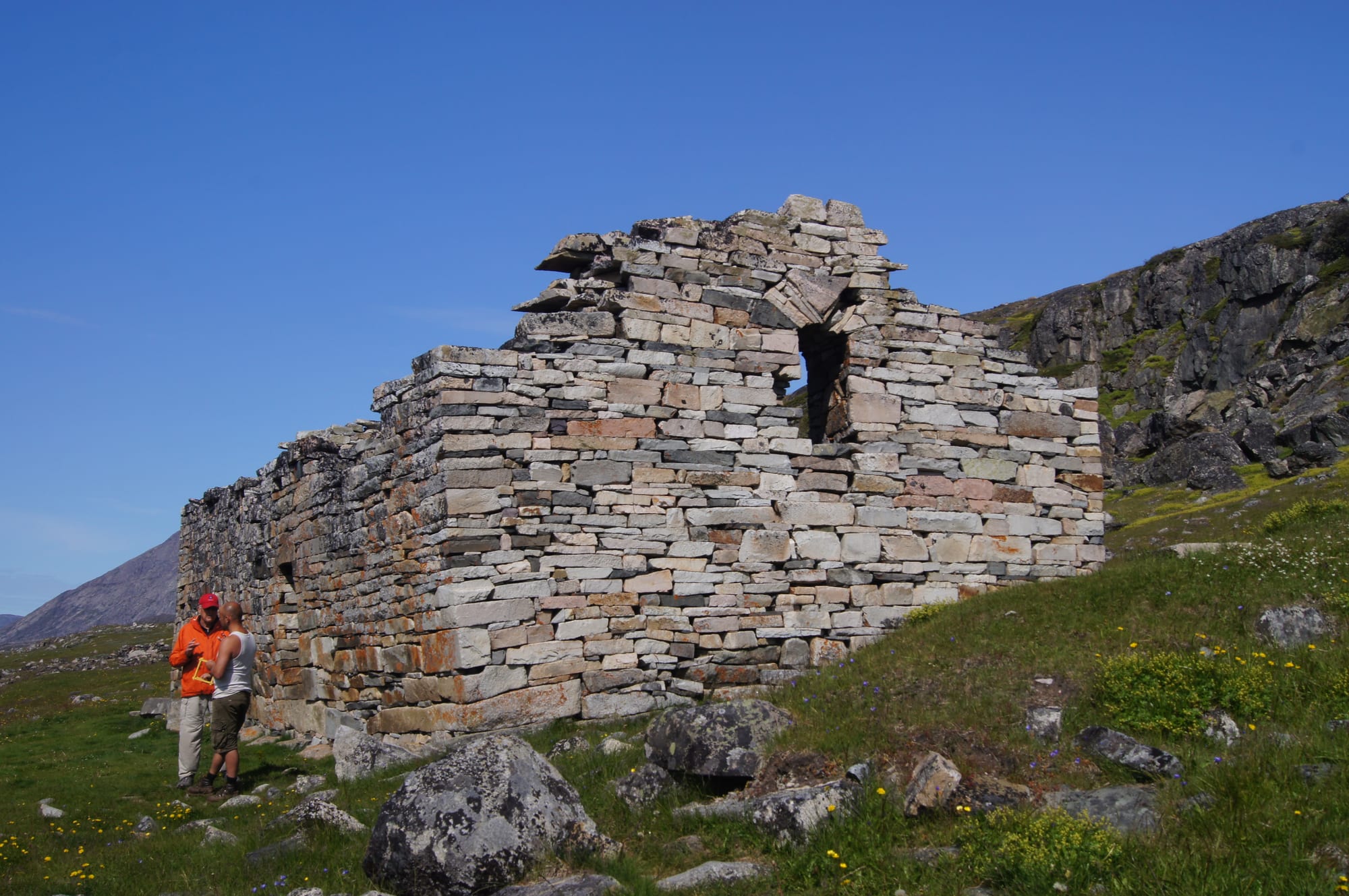
The good years did not last. From around 1300 the Little Ice Age brought summers as much as 6 to 8 °C cooler than today's, and the late 14th and early 15th centuries saw the coldest winters of the last 2,000 years. The settlers ate more and more seafood: their diet shifted from about 80 per cent farm produce at first to 50 to 80 per cent from the sea by the 14th century. The Western Settlement went first. The last written record of the Eastern Settlement is a wedding at Hvalsey church in September 1408, and the Norse colony was gone during the 15th century. Cold, falling prices for walrus ivory, one of the colony's main exports, and dwindling contact with Norway are all offered as reasons, and historians still debate the balance.
The name Greenlanders use
Most Greenlanders today are Inuit, whose ancestors came from what is now Canada, and in their own language the country is Kalaallit Nunaat, "land of the Kalaallit", the main Inuit group of the west coast. Tellingly, the word nunaat does not include water or ice: it means the land itself, the same thin inhabited margin that Erik chose to advertise.
The green strip still farms. In the 1780s an Inuk woman, Tuperna, and her Norwegian husband, Anders Olsen, started a farm on the old bishop's estate at Igaliku, and sheep farming continues around the southern fjords. In 2017 this landscape of Norse ruins and Inuit farms was inscribed as a UNESCO World Heritage Site, Kujataa. In high summer the hillsides above Igaliku and Qassiarsuk are as green as any field in Iceland, with the ice sheet glinting at the head of the fjords, and the logic of Erik's choice is easy to see.