History · Kiribati
Why is Kiribati the first country to see the New Year?
In 1994 Kiribati deleted a Saturday from its calendar and pushed the date line 1,000 km east, putting its Line Islands in the earliest time zone on Earth.
By Globeway Editorial · 2 November 2026
The short answer
Kiribati is first because it chose to be. The International Date Line is not fixed by any treaty; every country sets its own time. Until 1994 the line ran straight through Kiribati, leaving its eastern islands a day behind its capital. That year the government moved its eastern islands onto the same date as the west, and in effect bent the date line around the whole country. The Line Islands, far out at about 150 degrees west, ended up in UTC+14, the most advanced time zone on Earth.
So when the clock reaches midnight on 31 December, the first inhabited places to cross into the New Year are Kiribati's Line Islands, including Kiritimati (Christmas Island). The rest of the country follows later: Tarawa, the capital, keeps UTC+12 and celebrates two hours after Kiritimati.
A country living in two different days
Kiribati is a nation of 32 atolls and reef islands plus the raised coral island of Banaba, with just 811 square kilometres of land spread over more than 3.4 million square kilometres of ocean. Its islands straddle both the equator and the 180th meridian, the line of longitude halfway round the world from Greenwich, which the date line roughly follows.
As a British colony, Kiribati was centred on the Gilbert Islands, just west of the date line. The colony had also taken in the Phoenix and Line Islands, which lay to the east of it, and the new republic kept them on independence in 1979. The new country was split across two calendar days, with the Gilbert Islands nearly a full day ahead of the eastern islands. Government offices and businesses on opposite sides could only do routine business on the four days a week that were weekdays on both sides.
The Saturday that never happened
Teburoro Tito had promised during his campaign to fix the problem, and as president he did. Late in 1994 Kiribati announced that its eastern islands would change date. The Phoenix Islands moved from UTC−11 to UTC+13 and the Line Islands from UTC−10 to UTC+14. Neither zone had existed before. To make the switch, the eastern islands simply removed Saturday, 31 December 1994, from the calendar: Friday 30 December was followed by Sunday 1 January 1995.
The effect was to push the date line more than 1,000 kilometres east, so that the whole of Kiribati sat on its western side. It left a geographical oddity. Caroline Island, at 150 degrees west, shares the same clock time as Hawaii, but is a full day ahead. Mapmakers draw the line with a great bulge around Kiribati, though strictly speaking the old 1917 convention still applies to ships at sea; when it is Monday on Kiribati's islands, it is technically still Sunday in the surrounding ocean.
The race to the year 2000
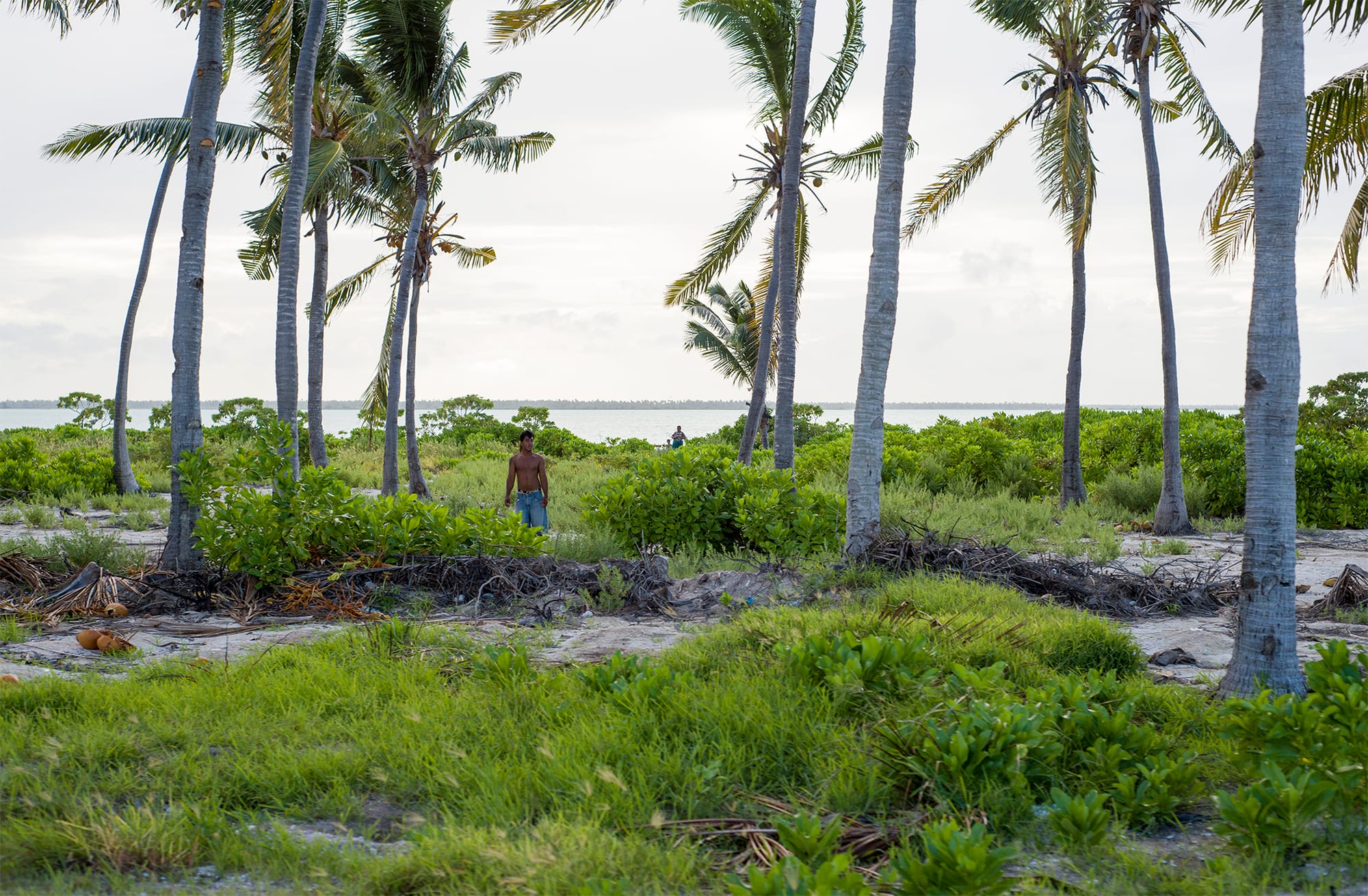
The change attracted little attention at first. Then the millennium loomed, and being first to reach 1 January 2000 suddenly looked valuable. The Kiribati government saw a chance to draw tourists, and renamed its easternmost speck of land, the uninhabited Caroline Island, as Millennium Island. Its sun rose on 1 January 2000 at 5:43 a.m. local time.
Neighbours cried foul. Tonga, Fiji and New Zealand protested that Kiribati had taken their claims to be the first land to see the dawn of 2000, and several Pacific nations tried to claim the "first inhabited land" or "first city" instead. Tonga, on daylight saving time at UTC+14 from 1999, welcomed the year 2000 at the same moment as the Line Islands. The United States Naval Observatory added a further twist: by its reckoning the first land to see sunrise on 1 January 2000 was a stretch of coast in East Antarctica, where the sun rose eight minutes after midnight.
Kiribati celebrated anyway. More than 70 singers and dancers travelled from South Tarawa to Millennium Island, with about 25 journalists, to welcome the new millennium on the uninhabited atoll.
- 12 July 1979
Kiribati becomes independent, straddling the date line.
- 1994
President Teburoro Tito's government announces a time zone change for its eastern islands.
- 31 December 1994
The eastern islands skip this Saturday entirely.
- 1 January 2000
Millennium Island sees the first sunrise of 2000 on Kiribati's calendar.
- 30 December 2011
Samoa skips a day and moves to the western side of the line.
- 2021
Samoa stops using daylight saving time, leaving UTC+14 to Kiribati alone.
Who is first today
Kiribati's lead has been challenged since. Samoa jumped across the date line by dropping Friday, 30 December 2011, from its calendar, and from 2012 to 2021 its summer daylight saving time put it on UTC+14 as well, level with the Line Islands each New Year. Samoa has not used daylight saving time since 2021, so Kiribati's Line Islands are once again alone in UTC+14.
Their midnight arrives when it is only 10 a.m. on 31 December in Greenwich. An hour later the New Year reaches Kiribati's Phoenix Islands, along with Samoa, Tonga, Tokelau and New Zealand in summer time. The capital, Tarawa, waits another hour. The last places of all are the uninhabited American atolls of Baker and Howland islands, on UTC−12, which reach the New Year 26 hours after the Line Islands.
Seeing in the New Year on Kiritimati
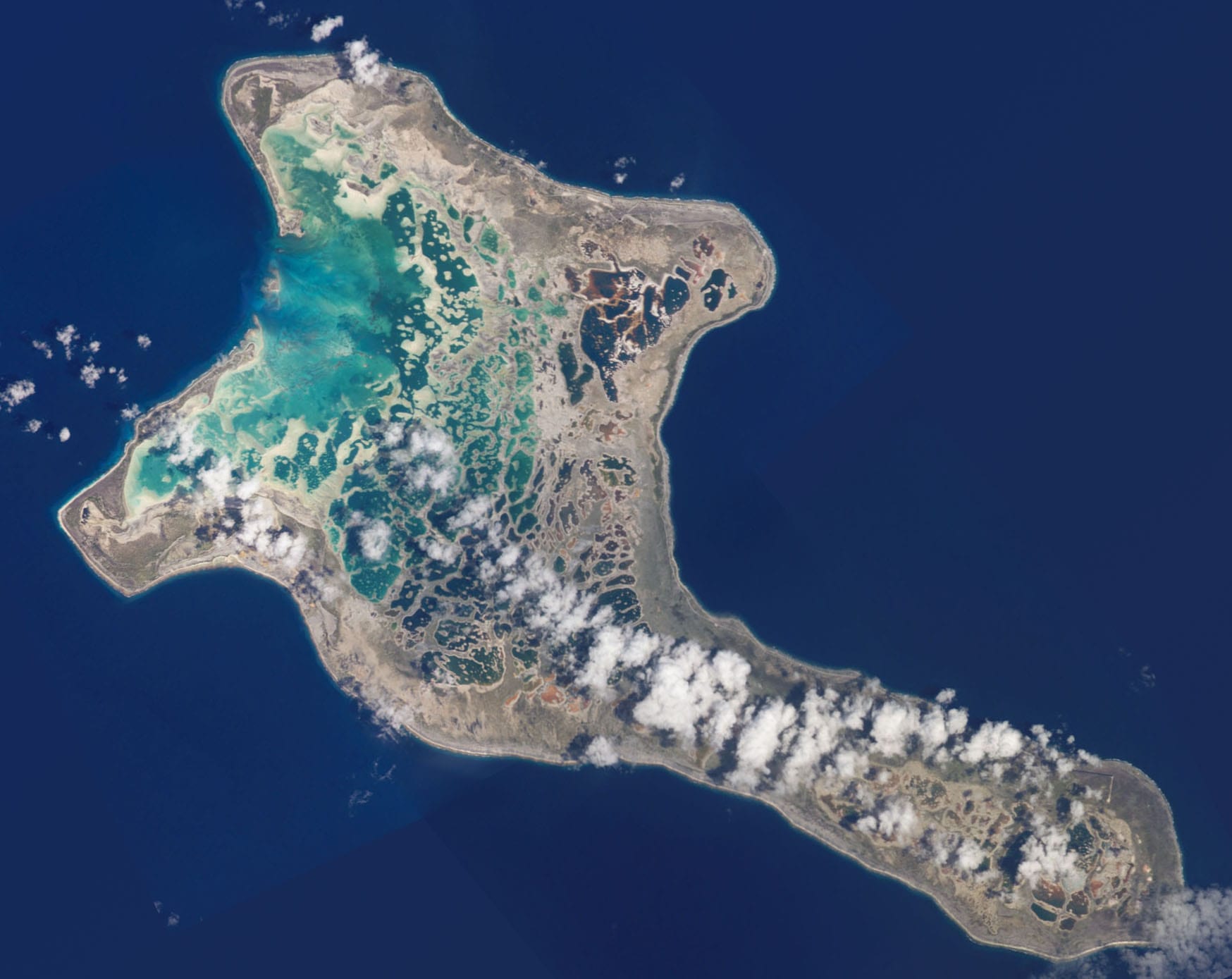
Kiritimati is one of the world's largest atolls by land area, about 312 square kilometres of coral and sand wrapped around a maze of lagoons. Captain James Cook visited it on Christmas Eve 1777, which gave the island its English name. About 7,400 people lived there at the 2020 census, in a handful of villages of which London, on the northern road, is the main one and the port. Many visitors come for the bonefishing and birdwatching, on flights from Nadi in Fiji and from Honolulu; at the end of the year they can stand on one of the first inhabited shores to reach the next one.