Attractions & Natural Wonders · Madeira
Why is part of Madeira's airport runway built on pillars over the sea?
A mountain island, a runway too short for safety and a coast too steep to fill in led engineers to stand the runway extension on 180 concrete columns.
By Globeway Editorial · 2 November 2026
The short answer
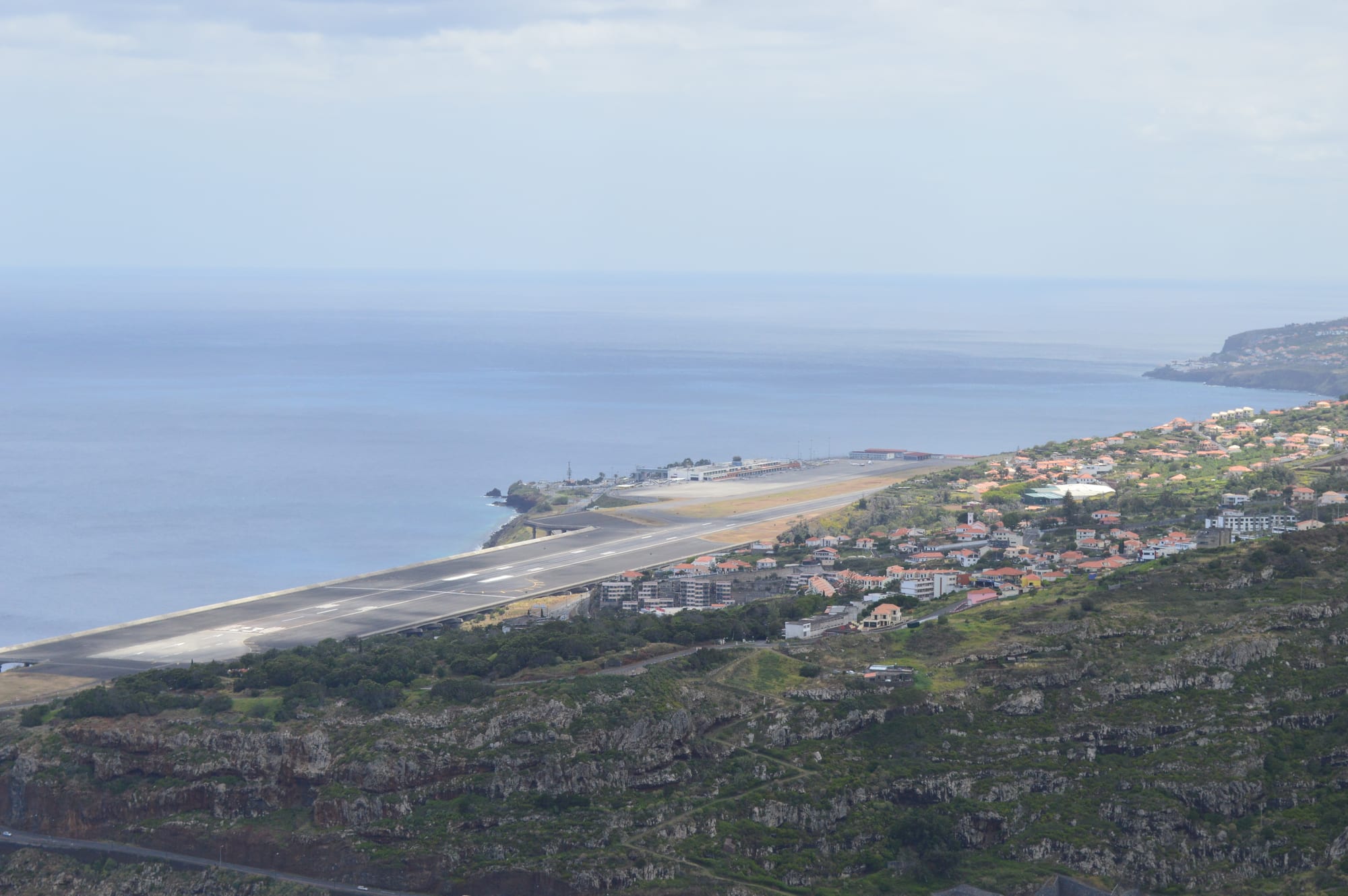
Madeira is a steep volcanic island with little flat land, and its airport sits on a narrow headland high above the shore. For decades the runway was dangerously short, and a fatal crash in 1977 made lengthening it unavoidable. But the only room to grow lay over a bay, a beach and the sea, far below the level of the runway, and filling that space in with earth and rock was not a realistic option.
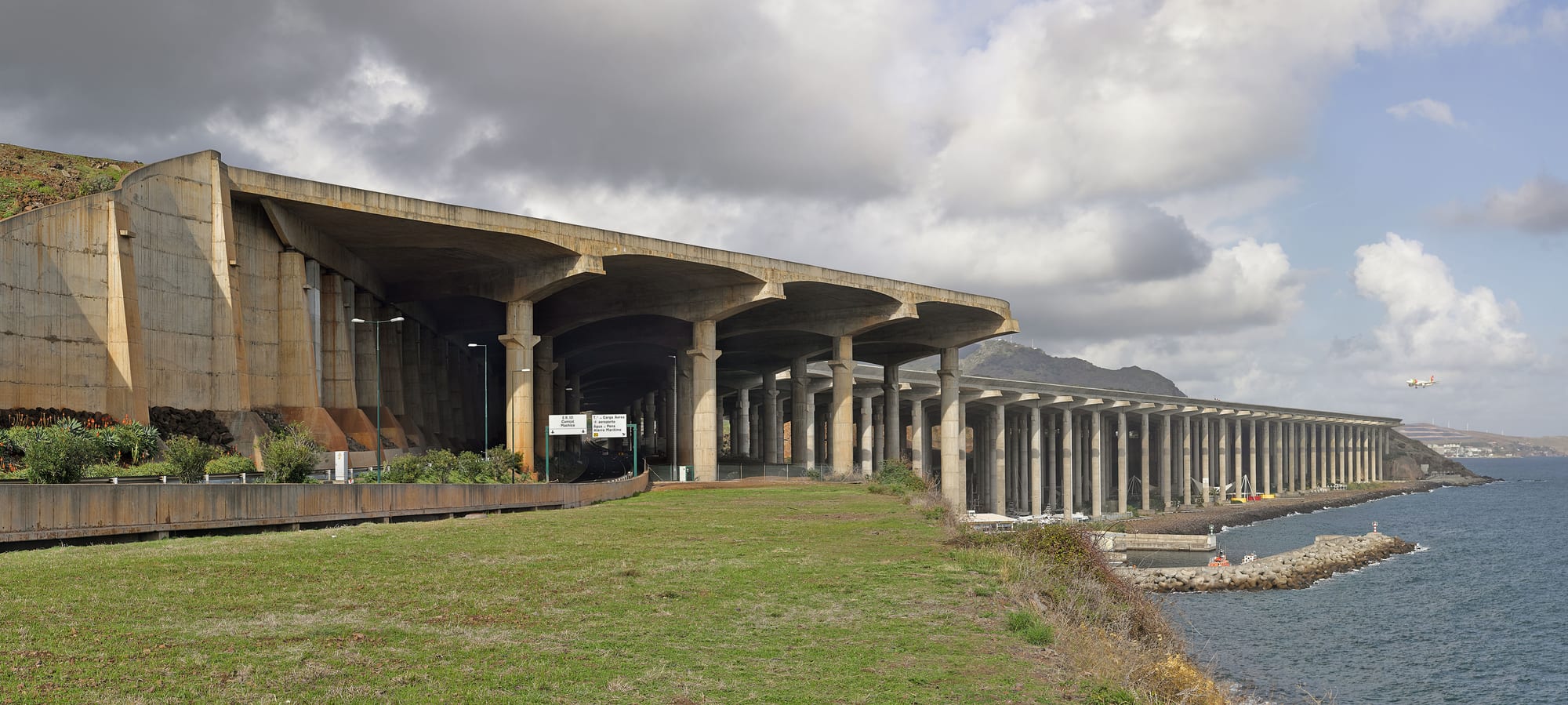
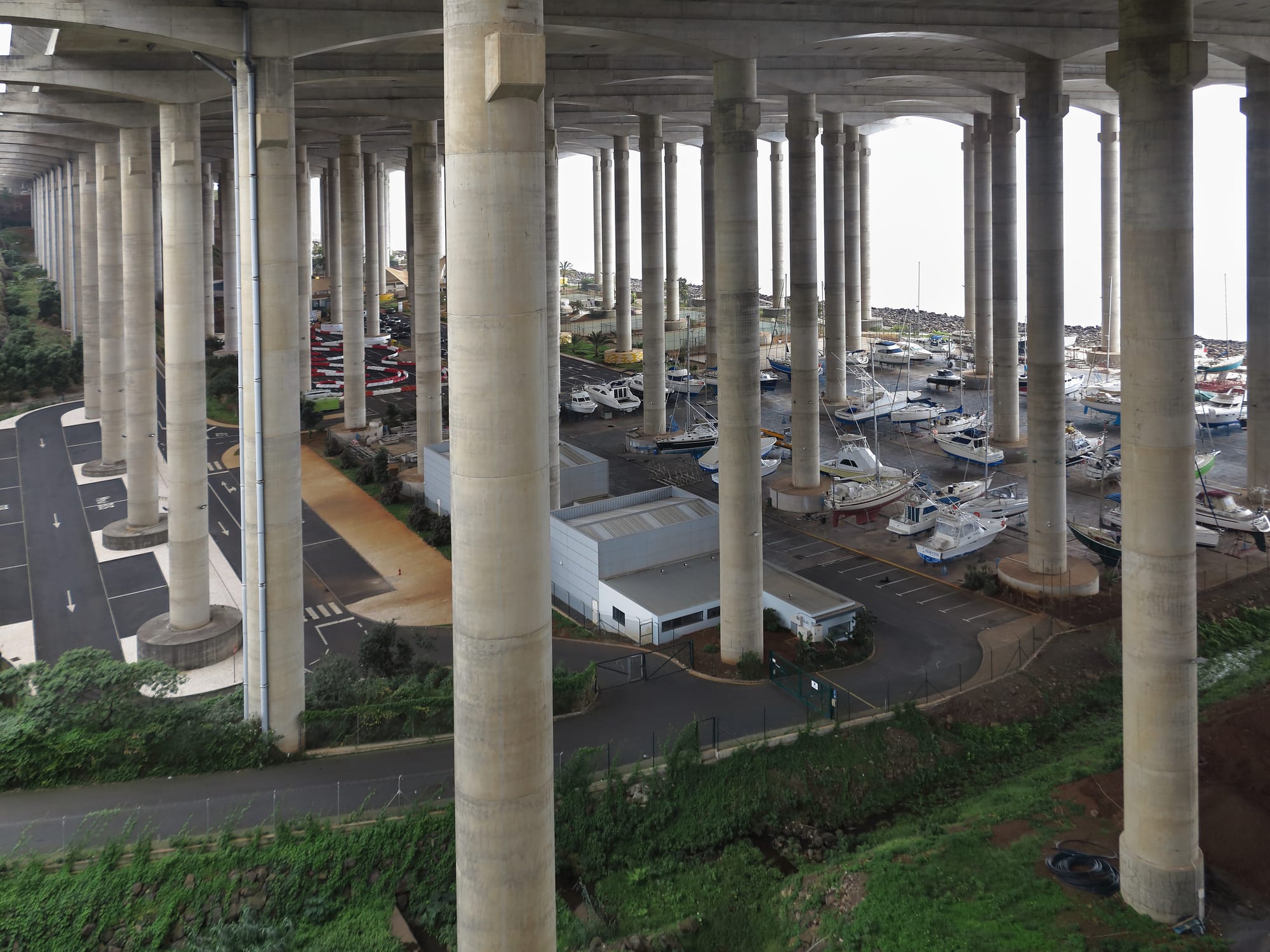
So engineers built the extension as a bridge. Finished in 2000, it took the runway to 2,781 metres (9,124 feet), and its final stretch rests on a concrete platform supported by 180 columns, each about 70 metres (230 feet) tall, partly over the Atlantic. Strictly speaking, it is only that extension, not the whole runway, that stands on pillars, and only part of it reaches out over the water.
A runway squeezed onto a ledge
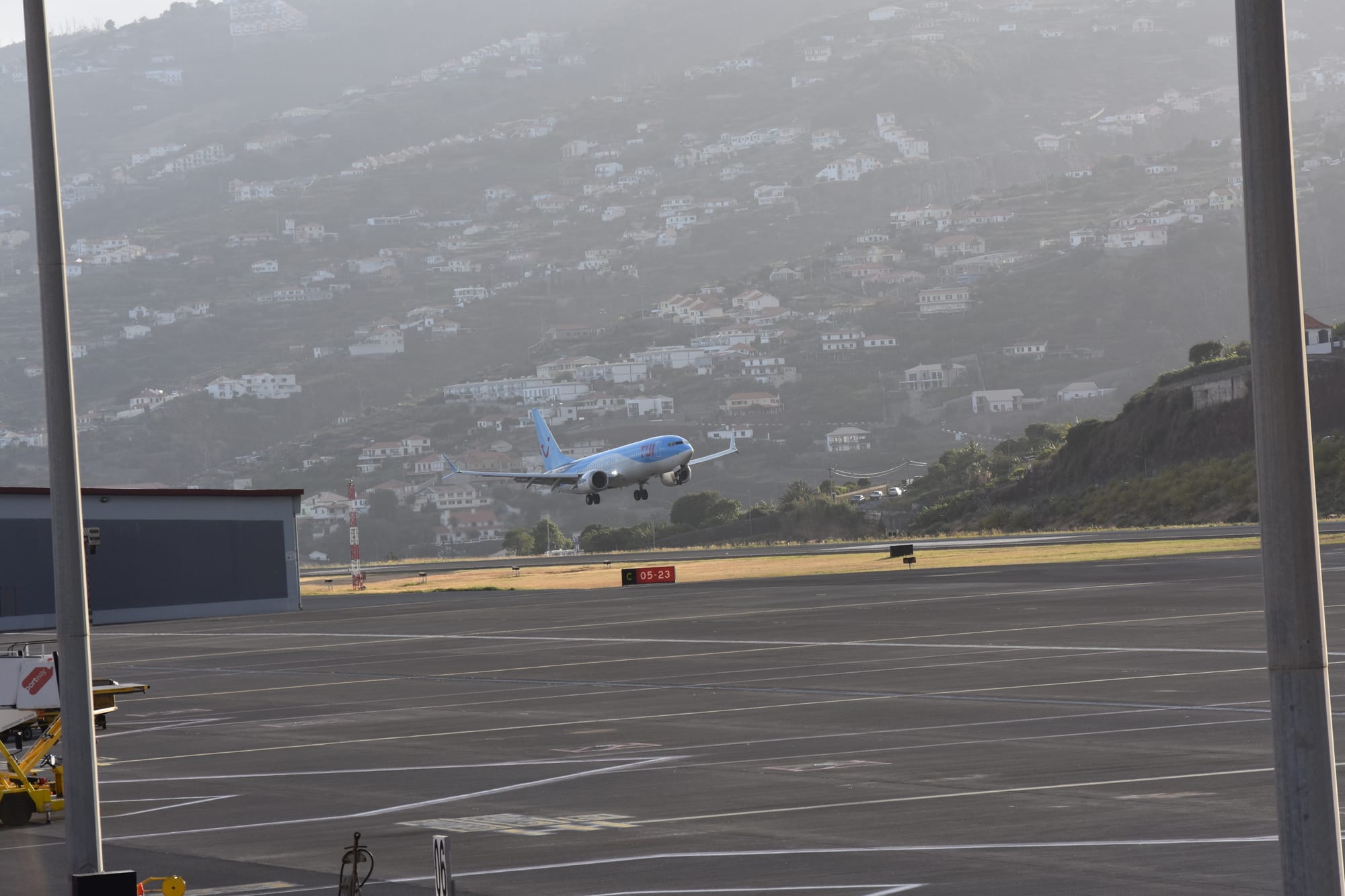
The airport lies in the parish of Santa Cruz, about 13 kilometres east-northeast of Funchal, the island's capital. Before it opened, travel between Madeira and mainland Portugal was by boat. The first aircraft to land on the island did so in 1957 on an experimental strip at Santa Catarina, and the airport proper opened in July 1964 with a single runway of just 1,600 metres.
That runway sits on what pilots call a tabletop: a strip with steep drops at both ends. At one end the ground falls away just before a motorway that curves around the runway; at the other it drops off a cliff. Hills and cliffs beyond one end rule out a straight-in instrument approach, so aircraft fly past the airport and swing round in a tight turn before lining up on a very short final approach. That manoeuvre earned it the nickname "the Kai Tak of Europe", after the famously difficult former airport in Hong Kong.
The crash that forced a change
As tourism grew in the 1970s, the short runway could not handle the bigger aircraft needed to carry visitors, and plans for an extension were drawn up from
- Then, on the night of 19 November 1977, in heavy rain, TAP Flight 425, a
Boeing 727 arriving from Brussels via Lisbon, touched down too far along the runway, ran off the end and fell over a steep bank of about 61 metres to the beach below. Of the 164 people on board, 131 died.
Portugal's investigators blamed bad weather, the length of the runway and human error. After the crash, TAP switched to a shorter version of the 727 on the route, and lengthening the runway became unavoidable. It was not easy: because the runway stood so high above the beach, any extension would be very difficult and very expensive.
- 1957
The first aircraft lands on Madeira, on an experimental strip.
- July 1964
The airport opens with a 1,600-metre runway.
- 19 November 1977
TAP Flight 425 overruns the runway; 131 people die.
- 1 February 1986
A first extension, to 1,800 metres, is inaugurated.
- 15 September 2000
The runway extension on 180 columns opens, bringing it to 2,781 metres.
- 2004
The extension wins the IABSE Outstanding Structure Award.
Why a bridge instead of landfill
The first extension, finished in 1986, added only 200 metres, and even that already relied partly on tall pillars above the sea. Tourism kept growing, and the engineer António Segadães Tavares adapted earlier studies by Edgar Cardoso for a far bigger lengthening.
The problem was what lay beyond the runway's end: the bay of Ribeira de Pena and the shore, a long way below the level of the tarmac. Building that up with landfill would have meant an enormous embankment, and it was judged not to be a realistic option. Instead the new section was designed like a beam bridge: a deck laid across rows of columns, with the platform built partly over the ocean. The work, carried out by the Brazilian firm Andrade Gutierrez, crossed the whole bay and is recognised worldwide as one of the most difficult of its kind, because of the terrain.
The result opened on 15 September 2000, and the runway can now take wide-bodied aircraft such as the Boeing 747 and the Airbus A340.
An award-winning piece of engineering
In 2004 the International Association for Bridge and Structural Engineering gave the extension its Outstanding Structure Award, a prize for the most remarkable and innovative structures completed in recent years. In Portugal, Segadães Tavares was hailed as the first Portuguese engineer to win what was described as the equivalent of an engineering Nobel.
Not everyone was convinced. The cost of carrying the runway right across the bay has been questioned by critics, who argue the technical gains did not justify the money spent. But the longer runway changed the island's links with the world: it is now Portugal's fourth-busiest airport, with direct flights to many cities across Europe.
Landing there today
The approach still demands skill. Strong winds cause turbulence, sudden downdraughts and gusting crosswinds, especially when the wind is above 15 knots, and operations are frequently restricted when wind shear exceeds set limits. Pilots need extra training and a special licence to land there. The terminal, mostly underground, has no air bridges: arriving passengers walk the short distance or take a shuttle bus.