Attractions & Natural Wonders
Why is the sea turquoise in the tropics and grey-green up north?
Clear, nutrient-poor tropical water over pale sand glows turquoise, while cooler seas rich in plankton, river silt and dissolved matter turn green, and grey skies dull them further
By Globeway Editorial · 2 November 2026
The short answer
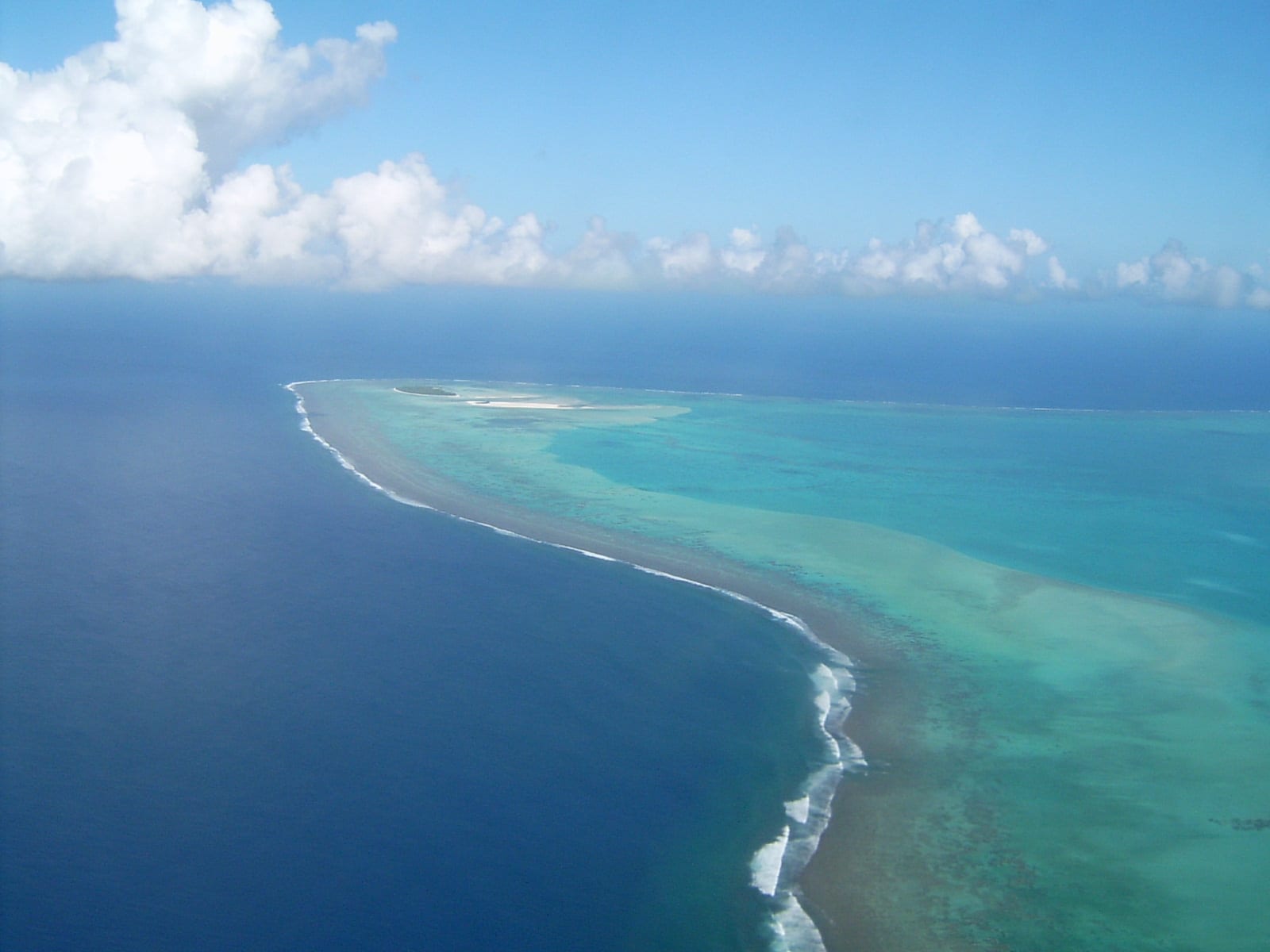
Water is not colourless. In bulk it is faintly blue, because it absorbs a little of the red end of sunlight. Tropical seas are unusually clear: a warm surface layer sits on top of the cold deep water and blocks the nutrients below from rising, so little plankton grows and the water stays close to pure. Where that clear water lies only a few metres deep over pale sand made of crushed shells and skeletons, sunlight bounces off the bottom and comes back a bright, light cyan: the turquoise of postcards.
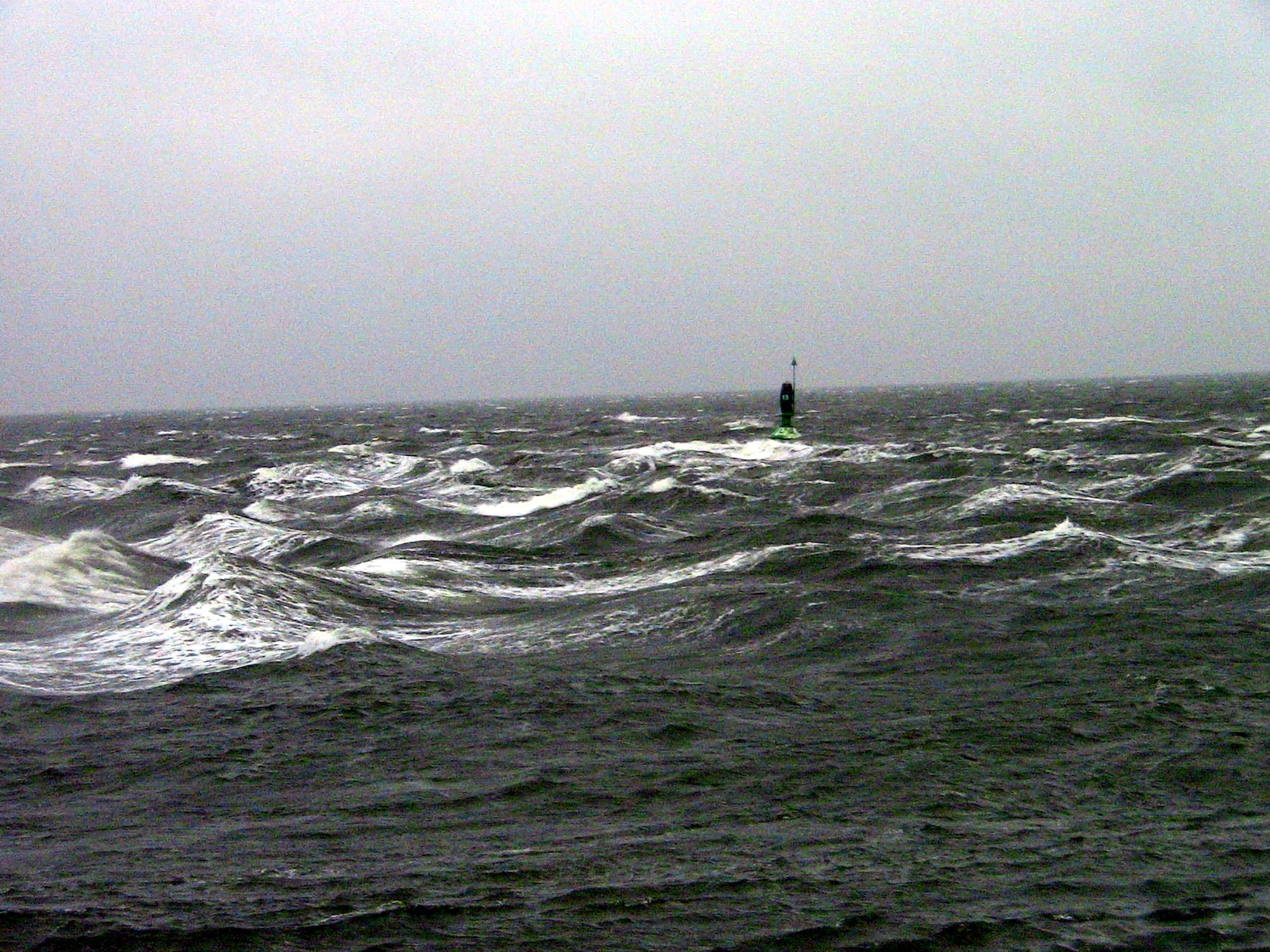
Colder seas are richer. Winter storms stir nutrients up from the deep, and every spring microscopic algae bloom in enormous numbers. Their green pigment soaks up blue and red light and leaves green. Add silt and dissolved plant matter washed in by rivers, plus a surface that mirrors a cloudy grey sky, and the result is the grey-green of the North Sea or the Baltic.
Water is blue all by itself
A white light seen through a pipe a metre or more long, filled with purified water, looks pale sky blue. That colour comes from the water molecule itself. Its bonds vibrate, and faint echoes of those vibrations, called overtones, absorb light at the red end of the spectrum, around 660 to 740 nanometres. Most coloured substances get their colour from electrons absorbing light; water is unusual in getting it from vibrations, and the effect is weak, which is why a glass of water looks clear and only a great thickness of it looks blue.
In the sea the effect builds quickly. Red light is mostly absorbed within 50 metres (164 feet) of the surface, while blue can penetrate as far as 200 metres (656 feet). Water molecules and very tiny particles also scatter blue light more than other colours, much as air does to make the sky blue. But absorption alone would leave the sea black: a few tens of metres of water swallow all light. What sends colour back to the eye is scattering from particles, which bounce some light upward after it has passed through enough water to be tinted.
Shallow water over pale sand
That is why a swimming pool with white sides and bottom looks cyan even indoors, with no sky to reflect, and why the deeper the pool, the more intense the colour. Tropical coasts work like giant pools. Around coral reefs the sea floor is often covered in coral sand, a mix of limestone fragments from corals, molluscs, crustaceans, foraminifera and calcareous algae, broken down largely by living things. Parrotfish bite off coral rock, digest what they can and excrete the rest as sand; a single humphead parrotfish can produce 90 kg (200 lb) of it a year.
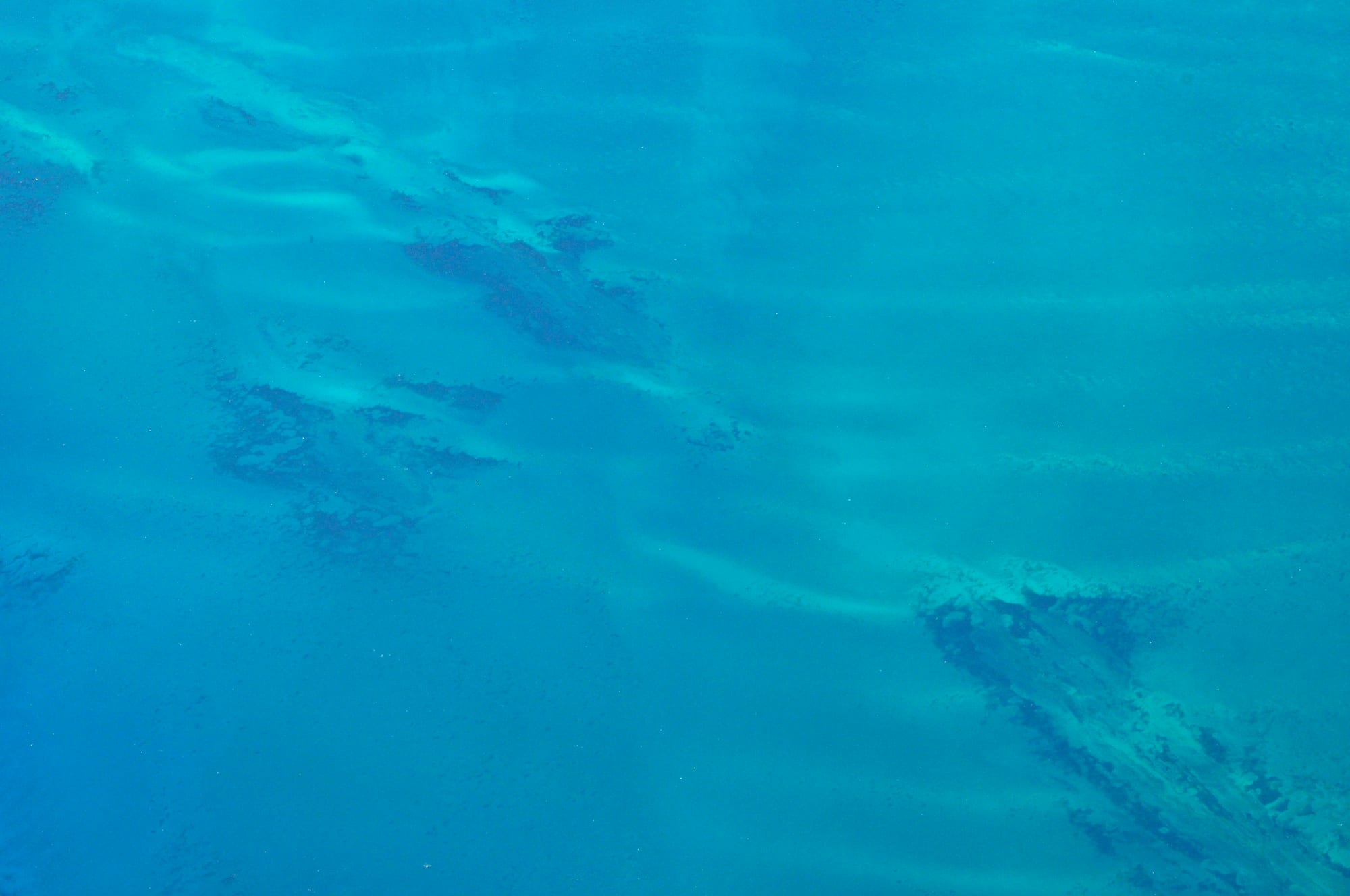
Light crosses a few metres of clear water, reflects off this pale floor and crosses the same water again. Only some of the red has been removed, so the light that returns is a light, bright turquoise. Where the floor drops away, light travels much further before anything sends it back, and the colour deepens to the dark blue of the open ocean. The Great Bahama Bank, a vast limestone platform that has been building up since at least the Cretaceous period and is now more than 4.5 kilometres (2.8 miles) thick, is covered by water that is generally no deeper than 25 metres (80 feet).
Why tropical water stays so clear
Clarity is the other half of the story, and it comes down to food. In the tropics, a layer of warm, light surface water floats on the cold, dense water below. The boundary between them, the thermocline, is semi-permanent in the tropics. It acts as a barrier to mixing, so the nitrate, phosphate and other nutrients that collect in the deep stay there. Without them, phytoplankton, the microscopic drifting algae that colour so much of the ocean, cannot multiply. Such waters are called oligotrophic, meaning poor in nutrients.
Coral reefs are adapted to exactly these conditions: they grow best in warm, shallow, clear, sunny water and flourish where there are few nutrients. Excess nitrogen and phosphorus from land is one of the threats to them. In the open subtropical Atlantic, the Sargasso Sea is known for its deep blue colour and exceptional clarity, with underwater visibility of up to 60 metres (200 feet).
The tropics are not uniformly blue, however. Where winds drag deep water up to the surface along certain coasts, a process called upwelling, nutrients pour in, plankton thrive and the sea turns greener. Five upwelling regions, covering only about 5 per cent of the ocean, provide roughly a quarter of the world's marine fish catch.
Plankton, silt and grey skies in the north
At higher latitudes the thermocline is variable or absent. In polar seas the water is cold from top to bottom. Each winter, wind-driven turbulence and cooling break down the layering formed in summer and mix nutrients from deep water back up towards the surface. When spring brings longer days and the surface warms again, phytoplankton suddenly have both light and food. Many species can double at least once a day, so a population can increase a thousandfold in ten days. These spring blooms are characteristic of the temperate North Atlantic, sub-polar seas and coastal waters.
Phytoplankton contain chlorophyll, a green pigment that absorbs the blue and red parts of the spectrum. The more of them there are, the more the water shifts from blue towards green, which is why satellites can map ocean productivity from colour alone: rich regions show green and yellow, poor ones blue.
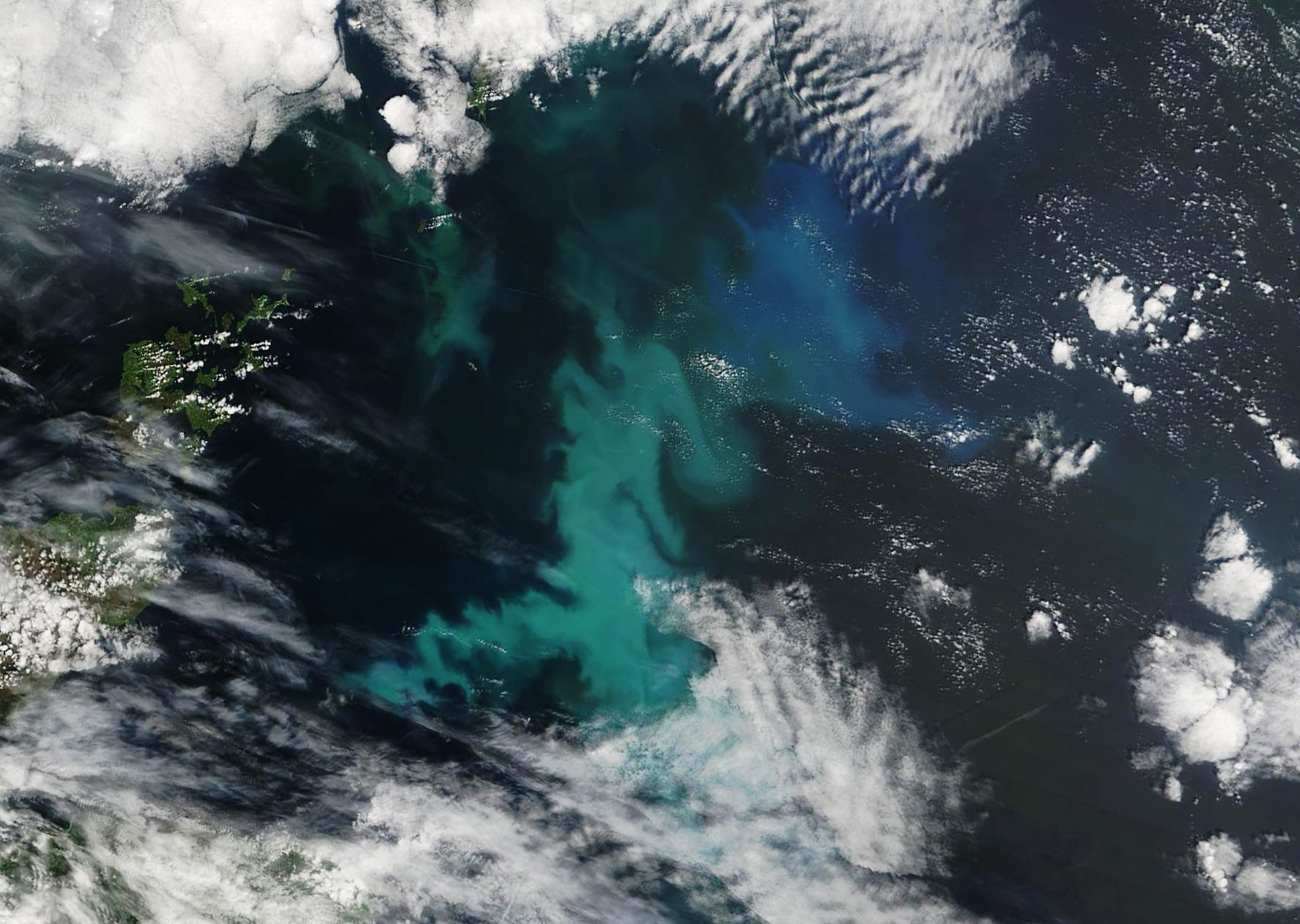
Coastal seas add more. Rivers and waves stirring the sea bed load the water with sand and silt, which scatter all colours and make water greener, yellower or browner. Decaying plant matter from land and marshes releases coloured dissolved organic matter, known by its German name gelbstoff, "yellow substance", which looks like weak tea and absorbs blue light strongly. Scientists call such water "optically complex", because several ingredients mix to produce its green. Enclosed seas fed by farmland can turn greener still: in July 2010 satellites recorded an algal bloom covering 377,000 square kilometres (146,000 square miles) of the Baltic.
Finally, there is the sky. Part of what is seen on any sea is sunlight and skylight reflected off the surface, and how much depends on the angle of view. Under a bright tropical sky, that reflection adds azure. Under an overcast sky, it adds grey, and a churned-up, plankton-rich sea beneath a grey sky looks grey-green.