History · Mozambique
Why is there an AK-47 on Mozambique's flag?
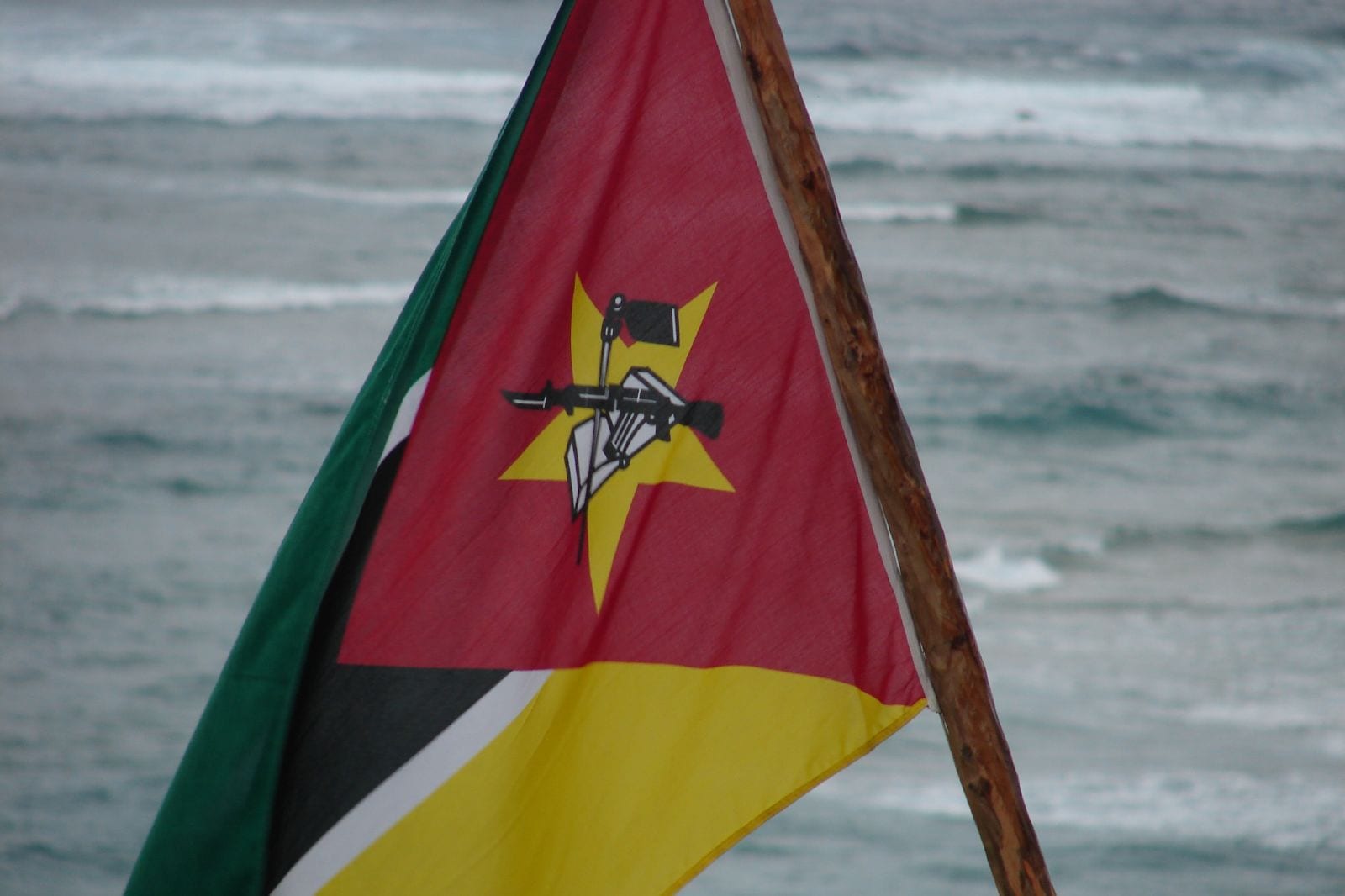
The rifle, crossed with a hoe on an open book, stands for the defence of a country that won its independence through ten years of guerrilla war.
By Globeway Editorial · 2 November 2026
The short answer
Mozambique's flag carries an AK-47 assault rifle with a bayonet because the country won its independence from Portugal through a guerrilla war, fought from 1964 to 1974 by the Mozambique Liberation Front, FRELIMO, whose fighters were armed largely with Soviet-bloc weapons such as the Kalashnikov. On the flag the rifle is crossed with a hoe and laid over an open book. According to the constitution, the three stand for defence, production and education: the things a new nation would need to protect itself, feed itself and teach its people.
The design comes from FRELIMO's own flag, and FRELIMO has governed the country ever since independence on 25 June 1975. Mozambique is the only country whose national flag shows a modern firearm, and the rifle has been controversial for decades. Opposition politicians have tried to remove it, most seriously in 2005, but parliament voted to keep it.
Reading the flag
Article 297 of the constitution describes the design: green, black and gold horizontal stripes separated by thin white bands, and a red triangle at the hoist, with a star in its centre and a crossed hoe and gun on a book above it. The constitution does not say how many points the star has or which gun it is, but the star is always drawn with five points and the gun is generally understood to be an AK-47 with a bayonet fixed.
Each element has an official meaning. Red stands for resistance to colonial rule and for national defence; green for the country's soil; gold for its subsoil; black for the African continent; and white for peace and "the justice of the struggle of the Mozambican people". The star represents the spirit of international solidarity. The national emblem, adopted on independence day in 1975, repeats the rifle and hoe beside a cogwheel, corn and sugarcane; there the Kalashnikov is described as standing for "defence and vigilance".
Ten years of war with Kalashnikovs
Portuguese rule over Mozambique lasted some 470 years, and by the 20th century it was deeply resented: Mozambicans faced discrimination, little access to education and few skilled jobs. Because the colonial regime was so repressive that resistance could hardly take root inside the territory, exiles founded FRELIMO in Dar es Salaam, in neighbouring Tanganyika (now Tanzania), on 25 June 1962, under the anthropologist Eduardo Mondlane. Portugal, a NATO member, threatened to leave the alliance if pressed over its colonies, so nationalists turned to the Soviet Union and China, which supplied weapons and advisers.
The war began on 25 September 1964 with an attack on the colonial post at Chai in Cabo Delgado, in the far north. FRELIMO's guerrillas carried Mosin-Nagant bolt-action rifles, SKS and AK-47 automatic rifles and Soviet PPSh-41 guns, later backed by mortars and rocket launchers. At first many Portuguese soldiers still carried old Mauser rifles. By the late 1960s FRELIMO had set up "liberated zones" in the north where it, not Portugal, ran civil affairs.
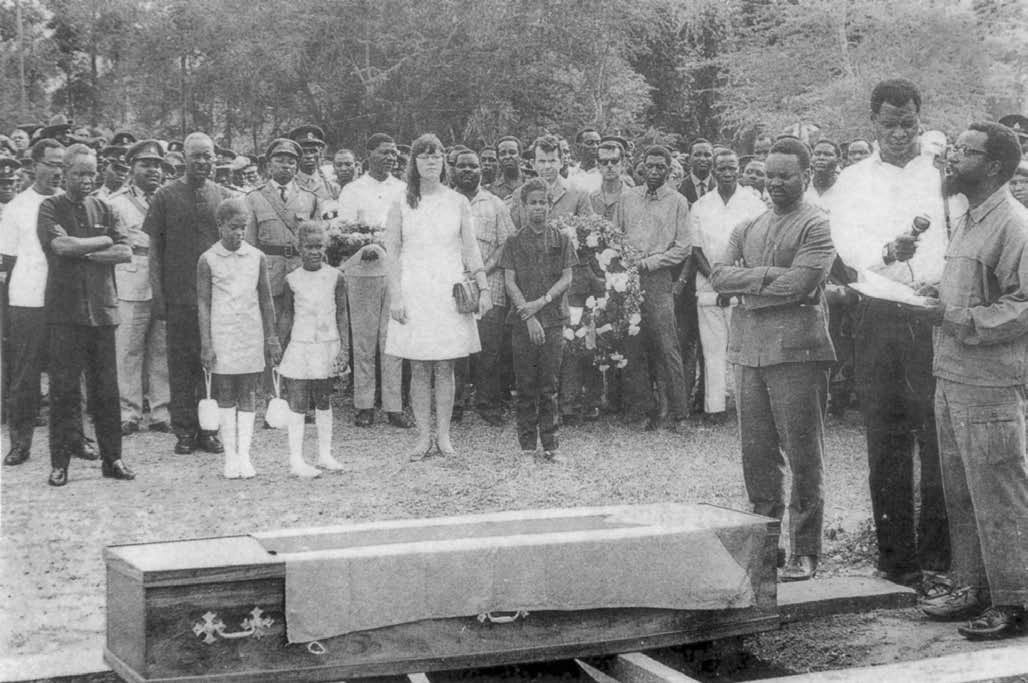
Mondlane was killed on 3 February 1969 by a bomb hidden in a book sent to FRELIMO's headquarters in Dar es Salaam, in an attack later linked to the Portuguese secret police.
After Mondlane's death, Samora Machel was elected FRELIMO's president in 1970. The war ended not on the battlefield but in Lisbon: in 1974 the Carnation Revolution, backed by parts of the Portuguese army, overthrew the dictatorship, and a ceasefire followed on 8 September 1974. Mozambique became independent on 25 June 1975, with Machel as its first president. For the movement that took power, the rifle was not a symbol of aggression but of the struggle that had won the country its freedom.
Cogwheels, red stars and a new design
The rifle was there from the start of independence, but the flag around it has changed. During the transition in 1974 and 1975, FRELIMO's own flag, with the same stripes and red triangle but no symbols, flew alongside Portugal's. The first national flag of the People's Republic, raised in 1975, had four diagonal stripes and, near the top corner, a white cogwheel carrying a red star and the crossed rifle and hoe on a book. The cogwheel stood for the working class and industry, the red star for proletarian internationalism, reflecting the Marxist outlook FRELIMO had held since the late 1960s. In April 1983 the country switched to a version of the FRELIMO flag with the emblem placed on a large yellow star, and on 1 May 1983 the cogwheel was dropped, giving the flag in use today.
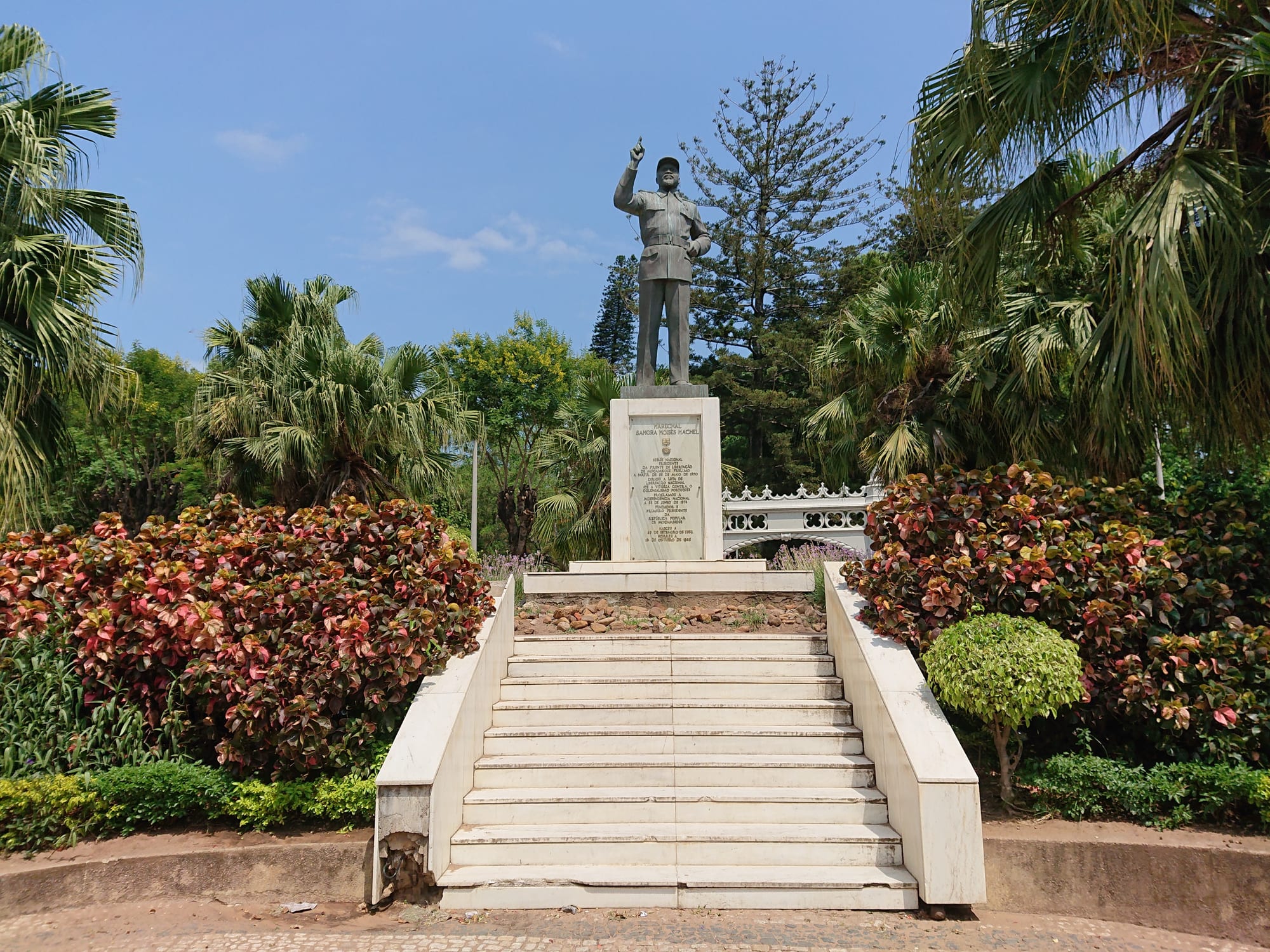
Machel led the country from independence until his death in a plane crash on 19 October 1986.
The fight to remove the rifle
Peace did not last. From 1977 to 1992 FRELIMO's government fought a civil war against the anti-communist rebels of RENAMO, backed by Rhodesia and South Africa. More than a million Mozambicans were killed or died of hunger, and five million were displaced. When a new constitution ended one-party rule in 1990, critics argued that a national flag so like a party flag was at odds with national unity, and many objected that a gun on the flag suggested violence.
In 2005, as part of the peace process between the two sides, the government ran a competition for a new flag and emblem and received 169 entries. RENAMO, by then the main opposition party, wanted the rifle and the star removed. One of its members of parliament argued that a peaceful country could not have a gun on its flag, and that the star was a communist symbol. President Joaquim Chissano replied that if a single star meant communism, the Stars and Stripes would make the United States one of the most left-wing nations on earth. FRELIMO's supporters said the rifle represented the people's determination to defend their country. The Assembly of the Republic voted 155 to 79 against any change, with all the votes to keep the flag coming from FRELIMO and all those to change it from RENAMO.
Not the only Kalashnikov in heraldry
Mozambique is not alone in honouring the weapon. In the pro-communist states of the 20th century, the AK-47 became a symbol of Third World revolution. It appears on the coats of arms of East Timor and Zimbabwe, and on that of revolutionary-era Burkina Faso, as well as on the flags of several armed movements. But Mozambique's remains the only national flag that carries one, and with FRELIMO still in power, the law still requires the flag, rifle and all, to fly over the country's schools, barracks and government offices.