History · Armenia
Why is Armenia considered the first country to make Christianity its official religion?
A king caught between Rome and Persia, a saint thrown into a pit, and a choice that shaped Armenian identity for 1,700 years.
By Globeway Editorial · 2 November 2026
The short answer
In the early 4th century, King Trdat III of Armenia, also known by the Greek form of his name, Tiridates, was converted by a missionary called Gregory the Illuminator, and Christianity became the religion of the kingdom. Armenian tradition dates this to 301, which would put Armenia ahead of the Roman Empire, which only legalised Christianity in 313 and made it the state church in 380. Many modern scholars prefer a date of about 314, and there is a rival, older claim from the small kingdom of Edessa, so historians usually describe Armenia as the first state, or one of the first, to adopt Christianity.
The reasons were partly faith and partly politics. Christianity had been spreading in Armenia for generations before the king adopted it. Trdat, a member of a royal family at war with the new Sasanian dynasty of Persia, also had good reason to set his kingdom apart from his Zoroastrian enemy. Many historians see the conversion as an act of state that bound the monarchy, the nobility and the people to a new identity.
A kingdom between two empires
For centuries Armenia had looked east. Before Christianity, most Armenians practised a local form of Zoroastrianism, the ancient religion of Iran, mixed with native gods such as the goddess Anahit and Vahagn. Since the 1st century AD the kingdom had been ruled by a branch of the Arsacids, the Parthian dynasty that also ruled Iran, under a compromise between Rome and Parthia.
That balance broke in the 3rd century, when the Sasanians overthrew the Parthians in Iran. The Armenian Arsacids, in effect, began a family feud with the Sasanians to avenge their relatives, and Armenia drifted closer to Rome. It was attacked and at times occupied by Persia, until Trdat was restored to the throne with Roman help during the reign of the emperor Diocletian, possibly in 298 or 299.
The faith had arrived long before the king. Armenian tradition credits the apostles Thaddeus and Bartholomew with preaching there in the 1st century, stories historians regard as legend. More solid evidence is a letter from Bishop Dionysius of Alexandria, written in the mid-3rd century to an Armenian bishop named Meruzanes, which suggests that a sizeable Christian community already existed.
The saint in the pit
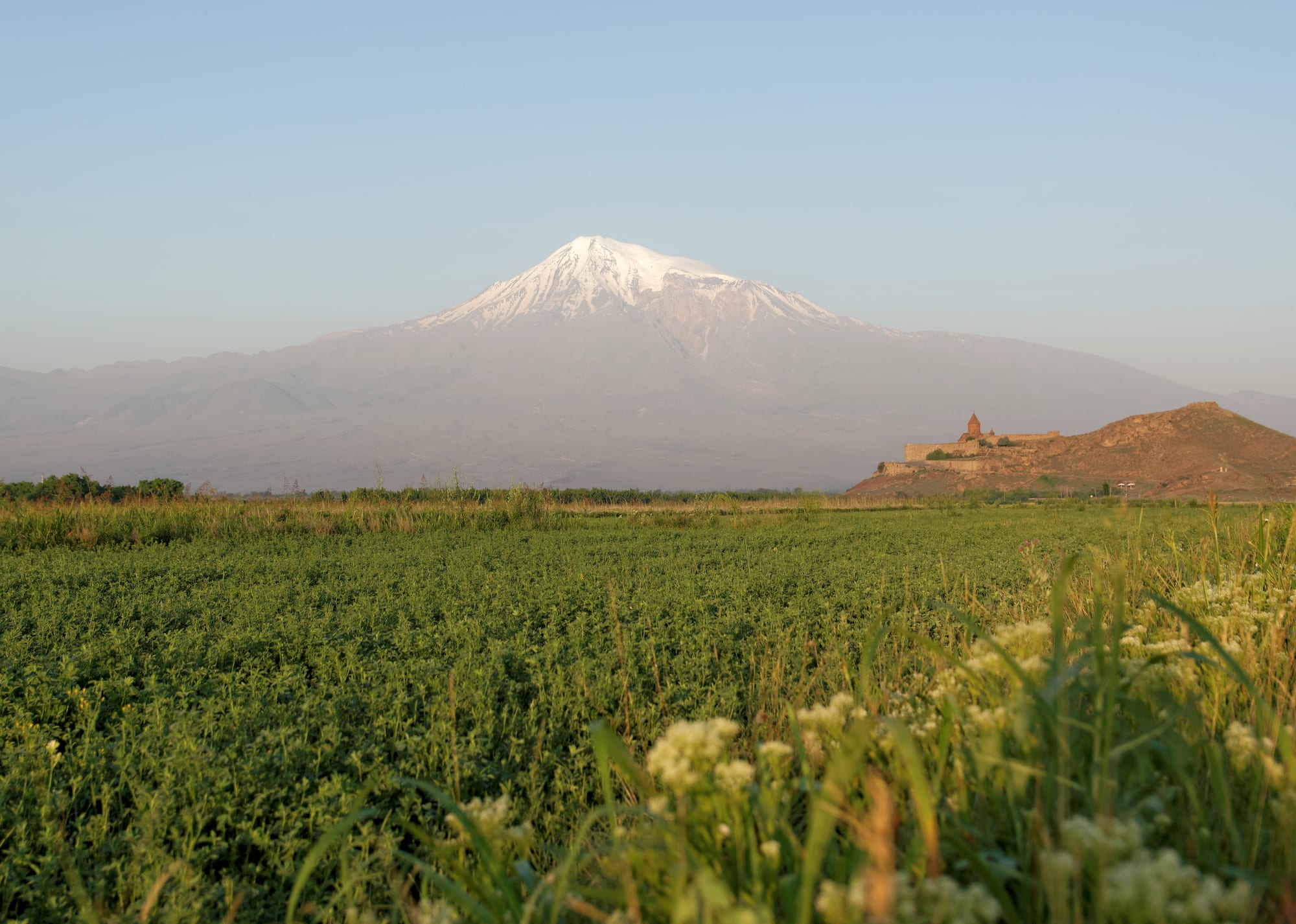
The traditional story comes from a 5th-century history attributed to a writer called Agathangelos, which mixes fact and legend. In it, Gregory is the son of the nobleman who murdered Trdat's father, raised as a Christian in Caesarea in Cappadocia. He enters the king's service, refuses to make offerings to the goddess Anahit, and is tortured. When Trdat learns who Gregory's father was, he has him thrown into a deep pit, Khor Virap, near the old capital of Artaxata, where he survives for 13 years. Meanwhile Trdat orders the death of a group of Christian nuns who had fled persecution in the Roman Empire, among them Hripsime and Gayane.
According to the story, Trdat is then turned into a wild boar for his sins. After his sister Khosrovidukht has a vision, the saint is lifted from the pit, heals the king, and Trdat and his court accept Christianity. Gregory goes on to tear down pagan temples, build churches on their sites and baptise the king, his army and his people in the Euphrates.
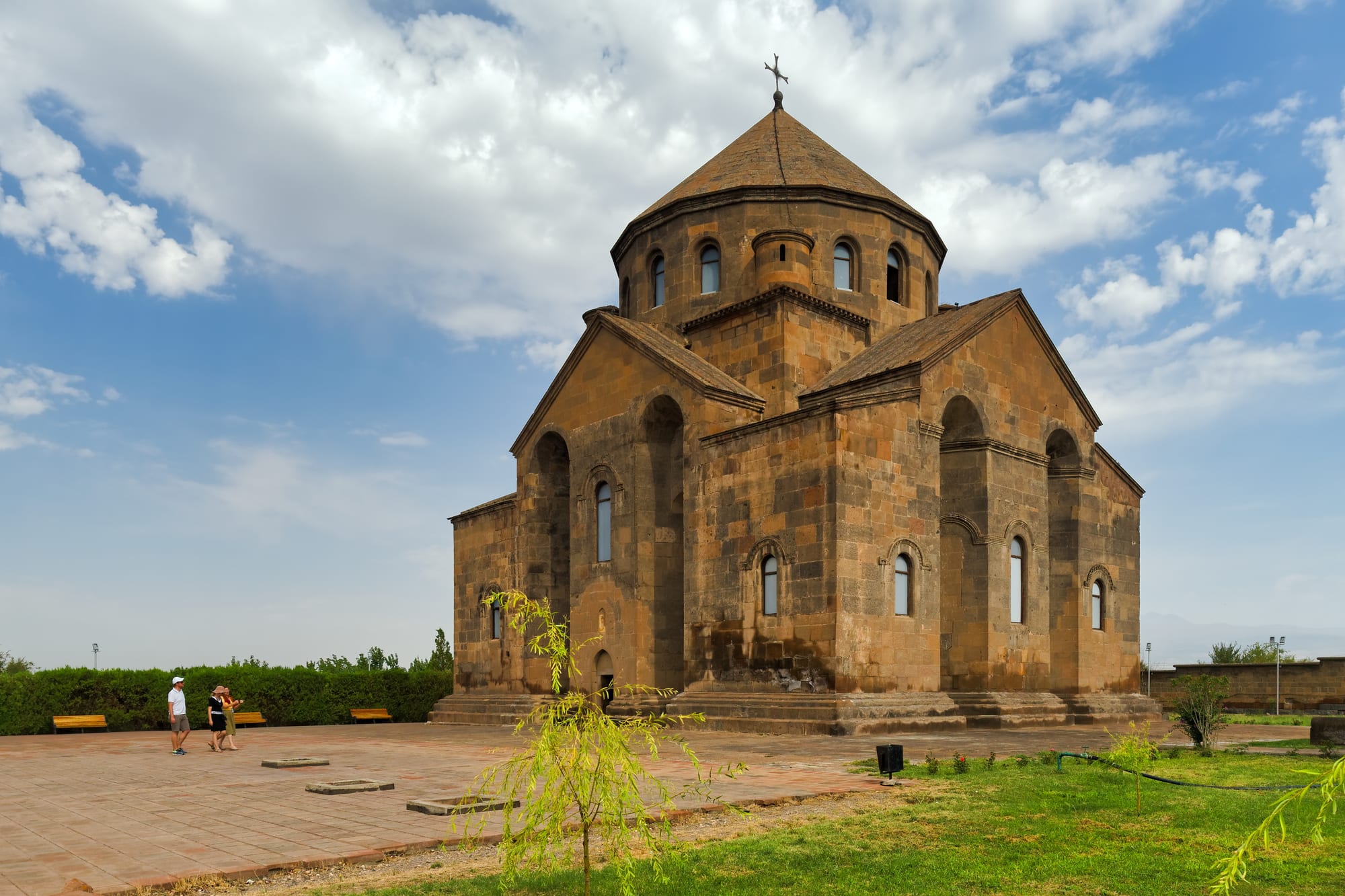
The church is part of a UNESCO World Heritage Site listed in 2000 with Etchmiadzin Cathedral and other early churches nearby.
Historians treat much of this as legend, but other sources confirm the core: Gregory led the early Armenian church, his descendants held its leadership for generations, and he was consecrated bishop at Caesarea, most likely at a church council in 314.
Faith, or an act of state?
Why did Trdat do it? Most explanations point to Persia. The historian George Bournoutian names external pressure from Zoroastrian Persia and its zealous new Sasanian dynasty as the main factor, and the scholar Mary Boyce wrote that Armenia accepted Christianity partly in defiance of the Sasanians. Others argue that with Persian Zoroastrianism, Roman paganism and Manichaeism all competing for influence in Armenia, Christianity was the best way to unite a restored monarchy and its quarrelsome nobles. The historian Robert W. Thomson calls it an act of state, while noting that Trdat's personal motives remain unclear.
The date matters to this argument. If Armenia converted in 301, it did so while Rome under Diocletian was still persecuting Christians, which would have been a bold break with its powerful ally. Those who favour 314 argue that a loyal client king could not have defied Rome like that, and place the conversion after the Edict of Milan of 313, when Rome turned to tolerating Christianity. One view splits the difference: the king and court may have converted privately in 301 and made it official after 313.
- c. 250
A bishop of Alexandria writes to an Armenian bishop, evidence of an established Christian community.
- 298/299
Trdat III is probably restored to the Armenian throne with Roman support.
- 301
The traditional date of Armenia's conversion under Trdat and Gregory.
- 313
The Edict of Milan brings toleration for Christians in the Roman Empire.
- 314
Gregory is consecrated bishop of Armenia at Caesarea, the date many scholars favour for the conversion.
- 325
Gregory's son and successor, Aristakes, attends the Council of Nicaea.
- 380
The Edict of Thessalonica makes Nicene Christianity the state church of the Roman Empire.
- c. 405
Mesrop Mashtots creates the Armenian alphabet, and the Bible is translated into Armenian.
How firm is "first"?
Armenia's claim has a rival. Edessa, capital of the small kingdom of Osroene and now the city of Şanlıurfa in Turkey, was celebrated in early Christian writings as the first kingdom to adopt Christianity. Some date this to the reign of King Abgar VIII the Great (177 to 212), whose coins from 179 to 192 show him wearing a tiara marked with a cross. But the main sources for the claim are a legend and a 6th-century chronicle, and its dates and circumstances are still debated. The historian Nina Garsoïan has even suggested that the tradition of Armenia as the first Christian state may originally refer to the early conversion of small Armenian principalities in the south, not the main kingdom.
The neighbouring Georgian kingdom of Iberia, under King Mirian III, also adopted Christianity in the early 4th century, so Armenia and Georgia were among the first monarchies anywhere to do so.
Why it still matters
The decisive step came around 405, when the ascetic preacher Mesrop Mashtots created the Armenian alphabet and the Bible and liturgy were translated into Armenian for the first time. From then on the faith spread quickly, and it held: in the mid-5th century, when the Persian king Yazdegerd II tried to impose Zoroastrianism, Armenians rebelled, and the effort to root out their Christianity failed.
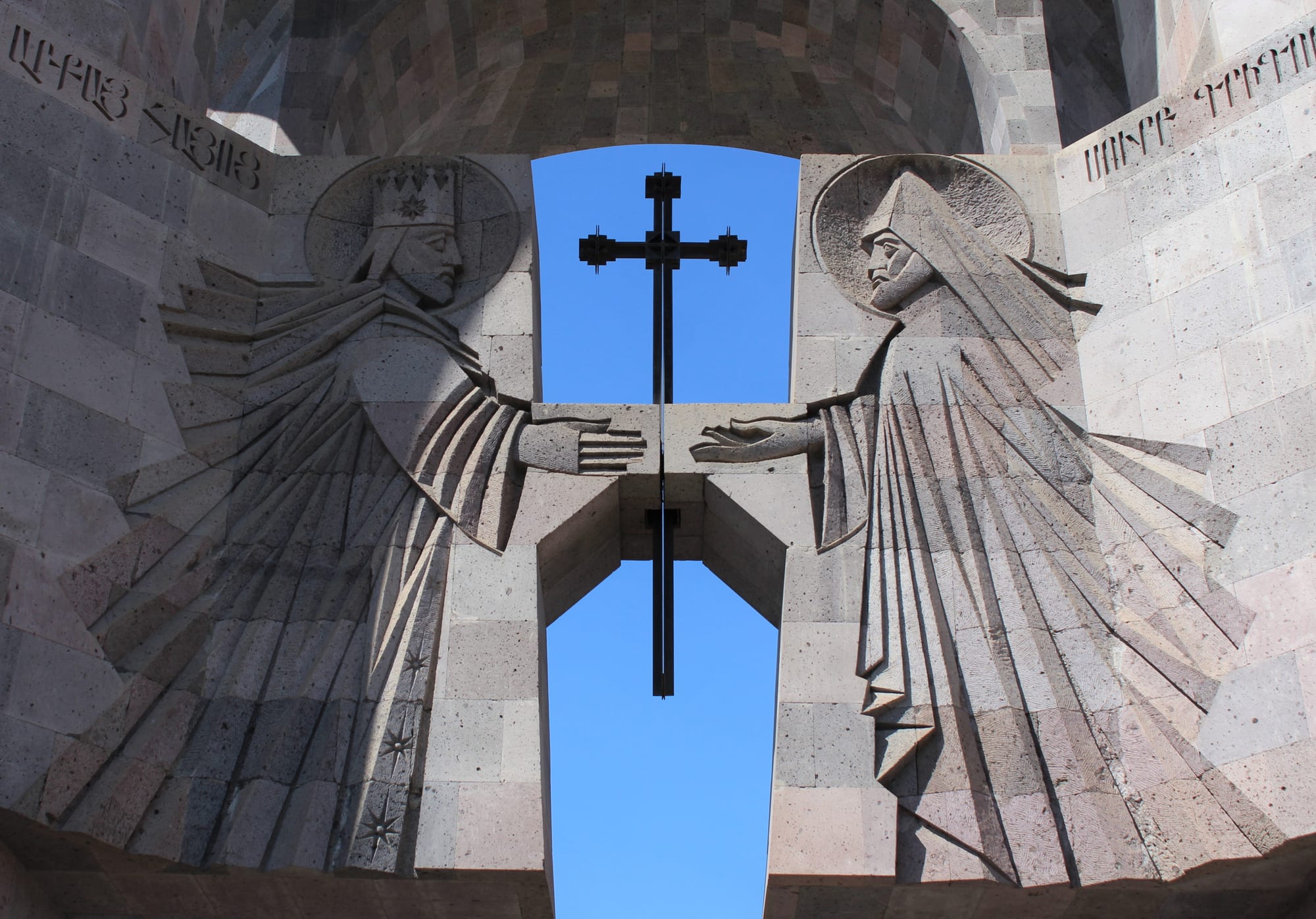
Etchmiadzin, the town also known as Vagharshapat, is home to the Mother See of Holy Etchmiadzin, the headquarters of the Armenian Apostolic Church.
The conversion is regarded as one of the most important events in Armenian history. It turned Armenia away from its centuries-old ties to the Iranian world, and through long periods without political independence, the Armenian Church gave the nation a structure that preserved its identity. Etchmiadzin Cathedral, founded by tradition between 301 and 303 on the site of a pagan temple, is often called the oldest cathedral in the world. In 2001 Armenia celebrated 1,700 years as a Christian nation, keeping the traditional date that scholars still debate.