History · Uruguay
Why was Uruguay's José Mujica called the world's poorest president?
He gave away most of his salary, skipped the presidential residence and drove an old Beetle. The label described a choice, not poverty.
By Globeway Editorial · 2 November 2026
The short answer
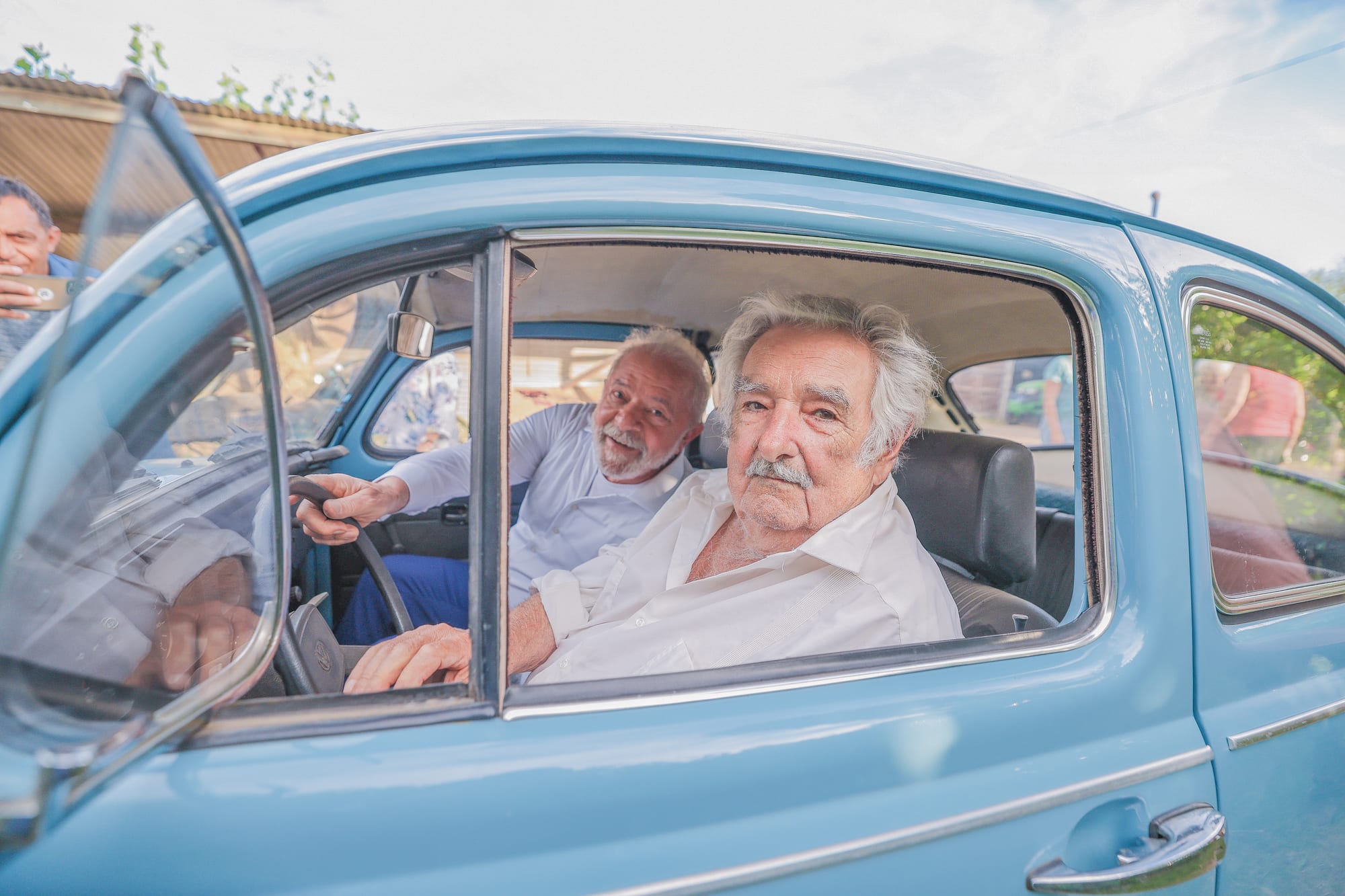
José "Pepe" Mujica, president of Uruguay from 2010 to 2015, was nicknamed "the world's poorest president" because of how he chose to live. He gave around 90 per cent of his monthly salary of about US$12,000 to charities helping people on low incomes and small entrepreneurs. He refused to move into the presidential residence, staying instead on his wife's small farm on the edge of Montevideo, where the couple grew chrysanthemums for sale. He drove himself around in a 1987 Volkswagen Beetle, and in 2010 that car, worth US$1,800, was the only asset on his official declaration of personal wealth.
The nickname was really about austerity rather than poverty. Mujica was a head of state with a full salary who simply declined to spend it on himself. He was also an outspoken critic of what he saw as capitalism's focus on piling up possessions that do not make people happier, and his way of living was the argument made visible.
From guerrilla to prisoner
Mujica's frugality was rooted in a hard life. Born in Montevideo on 20 May 1935, he lost his father, a farmer who went bankrupt, when he was five. He went into politics young, and in the mid-1960s joined the Tupamaros, a far-left urban guerrilla movement inspired by the Cuban Revolution. In 1969 he took part in the group's brief seizure of the town of Pando, near Montevideo. In March 1970 he was shot six times while resisting arrest in a Montevideo bar, wounding two policemen.
He was captured four times. Twice he escaped from Punta Carretas Prison, once in September 1971 with more than 100 other Tupamaros through a tunnel dug from inside the prison. After his final arrest in 1972, the military, which seized power in 1973, held him as one of nine Tupamaros kept in especially squalid conditions. In all he spent more than a dozen years in captivity, including more than two years confined at the bottom of an old, emptied horse trough. He suffered serious health problems, including hallucinations, and was freed only in 1985 under an amnesty after democracy returned.
A president who stayed on the farm
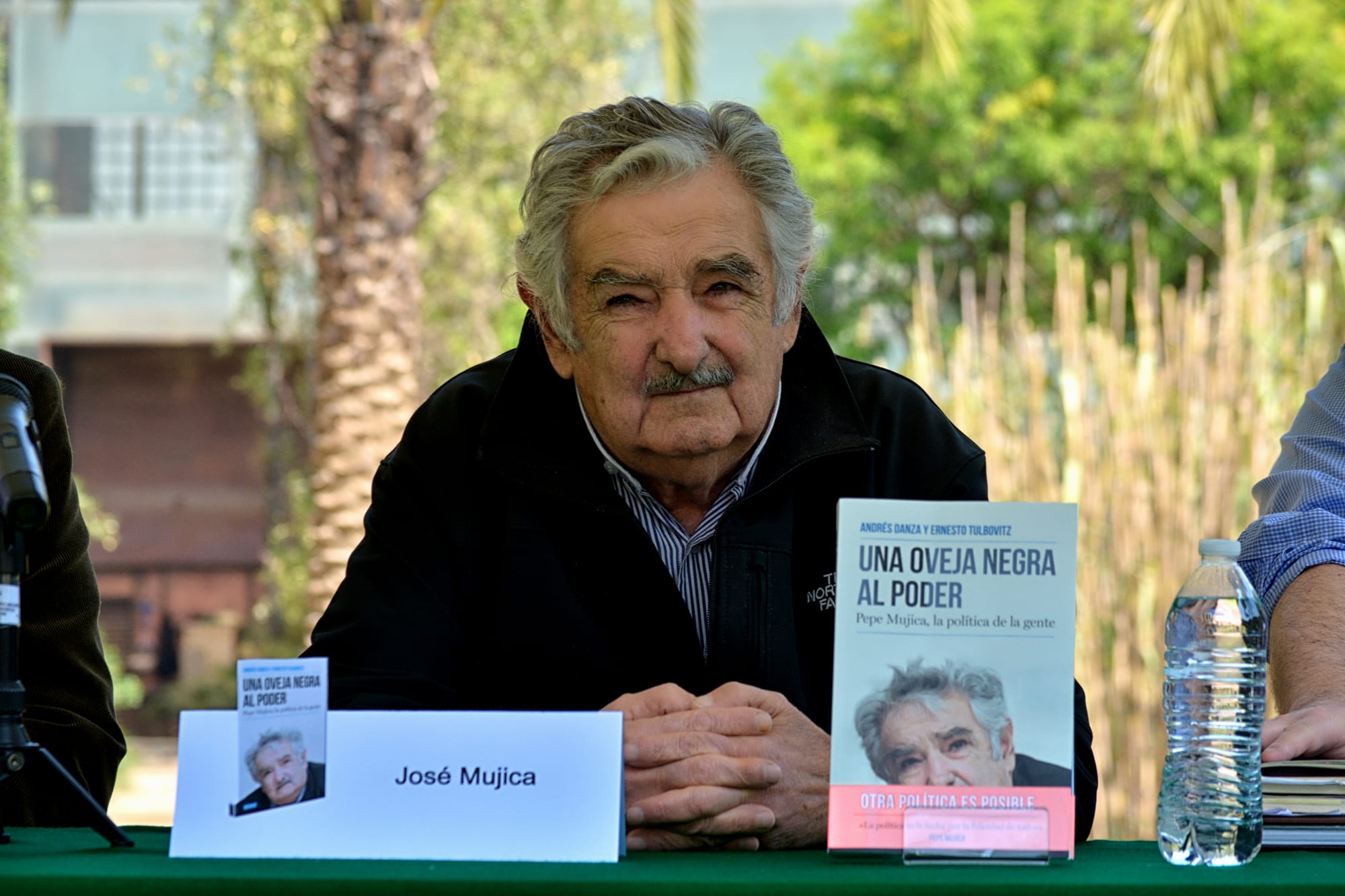
After his release, Mujica helped found the Movement of Popular Participation, which joined the Broad Front coalition of left-wing parties. He became a deputy in 1994, a senator in 1999 and minister of livestock, agriculture and fisheries in 2005, a post that fitted his own background in farming. His informal, plain-spoken style won him a following, especially among rural and poorer Uruguayans, and on 29 November 2009 he won the presidential run-off with more than 52 per cent of the vote. In his first speech as president-elect he called for unity, promising "no winners or losers" and saying it had taken him a lifetime to learn that power comes not from above but from the hearts of the people. He took office on 1 March 2010.
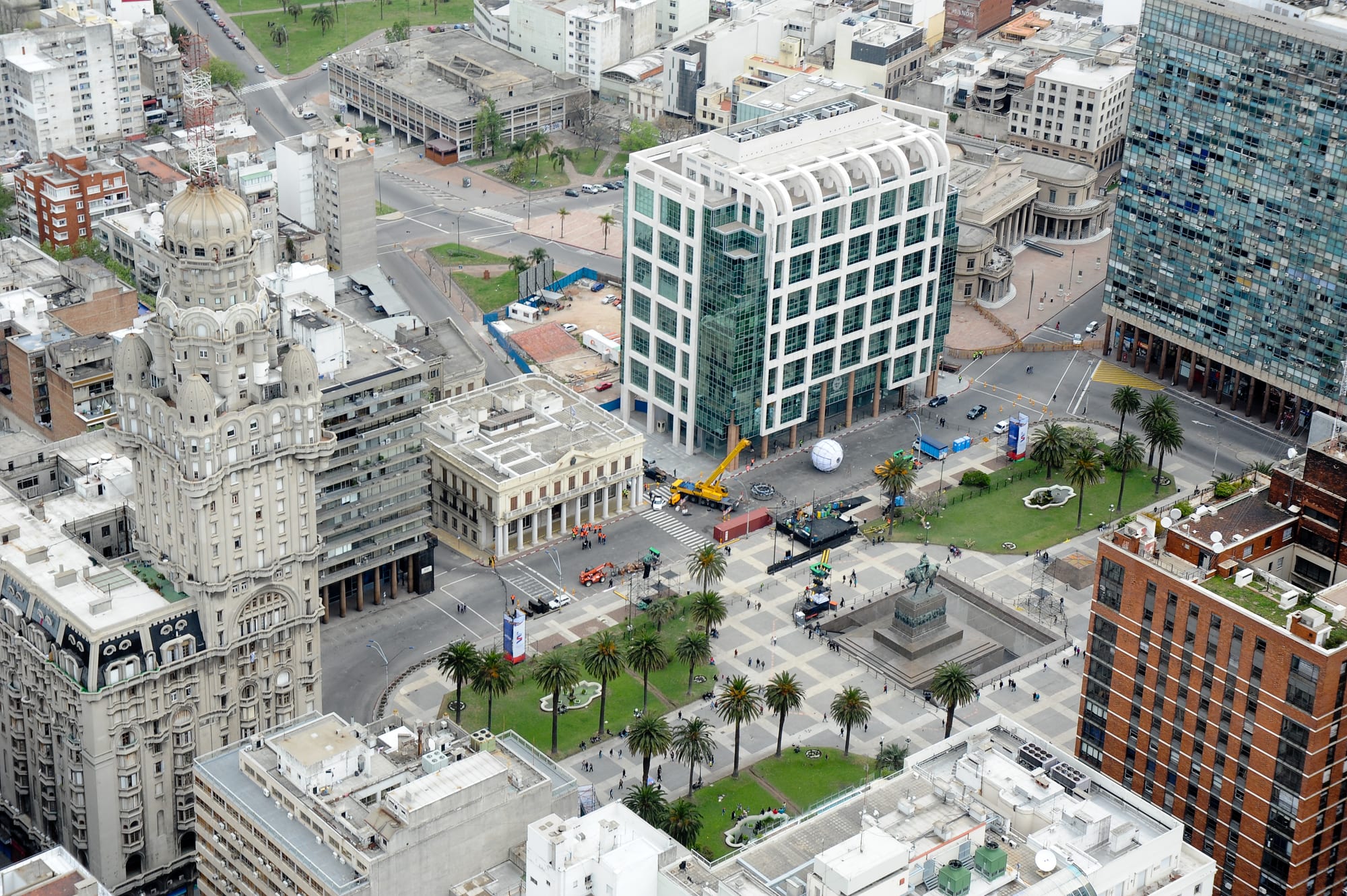
Uruguayan presidents have lived at the Suárez and Reyes residence in Montevideo's Prado district since 1947. Mujica and his wife, Lucía Topolansky, a fellow former Tupamaro who served in both houses of parliament, decided to stay at their farm in Rincón del Cerro instead, adding security and communications equipment. Their pets included a three-legged dog called Manuela. Besides the Beetle, Mujica got about on a bicycle he had owned for some 60 years. Mujica dressed informally, and even when he put on a suit to visit other heads of state during his campaign, he went without a tie.
Much of his salary went to a housing programme called Plan Juntos, in which homes for families in need were built by specialists working alongside the families themselves, their neighbours and volunteers. Mujica described it not as a housing plan but as a plan of ethics.
A message the world wanted to hear
The nickname spread because Mujica's example fitted a larger message. At the United Nations General Assembly in September 2013 he gave a long speech about humanity and globalisation, warning about the power of the financial system and urging a return to simpler lives founded on love, friendship, solidarity and family rather than lives shackled to the economy and the markets. Film-makers followed: Emir Kusturica made a documentary, El Pepe, una vida suprema, released in 2018, and the same year the film A Twelve-Year Night dramatised his imprisonment.
His government was more than a symbol. It legalised state-controlled sales of marijuana, same-sex marriage and abortion, raised the minimum wage and strengthened trade unions. Over the governments of Mujica and his predecessor, between 2004 and 2013, Uruguay's poverty rate fell from 18 to 9.7 per cent and the minimum wage more than doubled, from 4,800 to 10,000 pesos. The constitution barred him from immediate re-election, and he handed over power on 1 March 2015, leaving, in the words of the BBC correspondent Wyre Davies, a relatively healthy economy and social stability that Uruguay's bigger neighbours could only dream of.
The farmer's farewell
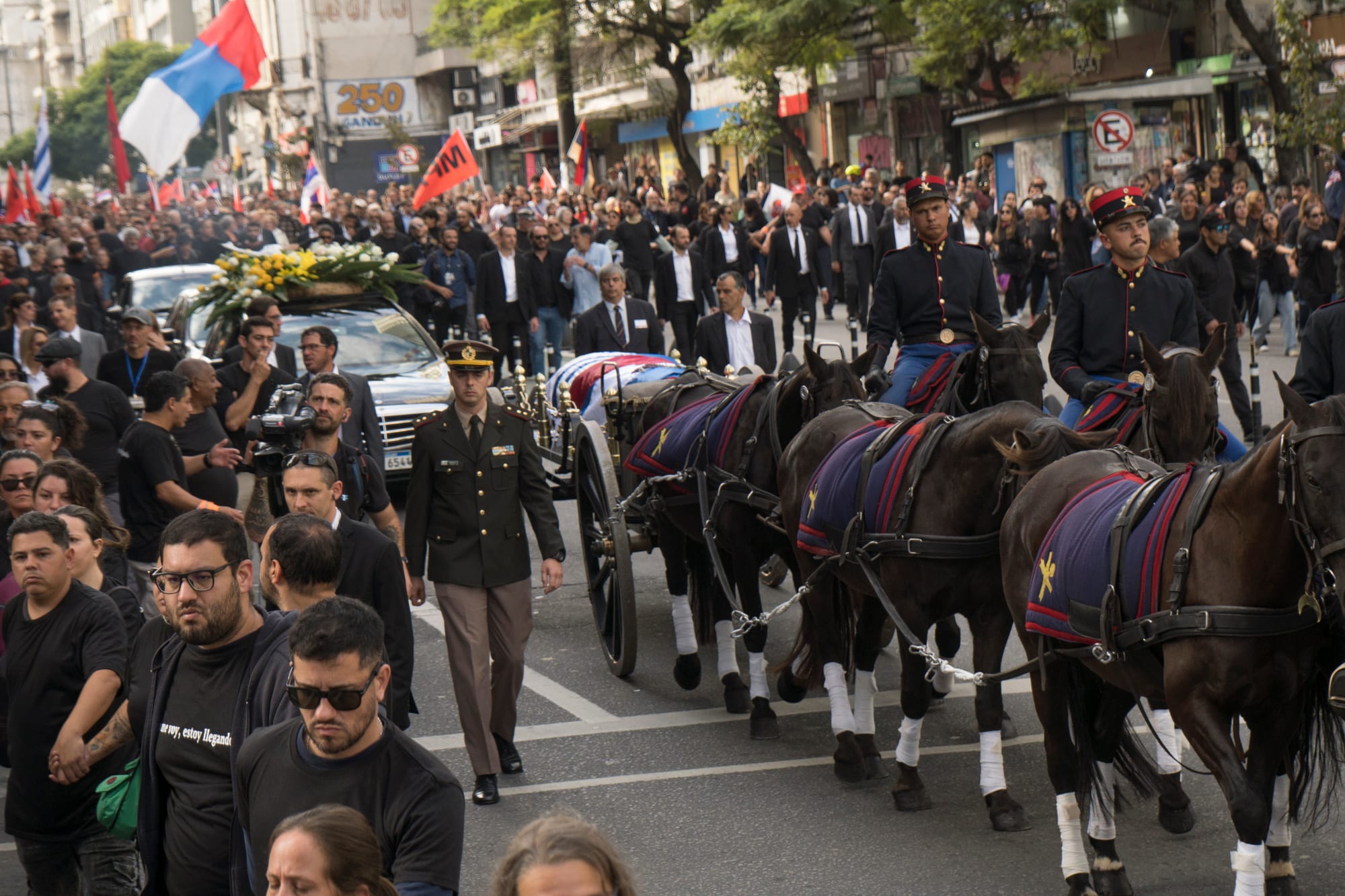
Mujica stayed in the Senate until October 2020, when he retired from politics at 85. In April 2024 he announced he had cancer of the oesophagus, but still campaigned for the Broad Front's Yamandú Orsi, who won that year's presidential election. He died at his farmhouse in Rincón del Cerro on 13 May 2025, a week before his 90th birthday. The government declared three days of national mourning, and an estimated 100,000 people attended his funeral in Montevideo. He had asked for his ashes to be laid to rest at the farm.