💰 Budget
Cabinda is expensive for its size because most visitors are oil-industry workers and hotel rates are set for company budgets, with little competition. Food in local restaurants and markets is cheap, and prices are often compared with those in Pointe-Noire over the border. Reaching the exclave usually means a domestic flight from Luanda.
- Daily Budget Midrange
- USD 160–300 (business hotel, restaurants, a car and driver)
- Daily Budget Shoestring
- USD 70–120 (basic hotel, market meals, shared taxis)
Rooms are worth booking ahead, and cash in kwanza and US dollars is needed outside the larger hotels, where cards are rarely accepted.
📅 Best Time to Visit
June to September, the drier cacimbo, is the easier season for the forest roads and for walking, though the sky is often grey. The rains from October to May are hot and heavy and turn unpaved roads in the interior to mud. Any visit to the interior depends more on the current security picture than on the season.
⏳ Suggested Number of Days
The city itself is small and a day or two covers it. Three or four days make sense for the coast north of the city and an organised trip towards the forest, both of which depend on transport being arranged in advance and on local advice about conditions.
- First Visit
- 1–2 days
- With Surroundings
- 3–4 days
🚆 Transportation
Shared taxis and motorcycle taxis cover the city and the main routes out of it, and a paved road runs north towards Landana and Buco-Zau. Most visitors use a hired car with a driver, often arranged through a hotel or an employer. Distances within the province are short by Angolan standards, but checkpoints add time.
Journeys into the interior are best arranged locally and in daylight, with identification carried for the frequent checkpoints.
🛬 Airport & Station Connections
Flights from Luanda to Cabinda Airport are the normal way in and out, and the airport sits on the edge of the city. The overland route from the rest of Angola crosses Democratic Republic of the Congo territory and requires Congolese paperwork, and a road runs north to the Republic of the Congo border towards Pointe-Noire.
🚶 Walkability
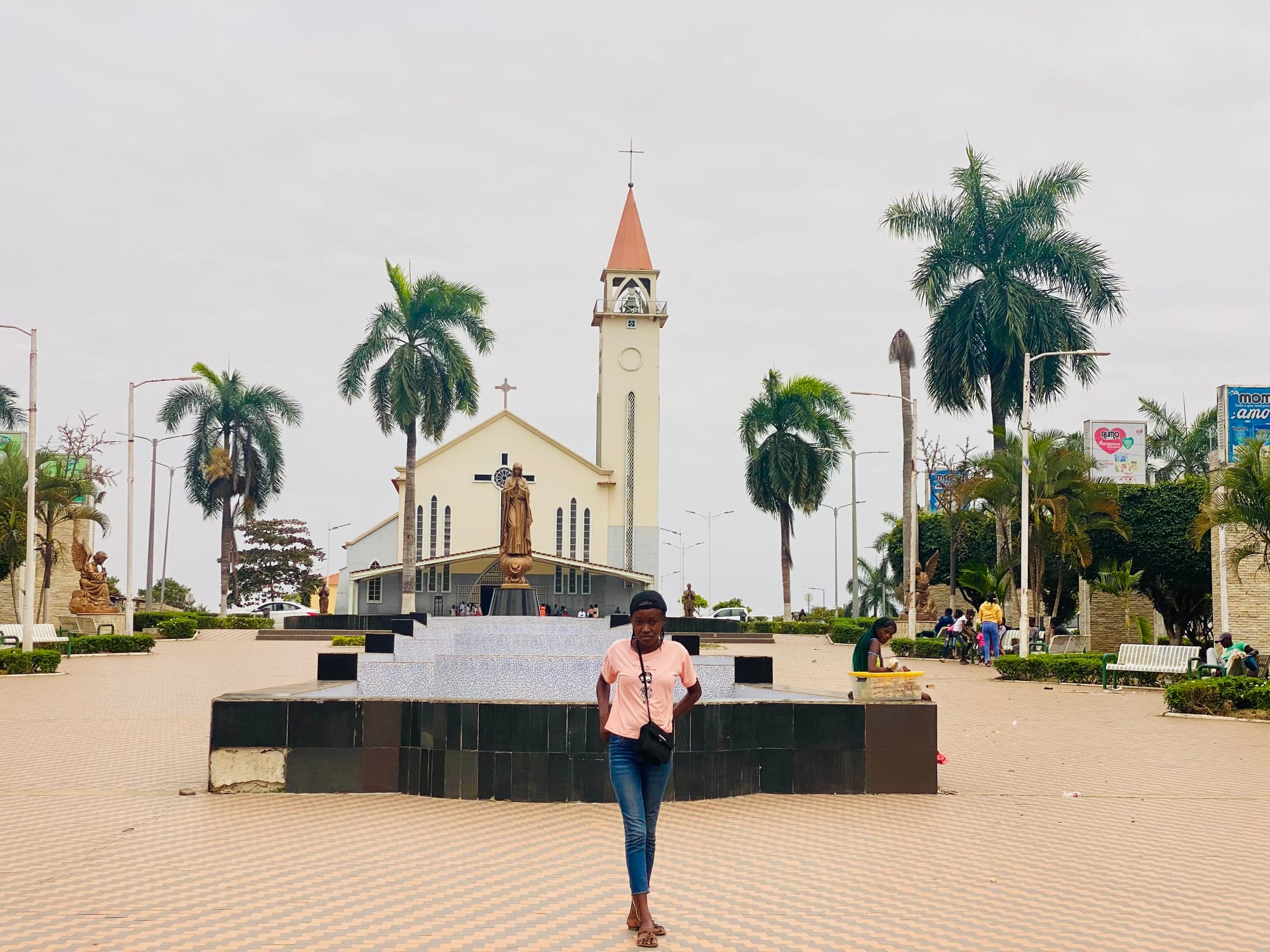
The central grid, the cathedral square and the seafront are flat and easily walked, and most of the city's hotels and restaurants lie within that area. Beyond the centre, pavements give out, traffic is heavy on the main roads and distances grow, so a taxi becomes the sensible option. Walking after dark is generally avoided.
🛡️ Safety
Security forces are prominent in the province and checkpoints are common. The city itself is calmer than the interior, with the petty crime found in other Angolan towns. Malaria is present year-round.
Cabinda has a long-running, low-level separatist insurgency linked to factions of FLEC, with occasional armed incidents reported mostly in the forested interior; the most notorious was the 2010 attack on the Togo football team's bus. Overland travel in the interior and across the borders is avoided, local advice is taken before any visit to the Mayombe, and identification is carried at all times. Photography of military, oil and government installations is prohibited. Check current official travel advice before travelling.
🌦️ Climate
Wetter and greener than Luanda, with a long rainy season from about October to May and a cooler, cloudier dry season from June to September. Sea breezes temper the coast, while the hills inland stay humid all year. Angola lies in the southern hemisphere, so summer falls in December to February.
- Summer
- hot and humid in the rainy season, around 27–31°C, with heavy downpours
- Winter
- the dry cacimbo, roughly June–September: overcast and milder, around 21–26°C
🤝 Local Customs
Most people here are Bakongo, and the local speech is Ibinda, a group of Kikongo dialects, alongside Portuguese; French and Lingala are widely understood through family and trade links with the Congos. The Catholic Church is central to social life, traditional authorities still carry weight, and the politics of the exclave are a sensitive subject best left to residents to raise.
Greet before asking, dress modestly away from the beach, ask permission before photographing people, and avoid photographing soldiers, police, the port or oil facilities.
💳 Common Payment Methods
The currency is the Angolan kwanza (AOA). Cards work in the larger hotels and a few supermarkets but almost nowhere else, so cash is the norm; cash machines exist in the centre and can run out. US dollars are useful to bring and change, and Congolese francs and CFA francs circulate informally near the borders.