💰 Budget
Ponta Delgada is moderately priced by Western European standards. A hire car or island tours for the crater lakes and Furnas, and boat trips from the marina, are the main extra costs; city minibuses are cheap.
- Daily Budget Midrange
- USD 115–235 (hotel, restaurant meals, a hire car or island tour, a whale-watching trip)
- Daily Budget Shoestring
- USD 50–95 (guesthouse or hostel, market and bakery food, city minibuses and regional buses)
Walking the old town and the waterfront costs nothing; keep the budget for a car or a tour to see the rest of the island.
📅 Best Time to Visit
The climate is mild all year. August is the warmest month, with daytime highs around 25°C, and February the coolest, with highs around 17°C; temperatures above 30°C or below 4°C have never been recorded. The Santo Cristo festival in spring and the Holy Spirit feasts after Pentecost are the busiest times in the city.
⏳ Suggested Number of Days
Two or three days are enough for the city itself. Most visitors use Ponta Delgada as a base for São Miguel, and the island's crater lakes, hot springs and coast add several more days, depending on the weather.
- First Visit
- 2–3 days
- With Surroundings
- 5–6 days
🚆 Transportation
Minibuses run along the main avenue and around the city, and larger regional buses link Ponta Delgada with the other towns of São Miguel. Taxis are easy to find. For trips across the island, buses, taxis, tours or a hire car are the options, and a car gives the most freedom.
The PDL Minibus app shows the next departures from each stop.
🛬 Airport & Station Connections
John Paul II Ponta Delgada Airport, the busiest in the Azores, is about two kilometres west of the city centre, a short taxi ride away; it handled about 3.3 million passengers in 2024, with flights from mainland Portugal, other parts of Europe, North America and the other islands. Cruise ships call at the terminal of the Portas do Mar.
🚶 Walkability
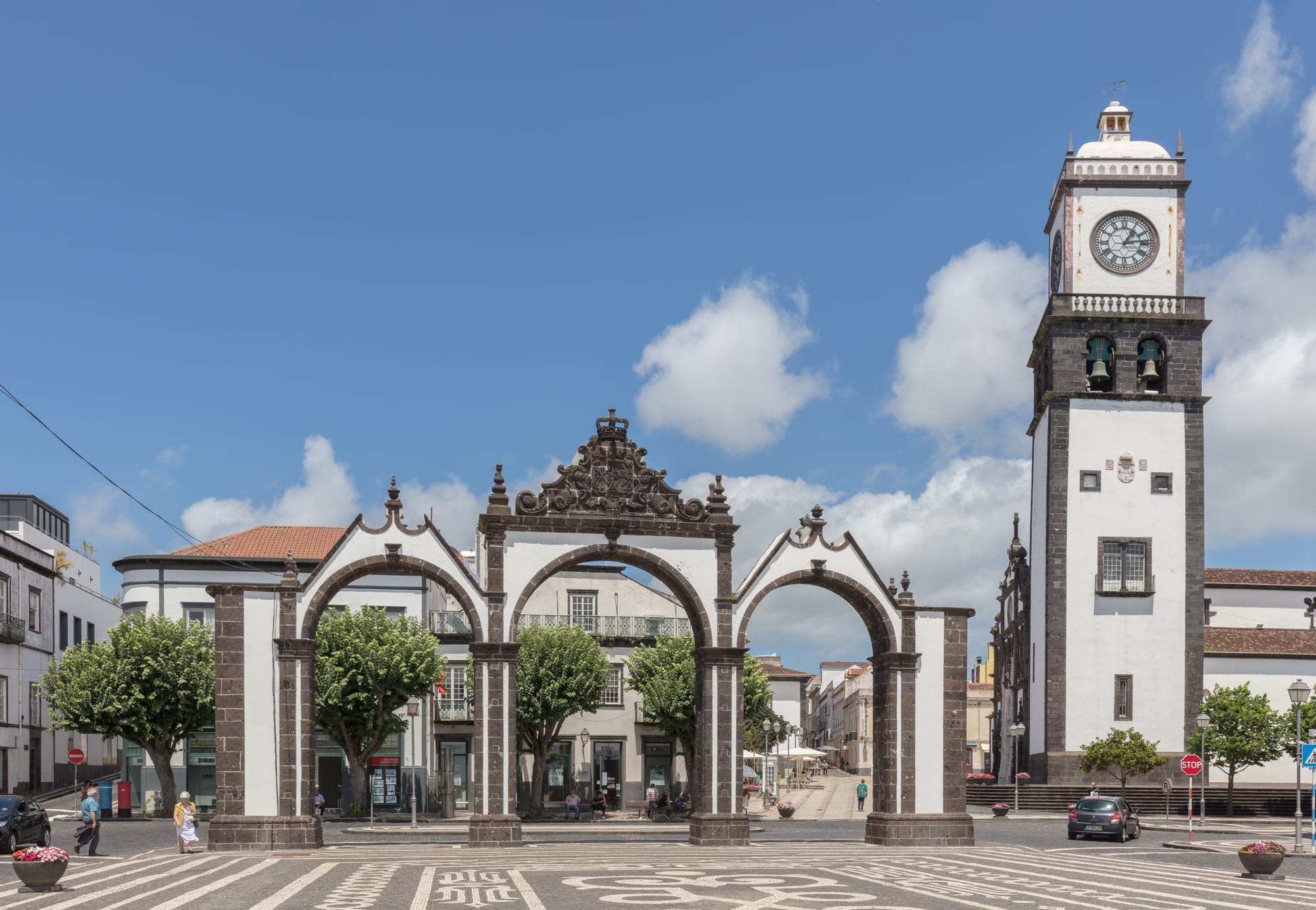
The historic centre and the seafront are compact and easy to walk, with the city gates, churches, fort and marina all close together. The streets are paved in stone, which can be slippery in rain. The rest of the island needs wheels.
🛡️ Safety
The Azores are very safe, with little crime. Crime has risen in recent years, however: in 2023 the municipality recorded about a third of all the criminal cases in the archipelago, and the regional crime rate was above the Portuguese average. For visitors, the main hazards are the weather, the sea and the island's roads and trails.
Take normal care with valuables, check the forecast and sea conditions before boat trips and hikes, and keep back from cliff edges. Check current official travel advice before travelling.
🌦️ Climate
A mild, humid oceanic climate classed as hot-summer Mediterranean, with small differences between seasons. Mean temperatures run from about 14.5°C in winter to about 22°C in summer, and the average relative humidity is around 80%.
- Summer
- mild to warm — daytime highs around 25°C, with August the warmest month
- Winter
- mild and often wet — daytime highs around 17°C, with February the coolest month
🤝 Local Customs
Portuguese is the language, and the Catholic calendar matters: the Santo Cristo and Holy Spirit festivals are religious events first, and processions and churches deserve quiet respect. Wine is the main drink, as in Portugal generally, and São Miguel grows tea at Gorreana, the oldest surviving tea plantation in Europe.
Dress modestly in churches and during processions, and ask before photographing people at religious ceremonies.
💳 Common Payment Methods
The currency is the euro. Many restaurants and shops do not accept international credit cards, but cash machines are widely available, so carrying some euros is sensible.