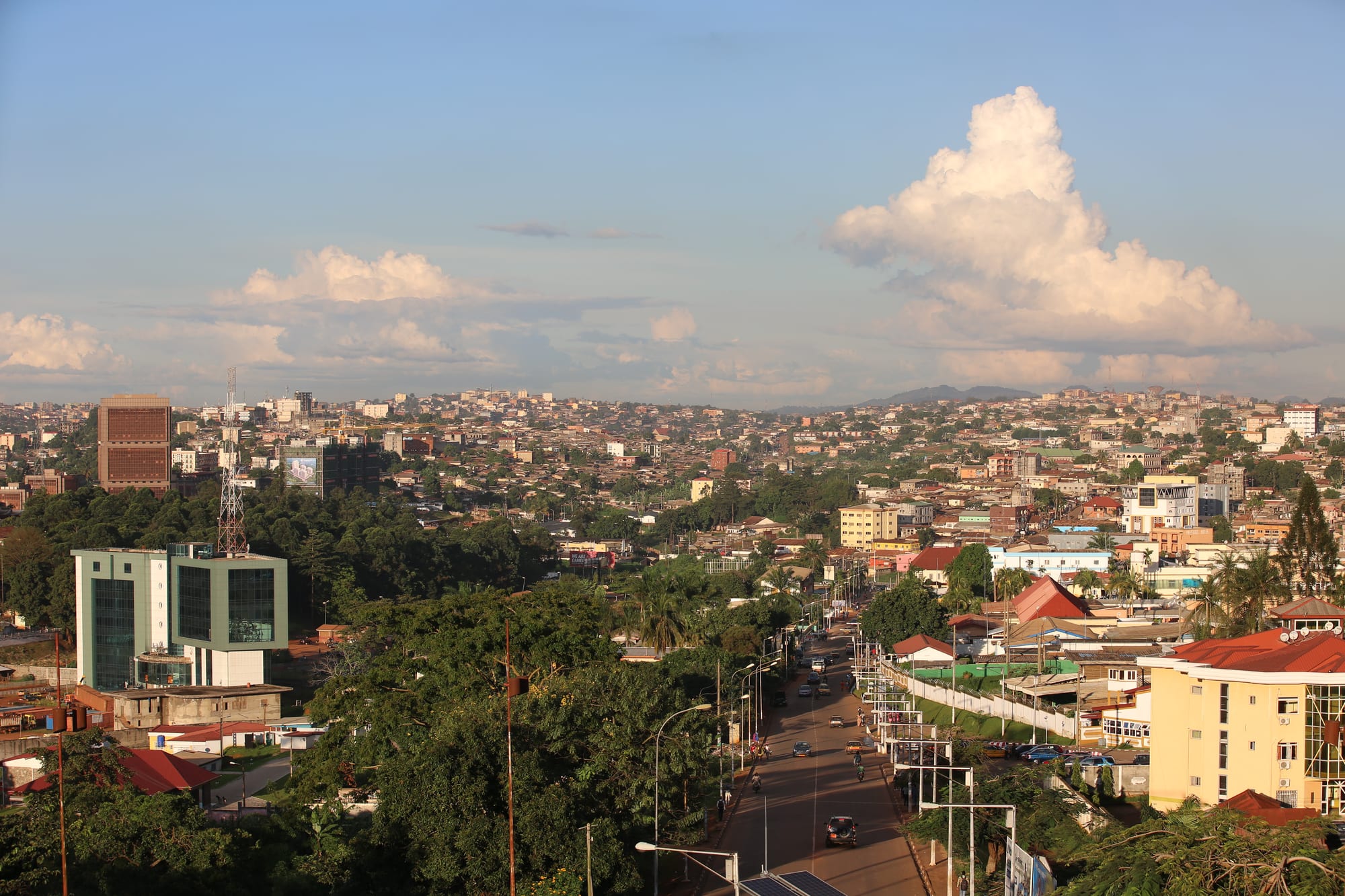
💰 Budget
Yaoundé costs much the same as Douala: hotels and hired vehicles are the expensive part, while markets, chop houses and shared taxis are cheap. The administrative city fills with official visitors during conferences and summits, when rooms are harder to find.
- Daily Budget Midrange
- USD 85–170 (mid-range hotel, restaurant meals, a hired car with driver for day trips)
- Daily Budget Shoestring
- USD 35–60 (basic hotel, chop houses and street food, shared taxis)
Carry CFA francs in small notes for taxis and markets; cards are accepted mainly in hotels and supermarkets.
📅 Best Time to Visit
The long dry season from December to February is the most comfortable, with warm days, less mud and passable roads for trips into the forest. A shorter drier spell falls in July and August. The heaviest rains come in September, October and again in April and May, when afternoon storms are frequent.
⏳ Suggested Number of Days
Two days cover the capital's museums, monuments and markets at an unhurried pace. Three or four allow the forest sanctuary and the villages of the plateau as well. Traffic between the hills stretches journeys, so fewer things fit into a day than the map suggests.
- First Visit
- 2 days
- With Surroundings
- 3–4 days
🚆 Transportation
Shared yellow taxis are the main way to move, hailed from the roadside and shared along a route. Motorbike taxis cover the steep side streets where taxis will not go. Minibuses serve the outer quarters, and there is no urban rail. The hills funnel traffic onto a few main roads, and jams are heavy at the start and end of the working day.
Agree the fare before getting in, and keep to registered taxis rather than motorbikes after dark.
🛬 Airport & Station Connections
Yaoundé Nsimalen International Airport lies about 25 kilometres south of the city, with flights to Douala, other African capitals and Europe. Coaches run to Douala in roughly four hours and east to Bertoua in most of a day; the railway to Douala and the overnight train north to Ngaoundéré both leave from the city station.
🚶 Walkability
The government quarter and the streets around the central market can be walked, but Yaoundé is built on hills and the gradients are steep. Broken pavements, open drains and heavy traffic make longer walks hard going, and most people take a taxi between quarters. Walking after dark is not advisable.
🛡️ Safety
The capital is among the calmer places in Cameroon, and the risks are urban: bag snatching, pickpocketing in markets and bus stations, and robbery after dark. Demonstrations and political gatherings can draw a heavy security response. Police and gendarmerie checkpoints are common on the roads leading out of the city.
Take registered taxis at night, keep valuables out of sight, carry identification for checkpoints, avoid demonstrations, and do not photograph officials, ministries or military sites. Check current official travel advice before travelling.
🌦️ Climate
Equatorial but tempered by the altitude of about 700 metres, so noticeably cooler than Douala. Days usually reach 27–30°C and nights fall to around 19°C, with two rainy and two drier seasons rather than one.
- Summer
- a shorter drier spell in July and August, cloudy and around 25–28°C, followed by the heaviest rains of the year in September and October
- Winter
- the long dry season, December to February, warm and hazy with Harmattan dust and days around 29–32°C
🤝 Local Customs
This is a formal city of civil servants: greetings are unhurried, handshakes and titles matter, and neat dress is expected in offices, churches and restaurants. French is the language of daily life, mixed with Ewondo and camfranglais slang. Sunday belongs to church, and funerals and family ceremonies take up weekends. Tipping is not obligatory, though small amounts are appreciated.
Ask before photographing people, and never photograph soldiers, police, the presidency, ministries or the airport.
💳 Common Payment Methods
The currency is the Central African CFA franc (XAF), pegged to the euro. Cash is needed for taxis, markets and small restaurants. Cards work in hotels, supermarkets and some restaurants, ATMs are common in the centre and Bastos, and mobile money is widely used by residents. Euros are the easiest currency to change.