💰 Budget
Stanley is expensive by South American standards. Almost everything is imported, rooms are few and costly, and much of the bill comes from what lies beyond the town: 4x4 trips to the penguin colonies, inter-island flights and lodge stays. Cruise passengers ashore for a day spend far less than visitors who fly in for a week.
- Daily Budget Midrange
- USD 250–450 (guesthouse or hotel room, pub and restaurant dinners, a guided 4x4 trip to a penguin colony)
- Daily Budget Shoestring
- USD 120–200 (bed and breakfast or camping with the landowner's permission, pub meals and supermarket food, walking and the odd taxi)
Book rooms and any wildlife trips well ahead of the summer season; the town itself, its memorials, the waterfront and the walk out to Gypsy Cove cost nothing.
📅 Best Time to Visit
October to March is the visitor season, when penguins and seabirds are breeding nearby and the cruise ships call. December to February is the mildest time and the peak for wildlife, with very long days. In winter the town is quiet, days are short and many trips beyond Stanley stop.
⏳ Suggested Number of Days
The town itself can be seen in a day or two. Most visitors who fly in stay a week or more to reach the penguin colonies and outer islands, and the length depends on the weekly flights and on weather, which can delay inter-island planes.
- First Visit
- 1–2 days
- With Surroundings
- 4–7 days
🚆 Transportation
Stanley is the hub of East Falkland's road network, but outside the town roads are few and most travel is by 4x4 on tracks; driving is on the left. Two taxi services cover the town and the surrounding area. The Falkland Islands Government Air Service flies small aircraft from Port Stanley Airport, two miles from the city, to grass strips across the islands.
Inter-island flight schedules are announced the night before departure, so allow spare days for weather.
🛬 Airport & Station Connections
International flights use RAF Mount Pleasant, a military airbase about 33 miles south-west of Stanley: twice-weekly flights to and from the United Kingdom routed via Ascension Island, and a weekly service to Punta Arenas in Chile. Taxis and a shuttle bus run to the town. Many visitors arrive instead on expedition cruise ships, whose passengers come ashore near the centre.
🚶 Walkability
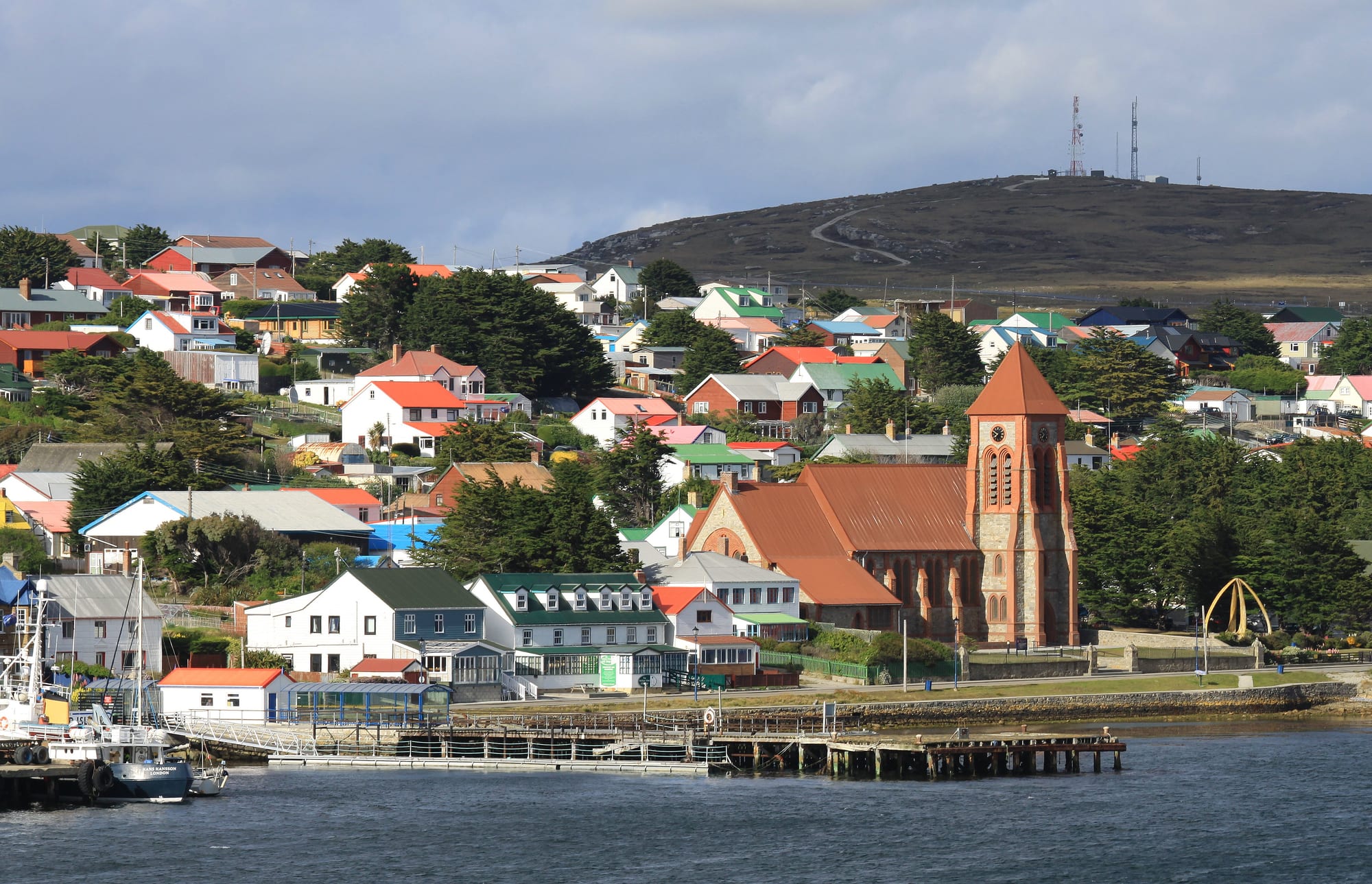
Stanley is small, and walking is the best way to see it: the waterfront, cathedral, museum and memorials lie along one road beside the harbour. Streets above it climb a north-facing slope, and the wind can make even short walks hard work. Gypsy Cove is a longer walk out of town.
🛡️ Safety
Very safe, with almost no crime. The real hazards around Stanley are the wind, cold and fast-changing weather, and the sea. The beaches and land around the town were heavily mined in 1982; after years of clearance the islands were declared free of landmines in 2020.
Carry windproof and waterproof layers even in summer, keep back from cliff edges and wildlife, and obey any fence or sign that remains. Check current official travel advice before travelling.
🌦️ Climate
A cool, windy subpolar oceanic climate with strong westerlies and fairly even temperatures through the year. Rain falls on many days but totals are modest, about 544 mm a year, and spread evenly through the seasons. Frost occurs on more than one night in three, and sporadic light snow can fall for much of the year.
- Summer
- December–February; mild — the January mean daily maximum in Stanley is about 14°C, and daylight lasts very long
- Winter
- June–August; cold, with days in the islands of about 0–5°C, short daylight and occasional snow
🤝 Local Customs
Stanley is a small, close-knit, English-speaking community with a firmly British identity. Spanish names for the islands and the town, above all Puerto Argentino, are considered extremely offensive by many islanders. Islanders call everywhere outside Stanley "camp". On days when large cruise ships call, visitors can outnumber residents, and a little patience goes a long way.
Ask before photographing people or their homes, keep to paths at memorials, and respect fences and signs at farms and wildlife sites.
💳 Common Payment Methods
The currency is the Falkland Islands pound, at par with sterling; British notes and coins are used alongside it, but Falklands notes are not accepted in the United Kingdom. Cards work in Stanley, but banking and cash machines are very limited, so cash is useful for trips into camp.