💰 Budget
Kefalonia sits close to the Greek average for prices, below Santorini and Mykonos. Argostoli and Lassi have the widest range of rooms and the best value, while Fiskardo and the villas of the north are among the more expensive places to stay in the Ionian Islands. A hire car is the main extra cost, as the island is large and buses are thin.
- Daily Budget Midrange
- USD 130–250 (mid-range hotel, taverna dinners, a hire car, a boat trip)
- Daily Budget Shoestring
- USD 55–90 (domatia room, bakery and taverna meals, local buses)
Staying in Argostoli gives better value than the beach villages and the most bus and ferry connections.
📅 Best Time to Visit
May, June and September are the best months, warm with open tavernas and fewer people. July and August are hot and busy, with the August feast of Saint Gerasimos and the highest prices. From November to April many resorts close and the island is wet and quiet, though Argostoli keeps a year-round life.
⏳ Suggested Number of Days
Two or three days cover Argostoli and its coast. The island is large and its roads winding, so most visitors stay a week to reach the north, the east coast and the mountain; a crossing to Ithaca or Zakynthos adds more.
- First Visit
- 2–3 days
- With Surroundings
- 5–7 days
🚆 Transportation
A hire car or scooter is the practical way around; most hire offices are in Argostoli and Lassi. Buses run from Argostoli to Poros, Sami, Skala, Fiskardo and some villages, infrequently, with more services in summer to Lassi, the airport and the west-coast beaches. The ferry across the bay to Lixouri runs every hour, and every half-hour in season.
Mountain roads are narrow and winding; allow more time than the distance suggests.
🛬 Airport & Station Connections
Kefalonia Airport Anna Pollatou lies in the south-west of the island, 8 km from Argostoli, with flights to Athens and summer charters from much of Europe; a summer bus links it with the town. Car ferries leave Argostoli for Kyllini on the mainland and for Zakynthos, Sami has ferries to Patras and Ithaca, Poros to Kyllini, and KTEL buses run to Athens by way of the ferry and Patras.
🚶 Walkability
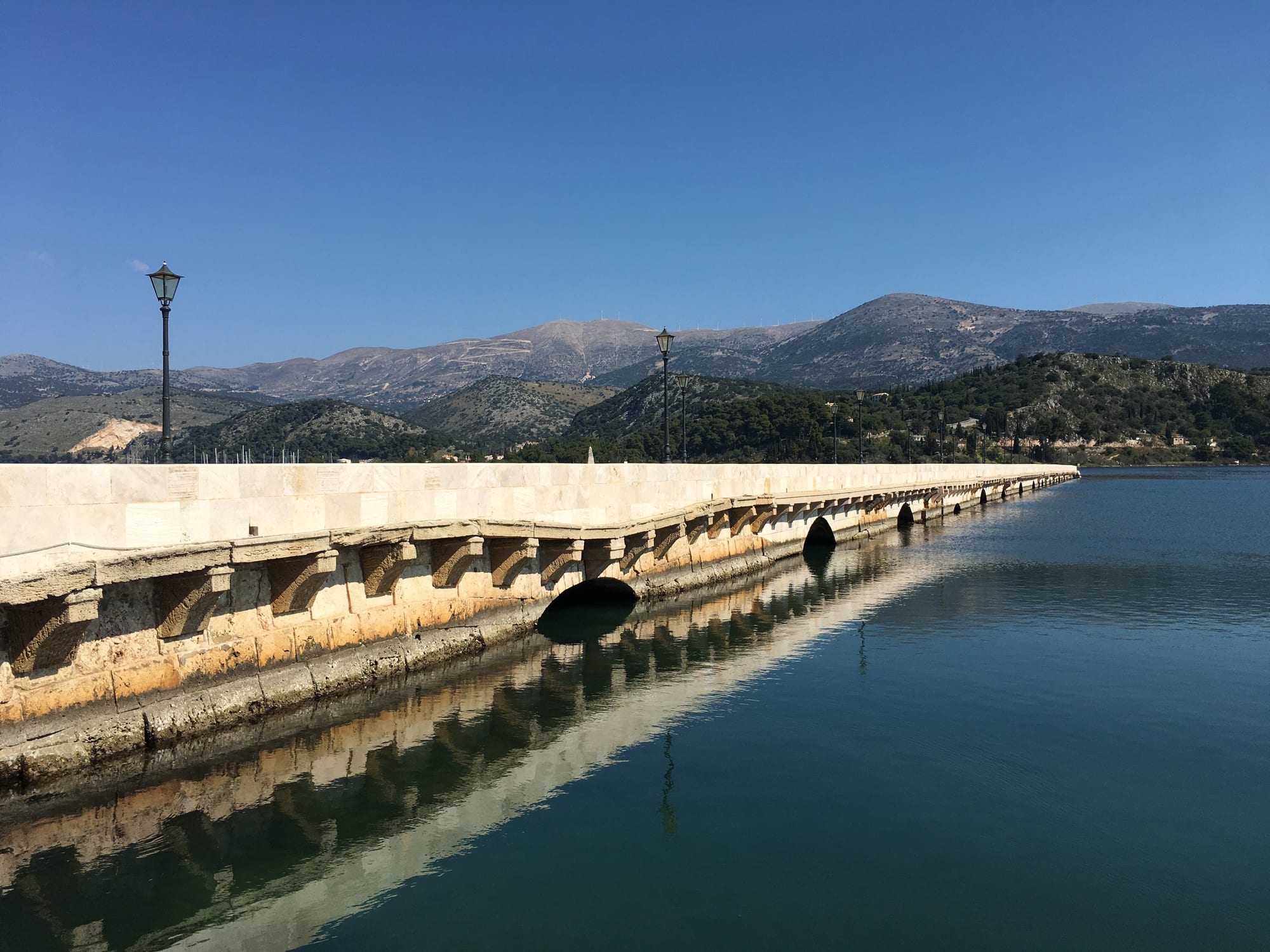
Argostoli is compact and flat by the water, with the square, the Lithostroto, the harbour and the bridge all within a short walk, and a waterfront path towards Lassi and the lighthouse. Beyond the town, distances on this large, mountainous island call for a car.
🛡️ Safety
Greece is a safe country for visitors, with low levels of violent crime. On Kefalonia the real risks are scooter and quad accidents on steep, narrow roads, heat, rough seas and falling rock below cliff beaches such as Myrtos, and forest fires in dry summers. The island lies in an earthquake zone.
Wear a helmet on any scooter, keep away from cliff bases on the beaches, follow local instructions during fires and earthquakes, and give turtles in the harbour space. Check current official travel advice before travelling.
🌦️ Climate
A hot-summer Mediterranean climate: hot, sunny summers with little or no rain and mild, rainy winters, when the humidity is high and snow occasionally falls on the mountain peaks.
- Summer
- hot and sunny — days reach nearly 30°C and nights stay around 21°C
- Winter
- mild and wet — days average 14–15°C and nights 8–9°C
🤝 Local Customs
Kefalonians are known for their surnames ending in -atos, and village names on the island commonly end in -ata. Churches, including the monastery of Saint Gerasimos, may ask for covered shoulders and knees. Tipping is not traditional, though diners often leave a few coins for good service. The rivalry between Argostoli and Lixouri dates back to the 18th-century move of the capital.
Turtles in the harbour and the lagoon should not be fed or touched.
💳 Common Payment Methods
The currency is the euro. Cards are widely accepted in shops, hotels and travel agencies but not in some restaurants, and ATMs are easy to find; a little cash is useful in the villages.