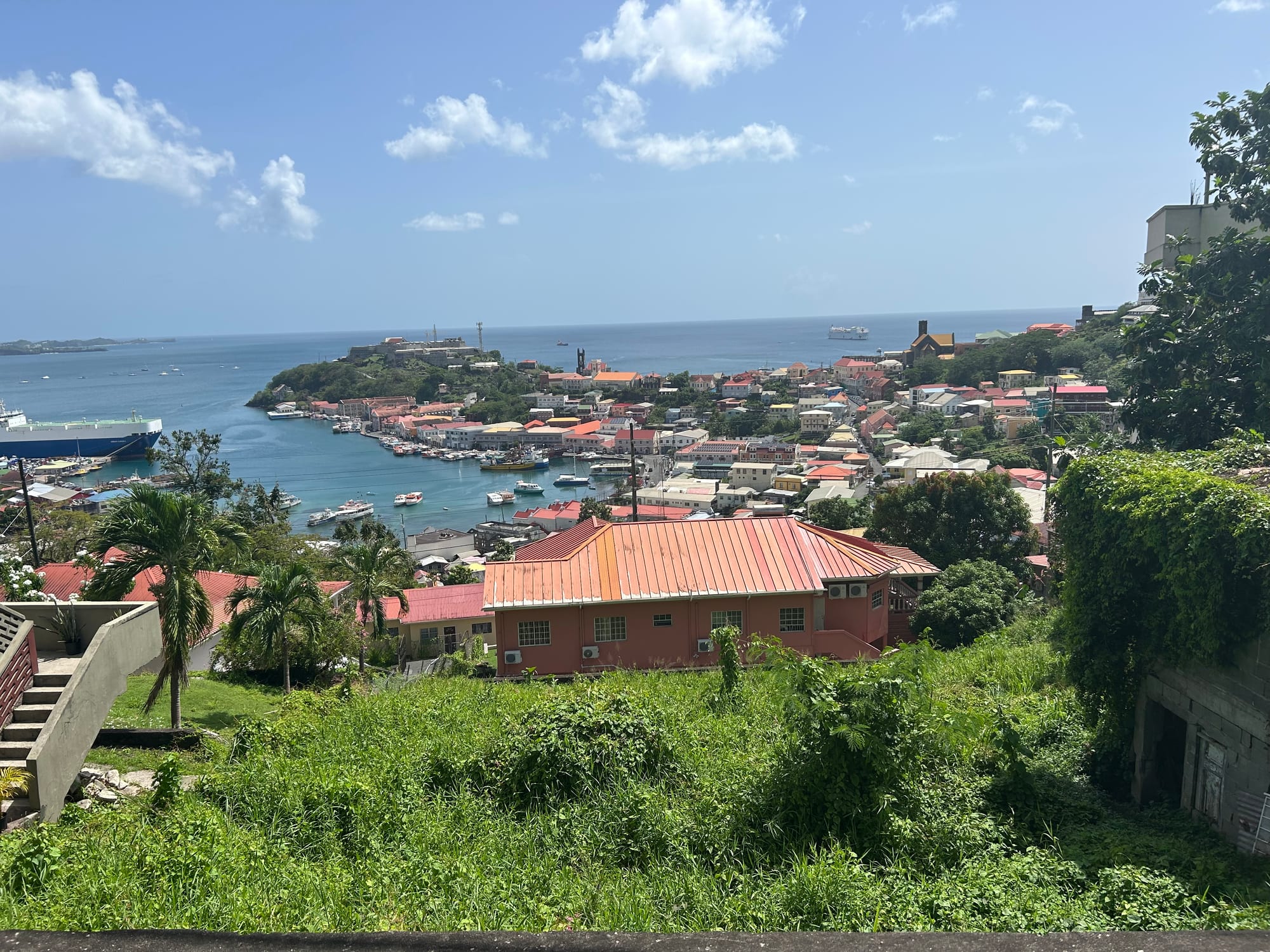
💰 Budget
St. George's is mid-range by Caribbean standards. The town itself has little accommodation; most places to stay are along Grand Anse, where prices are highest in the dry season. Dive and boat trips are the main extra costs, while minibuses, the produce market and local cookshops keep a day cheap.
- Daily Budget Midrange
- USD 170–320 (hotel at Grand Anse, car hire or taxis, restaurants, a boat or dive trip)
- Daily Budget Shoestring
- USD 75–120 (guesthouse, local food, minibuses)
The forts, the Carenage, the churches and Grand Anse beach cost little or nothing to see; carry small notes in EC dollars for buses and market stalls.
📅 Best Time to Visit
About January to May is the drier season, and the European and North American winter brings the most cruise ships. June to November is wetter, with frequent thunderstorms and the risk of hurricanes, but quieter and greener, and August brings Spicemas, when the capital is at its liveliest.
⏳ Suggested Number of Days
Two or three days are enough for the town, its forts and the beach to the south. Allowing five days to a week brings in the island's interior, the west-coast fishing towns and diving, and more time again is needed for a trip to the northern islands.
- First Visit
- 2–3 days
- With Surroundings
- 5–7 days
🚆 Transportation
St. George's is the hub of all transport on the island. Shared minibuses leave from the town bus terminal on the shore north of the cruise terminal and run fixed routes, most frequently along the busy corridor to Grand Anse and the airport. Taxis wait near the terminal. A hire car, driven on the left with a local permit, suits trips into the mountains.
Roads out of town are narrow, steep and winding once they leave the coast, so allow plenty of time for trips into the interior.
🛬 Airport & Station Connections
Maurice Bishop International Airport lies at Point Salines on the south-western tip of the island, about 5 miles south of the town, with international and regional flights. Cruise ships dock at the terminal just north of Fort George, and ferries from Carriacou and Petite Martinique arrive at the harbour.
🚶 Walkability
The town is compact and best seen on foot, though many streets are steep. The Sendall Tunnel under Fort George has no pavement, and walkers going between the Carenage and Church Street often prefer the lanes over the ridge. The forts on Richmond Hill and Grand Anse are easier by minibus or taxi.
🛡️ Safety
Grenada is one of the safer Caribbean islands, with low levels of violent crime, though petty theft, occasional burglary of rooms and villas, and opportunistic robbery do occur. In the capital the main concerns are petty theft and quiet streets after dark, and the steep, narrow roads call for care.
Use the room safe, leave nothing unattended on Grand Anse beach, take a taxi after dark in quiet parts of the town, and swim on the calm leeward beaches. Check current official travel advice before travelling.
🌦️ Climate
A humid tropical climate, warm all year and cooled by the trade winds. The months from June are wetter, with frequent thunderstorms and occasional hurricanes, while January to April is slightly drier and cooler. Across the islands temperatures generally range between about 22 and 32°C and rarely fall below 18°C.
- Summer
- June to November is humid and wetter, with thunderstorms and the hurricane season; across the islands days generally reach the low 30s °C
- Winter
- January to April is slightly cooler and drier; across the islands temperatures rarely fall below 18°C
🤝 Local Customs
Away from the beach Grenadians dress conservatively, so swimwear belongs on the sand rather than in town. Most people are Christian, and church and family are the anchors of community life. Traders may approach visitors but rarely hustle.
Cover up in town and in churches, and ask before photographing people.
💳 Common Payment Methods
The currency is the East Caribbean dollar, pegged to the US dollar at 2.70; US dollars are widely accepted, with change usually given in EC dollars. Cards work in hotels, larger restaurants and tourist areas, but taxi drivers and small businesses seldom take them, so cash is needed for buses, markets and taxis.