History
A Latgalian hill fort stood on the castle hill from the 9th century until German crusaders destroyed it in the 13th. In 1285, the year the name Rēzekne first appears, the Livonian Order built a stone castle here as a post on its eastern frontier, and the town was attacked many times by Russian and Lithuanian forces. It passed to Poland-Lithuania in 1559, received Magdeburg rights in the 17th century, and was occupied by Sweden in 1655–1660, when the castle's ramparts were demolished and the castle fell into ruin. After the First Partition of Poland in 1772 it became Rezhitsa in the Russian Empire, and received city rights in 1773.
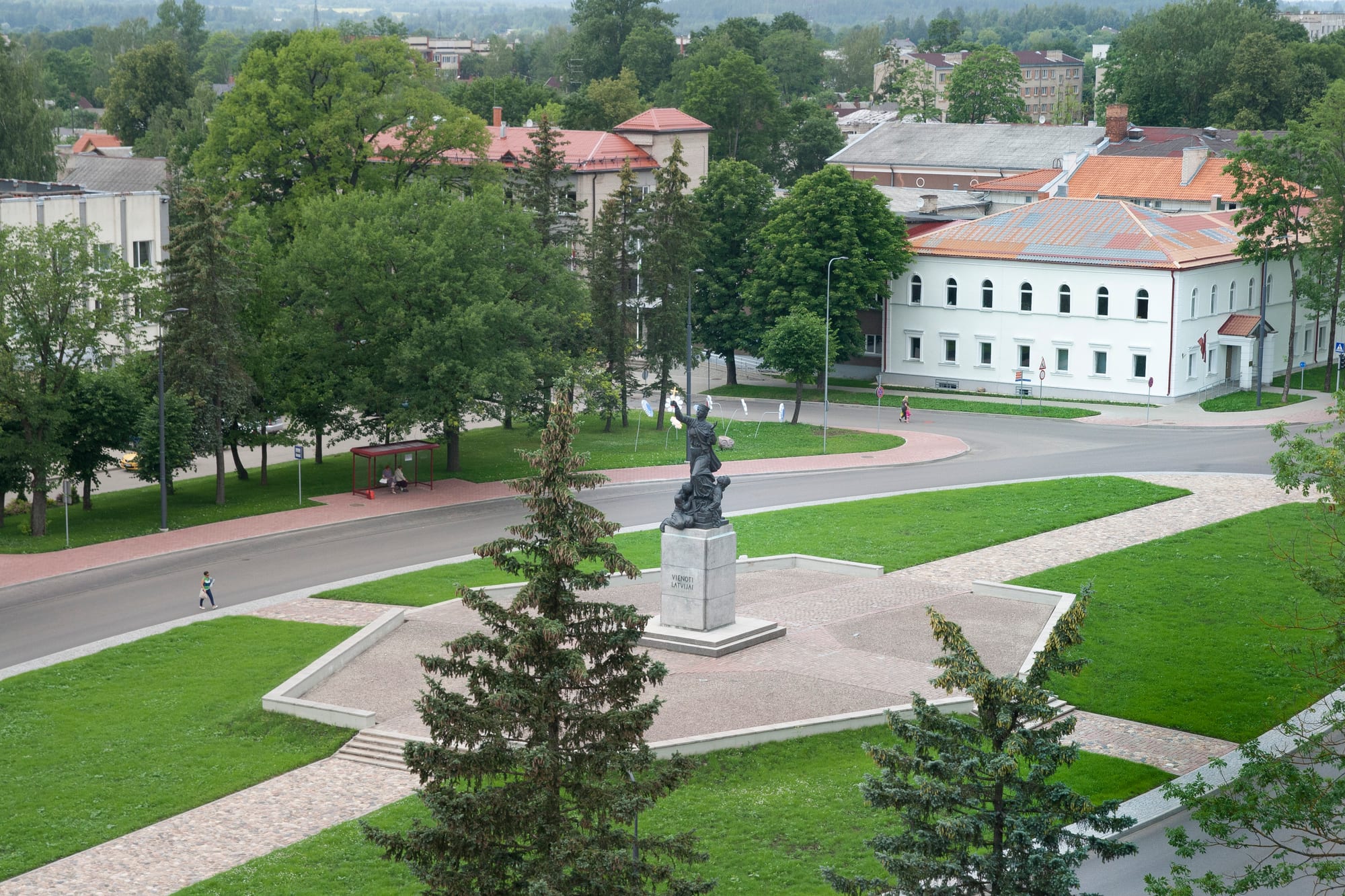
The St Petersburg–Warsaw and Moscow–Ventspils railways turned a sleepy country town into a junction with two stations; the population reached 23,000 by the eve of the First World War, and in the 19th century around 60 per cent of residents were Jewish. In spring 1917 the first Latgalian congress, held here, declared that Latgale should unite with the other Latvian regions, and after independence Rēzekne became the cultural centre of Latgale.
The Second World War was catastrophic. The Jewish population was murdered in the Holocaust, mostly between July and October 1941, and Soviet bombing in 1944 destroyed two-thirds of the buildings; only about 5,000 people remained. Rebuilt as an industrial town, it had the fifth-highest industrial output in Soviet Latvia, but most of those factories closed after 1991. In recent years the city's finances have dominated the news: after falsifications in the budget came to light at the end of 2023 the mayor was suspended, the Saeima dismissed the council in 2024, and in the 2025 elections the same mayor returned to office.