💰 Budget
Maafushi exists because it is the cheap way to see the Maldives. Guesthouse rooms, local-island meals and the public ferry cost a fraction of a resort stay, and the main extras are boat excursions, diving and any day pass to a nearby resort island. Prices are quoted in US dollars or rufiyaa, and a green tax and service charge are usually added to room rates.
- Daily Budget Midrange
- USD 160–260 (better guesthouse with sea view, half board, private speedboat transfer, daily excursions)
- Daily Budget Shoestring
- USD 70–140 (guesthouse room, local cafés, public ferry, one shared boat trip)
The public ferry from Male is far cheaper than the shared speedboats but does not sail every day, and not on Fridays; speedboats run more often.
📅 Best Time to Visit
December to April is the drier northeast-monsoon season, with calm seas, clear water and the busiest guesthouses. May to November brings the southwest monsoon, more rain and wind, choppier crossings and lower prices, along with the plankton blooms that draw manta rays and whale sharks to feeding sites elsewhere in the country.
⏳ Suggested Number of Days
Two or three days are enough for the island itself and a couple of boat trips. Four to six suit divers, or anyone combining the island with other local islands in the same atoll, and allow for a crossing that weather can delay.
- First Visit
- 2–3 days
- With Surroundings
- 4–6 days
🚆 Transportation
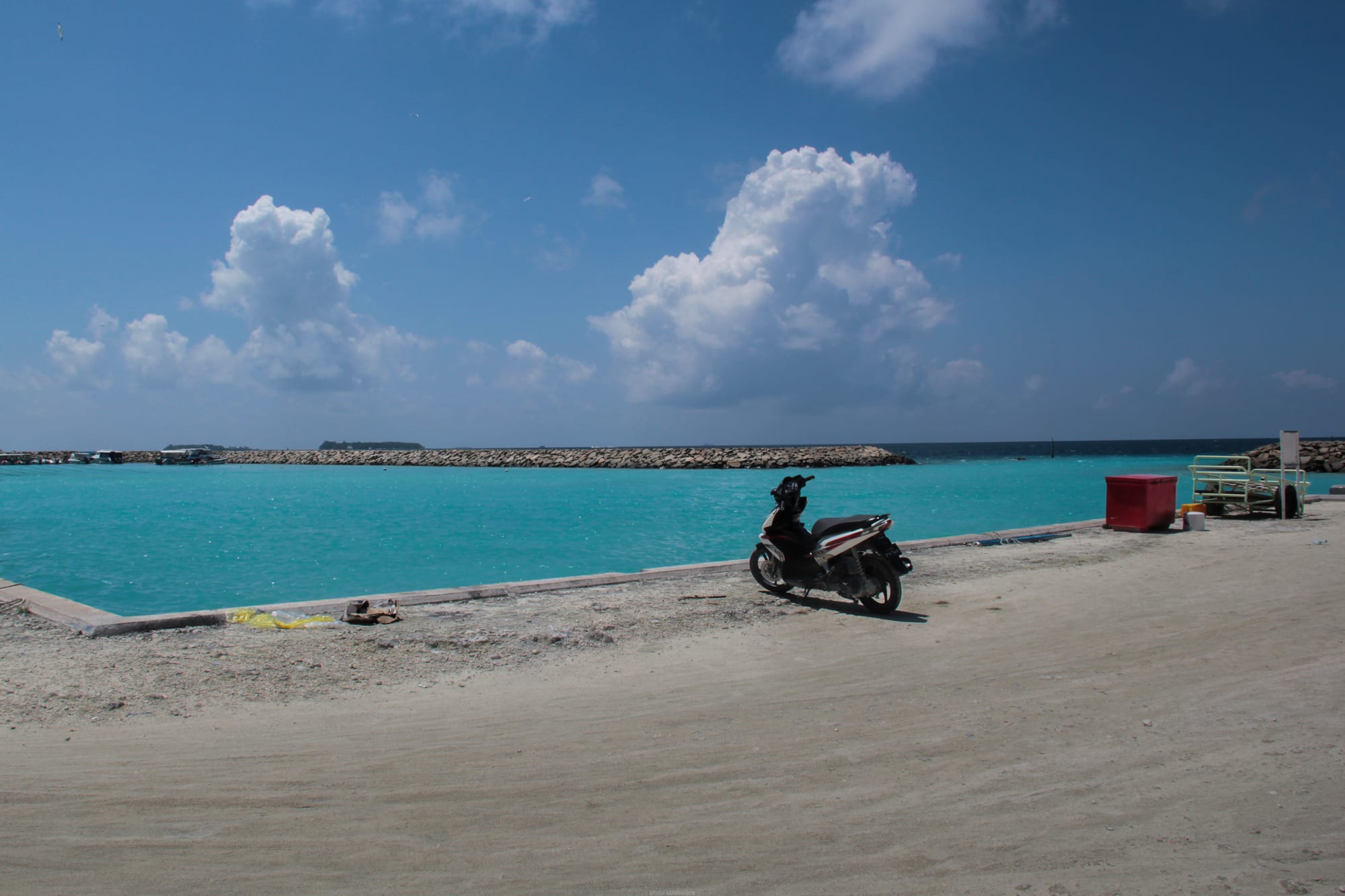
The island is small enough to cross on foot in minutes and everything on it is walked; a few pick-ups and scooters serve the harbour. Everything beyond it is done by boat — shared speedboats, the public ferry and the excursion dhonis that leave from the harbour each morning for snorkelling sites, sandbanks and neighbouring islands.
Boat departures shift with the weather and the tide, so leave a clear margin before an onward flight.
🛬 Airport & Station Connections
The island lies about 26 kilometres south of Male. Shared speedboats from the capital and from Velana International Airport take well under an hour and run several times a day; the cheaper public ferry is slower and does not sail daily. Guesthouses arrange transfers, and arrivals are met at the harbour.
🚶 Walkability
Entirely walkable. The village is a grid of short sandy lanes, the harbour is at one end and the bikini beach at the other, roughly fifteen minutes apart on foot. There are no hills and almost no traffic, though the sand is soft in places and midday heat is strong.
🛡️ Safety
The island is safe and crime is rare; islanders and guesthouse staff know their guests. The real hazards are in the water — currents in the channels, coral cuts, boat traffic close to shore and strong sun — and dive and snorkel trips are run with guides and briefings for that reason. The main practical risk is causing offence by ignoring the island's dress rules.
On local islands, respect the dress code (cover shoulders and knees off the designated 'bikini beaches'), and note that alcohol, pork, and non-Islamic religious items are banned outside the resorts. Check current official travel advice before travelling.
🌦️ Climate
Hot and humid all year, usually in the high 20s to low 30s Celsius by day with warm nights and sea temperatures close to air temperature. The difference between seasons is rain and wind rather than heat.
- Summer
- wet and windy — May to November days around 30°C, frequent heavy showers, rougher crossings and reduced visibility underwater
- Winter
- dry and calm — December to April days around 30°C, more sun, light winds and the clearest water
🤝 Local Customs
This is an inhabited Muslim village, not a resort. Away from the bikini beach, visitors cover shoulders and knees, including when walking from the guesthouse to the beach; swimwear is limited to the designated stretch. Alcohol is not sold on the island, pork is not served, and non-Islamic religious items may not be brought into the country. Prayer times punctuate the day and shops pause for them.
Ask before photographing islanders, particularly women and children, and avoid pointing cameras towards the mosque or the school; public displays of affection are not welcome outside the beach area.
💳 Common Payment Methods
The Maldivian rufiyaa is the local currency and US dollars are accepted by guesthouses and excursion operators. Larger guesthouses and dive centres take cards, but smaller cafés, shops and boat crews prefer cash, and the island's cash machines are few — bringing enough cash from Male is normal practice.