💰 Budget
Male is far cheaper than a resort stay but not cheap in itself: almost everything is imported, and city hotel rooms cost more than a guesthouse on a local island. Food at tea houses and local cafés is inexpensive, ferries cost very little, and the main sights charge small entry fees or none at all. Most costs are quoted in rufiyaa in the city and in US dollars in tourism.
- Daily Budget Midrange
- USD 120–220 (a city hotel, restaurant meals, taxis and airport transfers)
- Daily Budget Shoestring
- USD 50–90 (a simple guesthouse room in Male or Hulhumale, tea-house meals, public ferries)
Rooms in Hulhumale are generally cheaper than in the old city and are closer to the airport; the Friday Mosque, the markets and the waterfront cost nothing to walk around.
📅 Best Time to Visit
December to April brings the drier northeast monsoon, with calmer seas and the most reliable sunshine, and the highest prices across the country. May to November is wetter and windier, with heavy showers that pass quickly. The city is hot and humid all year, so early mornings and evenings are the comfortable times to walk.
⏳ Suggested Number of Days
The old city is small enough to cover in a day. Two or three days allow time for the neighbouring islands and the ferries between them, and suit anyone using the capital as a stopover before or after an island stay.
- First Visit
- 1 day
- With Surroundings
- 2–3 days
🚆 Transportation
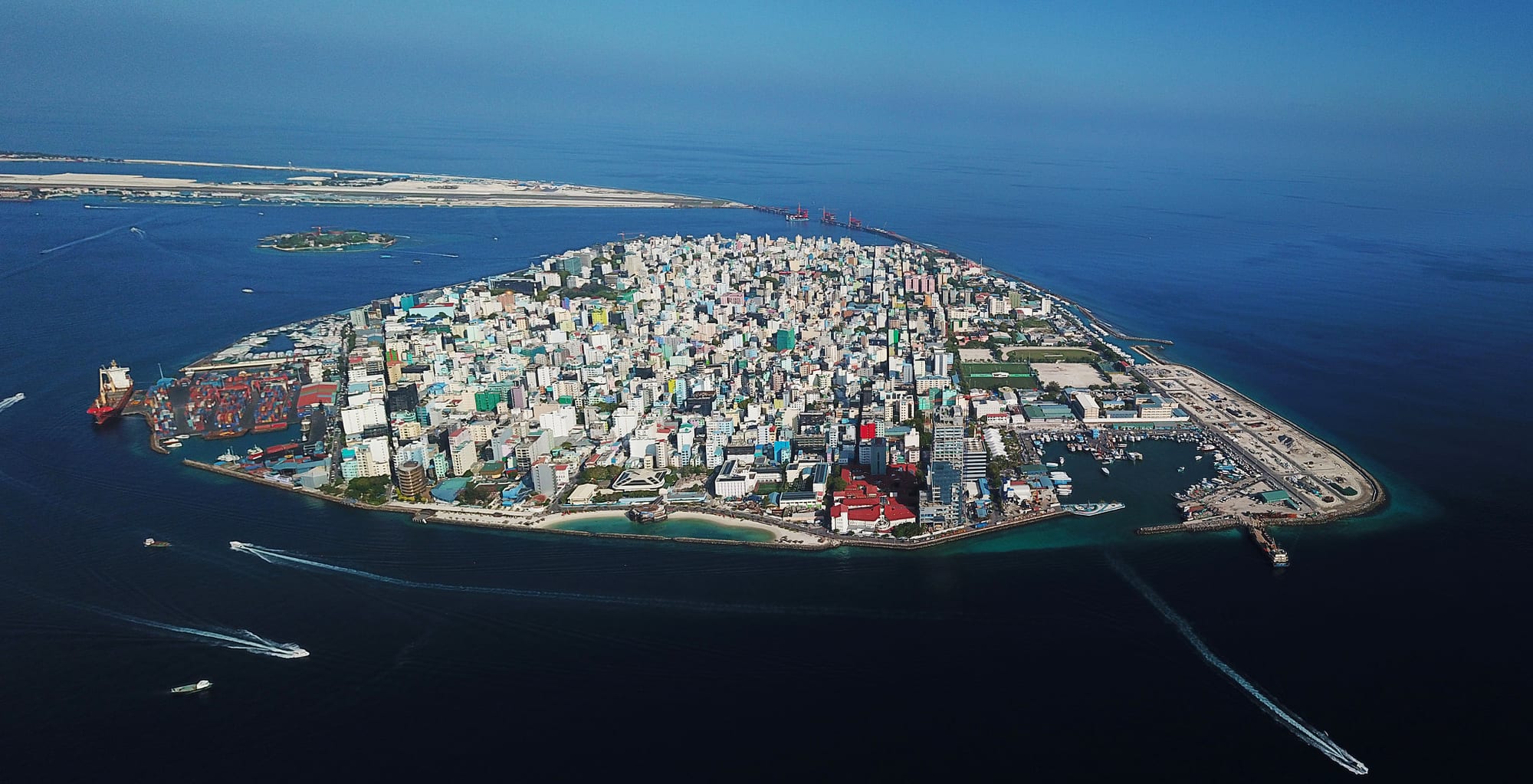
Male is about two square kilometres and most people walk or ride a moped; the streets are narrow, one-way and busy with scooters. Taxis are cheap and plentiful, and buses run across the Sinamale Bridge to the airport island and Hulhumale. Public ferries cross to Vilimale and the airport from terminals on the northern waterfront, and speedboats and atoll ferries leave from the same quays.
Watch for mopeds when crossing: the lanes are narrow, traffic is constant and pavements are often blocked or absent.
🛬 Airport & Station Connections
Velana International Airport sits on the neighbouring island of Hulhule, about two kilometres from the capital, and handles the country's international flights. A short ferry crosses the channel to Male, and the Sinamale Bridge, opened in 2018, carries road traffic to the city and to Hulhumale. Onward travel to the atolls is by domestic flight, seaplane during daylight hours, shared speedboat or cheaper public ferry.
🚶 Walkability
The whole island can be crossed on foot in half an hour, and the mosques, museum, markets and harbours are close together in the north-east. Against that, pavements are narrow or missing, scooters park across them, there is little shade and the heat is heavy, so walks are best kept short and early. Hulhumale, with its wide new streets and beach path, is easier going.
🛡️ Safety
Male is generally safe for visitors, with petty theft the usual risk in crowded streets and at the ferry terminals. The capital has a drug problem and occasional gang violence in its back streets, which rarely touches travellers, and political demonstrations in the centre can be tense. Traffic is the most common everyday hazard, and currents off the sea walls are strong.
On local islands, respect the dress code (cover shoulders and knees off the designated 'bikini beaches'), and note that alcohol, pork, and non-Islamic religious items are banned outside the resorts. Check current official travel advice before travelling.
🌦️ Climate
Hot and humid all year, typically in the high 20s to low 30s Celsius by day with little seasonal change in temperature. The northeast monsoon from about December to April is drier and calmer; the southwest monsoon from May to November brings more rain, cloud and wind.
- Summer
- wet and windy — May to November days around 30°C with heavy showers, high humidity and choppier seas
- Winter
- dry and calm — December to April days around 30°C, more sunshine, lighter winds and clearer water
🤝 Local Customs
Male is an ordinary Maldivian town rather than a resort, and the rules of the country apply in full: alcohol and pork are not sold, non-Islamic religious items may not be brought in, and swimwear belongs only on the designated beach areas. Visitors cover shoulders and knees in the streets, and non-Muslims do not enter mosques during prayer; permission is asked before photographing people, especially women.
Tipping is not expected, though a service charge is often added in restaurants; during Ramadan eating, drinking or smoking in public during daylight causes offence and many cafés close until sunset.
💳 Common Payment Methods
The currency is the Maldivian rufiyaa, and US dollars are widely used in tourism. Cards are accepted in hotels, larger shops and many restaurants, and ATMs are common in the centre, but tea houses, market stalls, ferries and taxis are cash businesses, so small rufiyaa notes are useful.