💰 Budget
Local prices are low — market food, small hotels and tricycle taxis cost very little — but almost nobody comes here independently. Most visitors are aid workers, officials or researchers whose accommodation, flights and security are arranged and paid for by an organisation, and those arrangements, not daily spending, set the real cost.
- Daily Budget Midrange
- USD 90–230 (best available hotel, a car with driver and security arrangements)
- Daily Budget Shoestring
- USD 25–45 (simple hotel and local food — independent travel not advised)
Bring naira in cash, expect card payment and foreign-card ATM withdrawals to be unreliable, and budget for flights rather than road journeys.
📅 Best Time to Visit
November to February is the coolest and driest part of the year, with harmattan dust in the air and cold nights. March to May is punishing, often well above 40°C, and the rains from June to September bring storms and flooding in low-lying districts. Any timing depends far more on the security situation than on the season.
⏳ Suggested Number of Days
The parts of the city that can be seen are few and close together, so stays are short. Length is decided by work, flight schedules and security clearance rather than by sightseeing, and travel outside the city is generally not possible.
- First Visit
- 1–2 days
- With Surroundings
- 2–3 days
🚆 Transportation
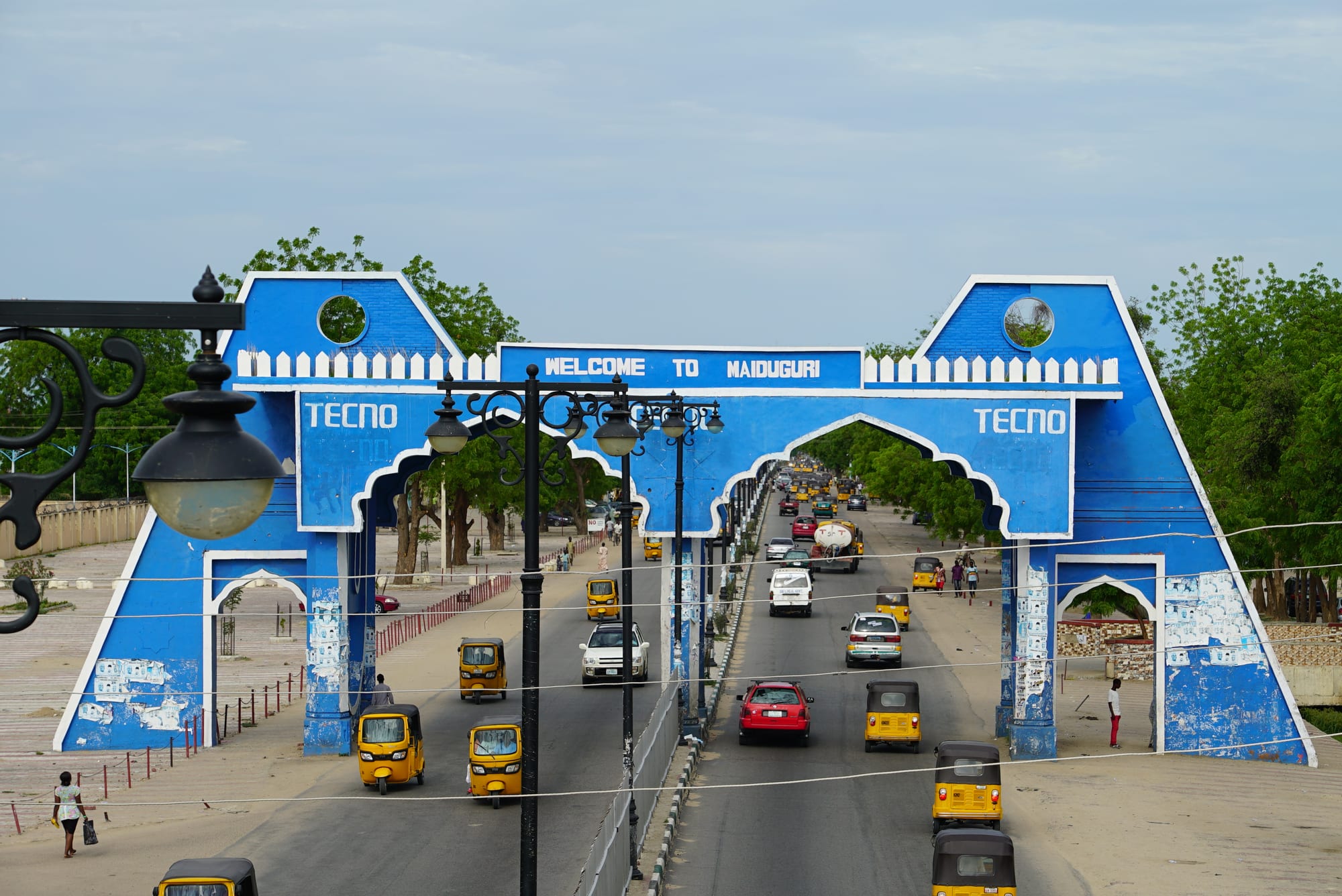
Yellow tricycle taxis, known as keke, carry most people around the city, with shared taxis and minibuses on the longer routes; motorcycle taxis have been restricted for security reasons. Visitors move by hired car with a trusted driver. Military checkpoints are frequent and curfews have been imposed at times.
Use a driver arranged through a hotel or an organisation, carry identification for checkpoints, and make no journeys outside the city or after dark.
🛬 Airport & Station Connections
Maiduguri International Airport, now named after General Muhammadu Buhari, lies a few kilometres from the centre and is the normal way in, with domestic flights as well as humanitarian flights for aid workers. The roads in from Damaturu, Bama and Gwoza pass through areas affected by the insurgency and are not used by visitors. A railway from Port Harcourt reaches the city.
🚶 Walkability
The old town and the market are flat and walkable, and short distances are covered on foot by most residents. The city is spread out, however, the heat is severe for much of the year, and security arrangements mean that visitors usually move by vehicle rather than on foot.
🛡️ Safety
Governments advise against all travel to Borno State. Maiduguri is where the Boko Haram movement emerged, and after the uprising of 2009 the city became the centre of an insurgency that has continued since; it is heavily garrisoned and ringed by checkpoints and trenches, and camps and host communities hold large numbers of people displaced from the countryside. The city is more secure than the surrounding country, but attacks, kidnapping and curfews remain part of life.
Travel only for essential purposes with professional security arrangements, avoid all road travel in Borno and Yobe, and follow local security advice closely. Check current official travel advice before travelling.
🌦️ Climate
Sahelian and very hot. One short rainy season falls between about June and September, and the rest of the year is dry, with harmattan winds carrying Saharan dust from December to February and a fierce hot season in March, April and May.
- Summer
- rainy season, roughly 23–35°C, with short violent storms
- Winter
- dry and dusty, roughly 14–33°C, with cool nights
🤝 Local Customs
Maiduguri is an overwhelmingly Muslim and largely Kanuri city, conservative in dress and manner. Greetings are long and formal, elders and the Shehu are shown marked respect, and the right hand is used for eating and giving. Alcohol is not part of public life. Military and security installations, checkpoints and camps for displaced people are sensitive subjects.
Dress modestly, never photograph soldiers, checkpoints, camps or the airport, ask permission before photographing anyone, and avoid eating or drinking in public during Ramadan daylight hours.
💳 Common Payment Methods
The currency is the naira and cash is what works: transport, markets and small eating houses take nothing else. A few hotels accept cards, ATMs are not dependable for foreign cards, and money is best changed before arriving.