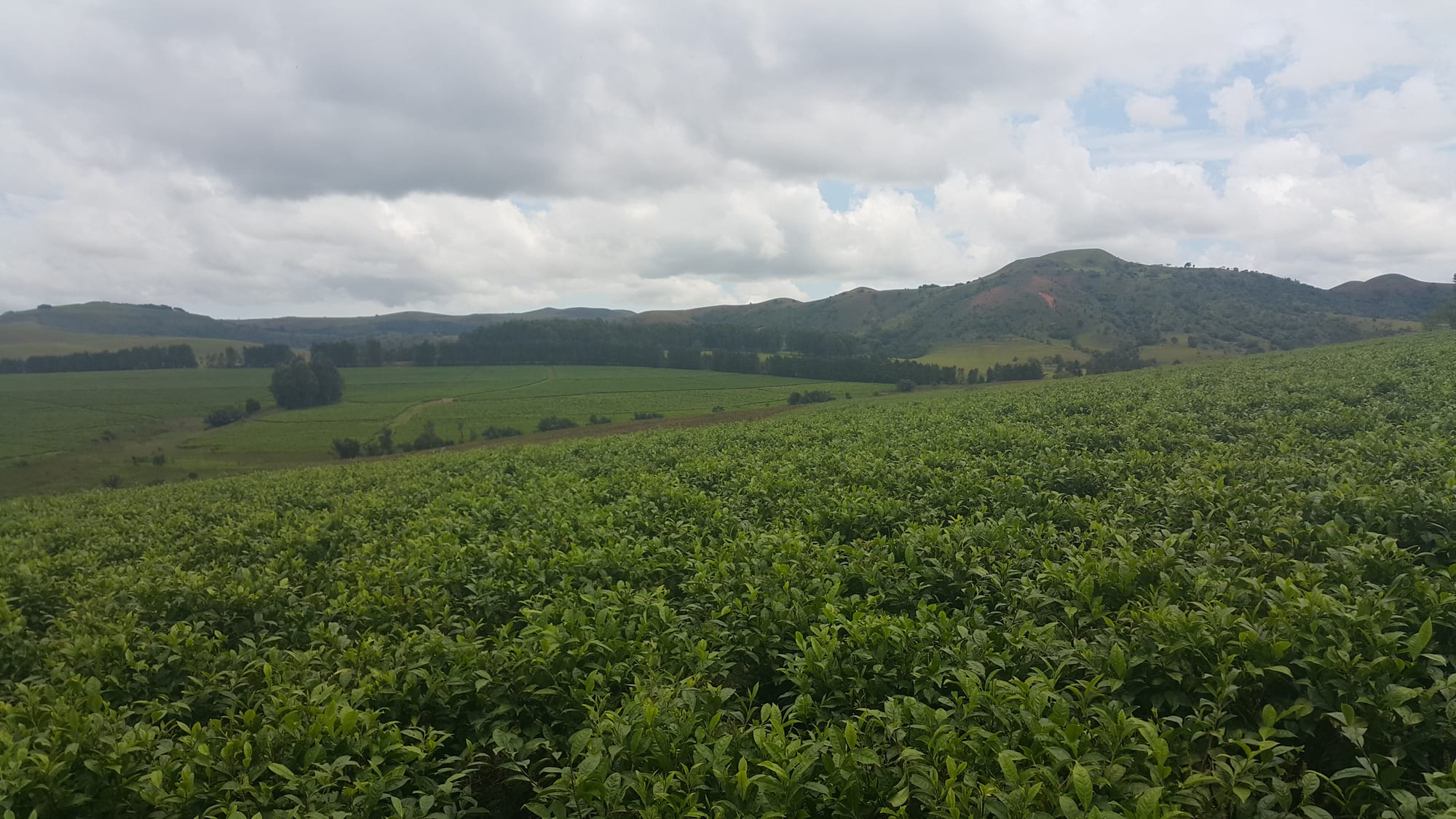
Rows of green tea bushes in the foreground, with fields, trees and rounded green hills under a cloudy sky

Nigeria

The Northeast

Tea fields and hills on the Mambilla Plateau, near Kakara in Taraba State. (Ebere Jude Ekemezie / Wikimedia Commons · CC BY-SA 4.0)

Nigeria's North East zone, the largest of the six, stretching from the shrinking shores of Lake Chad through the savanna of Borno, Yobe, Bauchi and Gombe to the Mandara Mountains, the Mambilla Plateau and the forests of Gashaka-Gumti — the old heart of Kanem-Bornu and, since 2009, the centre of the Boko Haram insurgency.

Explore The Northeast

History

The northeast was the heart of the Kanem-Bornu empire, one of Africa's longest-lived states. Founded in Kanem, east of Lake Chad, it adopted Islam in about the 11th century, and in the 14th century its Sayfawa rulers moved west of the lake to Bornu, where in the 15th century they built a walled capital at Ngazargamu, in present-day Yobe. Under Idris Alooma in the 16th century Bornu became a formidable military power, trading across the Sahara to North Africa.

In the early 19th century, when the Fulani jihad swept the Hausa lands, Bornu resisted under the scholar Muhammad al-Kanemi, whose descendants became the Shehus of Borno. Further south, the Fulani leader Modibo Adama founded the Adamawa emirate with its capital later at Yola. In the 1890s the warlord Rabih az-Zubayr conquered Bornu, before he was defeated by the French in 1900. Britain then took the western part, and Maiduguri became the capital of Borno. In 1961 the northern part of British Cameroons voted to join Nigeria, bringing in areas including much of the Mambilla Plateau.

In 2009 an uprising by the Maiduguri-based group known as Boko Haram was crushed and its founder, Mohammed Yusuf, died in police custody. The group then waged an insurgency that at its height in 2014–2015 held large areas of territory in and around Borno, abducted 276 schoolgirls from Chibok in 2014, and forced over two million people from their homes. In 2016 a faction split away as ISWAP, and fighting between the two groups, the Nigerian military and neighbouring countries continues. In 2024 floods caused by a dam collapse inundated much of Maiduguri.

Culture & Customs

The Kanuri are the main people of Borno and Yobe, alongside Shuwa Arabs, Hausa and Fulani; further south live many smaller peoples, including the Kilba and Kamwe in Adamawa, the Jukun and Mumuye in Taraba, and the peoples of the Mandara Mountains. Hausa and Kanuri are widely spoken, and Fulfulde is the language of the Fulani. The north of the zone is predominantly Muslim, and the south of Adamawa and Taraba has large Christian communities.

Traditional rulers remain central. The Shehu of Borno and the Lamido of Adamawa remain influential, and Yola holds an annual horse-riding durbar at the Lamido's palace. In the Mandara Mountains, Sukur keeps its hilltop chieftaincy and a long history of iron working, and the Fulani keep the sharo flogging custom, a test of bravery among young men.

The conflict has deeply affected cultural life, displacing whole communities and damaging schools, markets and religious buildings. Yet Maiduguri's markets, Islamic learning and music, and weddings and naming ceremonies continue. The region produced Nigeria's first prime minister, Abubakar Tafawa Balewa, from Bauchi.

Daily Life

Maiduguri is the largest city, its population swollen to over a million by people fleeing the countryside; Bauchi, Gombe, Yola, Jalingo and Damaturu are the other state capitals. Much of the zone is rural and has some of the lowest literacy and highest poverty rates in Nigeria.

Farming and herding are the backbone of the economy: millet, sorghum, maize, beans and groundnuts on the savanna, fishing and irrigated farming around Lake Chad, tea and cattle on the Mambilla Plateau, and rice in Taraba. The insurgency has cut many farmers off from their land and trade routes, and Lake Chad's shrinking waters have put further pressure on livelihoods.

In Borno and Yobe, daily life is shaped by the conflict: camps for displaced people, curfews and military checkpoints, and a large humanitarian presence of UN agencies and aid organisations. Many children have missed years of school. In the southern states, life is calmer, following the rhythms of markets, farming and Friday prayers, though kidnapping and communal violence also occur there.

Food

The northeast shares the grain-based diet of northern Nigeria. Tuwo, a stiff porridge of millet, sorghum or maize, is eaten with soups such as miyan kuka, made with dried baobab leaves, or miyan yakuwa, made with sorrel leaves. Rice with a tomato-and-pepper stew is common in towns.

Meat is prized: suya and kilishi, the thin, dried, spiced beef, are sold by street vendors, and dambu nama, a shredded, spiced and fried beef, is a traditional way of preserving meat. Lake Chad has long been a rich fishing ground. Masa, small rice cakes, and kosai, fried bean fritters, are popular snacks.

Fulani herders supply fresh and fermented milk, eaten as fura da nono with millet balls, and on the Mambilla Plateau tea and dairy products are produced. Kunu, a millet drink, zobo and sweet tea are the everyday drinks.

Attractions & Natural Wonders

Yankari Game Reserve in southern Bauchi State, a former national park, is one of Nigeria's best-known wildlife parks, with a population of elephants and other savanna wildlife. The park has several natural warm-water springs, the best known being the Wikki Warm Springs. Access depends on security at the time.

Further south in Taraba, the Mambilla Plateau offers cool, green scenery, tea farms, cattle pastures and rolling hills around Gembu. Gashaka-Gumti National Park, spanning Taraba and Adamawa, is Nigeria's largest national park, a remote area of forest, savanna and mountains that includes Chappal Waddi, the highest point in Nigeria, and is home to chimpanzees and other primates.

In the Mandara Mountains of Adamawa, the Sukur Cultural Landscape, a UNESCO World Heritage Site, preserves terraced fields and the palace of the Hidi, the local chief, on a hilltop. Yola and Jimeta sit on the Benue river. Maiduguri, the capital of Borno, is the seat of the Shehu of Borno, but the far northeast around Lake Chad remains off-limits for visitors.

Cities in The Northeast

Planning basics

Budget

Local costs are low, but independent travel is not currently realistic in most of the zone. Visitors are almost all aid workers, officials or researchers, whose accommodation, flights and security are arranged by their organisations. Hotels in Bauchi, Gombe and Yola are modest and inexpensive; costs are driven by security and air travel.

Daily Budget Midrange
USD 90–230 (best available hotel, a car with driver and security arrangements)
Daily Budget Shoestring
USD 25–45 (simple hotel and local food in Bauchi, Gombe or Yola — independent travel not advised)

Any travel here should be planned with an organisation that provides security support; do not rely on cheap public transport.

Safety

Governments advise against all travel to the northeast. Boko Haram and the Islamic State West Africa Province (ISWAP) carry out attacks on military bases, towns, roads and camps for displaced people, particularly in Borno, Yobe and northern Adamawa, including suicide bombings and mass abductions. Kidnapping for ransom and communal violence also occur in Bauchi, Gombe and Taraba. Humanitarian workers operate under strict security rules.

Travel only for essential purposes with professional security arrangements, avoid all road travel in Borno and Yobe, and follow local security advice closely. Check current official travel advice before travelling.

Climate

The far north of Borno and Yobe is Sahelian: very hot, with temperatures above 40°C from March to May, a short rainy season from about June to September and dusty harmattan winds from December to February. The south of the zone is wetter savanna, and the Mambilla Plateau, at about 1,600 metres, is cool and green, with mild days and cold nights.

Summer
rainy season, 22–35°C; Mambilla around 13–24°C
Winter
dry harmattan, 12–33°C, with dust and cool nights

Transportation

Maiduguri, Yola, Gombe and Bauchi have airports, and domestic flights, together with humanitarian flights for aid workers, are the usual way in. Road travel in Borno, Yobe and Adamawa is dangerous because of attacks, roadblocks and kidnapping, and many roads are poor. Reaching the Mambilla Plateau and Gashaka-Gumti involves long, rough drives.

Fly rather than drive, and make road journeys only with security advice and never after dark.

Best Time to Visit

The dry season, November to February, is the best time for wildlife viewing at Yankari, and the most comfortable for travel generally. The rains make many roads in Taraba and Adamawa difficult, and the hottest months, March to May, are punishing in Borno.