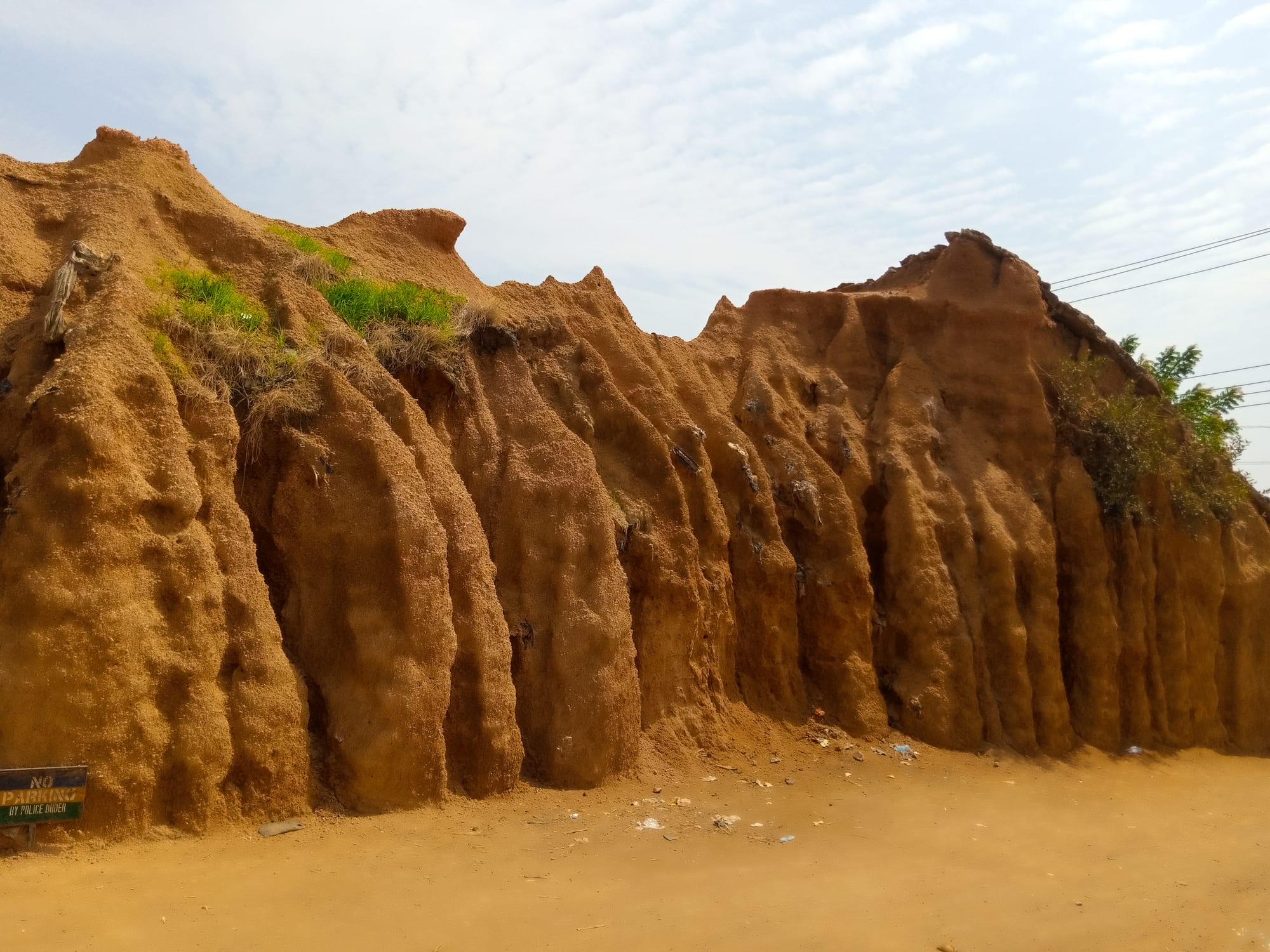
A surviving stretch of weathered, ribbed earthen city wall with grass growing on top beside a sandy road

Nigeria

Kano & the Northwest

A surviving section of the old earthen walls that once ringed the city of Kano. (Anasskoko / Wikimedia Commons · CC BY-SA 4.0)

Nigeria's North West zone, the Hausa-Fulani heartland of savanna and Sahel stretching from Kaduna to the Niger border — the land of the old walled trading cities of Kano, Katsina and Zaria and of the Sokoto Caliphate, deeply Muslim, densely populated and now badly affected by armed banditry and kidnapping.

Explore Kano & the Northwest

History

From around the 11th century a group of Hausa city-states — among them Kano, Katsina, Zazzau (Zaria), Gobir and Daura — grew up on the savanna, walled towns ruled by kings and enriched by farming, crafts and the trans-Saharan trade in cloth, leather, salt and slaves. Hausa tradition traces their origins to Daura, where the hero Bayajidda is said to have killed a serpent in the town well. Islam spread among the ruling classes from the 14th and 15th centuries; Kano's walls were expanded and Muhammad Rumfa built his palace there in the late 15th century, and Zazzau remembers Queen Amina, a warrior ruler of the 16th century.

In 1804 the Fulani scholar Usman dan Fodio launched a jihad against the Hausa kings, and within a few years his followers controlled most of the Hausa lands. His son Muhammad Bello founded Sokoto as the capital of the caliphate, and emirs governed Kano, Katsina, Zaria and other cities under the Sultan. The British conquered Kano and Sokoto in 1903 and ruled through the emirs by "indirect rule", preserving the emirate system. Kaduna was built as the capital of the Northern Region.

Ahmadu Bello, the Sardauna of Sokoto, led the Northern Region at independence and was killed in the coup of January 1966. From 2000 Zamfara and other northern states introduced sharia criminal law. Since the 2010s, conflicts over land and cattle between farmers and herders have fed the growth of heavily armed bandit gangs, and mass kidnappings, including of schoolchildren at Kankara in 2020 and Jangebe in 2021, have made the zone one of the most insecure in Nigeria.

Culture & Customs

The northwest is the heartland of the Hausa and Fulani, whose cultures have merged over centuries; Hausa is the everyday language, spoken as a lingua franca far beyond the region. The population is overwhelmingly Muslim, and the emirs and the Sultan of Sokoto remain influential religious and social leaders. Southern Kaduna, by contrast, is home to many smaller, largely Christian peoples.

Islamic learning is central: Qur'anic schools are found in every town, and the almajiri system, in which boys leave home to study under a teacher, is widespread and much debated. Daily life follows the call to prayer, and conservative dress is expected; the Hisbah religious police enforce sharia rules in states such as Kano. Hospitality is warm but formal, with greetings exchanged at length.

The Durbar festivals at Eid are the great spectacle: horsemen in quilted armour and bright robes charge before the emir in Kano, Katsina and Zaria. Crafts include indigo dyeing, embroidered babban riga robes, leatherwork — Kano and Sokoto goatskin was once traded across the Sahara as "Moroccan leather" — and Hausa earthen architecture with decorated facades. Kannywood, the Hausa-language film industry based in Kano, and Hausa praise-singing and music are popular.

Daily Life

Kano is northern Nigeria's largest city and commercial capital, with several million people in its metropolitan area; Kaduna has over a million, and Zaria, Sokoto, Katsina, Gusau, Birnin Kebbi and Dutse are other important towns. The zone is densely populated, very young and mostly rural.

Farming dominates: millet, sorghum, maize, rice, groundnuts and onions are grown across the savanna, and Fulani herders raise cattle, sheep and goats. Kano has been a trading city for centuries, with vast markets and industries in textiles and food processing, although many factories have closed. Kaduna was an industrial and military centre, and Ahmadu Bello University in Zaria is one of Nigeria's largest.

Poverty rates are among the highest in the country, and many children, especially girls, are out of school. Banditry has emptied villages in Zamfara, Katsina and Sokoto, disrupted farming and forced many people into towns. In the cities, the day follows prayer times, markets and evening gatherings over tea, and Friday prayers are the focus of the week. The succession to the Kano emirate has been a matter of political and legal dispute in recent years.

Food

Northern cooking centres on grains. Tuwo shinkafa, a soft pounded rice, and tuwo made from millet or sorghum are eaten with soups such as miyan kuka, made from dried baobab leaves, and miyan taushe, a pumpkin and groundnut soup.

Suya originated in the Hausa north, and kilishi, thin sheets of beef dried in the sun and coated in a spicy groundnut paste, is a regional speciality that travels well. Masa, small rice cakes cooked in a special pan, are eaten at breakfast and lunch, and kosai, fried bean fritters, and dan wake, bean-flour dumplings, are common street foods. Kano's gurasa is a local bread with a light dough.

Fura da nono, balls of millet dough mixed with fermented milk, is sold by Fulani women, and kunu, a millet drink, zobo and sweet tea are everyday refreshments. Alcohol is banned under sharia law in much of the zone.

Attractions & Natural Wonders

Kano's old city is the richest historic district in northern Nigeria. The Emir's palace, the Gidan Rumfa, stands near the Central Mosque; Kurmi market, founded in the 15th century, is a maze of stalls; and stretches of the earthen city walls and gates survive. The Kofar Mata dye pits, near one of the old gates, have been used to dye cloth with indigo for centuries, and the Gidan Makama Museum displays the city's history. Dala Hill is central to the city's early history.

Kaduna, built by the British, has a colonial-era centre and the National Museum. Nearby Zaria has an old walled city with the Emir's palace. Katsina has the Gobarau minaret, an old mud tower, and the Emir's palace, while Daura keeps the well of the Bayajidda legend.

In Sokoto, the tomb of Usman dan Fodio and the Sultan's palace recall the caliphate. In Kebbi State, the Argungu Fishing Festival is held on the river at Argungu, where thousands of fishermen leap into the water together. Much of the northwest is currently unsafe for visitors, and many of these sights can only be visited with careful security planning.

Cities in Kano & the Northwest

Planning basics

Budget

Everyday costs in the northwest are among the lowest in Nigeria: local food, simple hotels and markets are cheap. Kano and Kaduna have a few business-class hotels, but security arrangements, such as a car with a trusted driver or an armed escort where required, are the costliest part of any visit.

Daily Budget Midrange
USD 90–230 (better hotel in Kano or Kaduna, restaurants, a car with driver)
Daily Budget Shoestring
USD 25–50 (simple hotel, local food, city taxis — travel between cities not advised)

Carry cash in naira, as card acceptance is limited, and budget for security arrangements rather than cheap road transport.

Safety

Governments advise against all or all but essential travel to much of the northwest. Armed groups, locally called "bandits", carry out mass kidnappings for ransom, village raids and cattle theft across Zamfara, Katsina, Sokoto, Kebbi and Kaduna, and have abducted hundreds of schoolchildren. Jihadist groups also operate in the zone, and Kano has suffered bombings in the past. Kano and Kaduna cities are calmer than the countryside, but the risk of kidnapping remains.

Avoid rural areas and intercity roads, travel only with trusted local contacts and security advice, dress conservatively and respect Islamic customs. Check current official travel advice before travelling.

Climate

Semi-arid and much hotter and drier than the south. A short rainy season runs from about June to September, the hottest months are March to May, when temperatures often pass 40°C, and the harmattan blows dust from the Sahara from December to February, with cool nights. Sokoto and Kebbi, nearest the Sahel, are the hottest and driest.

Summer
rainy season, 22–33°C, with short heavy storms
Winter
dry harmattan, 12–32°C, dusty days and cool nights

Transportation

Kano's Mallam Aminu Kano International Airport is the main gateway, and Kaduna, Sokoto and Katsina have domestic flights. A standard-gauge railway links Kaduna with Abuja. Highways across the zone, including the Abuja–Kaduna road, have seen repeated kidnappings, and rural roads are dangerous.

Fly into Kano or Kaduna rather than driving, and do not travel by road between states without professional security advice.

Best Time to Visit

For those who must travel, November to February is the most bearable, though the harmattan haze can ground flights. Durbar festivals are held at Eid al-Fitr and Eid al-Adha, whose dates move each year, and the Argungu festival is held in the dry season, when it takes place at all.