💰 Budget
Everyday costs in Kano are among the lowest in Nigeria: markets, local food and shared transport cost very little. The expensive parts of a visit are a good hotel, of which the city has a few, and arranging a trusted driver and local guidance, which most visits depend on.
- Daily Budget Midrange
- USD 90–230 (better hotel, restaurants, a car with driver)
- Daily Budget Shoestring
- USD 25–50 (simple hotel, local eateries, shared taxis and keke)
Carry naira in cash, as card acceptance is limited outside larger hotels, and budget for a driver and local guidance rather than the cheapest transport.
📅 Best Time to Visit
November to February is the coolest time, with warm days and cold nights, though the harmattan carries dust that can ground flights. March to May is extremely hot, often above 40°C, and the short rains fall from June to September. The Durbar processions follow the two Eids, whose dates move each year.
⏳ Suggested Number of Days
Two days covers the walled old city, its markets and museums at a reasonable pace. Three or four allow for the wider city and a trip out into the surrounding countryside, and more if a visit is timed to coincide with the Eid celebrations.
- First Visit
- 2 days
- With Surroundings
- 3–4 days
🚆 Transportation
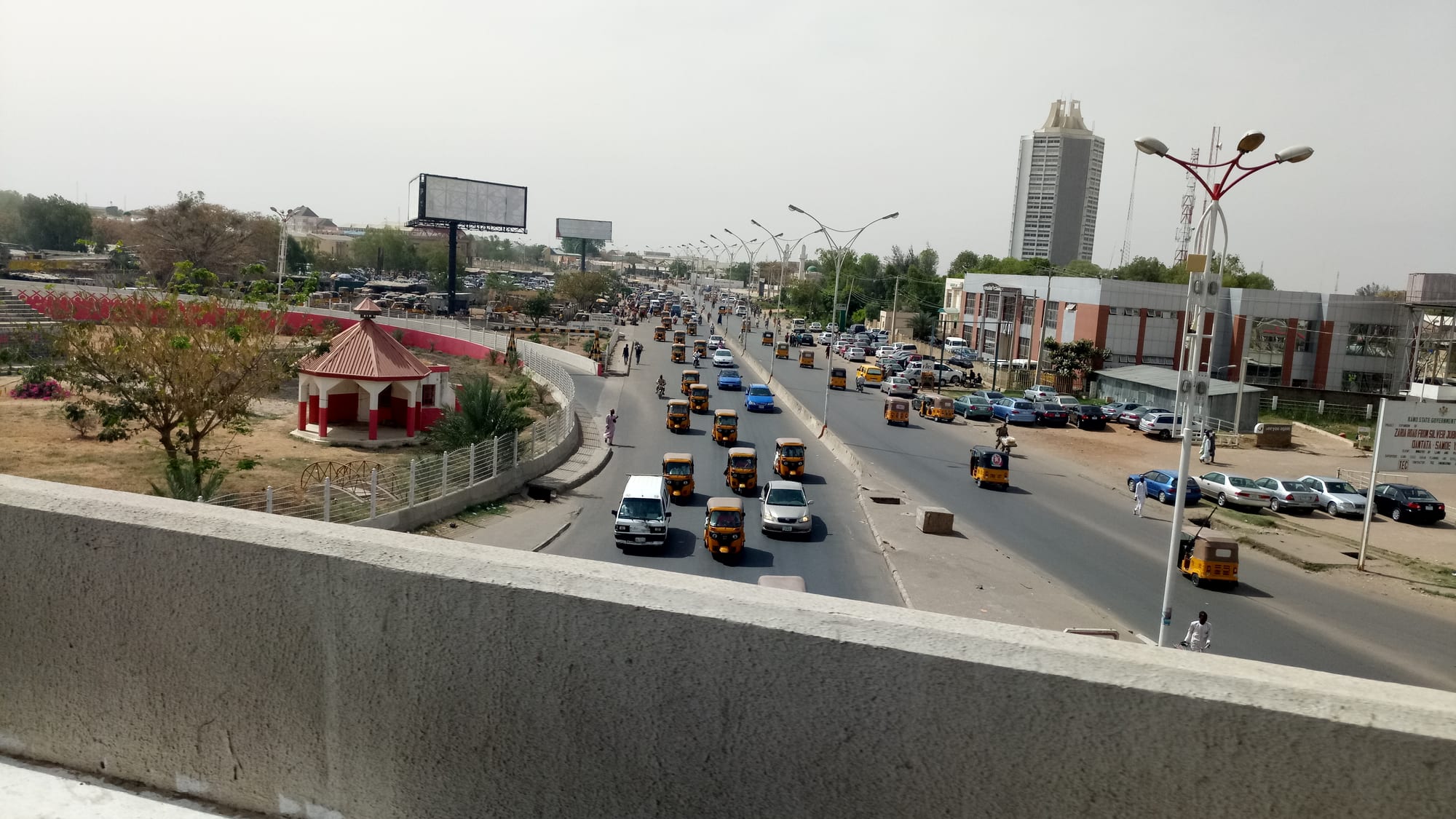
Three-wheeled keke napep and shared taxis are the main way of moving around, with minibuses on longer routes and motorcycle taxis restricted in parts of the city. Traffic is heavy around the markets and the old city gates, and most visitors use a hired car with a driver who knows the streets.
Arrange transport and local guidance in advance through a hotel or trusted contact, and avoid intercity road travel, particularly after dark.
🛬 Airport & Station Connections
Mallam Aminu Kano International Airport, about five kilometres from the centre, is the main gateway to northern Nigeria, with domestic flights to Abuja and Lagos and some regional and pilgrimage services. Roads link Kano with Kaduna, Katsina and Maiduguri, but intercity road travel in the zone carries serious risks and flying is the usual advice.
🚶 Walkability
The old city is best seen on foot: the palace, the mosque, the museum and Kurmi market lie within a short walk of each other along narrow, crowded lanes. The rest of Kano is spread over a wide area with heavy traffic, few pavements and long distances between districts, so walking between quarters is impractical and the heat makes midday walks hard.
🛡️ Safety
Governments advise against all or all but essential travel to much of the northwest. Kano city is calmer than the surrounding countryside, with a heavy security presence, but the risk of kidnapping remains, the city has suffered bombings in the past, and street crime occurs. Sharia law applies in the state and shapes rules on alcohol, dress and the mixing of men and women.
Avoid rural areas and intercity roads, travel only with trusted local contacts and security advice, dress conservatively and respect Islamic customs. Check current official travel advice before travelling.
🌦️ Climate
Hot semi-arid, on the edge of the Sahel. A short rainy season runs from about June to September, the hottest months are March to May, and the harmattan blows dust from the Sahara between December and February, when nights can be genuinely cold.
- Summer
- rainy season, roughly 22–33°C, with short heavy storms and green countryside
- Winter
- dry harmattan, roughly 12–32°C, hazy days and cool nights
🤝 Local Customs
Kano is a conservative Muslim city where sharia law applies. Modest dress covering arms and legs is expected of everyone, and a headscarf is usual for women in the old city. Greetings are long and formal, the right hand is used for giving and eating, and Friday prayers stop most business at midday. Alcohol is restricted to a few areas such as Sabon Gari.
Ask permission before photographing people, the palace, mosques or security posts, remove shoes where required, and follow the lead of a local host on where women and men sit and how greetings are exchanged.
💳 Common Payment Methods
The currency is the naira. Cash runs daily life, and small notes are needed in markets and for transport; bank transfers are widely used by residents. Cards are accepted in larger hotels and some supermarkets, and ATMs in the centre often limit withdrawals on foreign cards.