💰 Budget
There is no independent budget for Chongjin. When tourism has operated, the city has been reached only on specialist tours, usually by charter flight from Pyongyang to the airfield at Orang, and priced higher per day than capital tours because of the flight and small group sizes. Everything is paid in advance to a state-approved agency.
- Daily Budget Midrange
- USD 230–460 (a specialist tour, when tours run: charter flight, hotel, meals, guides and transport)
- Daily Budget Shoestring
- USD 230–460 (no cheaper option exists — independent travel is not permitted, so the tour price is the floor)
Tourist access has been almost entirely suspended since the border closed in 2020; if a tour ever runs, carry euros or Chinese yuan in small notes.
📅 Best Time to Visit
Late spring and September to early October have been the usual touring seasons on this coast, when the weather is mild and clear. Early summer brings persistent sea fog, midsummer the monsoon rain, and winter is cold and windy, though drier and less severe than on the inland plateau.
⏳ Suggested Number of Days
Visits have run to a day or two in the city, with three or four when combined with the mountains and coast to the south. The length is set by the operator and the approved programme rather than by the visitor.
- First Visit
- 1–2 days
- With Surroundings
- 3–4 days
🚆 Transportation
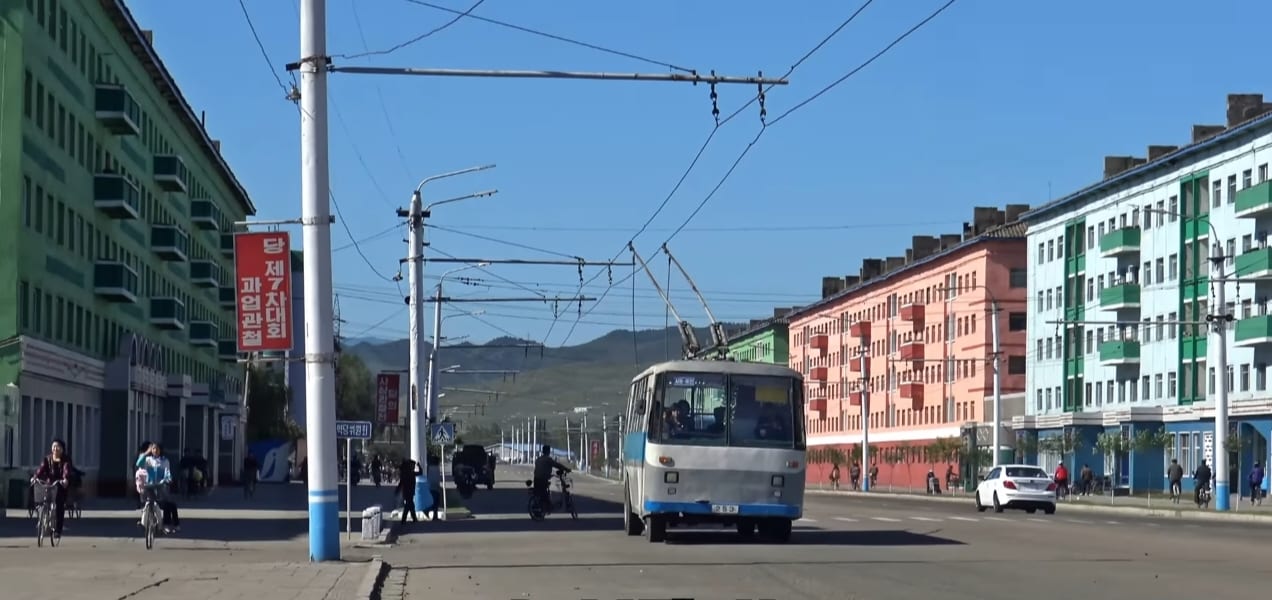
Visitors move only by chartered bus or car with guides on approved roads. Residents use trolleybuses, a tram line, bicycles and a great deal of walking. The main east-coast railway runs through the city towards Pyongyang and north to the Russian border, slowly, and freight moves through the port; residents need permits to travel between provinces.
No independent movement is allowed, and the port, steel works and railway yards are sensitive: do not approach or photograph them.
🛬 Airport & Station Connections
Chongjin lies roughly 450 km north-east of Pyongyang, and considerably further by road or rail. Tours have reached it by charter flight to the airfield at Orang, about 40 km to the south, because the railway journey down the east coast takes a day or more. Road access from the rest of the country is slow. All access depends on an approved tour arranged in advance.
🚶 Walkability
The central district is flat and laid out on wide streets, and the city stretches for several kilometres along the coast, so distances are long. In practice visitors walk only where and when their guides allow, and the industrial and port areas are closed.
🛡️ Safety
The danger is political rather than criminal. This is an industrial and border-adjacent city where photographing the port, the steel works, soldiers, checkpoints, markets or anything that reads as poverty can bring arrest and long detention, and few countries have an embassy able to help. Medical care is minimal and evacuation from the north-east is slow.
Most governments advise against all travel to North Korea and the US bans its citizens from going without special permission. Keep cameras down around industry and the port, and follow the guides' instructions exactly. Check current official travel advice before travelling.
🌦️ Climate
Continental but moderated by the Sea of Japan, so winters are milder than inland and summers cooler. Sea fog is frequent in early summer, most rain falls in July and August, and autumn is the clearest season.
- Summer
- cool to warm and often foggy — usually 18–25°C, with monsoon rain in late summer
- Winter
- cold and dry — daytime temperatures usually near or a little below 0°C, with wind off the sea
🤝 Local Customs
The rules of the capital apply here: formal conduct at monuments, bowing where the group is asked to bow, and images of the leaders never cropped, folded or creased. Neat dress is expected at memorials. Korean courtesies — two-handed giving and receiving, shoes off indoors, deference to age — are ordinary manners, and the north-eastern Hamgyong dialect sounds noticeably different from the Pyongyang standard.
Ask the guides before taking any photograph, never photograph soldiers, industry or markets, and do not give gifts, money or printed material to residents.
💳 Common Payment Methods
The North Korean won is not available to visitors, who pay in euros, Chinese yuan or US dollars in cash at the few counters open to foreigners. Foreign cards do not work and there are no international ATMs, so small notes are needed for anything beyond the tour price.