💰 Budget
Flights are the largest expense of any trip here; on the ground the capital is affordable. Guesthouses, local eating houses and shared taxis cost little, while the hotels on the coast, hired cars and boat and birding trips take the daily total up quickly. Prices for imported goods are high because almost everything arrives by sea.
- Daily Budget Midrange
- USD 130–330 (mid-range hotel or roça lodge, restaurants, a hire car or driver, boat and birding trips)
- Daily Budget Shoestring
- USD 45–85 (guesthouse, local restaurants, shared taxis and minibuses)
Agree taxi fares before setting off, and expect to pay a guide for walks into the forest; a hire car for two or three days covers most of the island cheaply if shared.
📅 Best Time to Visit
June to September, the gravana dry season, is the coolest and driest stretch and the easiest time for the interior roads and the beaches, with a shorter dry spell in January. Humpback whales pass offshore between about July and October. The wet months are green and good for birds and waterfalls but the unpaved roads turn to mud.
⏳ Suggested Number of Days
Two days suit the old town, the market and the nearest beaches at an unhurried pace. Four or five allow the roças, the forest and the south of the island as well. Roads are slow and distances deceptive, so fewer places and longer stops work better here.
- First Visit
- 2 days
- With Surroundings
- 4–5 days
🚆 Transportation
The town itself is walked. Beyond it, shared taxis and minibuses leave from the market and the bus stands for the coastal villages and Trindade, filling before they depart rather than running to a timetable. Private taxis are easily found and fares are agreed in advance. Hire cars are available, and a four-wheel-drive vehicle helps on the rough south and interior roads.
Avoid driving the unlit interior and southern roads at night, and allow far more time than the distances suggest.
🛬 Airport & Station Connections
São Tomé International Airport lies about 5 km north-east of the centre, ten minutes by road, with a handful of international flights, chiefly to Lisbon and to cities in West and Central Africa. A short flight, and an infrequent boat, connect the capital with Príncipe. The commercial port on the bay handles cargo rather than passengers, and there is no railway.
🚶 Walkability
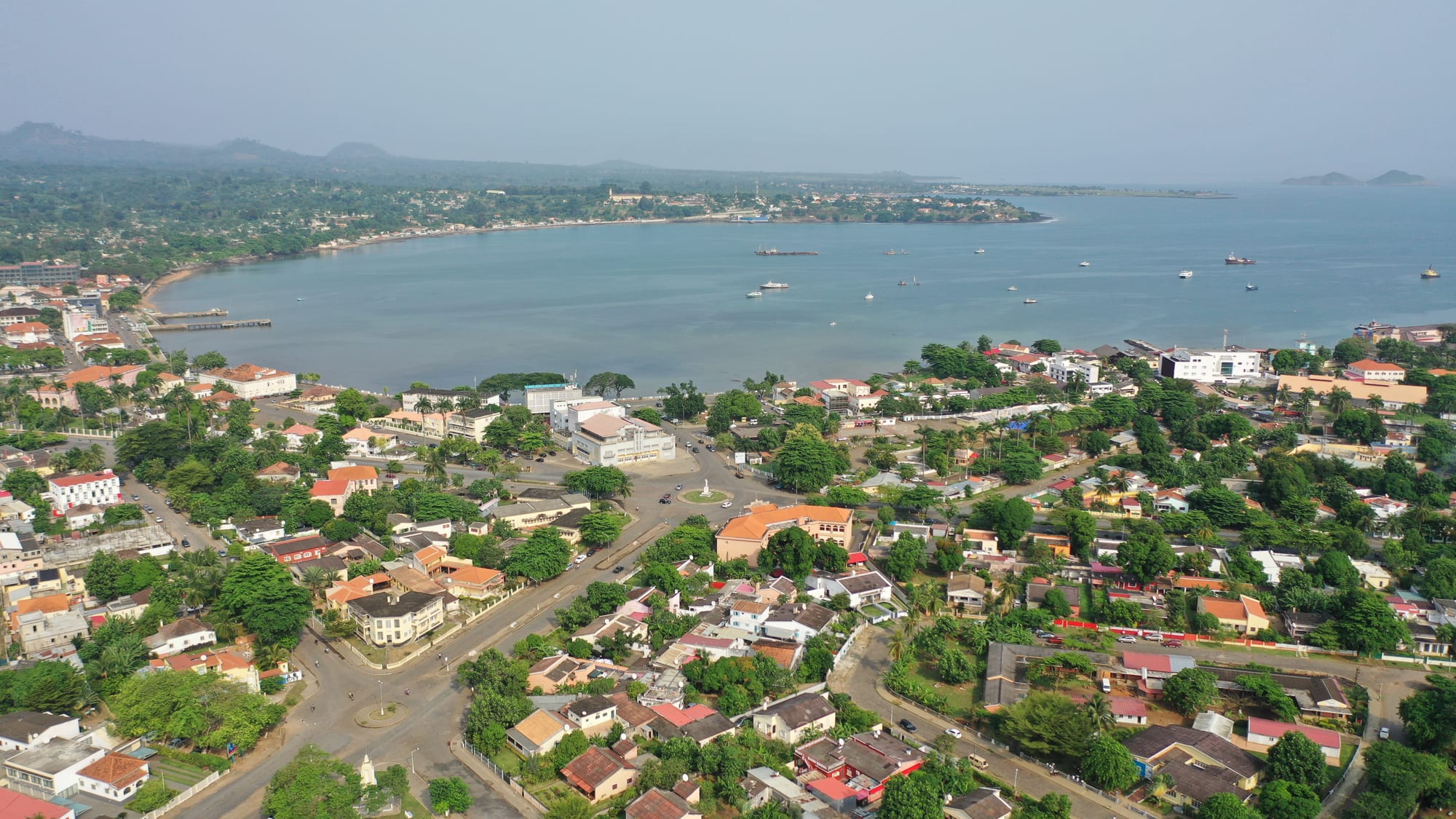
The old town is flat, compact and pleasant on foot — the cathedral, the square, the fort, the waterfront and the market are all within a few minutes of one another — and walking is the normal way to move around it. Pavements are uneven, shade is limited in the middle of the day, and street lighting is patchy, so a taxi is usual after dark. Everything outside the town requires transport.
🛡️ Safety
São Tomé and Príncipe is one of the safest countries in Africa for visitors, with very low crime and a calm, friendly society. Petty theft from beaches, cars and rooms is the main issue in the capital. The real considerations are practical: very limited medical care, with serious cases needing evacuation abroad; year-round malaria; and rough seas and strong currents on some beaches, especially in the rains.
São Tomé and Príncipe is one of the safest countries in Africa for visitors, with very low crime and a calm, friendly society. Carry comprehensive insurance with medical evacuation cover, take malaria precautions, drink bottled or treated water, and use a guide for forest walks. Check current official travel advice before travelling.
🌦️ Climate
Equatorial and steady: hot and humid all year at sea level, generally 24–30°C, with little variation between months and cooler air in the hills behind the town. The gravana, roughly June to September, is the main dry season, drier and a little cooler, with a shorter dry spell in January. The rest of the year is wet, heaviest from October to May. There are no cyclones.
- Summer
- June to September, the gravana, is the driest and coolest stretch, with days around 26–28°C, grey mornings and calmer seas
- Winter
- The wet months from October to May are hotter and more humid, days around 29–30°C with heavy afternoon and night rain
🤝 Local Customs
Life moves at what São Toméans themselves call leve leve — gently, without hurry — and impatience is badly received. Portuguese is spoken by nearly everyone, with Forro creole alongside it. Greetings come before business, dress is neat in town and swimwear stays on the beach, and this is an overwhelmingly Catholic society in which the church calendar matters.
Ask before photographing people, especially at the roças, which are homes rather than monuments, and avoid photographing the airport, military and police. Tipping is not expected but small amounts are appreciated; a guide is paid for forest walks.
💳 Common Payment Methods
The currency is the dobra, pegged to the euro, and euros are widely accepted alongside it. This is largely a cash economy: cards work at a few hotels in the capital only, and ATMs are limited to the town, so cash for the rest of the island should be drawn before leaving it. Bring euros rather than other currencies to change.