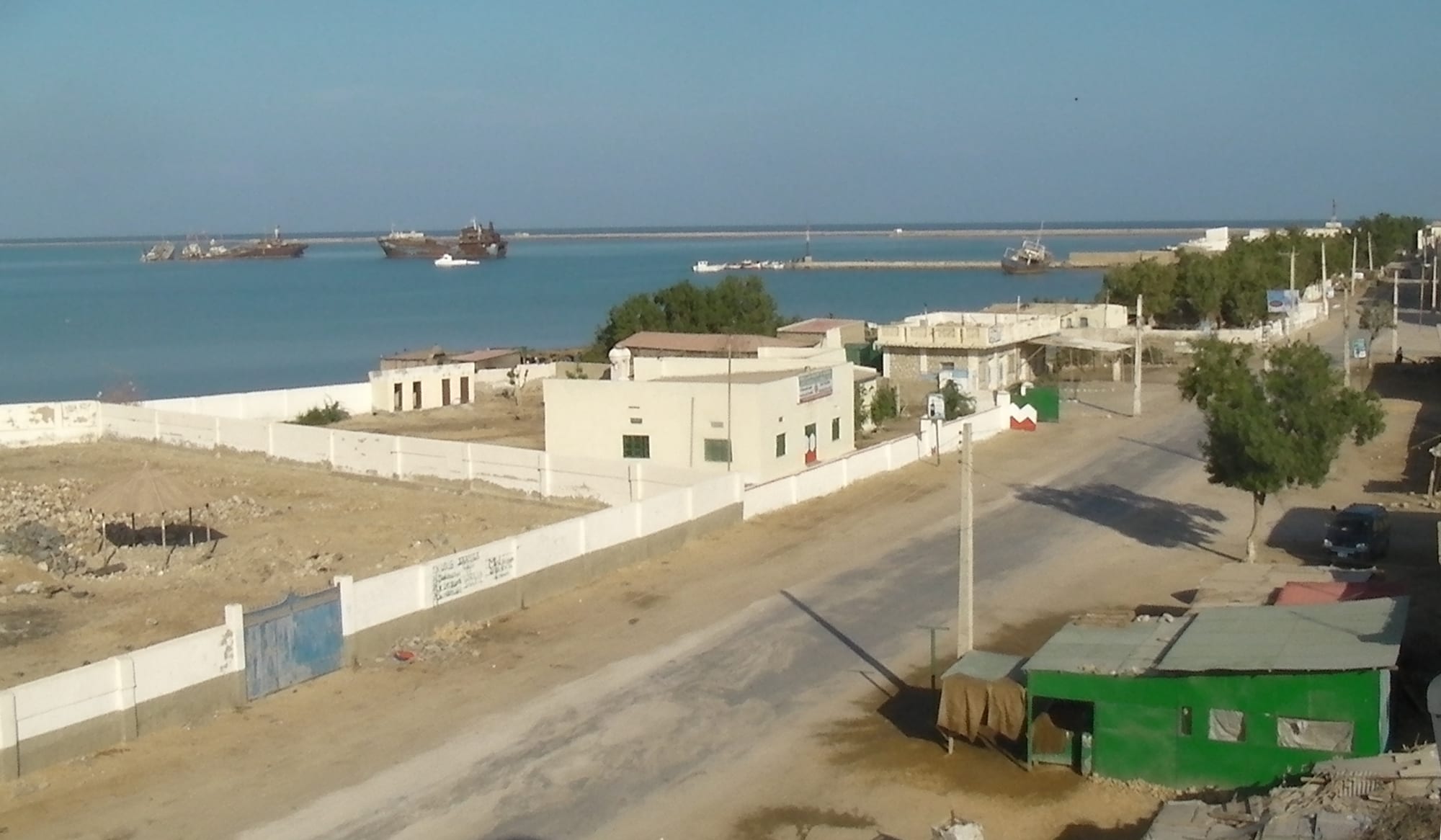
Low white buildings and a dusty road beside a calm blue bay with fishing boats and a rusting freighter at anchor

Somaliland, Somalia

Berbera

The shoreline at Berbera, looking north-east across the bay towards the harbour. (Brian Dell / Wikimedia Commons · CC0)

An old trading port on the Gulf of Aden in the Somaliland region of northern Somalia, and for decades the capital of the British protectorate. Its coral-stone quarter, long beaches and expanded container terminal sit on a coast that is extremely hot for much of the year. This page is written to explain the town, not to encourage travel.

Neighbourhoods

  • The old town
    • Historic district
    • Architecture
    • First-time visitors

    The quarter behind the harbour, where coral-stone and lime-plastered buildings from the Ottoman, Egyptian and British periods stand in varying states of repair, with carved doors and shaded verandas. Some are ruins, some are lived in, and the streets between them are sandy and quiet outside trading hours.

    Open in Maps
  • The port and the new town
    • Local life
    • Trade and business

    The working part of Berbera, spread along the road to the container terminal — freight yards, warehouses, workshops, shops, small hotels and the offices that handle livestock exports and imports for Somaliland and Ethiopia. Lorries dominate the traffic.

    Open in Maps
  • The beach strip
    • Beaches
    • Quiet and residential

    A stretch of sand running west of the harbour, with a handful of low buildings, fishing boats drawn up on the shore and open water beyond. Families come out to it in the cooler hours, and the water is very warm all year.

    Open in Maps

Things to do

The waterfront and the old town

  • Port of Berberalandmark

    The harbour that has shipped livestock, hides and incense across the Gulf of Aden for centuries, run since a thirty-year agreement signed in 2016 by the operator DP World, which completed the first phase of an enlarged container terminal in 2021 and is linking it by road towards Ethiopia.

    Open in Maps
  • The coral-stone quarterneighborhood

    The old streets behind the harbour, built of coral blocks and lime plaster under Ottoman, Egyptian and British administrations, with carved wooden doors and arcaded façades.

    Open in Maps
  • The fish landingattraction

    The shore where small boats bring in the day's catch from the Gulf of Aden, sold and gutted on the sand in the early morning before the heat rises.

    Open in Maps

Beaches and the sea

  • The town beachbeach

    The long pale-sand shore west of the town, where fishing boats are drawn up and local families come out in the cooler hours.

    Open in Maps
  • The offshore reefsattraction

    Coral reefs lie a short distance off the coast in warm, clear water, and the shallows are fished from small boats.

    Open in Maps

Short trips from the town

  • Sheikhattraction

    A cool highland town about 70 kilometres inland at 1,430 metres, reached by the road that climbs the escarpment of the Golis Mountains towards Burao, and known for the secondary school complex founded there in 1958 and restored in 2003.

    Open in Maps

Seasonal events

  • Somaliland national day18 May

    The anniversary of the 1991 declaration, marked with flags, parades and public gatherings.

  • Eid al-Fitr and Eid al-Adhadates move through the year with the Islamic calendar

    The two main Islamic festivals, when families gather, meat is shared and the beach fills in the evenings.

  • The cool seasonNovember to February

    Not a festival but the season that governs local life — the months when the heat eases, families return from the highlands and trade through the port is easiest.

Eat and drink

Long-standing places and food districts in Berbera. Hours, ratings and directions come from your maps app, always current.

Berbera classics

  • Grilled fish placesrestaurant

    Fish from the Gulf of Aden, grilled over charcoal or fried and served with rice or flatbread, is the town's speciality and is cooked simply in small restaurants near the harbour.

    Open in Maps
  • Canjeero and tea stallscafe

    Breakfast places serving canjeero, the soft fermented flatbread, with ghee, sugar or liver, and tea boiled with cardamom and cloves.

    Open in Maps

Markets and food streets

  • The town marketmarket

    Stalls of dates, fruit, camel milk, rice, spices and khat brought in by road, busiest in the early morning before the heat.

    Open in Maps

Experience Berbera

History

Berbera has been a Gulf of Aden port for as long as there are records of the coast. Classical accounts of Red Sea and Indian Ocean trade describe ports along this shore shipping incense, hides and slaves, and by the medieval period the town held a long annual trading season, when caravans came down from the interior and from Harar in the Ethiopian highlands and ships arrived from Arabia and India. Egyptian forces occupied it in the nineteenth century before withdrawing.

Britain took the coast under protection in the 1880s, chiefly to secure meat and livestock for its garrison at Aden across the water, and made Berbera the capital of the British Somaliland protectorate. Administration, garrison and trade concentrated here for more than half a century; the seat of government moved inland to Hargeisa in 1941. A deep-water harbour was developed after independence, and in the 1970s Soviet engineers built port facilities and an airfield with an exceptionally long runway, which passed to American use after Somalia changed allegiance in the Ogaden war.

The town suffered in the fighting of the late 1980s and again during the collapse of the Somali state in 1991, after which it became the port of the self-declared Republic of Somaliland. Livestock exports to the Arabian Peninsula revived the harbour. DP World has run the port since a thirty-year agreement signed in 2016, completing the first phase of an enlarged terminal in 2021, with Ethiopia taking a shareholding in 2018 and a road corridor aimed at landlocked Ethiopian trade; that investment now dominates the town's prospects and its politics.

Culture & Customs

Berbera is a port town, and its culture reflects centuries of coming and going across the Gulf of Aden. Arab, Indian and African traders left their mark in the architecture of the old quarter and in the vocabulary of trade, and families here have long-standing ties to Aden, Jeddah and the Gulf ports opposite. The town is Somali and Sunni Muslim, organised by clan like the rest of the region, with mosques at the centre of the week.

Heat governs behaviour. Work happens early, the middle of the day empties, and life resumes in the late afternoon and evening, when people walk by the shore and sit outside. In the hottest months families who can afford it move to the highlands around Sheikh, a seasonal migration that has gone on for generations and that once included the colonial administration itself.

Hospitality is close to obligatory: tea is offered at any visit, and a guest is fed. Dress is conservative for both men and women, and the beach is not a place for swimwear. Poetry and song carry the same prestige here as across the Somali world, and the sea adds its own body of work songs and sailors' verse. Many households have relatives abroad, and the summer brings visitors from the diaspora back to family compounds.

Daily Life

Berbera is small: an estimate in 1985 put its population at about 70,000 and no recent census settles the figure, but the town is far smaller than Hargeisa and its numbers rise and fall with the port's fortunes and with the season. Work is dominated by the harbour — loading and unloading, customs, haulage, fuel, ships' supplies — and by the livestock trade, in which animals are brought down from the interior and held in pens before being shipped to Saudi Arabia and the Gulf, above all in the weeks before the Hajj.

Fishing employs many families along the shore, though the catch is mostly sold locally and the sector remains small relative to the waters offshore. The port expansion and the corridor road towards Ethiopia have brought construction work, new warehousing and expectations of growth, and with them arguments about land, jobs and who benefits.

The rhythm of the day is set by the heat, with an early start, a long pause, and a second working period from late afternoon. Electricity is expensive and largely privately generated, water is scarce and often trucked in, and air conditioning is a luxury. Many young people leave for Hargeisa or abroad, and remittances from relatives overseas support a significant share of households.

Food

Fish is what distinguishes Berbera's table from the interior. Tuna, kingfish and reef fish come ashore in the morning and are grilled over charcoal or fried, then served with rice, with the soft flatbread canjeero, or with a fiery chilli and coriander relish. Lobster and shellfish are landed too, most of it destined for export rather than local plates.

Otherwise the food is northern Somali. Breakfast is canjeero, also called laxoox, with ghee and sugar or with liver and onions, alongside tea boiled with cardamom, cinnamon and cloves. Lunch is bariis iskukaris, spiced rice with goat or camel, or baasto, pasta with a heavy meat sauce left over from the Italian period in the south, usually with a banana on the side. Muqmad, meat dried and kept in ghee, is the old pastoral preserve and still made at home.

Camel milk, fresh or soured, is drunk through the day, and dates arrive by the sack from across the Gulf. Sambuusa, fried pastries filled with spiced meat, are the evening snack, especially in Ramadan, and xalwo, the dense sweet of sugar, ghee and spices, marks weddings and Eid. In the heat, cold soft drinks and endless sweet tea do the rest of the work; no alcohol is sold.

Planning tools

Budget

Berbera has basic and mid-range hotels used by traders, port staff and visitors from Hargeisa, and local food is cheap. The real costs are the vehicle, the driver and the armed police escort that foreigners must take outside Hargeisa, all paid in US dollar cash or by mobile money.

Daily Budget Midrange
USD 150–250 in cash (better hotels, a private vehicle and driver, escort and guide)
Daily Budget Shoestring
USD 80–120 in cash (simple hotel, local food, shared vehicle and the required escort)

Bring clean US dollar notes from Hargeisa, agree the vehicle and escort costs before setting out, and budget for air conditioning, which is not always reliable.

Best Time to Visit

November to February, when the coastal heat is bearable and the sea is calm. From about May to September the town is extremely hot and humid and many residents move up to the highlands around Sheikh; the same months bring strong winds along the coast.

Suggested Number of Days

A day or two is enough for the town itself, and two or three allows for the climb to the highlands inland. The heat shortens what can be done between mid-morning and late afternoon, which is the main constraint on any stay.

First Visit
1–2 days
With Surroundings
2–3 days

Transportation

The town is small enough to cross by shared taxi or minibus, and most visitors arrive with a hired four-wheel drive and driver. Roads are a mix of paved and sand, and lorry traffic to the port dominates the main route. Foreigners travelling on the roads outside Hargeisa must take an armed police escort.

Arrange the vehicle and escort in Hargeisa before leaving, and travel early in the day rather than in the afternoon heat.

Airport & Station Connections

The paved road from Hargeisa, about 160 kilometres to the south-west, is the usual approach and takes a few hours. Berbera International Airport lies just outside the town and has a 4,140-metre runway, one of the longest on the continent, built by the Soviet Union in the mid-1970s and rented by NASA as an emergency landing site for the Space Shuttle between 1980 and 1991; it was renovated and reopened to international passengers in November 2021. The port is the main sea entry for Somaliland and for cargo bound for Ethiopia.

Walkability

The old town and the harbour area can be walked in an hour or so, and the distances are short, but there are few pavements, the ground is sandy and the heat makes walking uncomfortable for much of the day. The beach is a short drive from the centre.

Safety

Berbera has been calm compared with southern Somalia, and the port and town are patrolled, but strong official warnings cover the whole country. Kidnapping of foreigners, occasional terrorism, road accidents and heat illness are the practical risks, and medical care is basic.

Most governments advise against all travel. Some treat Somaliland less severely than the south but still warn against all or most travel; travel there is made with a reputable local operator, the required escort and a low profile. Check current official travel advice before travelling.

Climate

The coast here is extremely hot, humid for much of the year and very dry. The sea is warm throughout, and heat, not rainfall, shapes the calendar.

Summer
extreme — often above 40°C from about May to September, with high humidity and strong coastal winds
Winter
hot but manageable, broadly 28–33°C by day, with warm nights

Local Customs

Society is conservative and Sunni Muslim. Modest dress is expected even at the beach, where swimming for women is done clothed, and the day pauses for prayer. Tea is offered constantly and hospitality is a strong obligation. Photographing the port, soldiers, checkpoints or people without asking causes problems.

No alcohol is sold. Ask before photographing anyone or anything to do with the port or security, keep shoulders and knees covered, and expect business to slow in the afternoon when many men chew khat.

Common Payment Methods

The Somaliland shilling covers small purchases and is exchanged in bundles by money-changers, while US dollar cash is used for rooms, vehicles and fuel. Mobile money is accepted almost everywhere, including market stalls. International cards are not usable, so cash is brought in.