💰 Budget
Jeonju is inexpensive by South Korean standards except in the hanok village itself, where staying in a converted traditional house costs more than a hotel in the new districts. Eating is cheap, since the city's signature dishes are market and neighbourhood food, and most of the historic sights charge little or nothing.
- Daily Budget Midrange
- USD 100–180 (hanok stay or mid-range hotel, full Jeolla-style meals, KTX connections, museum and shrine tickets)
- Daily Budget Shoestring
- USD 45–80 (guesthouse dormitory or budget motel, market soups and street snacks, city buses)
Weekdays are much cheaper and calmer than weekends in the hanok village; a full set meal is designed to be shared by two or more.
📅 Best Time to Visit
April and May bring blossom along the stream and the film festival; September to early November is clear and mild, with the Sori festival and autumn colour in the hills around the city. Midsummer is hot, humid and wet, and January is cold, though the hanok lanes are at their emptiest then.
⏳ Suggested Number of Days
The hanok quarter, the old town and a market meal fill a day or two comfortably. Three or four days allow the museums, the parks and the temples and mountains outside the city. Festival weeks need booking well ahead and reward a longer stay.
- First Visit
- 1–2 days
- With Surroundings
- 3–4 days
🚆 Transportation
City buses cover Jeonju thoroughly and take the T-money card; there is no metro. Taxis are inexpensive and are the simplest way between the station, the bus terminals and the hanok village. Much of the historic area is closed or awkward to cars, and bicycles and rented electric scooters are common along the stream paths.
Jeonju Station is a few kilometres north-east of the hanok village, so allow for a bus or taxi at each end of a rail journey.
🛬 Airport & Station Connections
KTX trains run from Seoul's Yongsan station to Jeonju in roughly two hours on the Jeolla line, and express buses serve the city from Seoul, Daejeon and Gwangju. The express and intercity bus terminals sit together in the north of the city. The nearest international gateway is Incheon, reached by direct airport bus.
🚶 Walkability
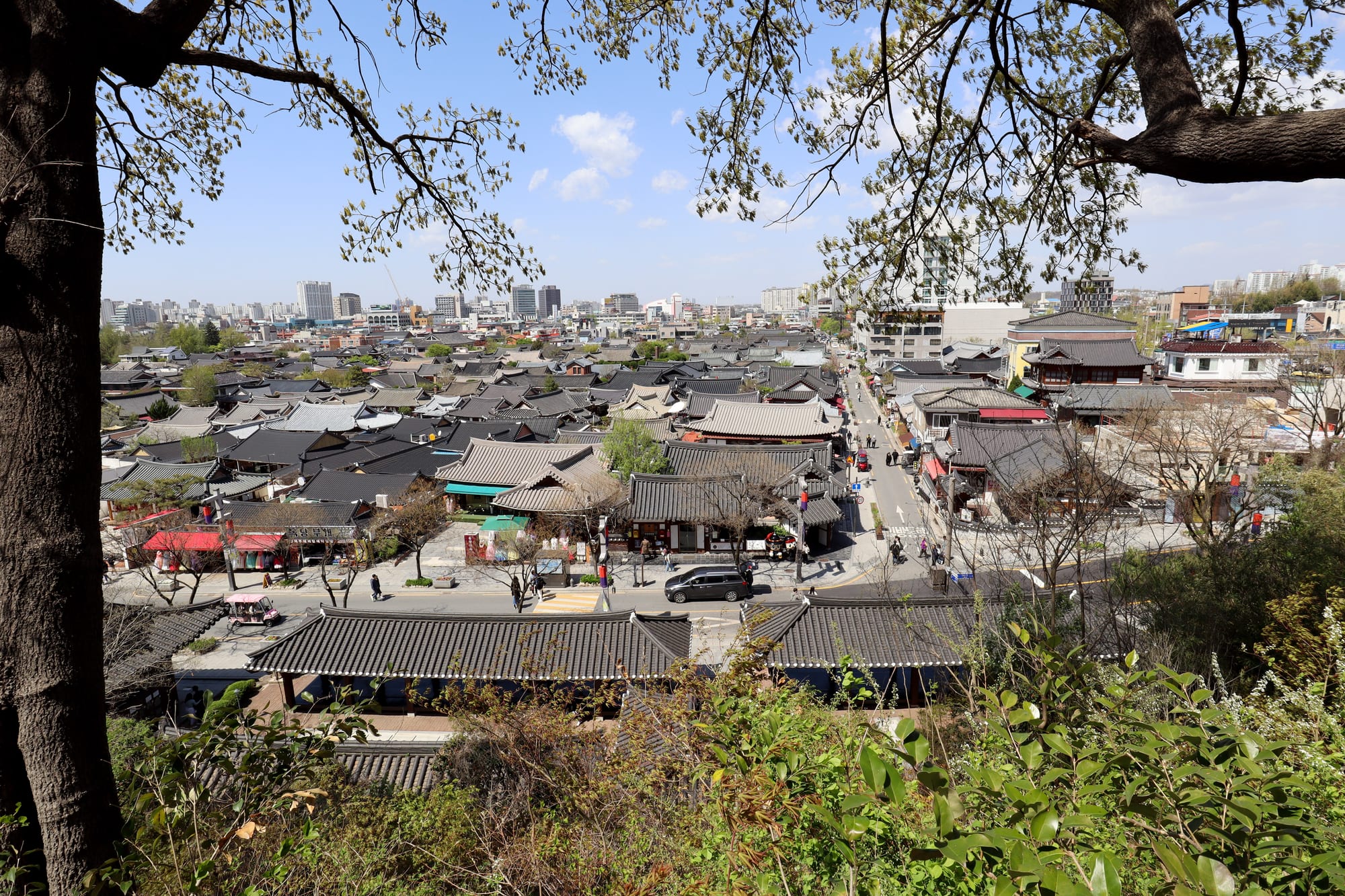
The historic core is very walkable: the hanok village, Pungnammun, Nambu Market and the downtown shopping streets are strung along about two kilometres of flat ground, with the stream path linking them. The mural village and the pavilion above the hanok quarter involve short steep climbs, while the newer residential districts and the station are spread out and need a bus.
🛡️ Safety
Jeonju is a calm provincial city with very low crime, and walking at night in the centre is normal. The everyday risks are traffic on narrow lanes shared with scooters, slippery stone paving in the hanok quarter when wet, and summer heat and heavy monsoon rain. Crowds in the village lanes peak on spring and autumn weekends.
Watch for scooters and delivery bikes in the pedestrian lanes, and carry water in July and August. Check current official travel advice before travelling.
🌦️ Climate
An inland climate with four sharply marked seasons. Summers are hot and humid with a rainy spell in late June and July; winters are cold and dry, with occasional heavy snow when cold air crosses the Yellow Sea. Spring and autumn are mild and mostly clear.
- Summer
- hot and humid, generally around 28–33°C, with monsoon rain and a typhoon risk in late summer
- Winter
- cold and dry, usually around −6 to 5°C, with snow on some days
🤝 Local Customs
Tipping is not practised. Shoes are removed in hanok guesthouses, temples and floor-seated restaurants. Meals arrive with many shared side dishes that are refilled without charge, and pouring for others rather than oneself is the normal courtesy at a drinking table. Many hanok guesthouses are family homes, so quiet after dark is expected.
Hanbok is widely rented and worn around the hanok village by visitors, which is welcomed; ask before photographing residents or the interiors of private houses.
💳 Common Payment Methods
The currency is the South Korean won. Cards and phone payment work almost everywhere, including buses and taxis. Market stalls and the smallest soup shops may be cash only, so a small amount of won is useful, and ATMs taking foreign cards are in banks and convenience stores across the city.