💰 Budget
Kassala was one of the cheaper places in Sudan before the war: simple hotels, market food and shared transport cost very little, and the attractions — the mountains, the gardens, the markets — were free. Since 2023 prices for food and fuel have risen sharply and the city has taken in very large numbers of displaced people. The figures below are pre-war and are given for reference only.
- Daily Budget Midrange
- USD 150–250 (pre-war equivalent; the regional figure, set by Red Sea diving trips rather than by inland towns like this one)
- Daily Budget Shoestring
- USD 30–50 (pre-war equivalent; simple hotel, market food, buses — the Sudanese pound is not meaningful during the war)
Do not plan travel here while the war continues; before it, visitors needed US dollars in cash, as international cards and ATMs did not work, and a permit to travel.
📅 Best Time to Visit
In peacetime November to March was the season, when days were warm rather than fierce and the gardens were in fruit. The summer rains from July to September fill the Gash and green the plain but make heat and humidity heavy, and April to June is very hot. Travel is not advisable at any time of year while the war continues.
⏳ Suggested Number of Days
The city and the hills at its edge take a day or two. Longer stays were spent on the gardens along the river, the villages under the domes and the country towards the border. Heat shortens what can be done in a day.
- First Visit
- 1–2 days
- With Surroundings
- 3–4 days
🚆 Transportation
The city is small and flat, and rickshaws, pick-up taxis and minibuses cover it cheaply. Kassala sits on the main highway between Khartoum and Port Sudan, which is how most people arrive, and roads run south to Gedaref and east to the Eritrean border. The railway through the city has long been out of use, with much of the track salvaged or derelict.
There is no safe or dependable way for visitors to travel in the region at present; checkpoints and fuel shortages slow every journey.
🛬 Airport & Station Connections
Kassala lies about 400 km east of Khartoum and roughly 500 km south of Port Sudan on the highway that links them, a journey of most of a day by bus in normal times. The city has an airport that has handled domestic flights, and the Eritrean border is close by, though the crossings there have opened and closed with politics.
🚶 Walkability
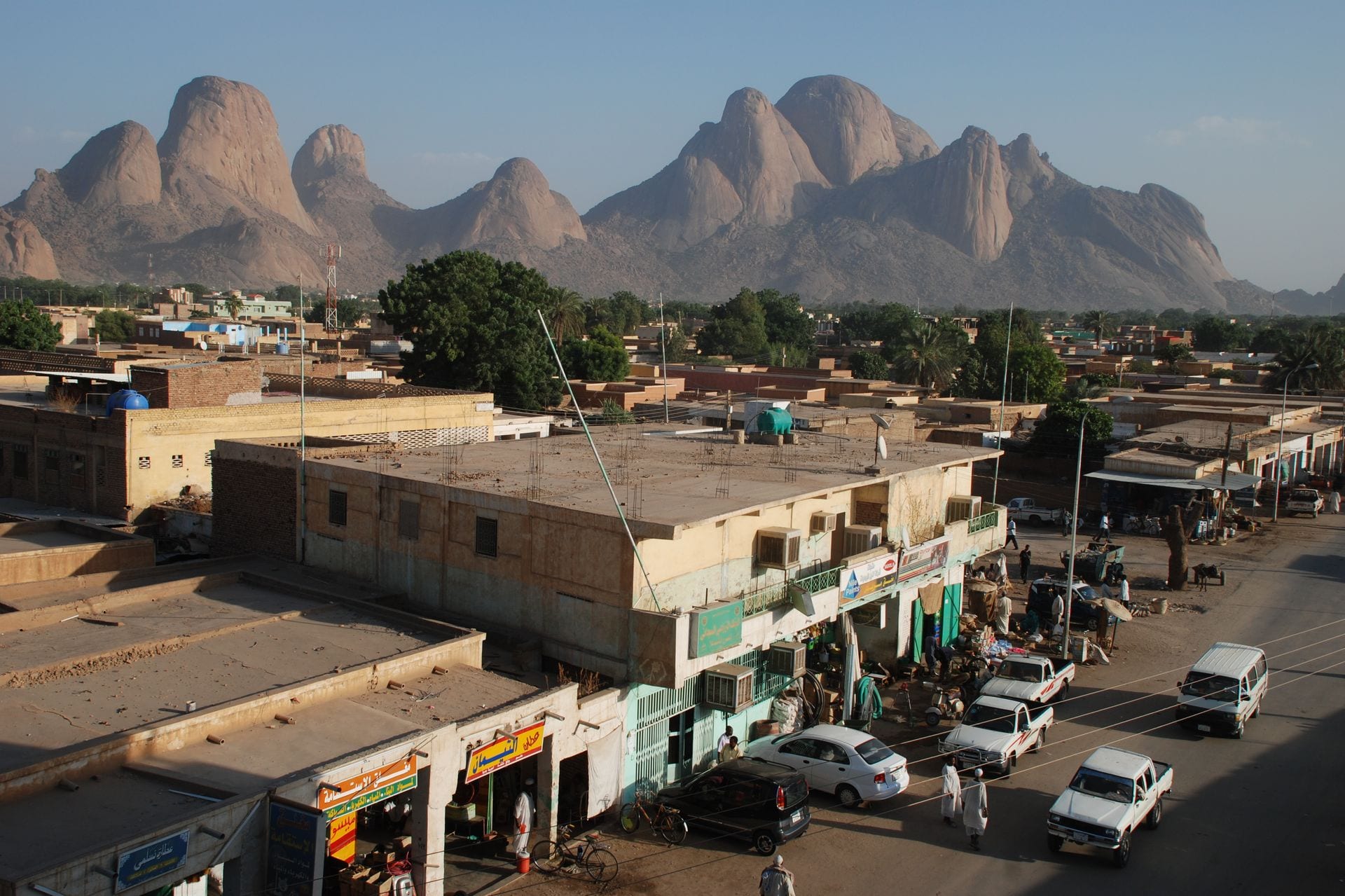
Kassala is easy to walk: the centre is compact, the ground is flat, and the mountains are a visible landmark from almost everywhere, about half an hour on foot from the market to the Khatmiyya quarter. Heat is the limit for much of the year, so walking is done early and late, and streets outside the centre are sandy rather than paved.
🛡️ Safety
Do not travel. Eastern Sudan has seen far less ground fighting than Khartoum or Darfur, but the city was drawn into the war on 3 May 2025, when drones struck the fuel storage area at Kassala Airport — the first such attack on the city since the conflict began. The border area carries smuggling, trafficking and periodic tension, armed groups and militias have multiplied across the east, and the city hosts large numbers of displaced people and long-settled refugees.
Most governments advise against all travel to Sudan, including Port Sudan, and consular help is very limited. Check current official travel advice before travelling.
🌦️ Climate
Hot semi-desert, with a single rainy season in summer. The Gash runs only in and after the rains, and the surrounding plain turns green from July before drying out again.
- Summer
- very hot before the rains, regularly above 40°C; rains from about July to September bring humidity and thunderstorms
- Winter
- warm and dry, often around 30°C by day with cool nights and dust in the air
🤝 Local Customs
Kassala is one of Sudan's most mixed cities — Beja, Arab tribes, Rashaida camel herders, and Eritrean and Ethiopian families settled for generations — and it is conservative and strongly Muslim, with the Khatmiyya order at its centre. Modest dress covering shoulders and knees is expected, most women cover their hair, and greetings are unhurried. Coffee or tea is offered to every visitor and refusing outright is impolite.
Alcohol was banned under the sharia laws of 1983, and the ban was lifted for non-Muslims in 2020. Dress and behave with particular restraint around the Khatmiyya mosque and tombs, ask before photographing anyone, especially Rashaida women, and do not photograph military sites, bridges or the border.
💳 Common Payment Methods
The currency is the Sudanese pound (SDG), which has lost most of its value. International cards and ATMs do not work because of sanctions, so everything runs on cash, with US dollars changed informally at rates far from the official one. Cross-border trade means Eritrean and Ethiopian money also circulates in the markets.