💰 Budget
There is no commercial accommodation, no restaurant and almost nothing to buy, so the cost of a stay is the boat passage from Samoa plus a daily rate paid to a host family, with a contribution of food or goods for the household. Everything must be arranged in advance through the Tokelau administration in Apia.
- Daily Budget Midrange
- USD 80–150 (host-family rate with extra contributions, boat trips within the lagoon, gifts and store goods)
- Daily Budget Shoestring
- USD 45–80 (host-family rate, meals shared with the household, nothing else to spend on)
Bring New Zealand dollars in cash from Samoa — there is no bank or ATM — and bring gifts of food or useful goods for the household.
📅 Best Time to Visit
The ship's schedule, roughly fortnightly and subject to weather and maintenance, decides everything; a visit lasts as long as the gap between sailings. Late in the year brings Christmas festivities and the largest gatherings. Tokelau lies in the Pacific cyclone belt, and cyclones are most likely between November and April.
⏳ Suggested Number of Days
The length of a stay is set by the ship rather than by choice, so most visitors are on the atoll for one or two weeks. Adding a call at another atoll, or missing a sailing, stretches a visit to three weeks.
- First Visit
- a week or two
- With Surroundings
- two to three weeks
🚆 Transportation
There are no cars to speak of and no roads beyond village paths. Everything moves on foot, by bicycle or small motorcycle, and by aluminium boat across the lagoon between Fale, Fenua Fala and the outer islets. Travel between atolls is by the Tokelau vessel or by chartered boat, and only when the sea allows.
Boat movements depend on the swell and on the household that owns the boat, so plans on Fakaofo are made loosely and changed often.
🛬 Airport & Station Connections
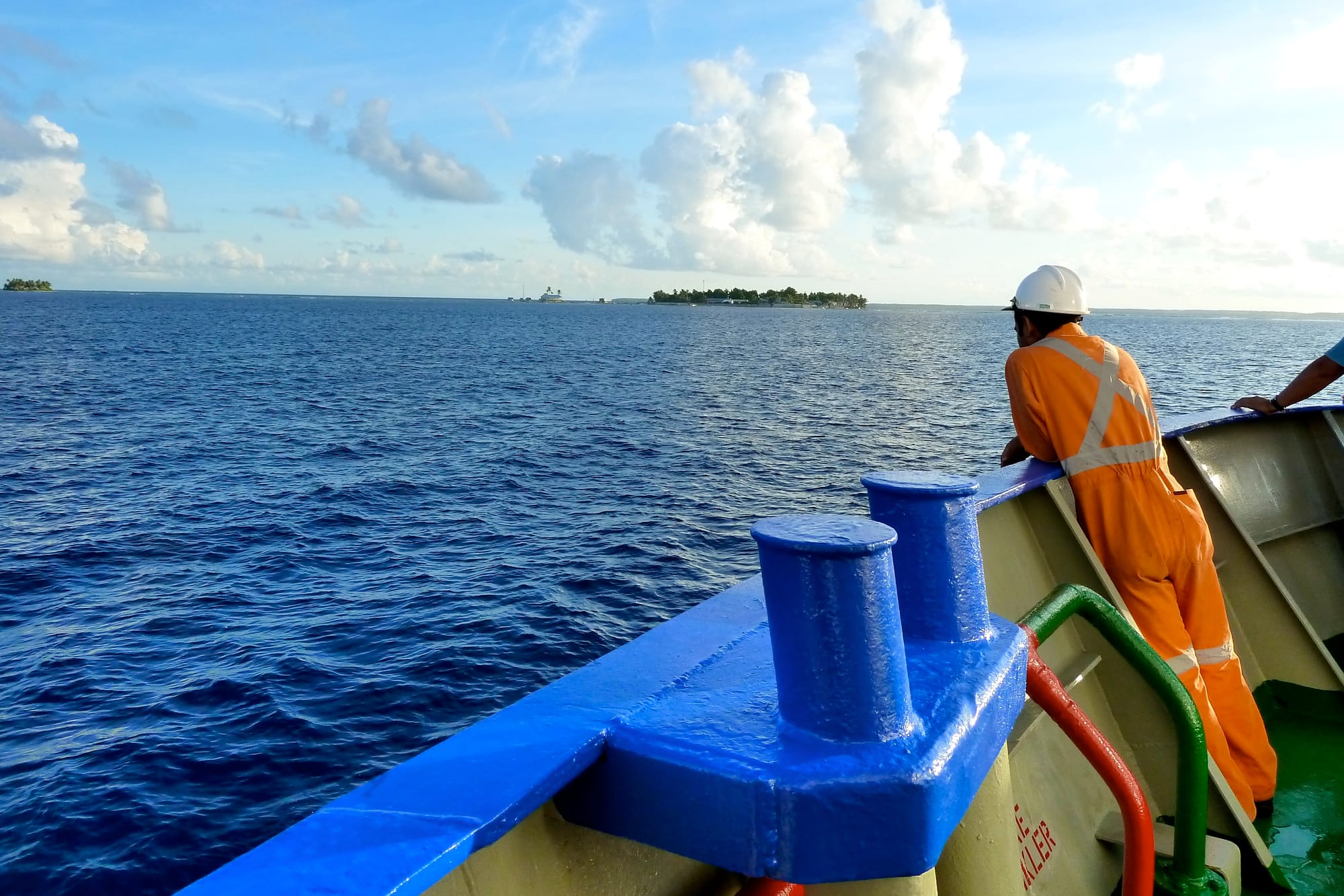
There is no airport, and a New Zealand-funded airport project was cancelled in January 2026. Access is by the Tokelau vessel from Apia in Samoa, a passage of a little over a day covering roughly 500 kilometres, sailing fortnightly. There are no harbours for large vessels: the ship stands off the leeward side of the islet, and passengers and cargo transfer to a small boat for the run ashore, which depends on the swell.
🚶 Walkability
Both settlements are walked end to end in a few minutes, and there is nowhere that needs a vehicle. The islets are flat, narrow and only a few metres above sea level, with sandy paths between houses, coconut palms and the shore. Crossing the lagoon between villages requires a boat.
🛡️ Safety
Socially this is an extremely safe place, with no crime to speak of and a village that knows every visitor. The risks are the sea crossing, the dinghy transfer through the reef passage, sunburn and heat, and isolation: the atoll has a small clinic, and a serious case means waiting for the ship or a medical evacuation to Samoa more than a day away.
Follow the host family's guidance on the reef, tides and boats, keep Sunday quiet, respect the decisions of the council of elders, and carry insurance covering evacuation to Samoa. Check current official travel advice before travelling.
🌦️ Climate
Tropical, hot and humid all year at around 28–30°C, with very little seasonal change this close to the equator and rain in every month. Tokelau lies in the Pacific cyclone belt — Cyclone Percy damaged all three atolls in 2005 — and storm surges and king tides wash across low ground.
- Summer
- December to February in the southern hemisphere — hot and humid at about 29–30°C by day, with trade winds, showers and the main cyclone risk
- Winter
- June to August differs little, around 28–30°C, humid, with rain squalls and close, still air
🤝 Local Customs
The Taupulega, the council of elders, governs the village, and a visitor is a guest of the atoll as much as of a household. Sunday is strictly for church and rest. Dress is modest — shoulders covered, shorts to the knee, and swimming clothes only at the beach — and shoes are removed before entering a house. Food and work are shared communally, and gifts are expected to be reciprocated.
Ask the host family or the council before photographing people, houses or ceremonies, take part in whatever the household is doing, and bring a gift for the village as well as for the family; tipping is not a local custom.
💳 Common Payment Methods
The currency is the New Zealand dollar, and this is a cash economy. There are no banks and no ATMs, and cards cannot be used, so all the money needed must be carried from Samoa in notes. The stores and the host family are the only things to pay for.