💰 Budget
Before 2022 Dnipro was an inexpensive business and industrial city with few foreign tourists. Since the full-scale invasion it has been a hub for aid and displaced people and a target of missile strikes, so cost matters far less than risk. The figures below are a pre-war guide only.
- Daily Budget Midrange
- USD 65–130 (pre-war guide: mid-range hotel, restaurant dinners, taxis)
- Daily Budget Shoestring
- USD 25–45 (pre-war guide: hostel, canteen meals, trams, minibuses and the metro)
Do not travel to Dnipro while the war continues; ordinary travel insurance does not cover it.
📅 Best Time to Visit
In peacetime late spring and early autumn were the most comfortable months, avoiding the hot summers and windy winters. Since 2022 there is no advisable season: missile and drone attacks continue all year.
⏳ Suggested Number of Days
No stay can be recommended while the war continues. In peacetime the centre, the parks and the riverside filled one or two days, and excursions into the surrounding region added more.
- First Visit
- Not advisable at present
- With Surroundings
- Not advisable at present
🚆 Transportation
The city has trams, trolleybuses, buses, minibuses and a single metro line of six stations, opened in 1995, that runs from the central railway station area into the centre. Long-distance trains link Dnipro with Kyiv, Lviv, Odesa, Kharkiv and Zaporizhzhia. Air-raid alerts and power cuts can interrupt services.
Anyone in the city should know the nearest shelter, keep a power bank charged and follow official alert apps and instructions.
🛬 Airport & Station Connections
Dnipro International Airport, about 15 km south-east of the city, was completely destroyed by a Russian attack on 10 April 2022, and civilian flights over Ukraine are suspended. The city is reached by train or road; Intercity+ trains run from Kyiv.
🚶 Walkability
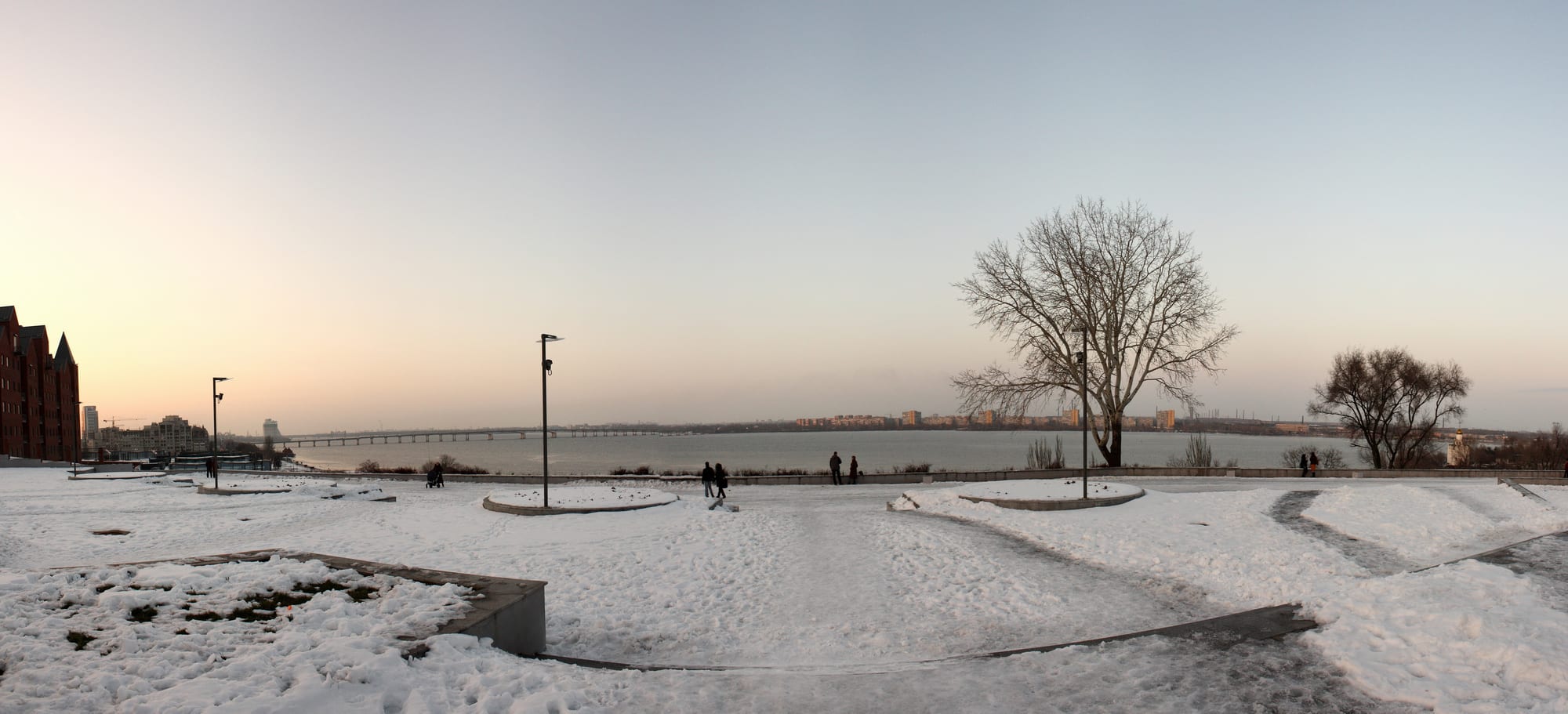
The right-bank centre is easy to walk along the central avenue, with the cathedral, museum and Shevchenko Park at its hilltop end and the river promenades below. The city is large and spread over both banks, so the metro, trams and buses are needed for anything further.
🛡️ Safety
Most governments advise against all travel to most or all of Ukraine. Dnipro has been struck repeatedly by Russian missiles and drones since 2022: strikes have hit its energy infrastructure, destroyed its airport, and on 14 January 2023 a missile hit an apartment building, killing at least 40 people.
Do not travel to southern Ukraine or Crimea; if present, shelter during alerts, keep off beaches and fields that may be mined, and never touch debris. Check current official travel advice before travelling.
🌦️ Climate
A continental climate on the steppe, with warm to hot summers and cold winters that feel much colder when the wind blows hard and there is no snow.
- Summer
- warm — July days average 24–28°C, sometimes reaching 32–36°C
- Winter
- cold — January days average −4 to 0°C
🤝 Local Customs
Dnipro has long been mainly Russian-speaking, but the city has moved decisively towards Ukrainian: about 300 streets and five of its eight districts were renamed in 2015, 92 more names were changed in 2024, and in November 2025 the city council introduced a moratorium on the public use of Russian-language cultural products. The city's Jewish community has its home in the Menorah Center, described as the largest Jewish complex in the former Soviet Union.
Martial law is in force; follow instructions from officials and at checkpoints, and avoid photographing strike sites or military positions.
💳 Common Payment Methods
The currency is the Ukrainian hryvnia. Cards and contactless payment are widely accepted and the banking system has kept working through the war; some cash is useful for markets and for power cuts that take card terminals offline.