💰 Budget
Ras Al Khaimah is cheaper than Dubai and Abu Dhabi for hotels and food, though the beach resorts on the reclaimed islands are priced like any international resort. The mountains, the old villages and the beaches cost nothing to visit; a hire car is the main fixed expense, since distances here are long and public transport is thin.
- Daily Budget Midrange
- USD 140–300 (beach resort or mid-range hotel, restaurants, a hire car, paid activities)
- Daily Budget Shoestring
- USD 45–85 (budget hotel, cafeteria meals, shared taxis and walking)
A hire car pays for itself within a day or two, because the mountain road, the forts and the old villages are all well outside the city and taxis are scarce away from the centre.
📅 Best Time to Visit
November to March, when the coast is warm rather than punishing and the mountains are genuinely cool, with campers on Jebel Jais and walking possible through the day. April and October are hot but manageable early and late; June to September is extreme on the coast, though the summit is several degrees cooler. The war that began in February 2026 has disrupted flights, shipping and events across the region, so it is worth confirming that anything being travelled for is going ahead.
⏳ Suggested Number of Days
A day or two covers the old town, a fort and the mountain road. Three or four suit a beach stay with time for the wadis, the springs and the abandoned villages. Driving time, not the number of sights, sets the pace.
- First Visit
- 1–2 days
- With Surroundings
- 3–4 days
🚆 Transportation
A hire car is the practical way to get around: the emirate is spread out and the mountain road, the wadis and the northern villages are hard to reach otherwise. Taxis are metered and available in the centre and at the resorts but not easily hailed elsewhere; ride-hailing coverage is thinner than in Dubai. Intercity buses connect to Dubai and Sharjah, and a small local bus network serves parts of the city.
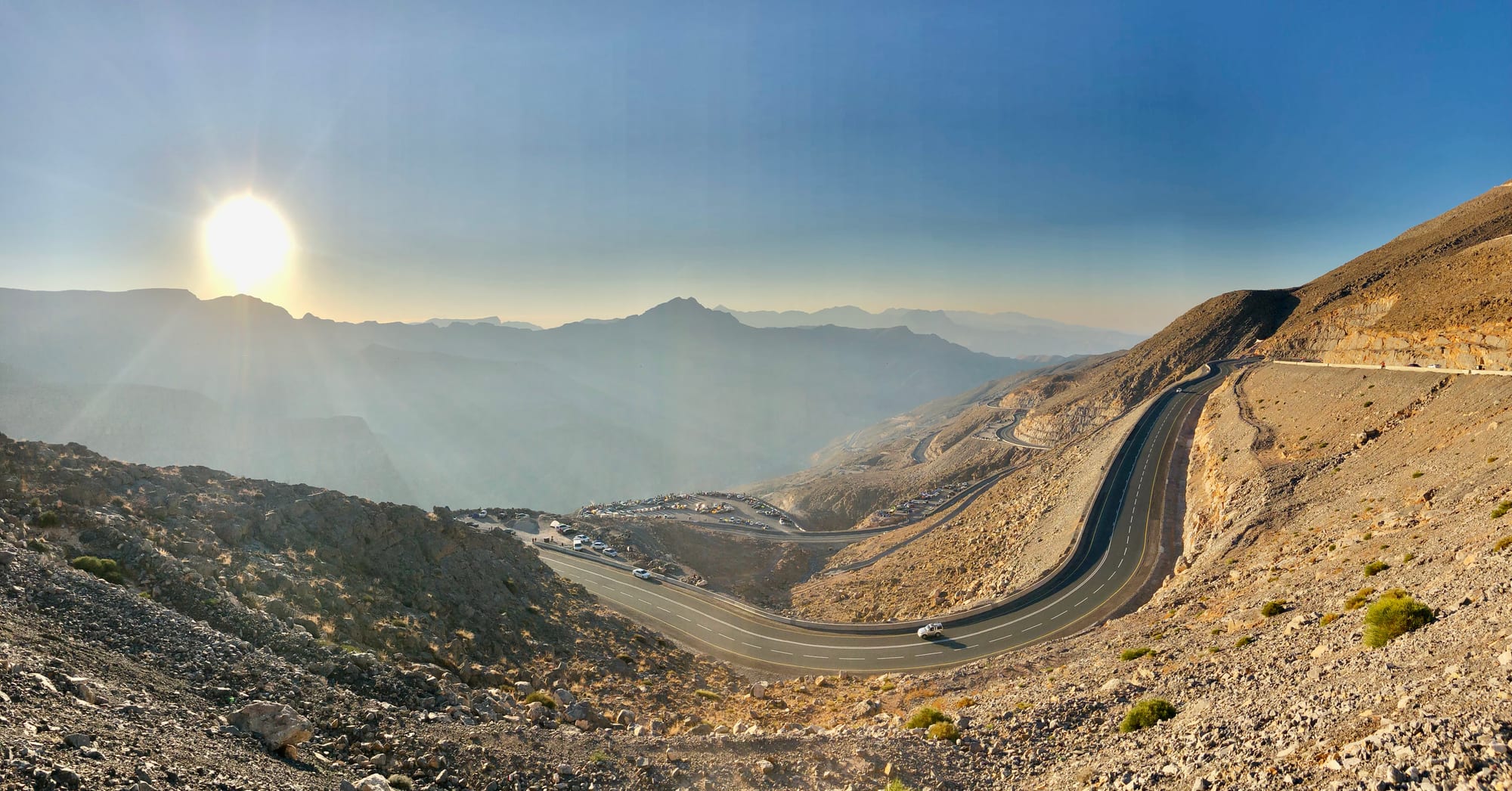
The Jebel Jais road is paved and well engineered but long, steep and exposed, so a full tank, water and attention to the weather are sensible before setting off.
🛬 Airport & Station Connections
Ras Al Khaimah International Airport lies a short drive south of the centre and handles a modest number of regional and charter flights; most visitors arrive through Dubai, roughly 110 kilometres and an hour and a half to two hours away by road, or through Sharjah. Intercity buses run from both, and the Omani border and the Musandam peninsula are a short drive north. Aviation across the region has been disrupted since the war began in February 2026, so schedules can change at short notice.
🚶 Walkability
The old town, the souq and the corniche in the centre are walkable, and so is the promenade at the resort islands. Everything else — the forts, the abandoned village, the springs, the mountain — is separated by long stretches of road with no pavements, and summer heat rules out walking outside early mornings. This is an emirate explored by car and walked in short stretches.
🛡️ Safety
Crime is very low and the emirate is calm. The particular risks here are outdoors: heat and dehydration on the trails, flash floods in wadis after rain, loose rock and steep drops on the mountain paths, and fast traffic on the highways. Legal and cultural cautions match the rest of the country — severe drug laws, offences for public drunkenness and public displays of affection, and prosecutions over online posts. Same-sex relationships are criminalised. Since 28 February 2026 the United States and Israel have been at war with Iran and its allies; Abu Dhabi was among the places hit by Iranian drones and missiles in the first days, further attacks on US military assets and Emirati infrastructure have followed, the UAE has struck Iran in return, and shipping in and around the Strait of Hormuz has been attacked. Gulf governments have prosecuted residents and foreigners for sharing unverified accounts of the attacks online.
Carry a doctor's note for prescription medicines, drink only in licensed venues, dress modestly in public and conservative areas, do not photograph people or officials without permission, and take care with what is posted online. Check current official travel advice before travelling.
🌦️ Climate
Hot desert climate on the coast, cooler with altitude inland. Rain is rare but heavier here than further south, falling mainly between December and March and sometimes filling the wadis in minutes. The mountains can be fifteen degrees cooler than the shore.
- Summer
- May to September is extreme on the coast — regularly above 40°C by day with high humidity, and warm nights
- Winter
- November to March is warm and dry at sea level, roughly 24–27°C by day, while nights on Jebel Jais can fall close to freezing
🤝 Local Customs
The northern emirates are more traditional in feel than Dubai. Modest dress — shoulders and knees covered — is expected in town, in villages and at the markets, with swimwear kept to hotel beaches and pools. Alcohol is served in licensed hotels and restaurants and sold from a small number of licensed outlets, but drinking or being drunk in public is an offence. During Ramadan eating, drinking and smoking in public during daylight are restricted. Greetings are lengthy and the right hand is used for giving and eating.
Ask before photographing people, houses or the abandoned village's interiors, never photograph military or government sites, and take care in wadis when rain is forecast anywhere upstream.
💳 Common Payment Methods
The currency is the UAE dirham, pegged to the US dollar. Cards work in hotels, malls, supermarkets and most restaurants, and ATMs are common in the city and at the resorts. Carry cash for the fish and vegetable markets, small village shops, roadside date stalls and parking in older districts.