💰 Budget
Laayoune is an administrative city rather than a tourist one, so prices follow Moroccan norms and there are few premium options. Hotels across a modest range, cheap café food and shared taxis keep costs low; hired 4x4 transport for the coast or the desert road is the main extra.
- Daily Budget Midrange
- USD 70–160 (mid-range hotel, restaurant meals, a hired car or excursion)
- Daily Budget Shoestring
- USD 25–50 (basic hotel, café food, shared taxis)
Costs are lowest in the centre, where hotels, cafés and shared-taxi ranks are within walking distance of each other.
📅 Best Time to Visit
October to April is the most comfortable, with warm days, cool nights and less dust. The cold Canary Current keeps the coast milder than the interior year-round but brings frequent morning fog. Deep summer is very hot when the wind turns inland off the desert.
⏳ Suggested Number of Days
The city itself is quickly seen, so one or two days suits most visits. Adding the coast west of the city, or using Laayoune as a stop on the long drive down the Atlantic highway, stretches it to two or three.
- First Visit
- 1–2 days
- With Surroundings
- 2–3 days
🚆 Transportation
Petit taxis and shared grands taxis are the normal way to move around; distances between districts are long and the layout is built for cars. Shared taxis and long-distance coaches link the city with the coast and with towns north and south along the Atlantic highway.
Agree the fare or the shared-taxi seat price before setting off, as fares are not always metered.
🛬 Airport & Station Connections
Hassan I Airport lies about 2 kilometres from the centre, with flights from Casablanca and other Moroccan cities and a short taxi ride into town. Most other arrivals come by long-distance coach on the coastal highway from Agadir and Marrakesh, a journey of many hours with police checks along the way.
🚶 Walkability
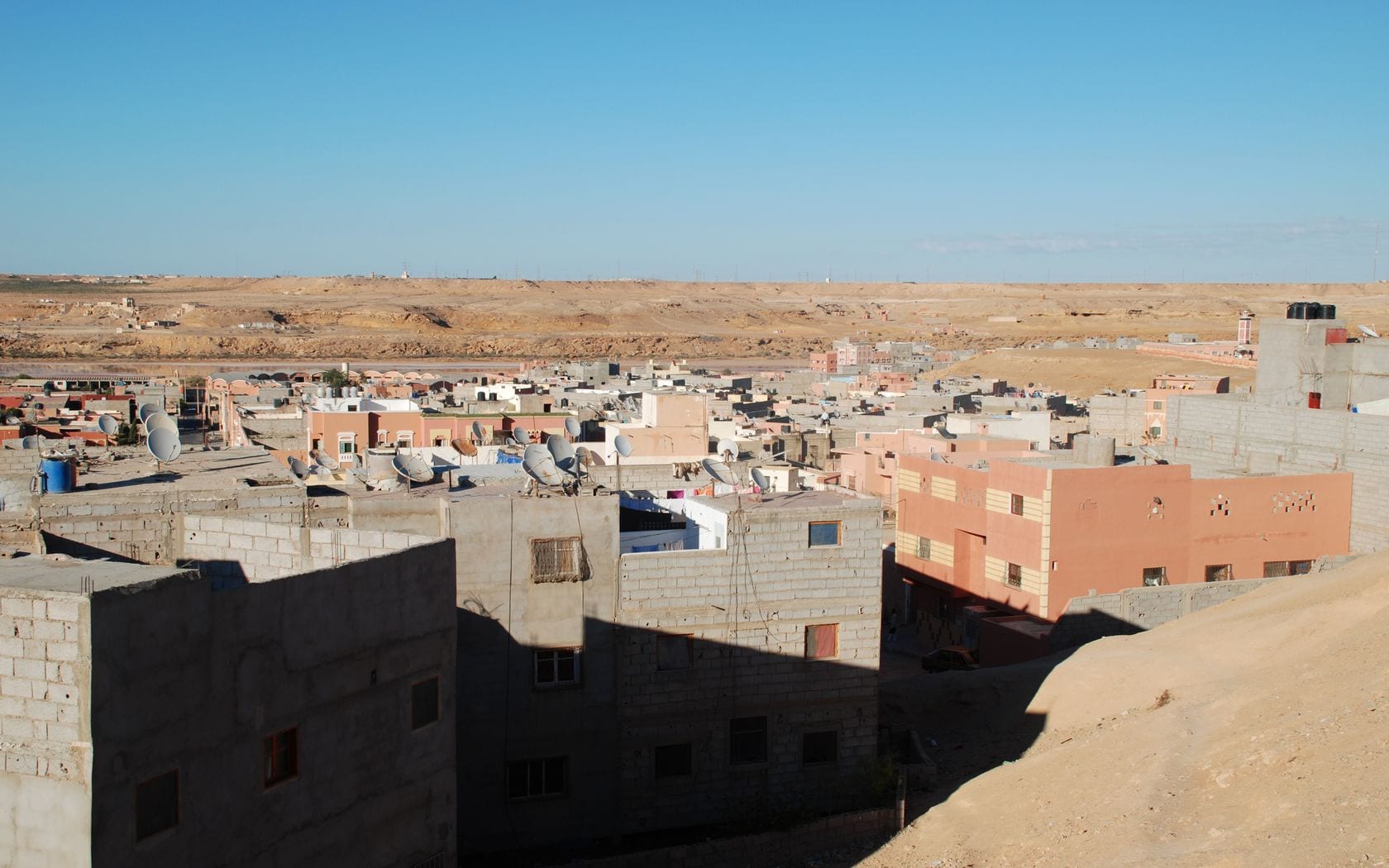
The centre is walkable, with wide pavements, and the Spanish-era buildings around the cathedral are an easy walk from it. Beyond that the city spreads out over the plateau in long blocks with little shade, and heat, wind and blowing sand make walking uncomfortable in the middle of the day.
🛡️ Safety
The city is calm and heavily policed, and ordinary crime is low. The political situation is sensitive: there is a large security presence, demonstrations are possible, and photographing police, soldiers, checkpoints or official buildings is not permitted. Uncleared landmines from the war remain a serious hazard in the desert east of the territory's sand berm, far from the city but relevant to anyone leaving the paved roads.
Most governments advise against travel to areas near the 2,700-kilometre sand berm that divides the territory, where uncleared landmines from the war remain a serious hazard, and against travel to the Polisario-controlled zone and the wider buffer strip. Keeping to the coastal highway and the towns, avoiding photography of security forces, and carrying a passport for road checks are the usual precautions. Check current official travel advice before travelling.
🌦️ Climate
Hot desert climate cooled on the coast by the Canary Current, with very little rain in any month, frequent sea fog in the mornings and dust in the air when the wind blows off the interior.
- Summer
- warm to hot — coastal air often around 25–30°C, considerably hotter with an inland wind, and cool at night
- Winter
- mild — days commonly around 20°C, nights cool, with grey, foggy mornings
🤝 Local Customs
This is a conservative Muslim society, and Sahrawi custom sets the tone: guests are pressed to accept tea, served in three rounds, and refusing outright is awkward. Many women wear the melhfa, a length of bright cloth wrapped over the clothes. Modest dress covering shoulders and knees is expected of visitors, and the political situation makes politics a subject best left alone with strangers.
Ask before photographing people, never photograph security forces or installations, use the right hand for eating and greeting, and dress modestly, particularly away from the centre.
💳 Common Payment Methods
The Moroccan dirham (MAD) is the currency in use, and it may not be taken out of the country. Banks and ATMs are available in the centre, cards are accepted in hotels and larger shops, and cash is needed for taxis, markets and small cafés.