A wide brown river flowing fast past a bank of dense, tall rainforest under a cloudy sky

Sierra Leone

The South & East

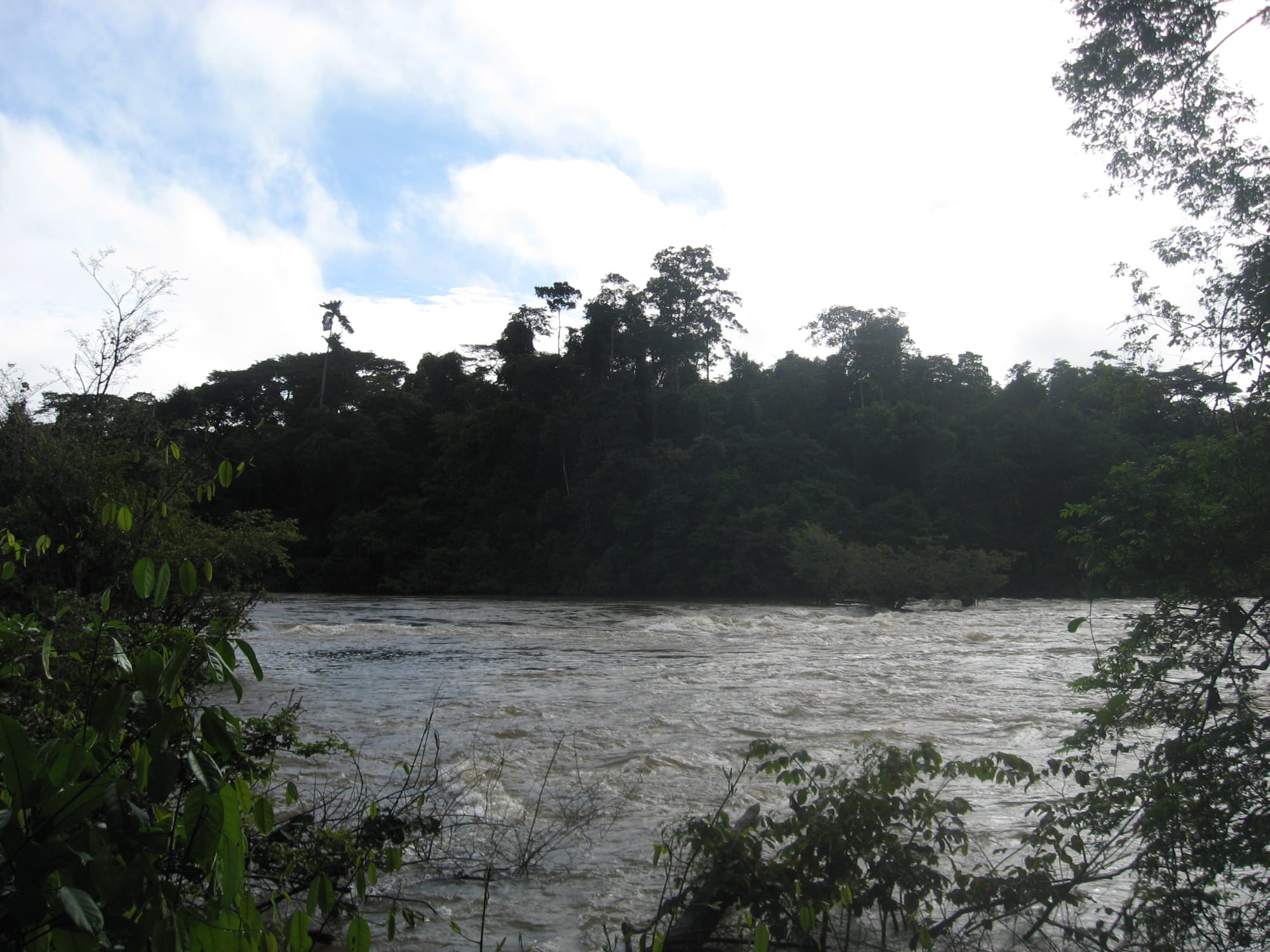
The Moa River and the rainforest of Tiwai Island in southern Sierra Leone. (Dorothy Voorhees / Wikimedia Commons · CC BY-SA 2.0)

The southern and eastern provinces of Sierra Leone, a greener, wetter land of rainforest, cocoa farms and diamond fields stretching from the mangrove coast of Sherbro Island to the Liberian and Guinean borders — the Mende heartland, with Bo and Kenema as its cities.

Explore The South & East

History

The south and east are the land of the Mende, who spread through the region from the 16th century, alongside the Sherbro (Bullom) on the coast, the Kissi and Kono in the north-east, and the Gola, Krim and Vai along the Liberian border. Soapstone figures called nomoli, recorded by the Portuguese in the 15th century, are still placed in Mende and Kissi farm fields for protection. Sherbro Island was an early centre of European trade, and later of the Caulker and Tucker trading families of mixed African and European descent.

Britain's 1896 protectorate and its house tax triggered a Mende rising in 1898, alongside Bai Bureh's war in the north. The railway brought Bo its modern growth, and from 1930 the town was the protectorate's administrative and educational hub, with the Bo School founded in 1906 for the sons of chiefs. Diamonds were found in Kono in the 1930s, and the region became the centre of the diamond economy — and of illicit mining and smuggling.

The civil war began in March 1991 when the Revolutionary United Front crossed from Liberia. The diamond fields of Kono and the east were fought over for a decade, and Mende hunter militias, the Kamajors, formed a civil defence force against the rebels. In 2014 Kailahun and Kenema were early hot spots of the Ebola epidemic, and Kenema Government Hospital lost many health workers, including the virologist Sheik Humarr Khan, before the outbreak was contained.

Culture & Customs

Mende is the language of daily life across most of the south and east, spoken alongside Krio, while Kono, Kissi and Sherbro hold their own districts. Christians and Muslims live side by side here, with Christianity somewhat stronger than in the north, and older practices remain woven into both.

The Poro and Sande (Bondo) societies are strong in Mende country, and the Sande society's black helmet mask, the sowei, is a celebrated art form. The Kissi once used long twisted iron rods, the "Kissi pennies", as currency. Chiefdom life matters: paramount chiefs, drawn from ruling families, settle land and local disputes.

Politically the south and east are the heartland of the Sierra Leone People's Party, the party of the first prime minister, Milton Margai, himself a Mende. Bo and Kenema carry a friendly rivalry, played out in football, schools and markets.

Daily Life

Kenema and Bo are the country's largest cities after Freetown, with about 255,000 and 223,000 people respectively (2021 estimates); Koidu, the diamond town of Kono, is the next. Bo is a sprawling, low-rise town of schools, churches and mosques, and home to Njala University's Bo campus; Kenema is a busier trading city of diamond buyers, timber yards and produce traders.

Most people farm: upland and swamp rice, cassava, and cash crops of cocoa, coffee and oil palm, especially in Kailahun and Kenema districts. Artisanal diamond digging continues along the rivers of Kono and the east, alongside industrial mines, while rutile is mined in the Bonthe and Moyamba area. On Sherbro Island and the Turtle Islands, fishing and fish-smoking are the living. Roads, power and clinics remain weak in rural areas, and young people drift towards the cities and mining towns in search of work.

Food

The food of the south and east is built on rice and palm oil: cassava leaf and potato leaf sauces thickened with red palm oil and cooked with smoked fish. Groundnut stew and okra sauce are everyday dishes, and fufu made from pounded cassava is eaten with soups.

On the Sherbro coast, fishing communities smoke bonga and other fish, sent inland to flavour sauces. The forest districts grow cocoa and coffee, as well as kola nuts, which are chewed and exchanged as a gesture of welcome and respect. Plantains, cassava, sweet potatoes, oranges and pineapples fill the markets of Bo and Kenema. Fresh poyo palm wine is tapped in the villages, and roasted groundnuts and fried akara fritters are sold at every roadside stop.

Attractions & Natural Wonders

Bo is the gateway to the south, with busy markets and the old railway town around its centre. Kenema, to the east, sits below the forested Kambui Hills, with the Kambui Hills Forest Reserve above the town.

Tiwai Island, a rainforest island in the Moa River, is a protected wildlife sanctuary with one of the highest densities of primates in the world — including western chimpanzees, red colobus and Diana monkeys — as well as the rare pygmy hippo, which is hard to see. The island has long combined research, community conservation and tourism. Further east, Gola Rainforest National Park protects a large block of Upper Guinean forest along the Liberian border, with forest elephants, chimpanzees, pygmy hippos and more than 330 bird species; it adjoins Liberia's Gola forest. In 2025 Tiwai and the Gola forest were inscribed together on UNESCO's World Heritage list as the Gola-Tiwai complex.

On the coast, Sherbro Island and the old colonial port of Bonthe lead to the Turtle Islands, a group of small islands with fishing villages and sandy beaches at the edge of the Atlantic, reached by boat.

Cities in The South & East

Planning basics

Budget

The south and east are cheaper than Freetown, with simple guesthouses and local food in Bo and Kenema, but comfort is limited and the real costs are transport and access. Tiwai Island and the Gola rainforest charge park and guiding fees, and reaching the Turtle Islands means hiring a boat, which is expensive unless shared.

Daily Budget Midrange
USD 90–200 (best hotels in Bo or Kenema, a car with driver, park fees and guides)
Daily Budget Shoestring
USD 25–45 (guesthouse, chop bars, shared taxis and okadas)

Bring enough cash in leones (SLE) from Freetown or Bo; banking is thin in the rural districts and on the islands.

Safety

The region is peaceful. The main hazards are road accidents and okadas, boat crossings in poor weather, and disease: malaria is widespread and Lassa fever is endemic in the east, especially around Kenema. The Ebola epidemic of 2014–16 is over, but health facilities remain basic, and diamond-mining areas can be rough.

Use life jackets on boats, avoid rodent-contaminated food, take malaria precautions and carry medical evacuation insurance. Check current official travel advice before travelling.

Climate

Hot and humid, with a long rainy season from about May to October. The forested south-east is among the wettest parts of the country, and the Sherbro coast is heavily rained on too, while the dry season from November to April brings some harmattan haze, though less than in the north.

Summer
the wet season, about 23–30°C, with heavy rain, flooded tracks and swollen rivers
Winter
the dry season, 24–33°C, humid in the forest and hottest in March and April

Transportation

A paved highway runs from Freetown to Bo and Kenema, served by buses, shared taxis and poda-podas, and paved roads continue towards Kailahun and Koidu. Beyond these, travel is by laterite road, okada and dugout canoe. Tiwai Island is reached from Kenema or Bo by road to the Moa River and a short boat crossing; the Turtle Islands need a hired boat from Bonthe or the mainland, a trip of several hours.

Freetown to Bo takes roughly four hours by road; arrange Tiwai and Gola visits in advance through their community or park offices.

Best Time to Visit

December to April, when the roads to Tiwai and Gola are passable, forest trails are drier and seas off the Sherbro coast are calmer for boat trips to the Turtle Islands. The rains make many laterite roads difficult and boat crossings rough, though the forest is at its most alive.