Attractions & Natural Wonders · Algeria
Algeria: Ten Attractions and Natural Wonders
Some of the best-preserved Roman cities in the world, a living hill-town casbah, and a desert of sandstone towers, volcanic peaks, and 8,000-year-old paintings
By Worldlore Editorial · 30 September 2026
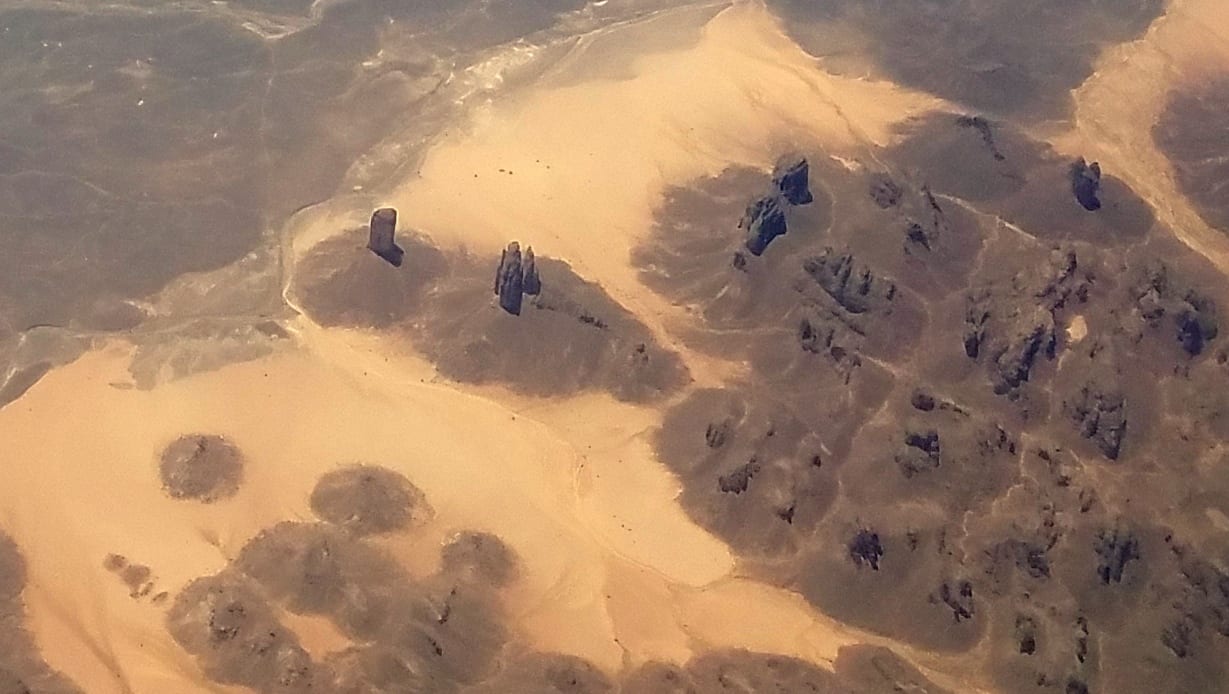
Africa's largest country, and one of its least visited
Algeria is the biggest country in Africa, and for its size it gets remarkably few tourists. That is slowly changing. The north has a Mediterranean coast, green mountains, and two of the best-preserved Roman towns anywhere; the south is pure Sahara, with painted rock shelters and forests of eroded stone. Visas have loosened for organised trips: tours run by an approved agency whose itinerary includes a southern province such as Djanet or Tamanrasset can get a visa on arrival.
The ten places below run from the coast to the deep desert. The north is easy to travel independently; the Saharan sites require a licensed agency and a guide, partly for the terrain and partly for security rules that still apply in the far south. Spring and autumn are best everywhere; the desert is a winter destination.
1. Timgad
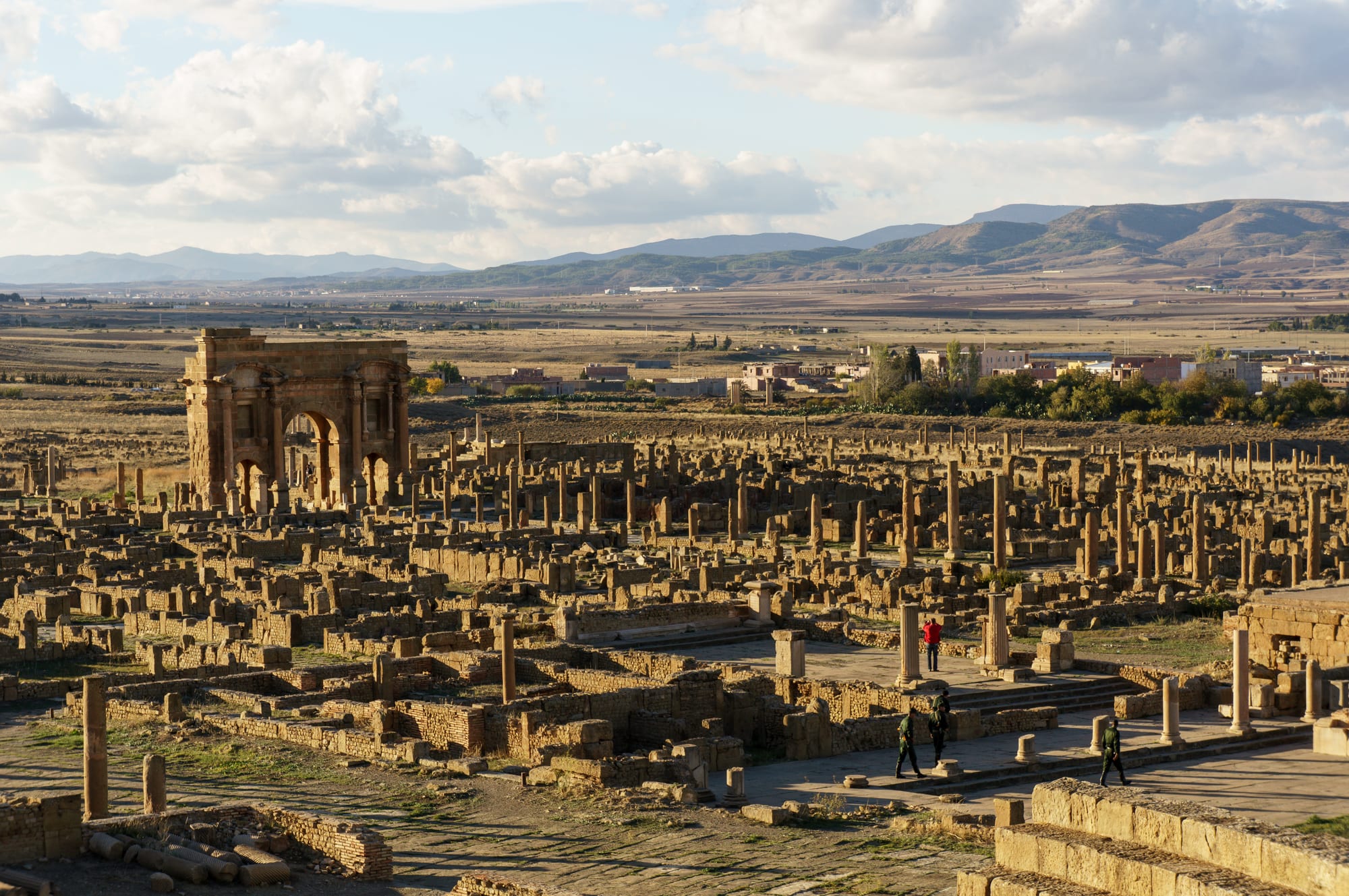
The emperor Trajan founded Timgad around AD 100 as a settlement for army veterans, and laid it out as a textbook Roman town: a dead-straight grid of streets inside a square wall, with a forum, a theatre for 3,500 people, a library, and several bath complexes. After it was sacked at the end of the 5th century the city faded from view, and it lay largely forgotten for centuries, which is part of why so much survives.
Excavated from the 1880s, Timgad is now one of the most legible Roman towns in existence — visitors walk its actual paved streets and pass under the 12-metre Arch of Trajan, where cart wheels wore deep ruts. It sits about 35 kilometres east of Batna in the Aurès Mountains, and gets a fraction of the visitors that a comparable site in Italy would.
2. Djémila
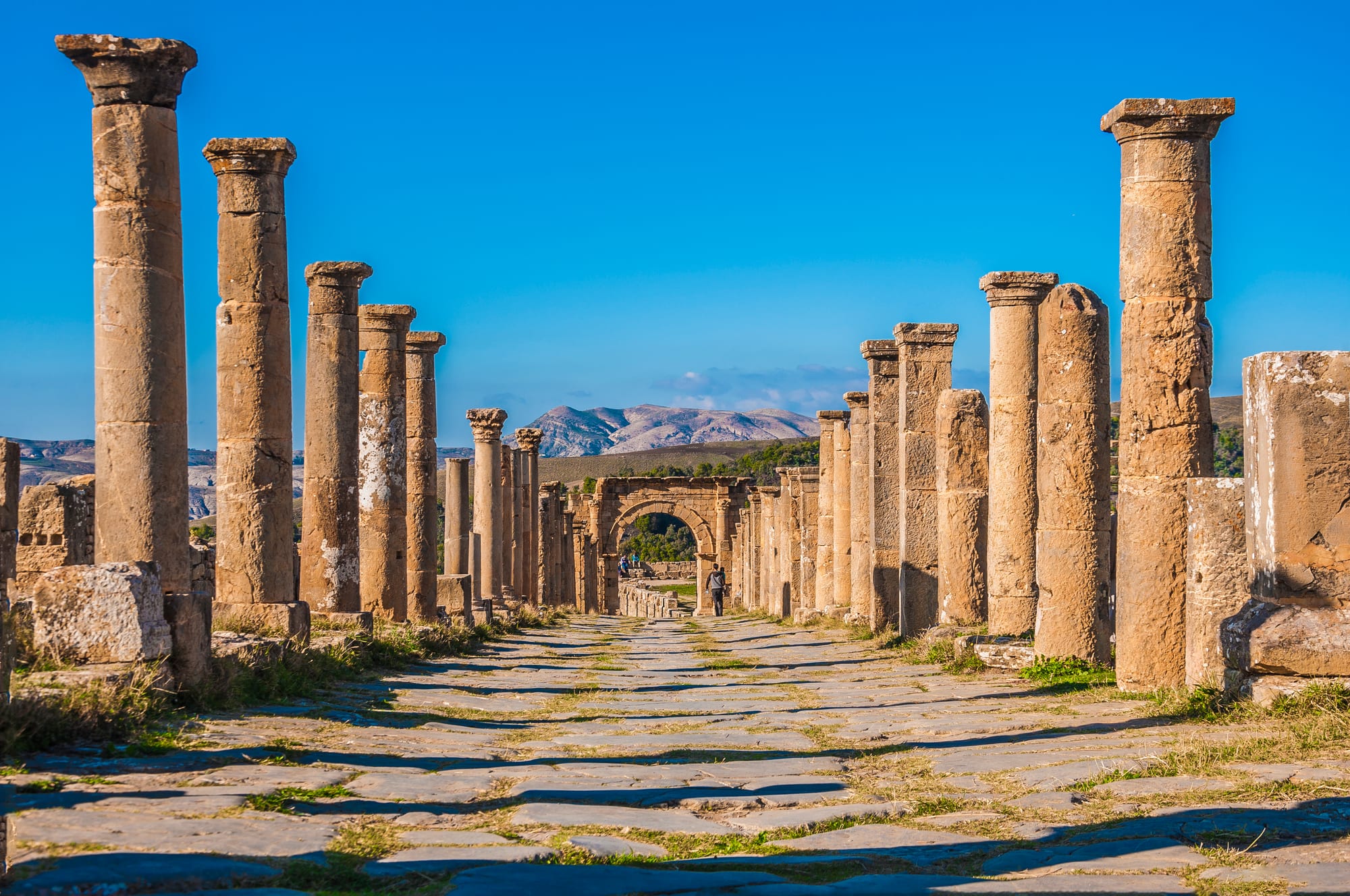
If Timgad is the Roman town that followed the rulebook, Djémila — to the north-west, at 900 metres in the mountains of Sétif Province — is the one that adapted to its site. The builders had to fit the forum, temples, and market between ridges and ravines, so the streets curve and the squares sit at angles to each other.
The setting is half the appeal: green hills, cooler air, and a site museum holding the mosaic floors, with scenes from myth and daily life, found in the town. Djémila (the name is Arabic for "beautiful") has been a UNESCO World Heritage Site since 1982 and, like Timgad, is usually quiet.
3. The Casbah of Algiers
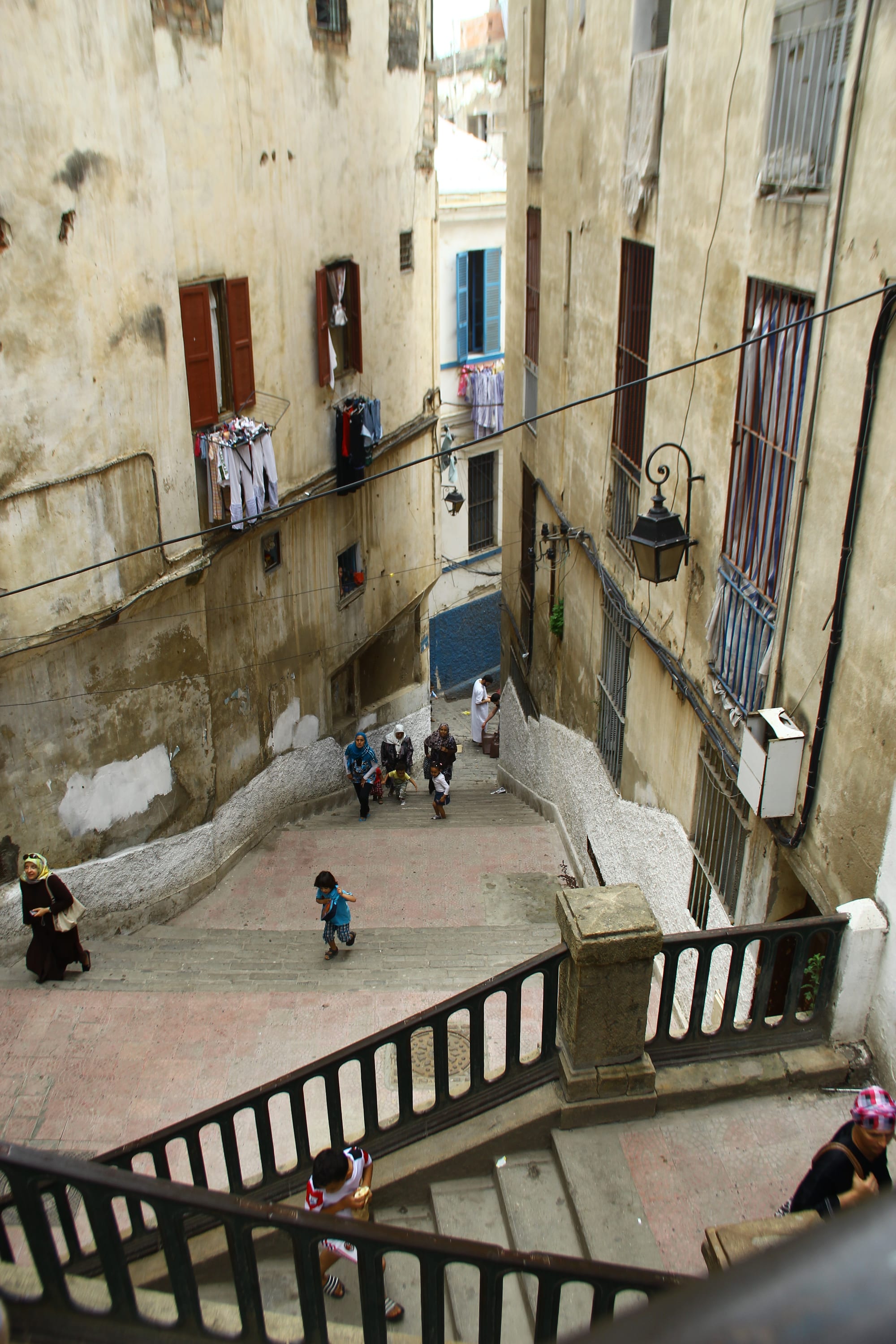
The Casbah is the old core of Algiers: a dense triangle of whitewashed houses, Ottoman palaces, and tiny mosques tumbling down a steep hillside to the sea. It took its present form under the Ottomans from the 16th century, and its lanes are so narrow and stepped that it is car-free; deliveries and rubbish collection are still done by donkey. During the war of independence it was a stronghold of the FLN independence fighters, a story told in the film The Battle of Algiers.
It has been a UNESCO World Heritage Site since 1992 and is still a working neighbourhood, parts of it fragile after repeated restoration plans stalled. Many visitors go with a local guide, because the alleys are a maze and some buildings are unsafe.
4. The M'Zab Valley (Ghardaïa)
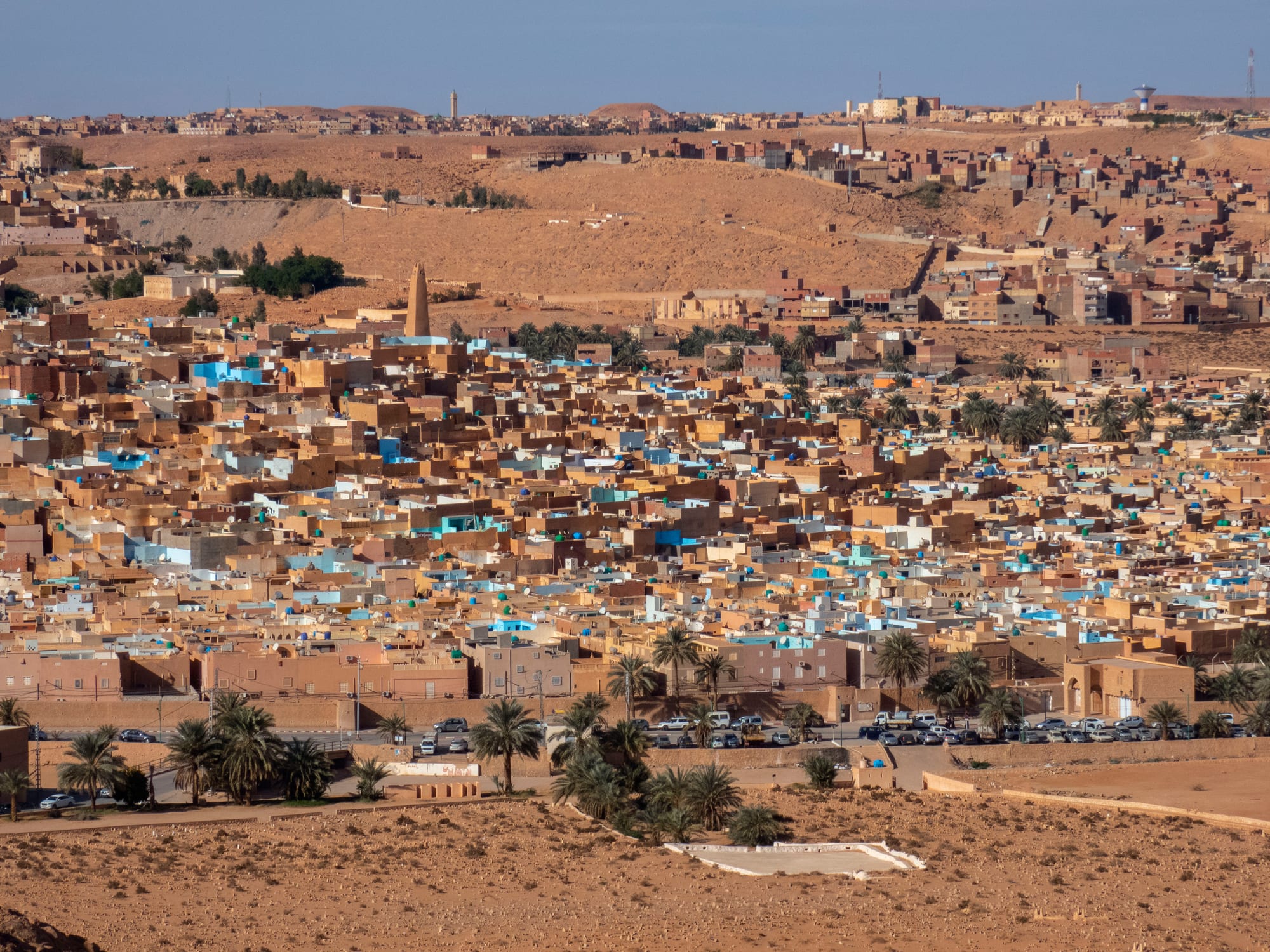
In a rocky valley on the northern edge of the Sahara, the Mozabites — a distinct Ibadi Muslim community — built five compact walled towns between 1012 and 1350, each climbing a rocky outcrop to a mosque whose minaret served as a watchtower. The design went on to influence 20th-century architects, Le Corbusier among them. Ghardaïa is the principal town; Beni Isguen is the most sacred.
The M'Zab has been a UNESCO World Heritage Site since 1982, and it is a conservative place where modest dress and discretion with a camera are expected. The Ghardaïa area is also known for its rugs, celebrated each spring with a carpet festival.
5. Tassili n'Ajjer
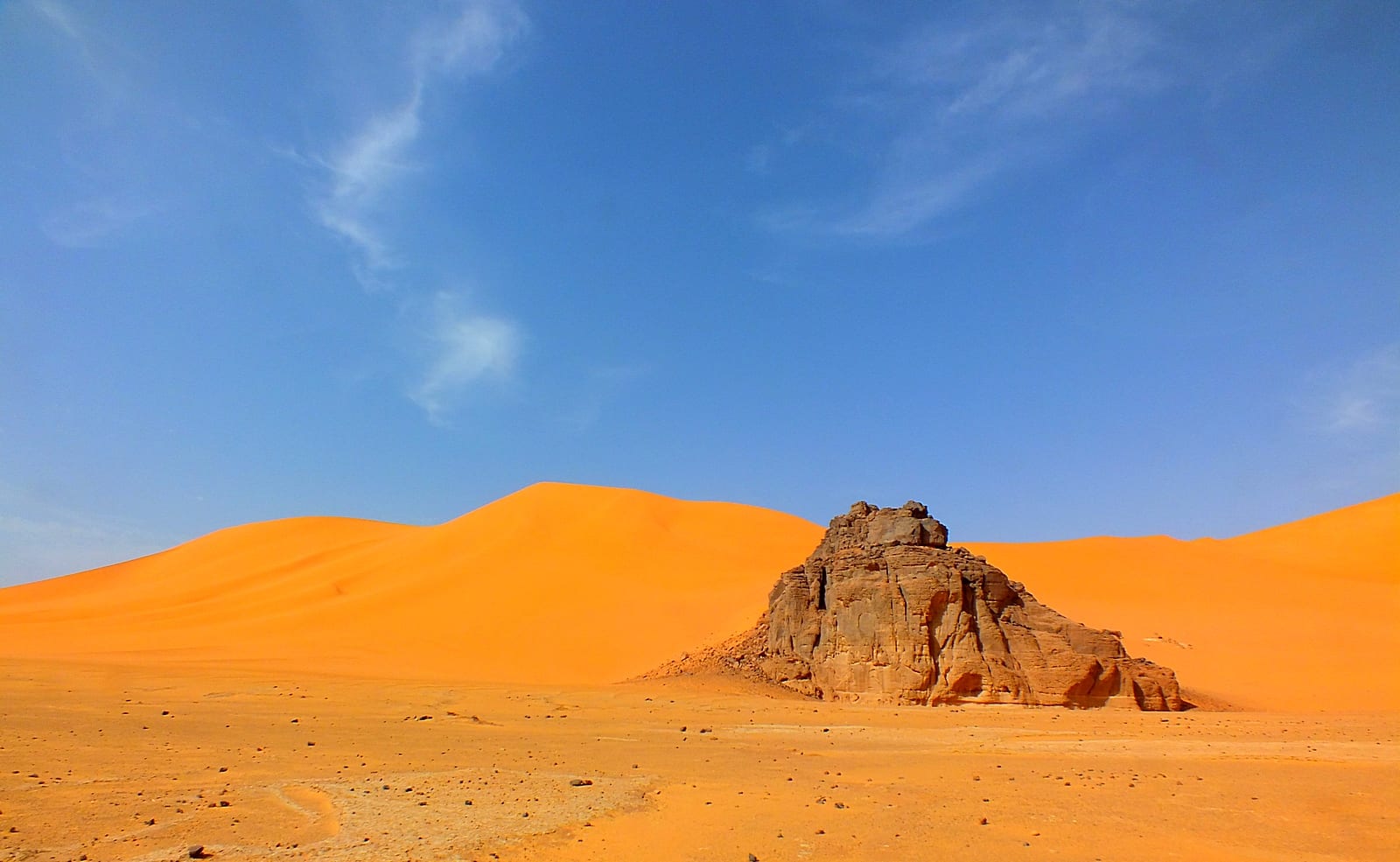
Tassili n'Ajjer is a sandstone plateau the size of a small country, eroded into thousands of pillars, arches, and slot canyons — a "forest of rock." It also holds one of the greatest concentrations of prehistoric art on Earth: more than 15,000 painted and engraved figures, some of them thousands of years old, showing a green Sahara of antelopes, crocodiles, and herds of cattle.
Visiting means a multi-day expedition from Djanet with a licensed agency, camping among the rocks and walking to the painted shelters. It is remote, cold at night in winter, and completely unlike anywhere else. Since 1982 it has been a UNESCO World Heritage Site listed for both its natural and its cultural value, the only one of Algeria's seven sites to be so.
6. Constantine, the City of Bridges
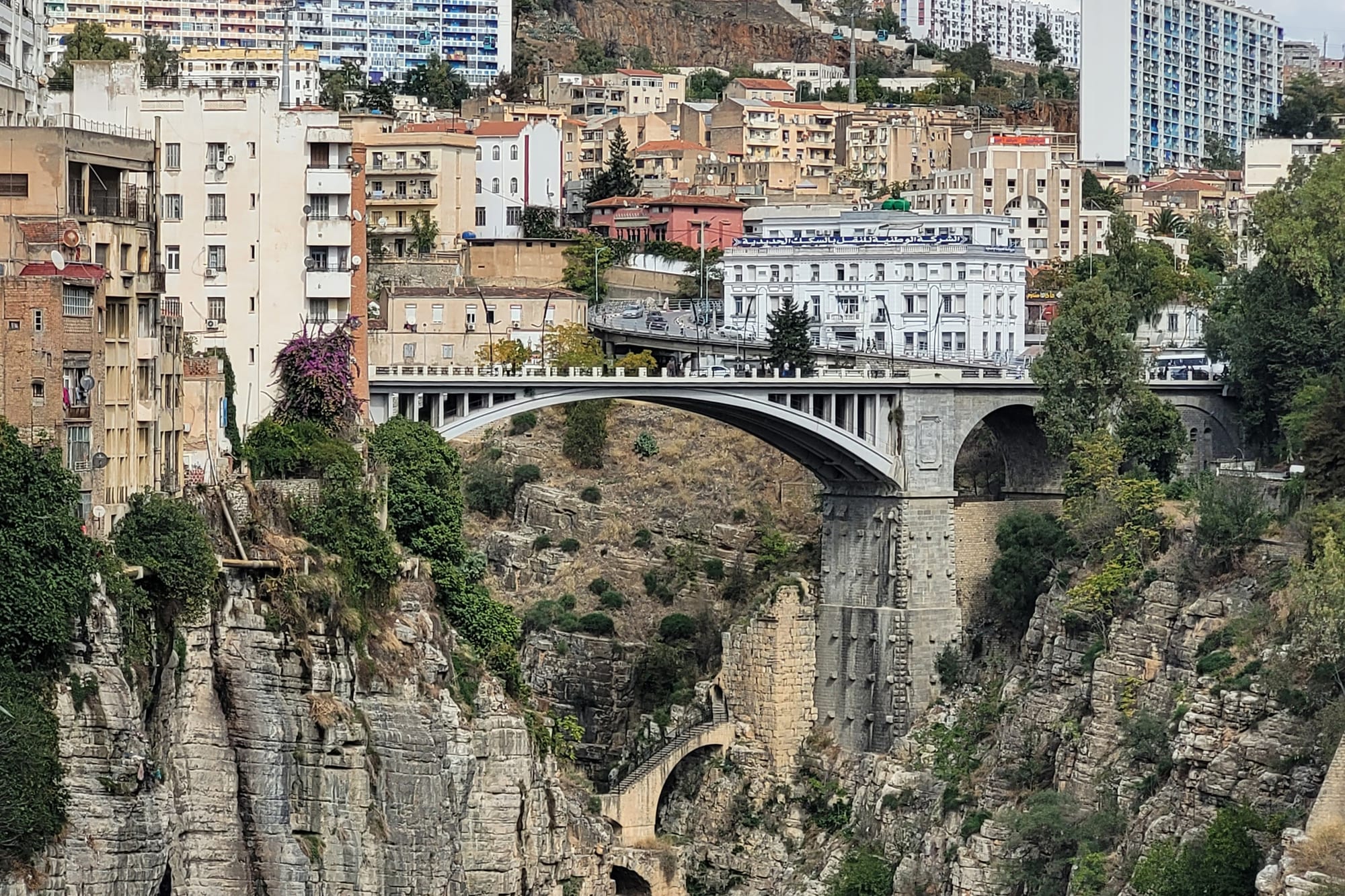
Constantine sits on a plug of rock almost entirely encircled by the deep gorge of the Rhumel River, whose sheer walls fall away more than 150 metres. To function as a city at all it has had to bridge the chasm again and again, and the result is spectacular: footbridges, road bridges, and the vertiginous Sidi M'Cid suspension bridge of 1912, 175 metres above the river.
The city is very old: as Cirta it was the capital of the Berber kingdom of Numidia, and it was rebuilt in 313 and renamed for the emperor Constantine. The old town on the rock, the bridges, and the palace of the last Ottoman bey are the reasons to come.
7. Oran and the Fort of Santa Cruz
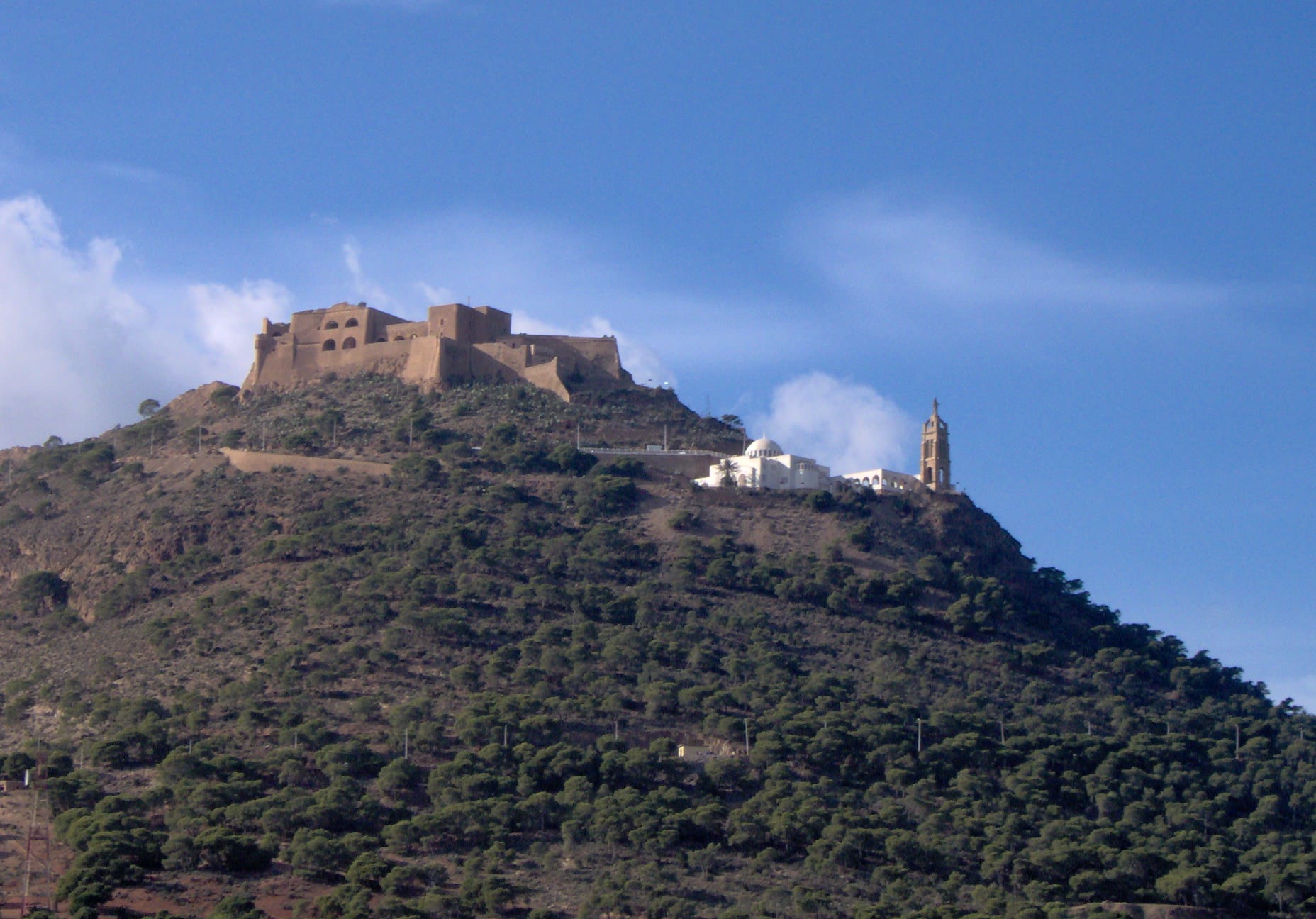
Oran, Algeria's second city, has a relaxed, outward-looking reputation — raï music had its beginnings here — and a place with a strong Spanish and French imprint. High above it, on Murdjadjo mountain, the Spanish-built Fort of Santa Cruz looks down over the harbour, next to a 19th-century pilgrimage chapel; the view along the coast from up here, about 400 metres above the sea, is the best in the city.
Down in town, the old Spanish quarter, the former cathedral, the seafront, and the grand colonial-era theatre make an easy day's walking. Oran is also the usual jumping-off point for the beaches west along the coast.
8. Maqam Echahid and modern Algiers
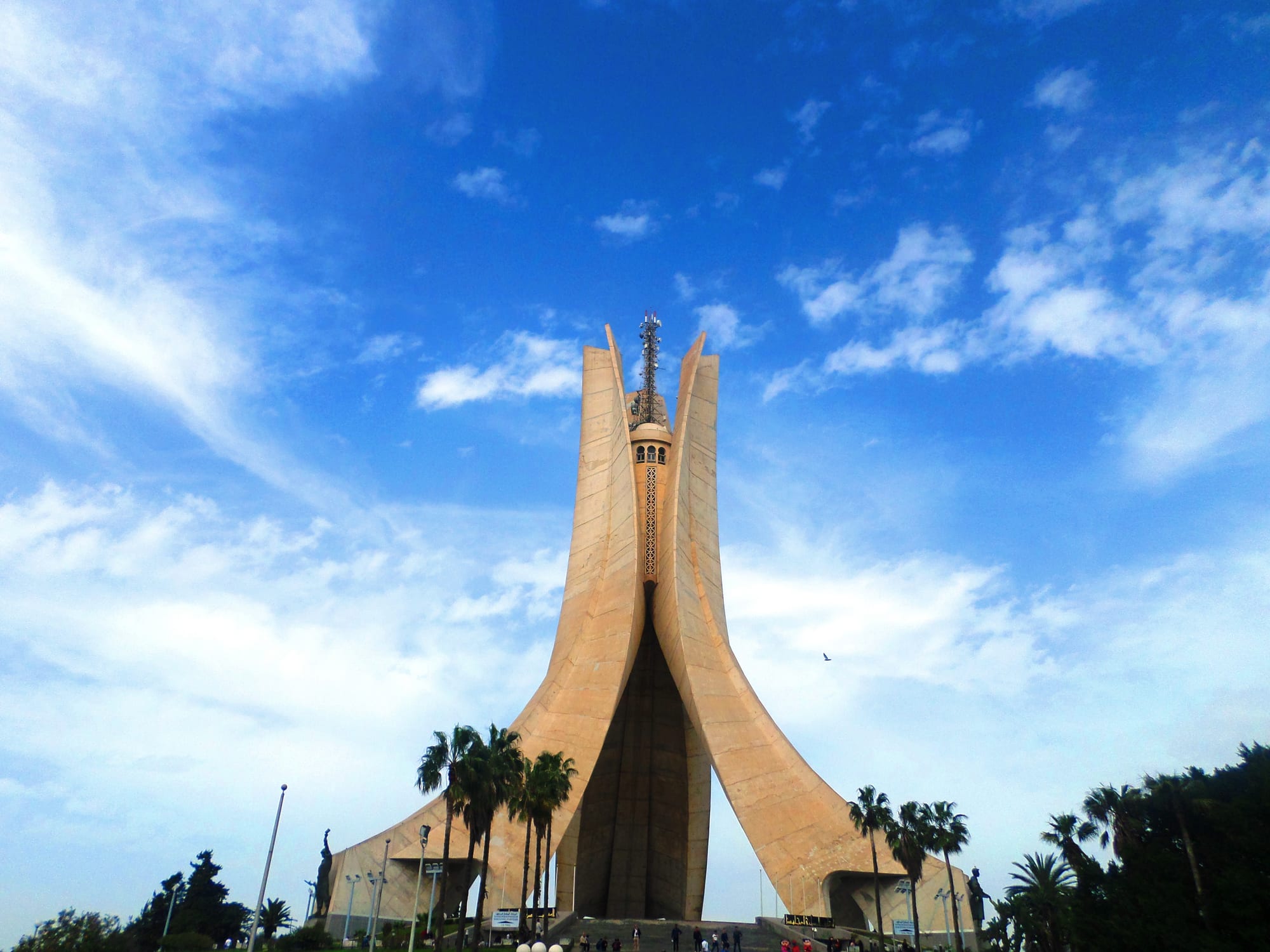
Algeria's independence, won from France in 1962 after a brutal eight-year war, is central to national identity, and the Martyrs' Memorial states it in concrete: three enormous stylised palm leaves rising 96 metres above the city, joined part-way up, sheltering an eternal flame.
The monument crowns a hill above the Jardin d'Essai, a lush botanical garden founded in 1832, that is one of the nicest places in the capital to spend an hour. Together with the Great Mosque of Algiers, opened in 2019, whose 265-metre minaret is the tallest in the world — they make the modern counterweight to the Ottoman Casbah below.
9. Tipaza and the coast
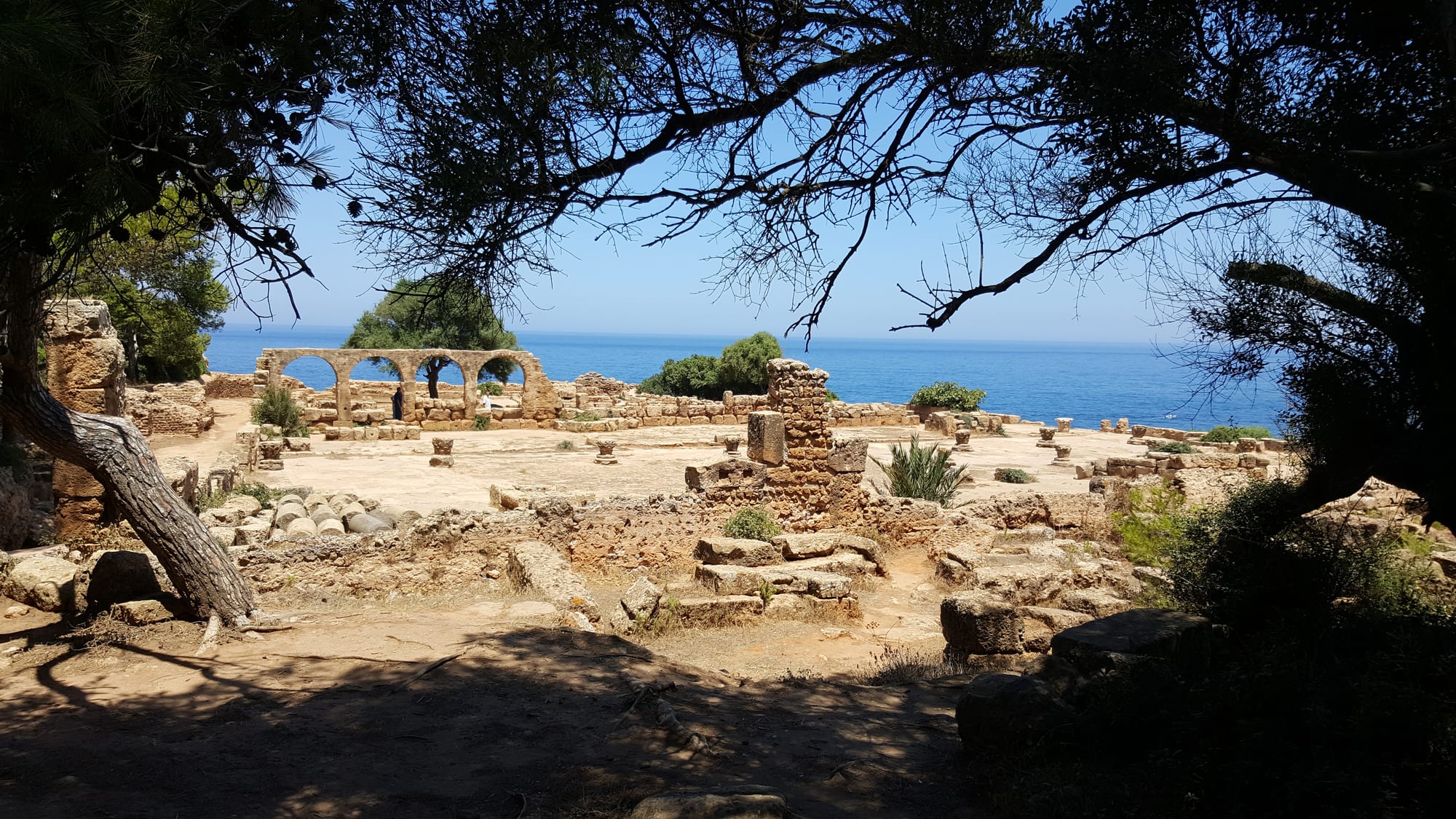
West of Algiers, Tipaza was a Punic trading post and then a Roman port, and its ruins have the best setting of any ancient site in the country: they sit right on the Mediterranean, with columns and a basilica looking out over the water and Mount Chenoua rising behind. The writer Albert Camus, who grew up in Algiers, set his essay Nuptials at Tipasa among these ruins.
It has been a UNESCO World Heritage Site since 1982, an easy half-day from the capital, and it pairs well with the Royal Mausoleum of Mauretania, a huge circular stone tomb on a hill nearby, traditionally held to be that of King Juba II and Queen Cleopatra Selene. The province is also where people from Algiers go to the beach.
10. The Hoggar Mountains and Assekrem
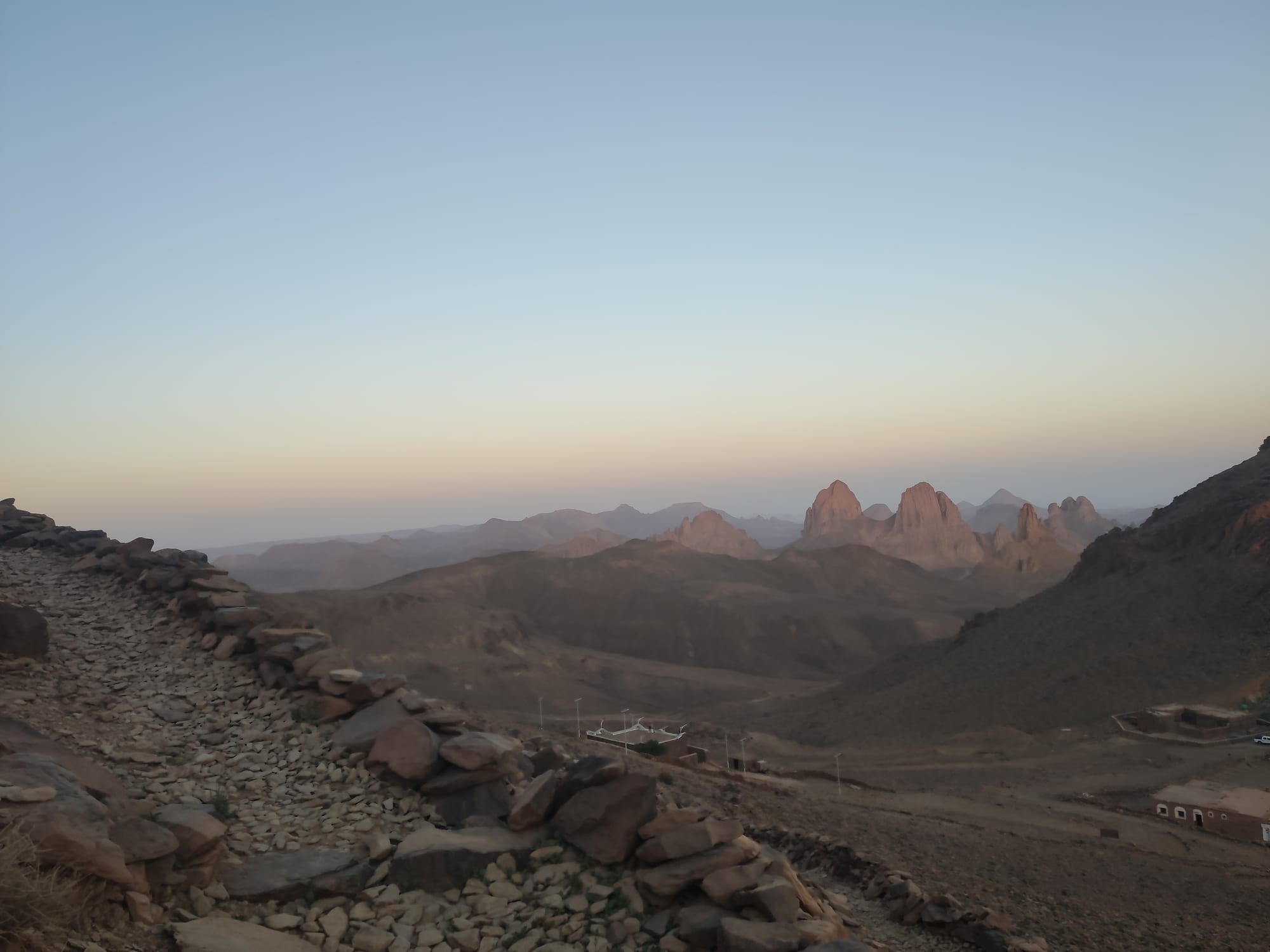
Far to the south, near Tamanrasset, the Hoggar is a range of ancient rock crowned by dark peaks, many of them the eroded plugs of old volcanoes, rising out of the Sahara — a landscape so different from the rest of Algeria that it barely seems part of the same country. Assekrem, a 2,700-metre viewpoint at its heart, is where the French hermit and explorer Charles de Foucauld built a small hermitage in 1911, still lived in by a few monks, and where visitors now climb for the sunrise and sunset views.
Reaching it means the same kind of licensed-agency expedition as Tassili n'Ajjer, usually combined with it as part of a longer southern circuit out of Tamanrasset. Nights at altitude are cold even when the days are fierce.
Algeria takes more planning than most Mediterranean countries — some sites need a guide, the desert needs an agency — but that is also why Timgad is empty and the Casbah still feels like a neighbourhood rather than an attraction.