Attractions & Natural Wonders · Andorra
Andorra: Nine Attractions and Natural Wonders
A Pyrenean micro-state of Romanesque churches, glacial valleys, a UNESCO-listed wilderness, and the largest ski area in the mountains
By Worldlore Editorial · 30 September 2026
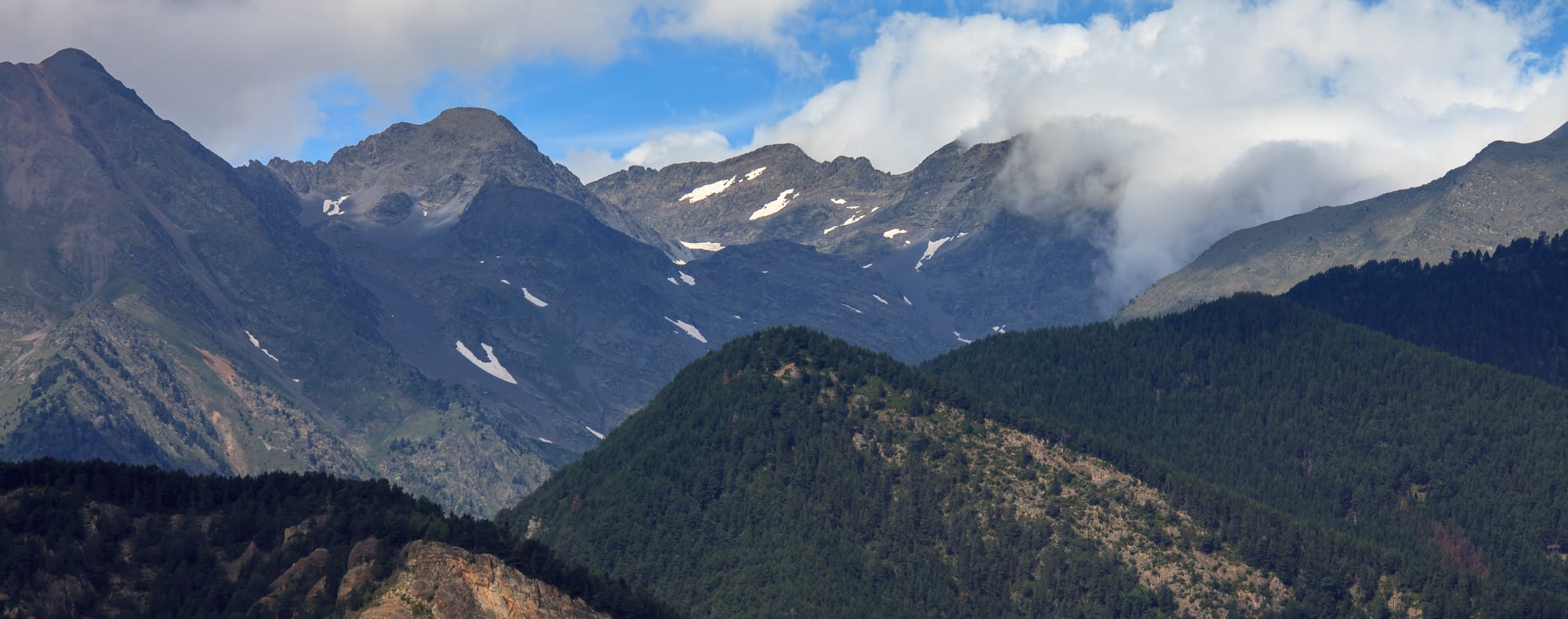
A country that is almost all mountain
Andorra is a 468-square-kilometre country wedged in the eastern Pyrenees between France and Spain, ruled jointly — in an arrangement dating to 1278 — by the president of France and the Bishop of Urgell in Catalonia, Spain. Almost none of it is flat. Most visitors come for two things: duty-free shopping in the capital, and skiing at Grandvalira, the largest ski area in the Pyrenees, and at Vallnord.
But there is more to it than tills and chairlifts. The nine places below are the churches, valleys, and villages that show the older Andorra — the one that, until the 20th century, was one of the most isolated corners of Europe. Summer is superb for walking; winter is the ski season.
1. The Madriu-Perafita-Claror Valley
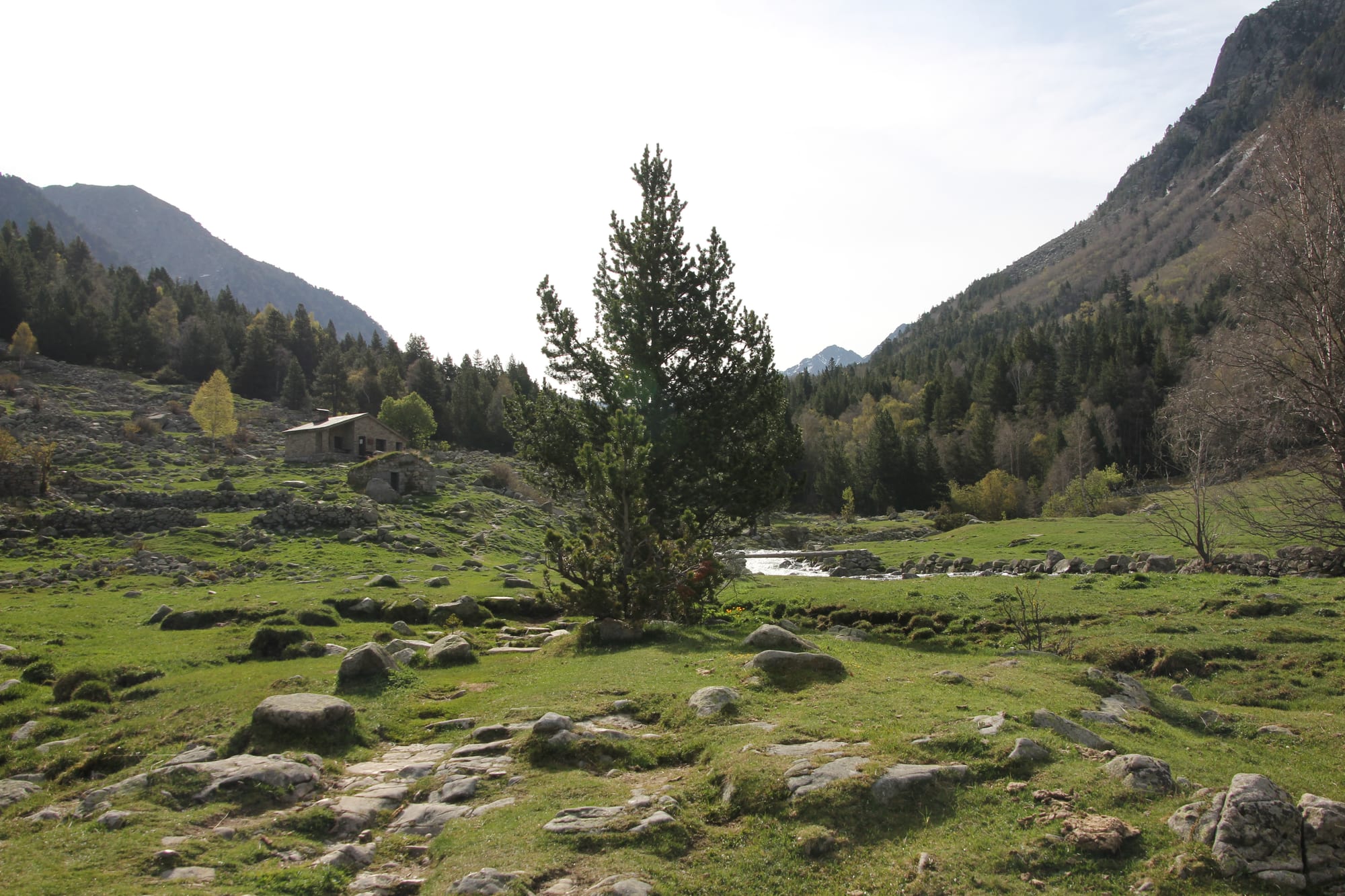
This U-shaped glacial valley in the southeast is Andorra's only UNESCO World Heritage Site, listed in 2004 as a cultural landscape: a place shaped over more than 700 years by mountain farming, with summer pastures, terraced fields, stone houses, the remains of ironworking, and tracks passable only on foot.
It can be reached only on foot, from the Escaldes-Engordany side. Day walkers go in for the summer settlements of Entremesaigües and Ramio and their granite houses; long-distance hikers cross it on the GR 7 and GR 11 footpaths. It is the best answer to anyone who thinks Andorra is only shopping malls.
2. Casa de la Vall, Andorra la Vella
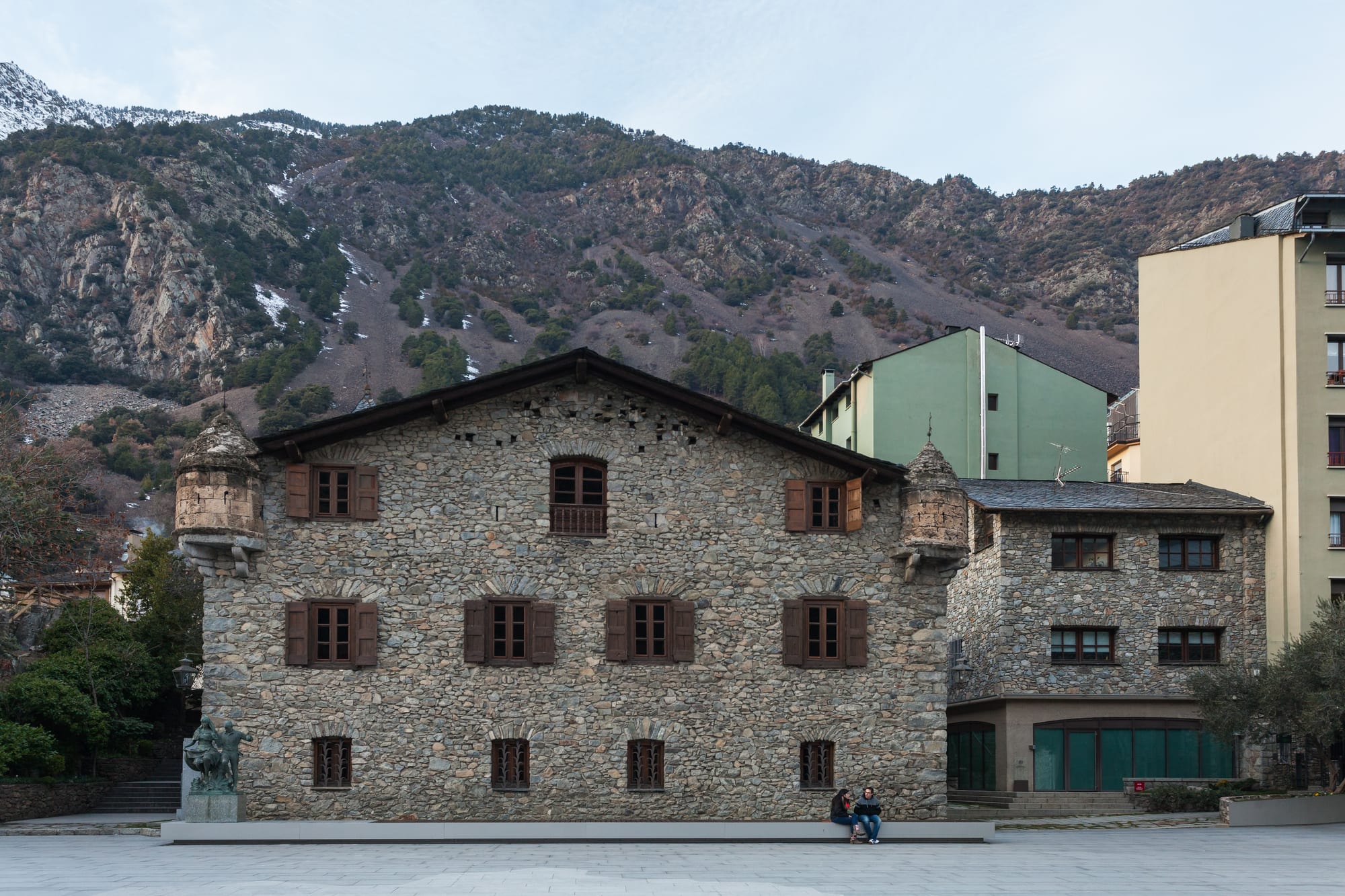
Casa de la Vall is a stone manor house built in 1580 by the Busquets family that served for three centuries as the seat of Andorra's parliament, with the courtroom on its ground floor. Inside is the "Cabinet of the Seven Keys," a cupboard holding historic documents such as the Manual Digest, with a lock for each of the parishes.
It sits in the small medieval core of the capital, a short walk from the duty-free shopping streets. Visits take in the council chamber, the chapel of Sant Ermengol, and the courtroom; the parliament moved to a new building in 2011.
3. The Church of Santa Coloma
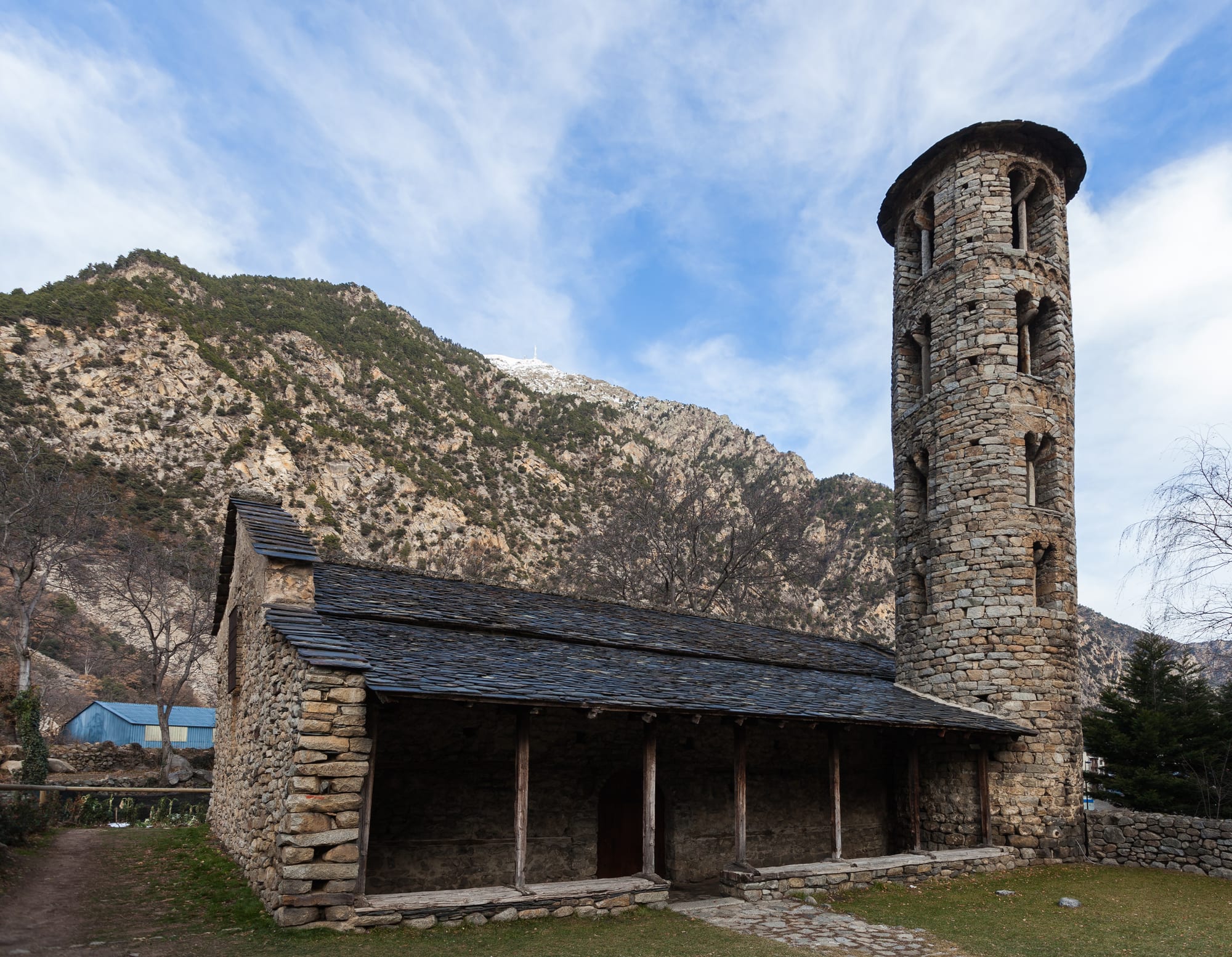
Just south of the capital, Santa Coloma is Andorra's oldest church, with a nave that may go back to the 8th or 9th century and a distinctive circular bell tower added in the 12th century. Most of its 12th-century wall paintings were removed in 1933 and spent decades in Berlin; they returned to Andorra in 2007 and are now shown in a government exhibition hall, while remnants remain in the church.
It is a good first stop for the country's real signature: dozens of small Romanesque churches, most from the 11th and 12th centuries, scattered through the valleys.
4. Sant Joan de Caselles
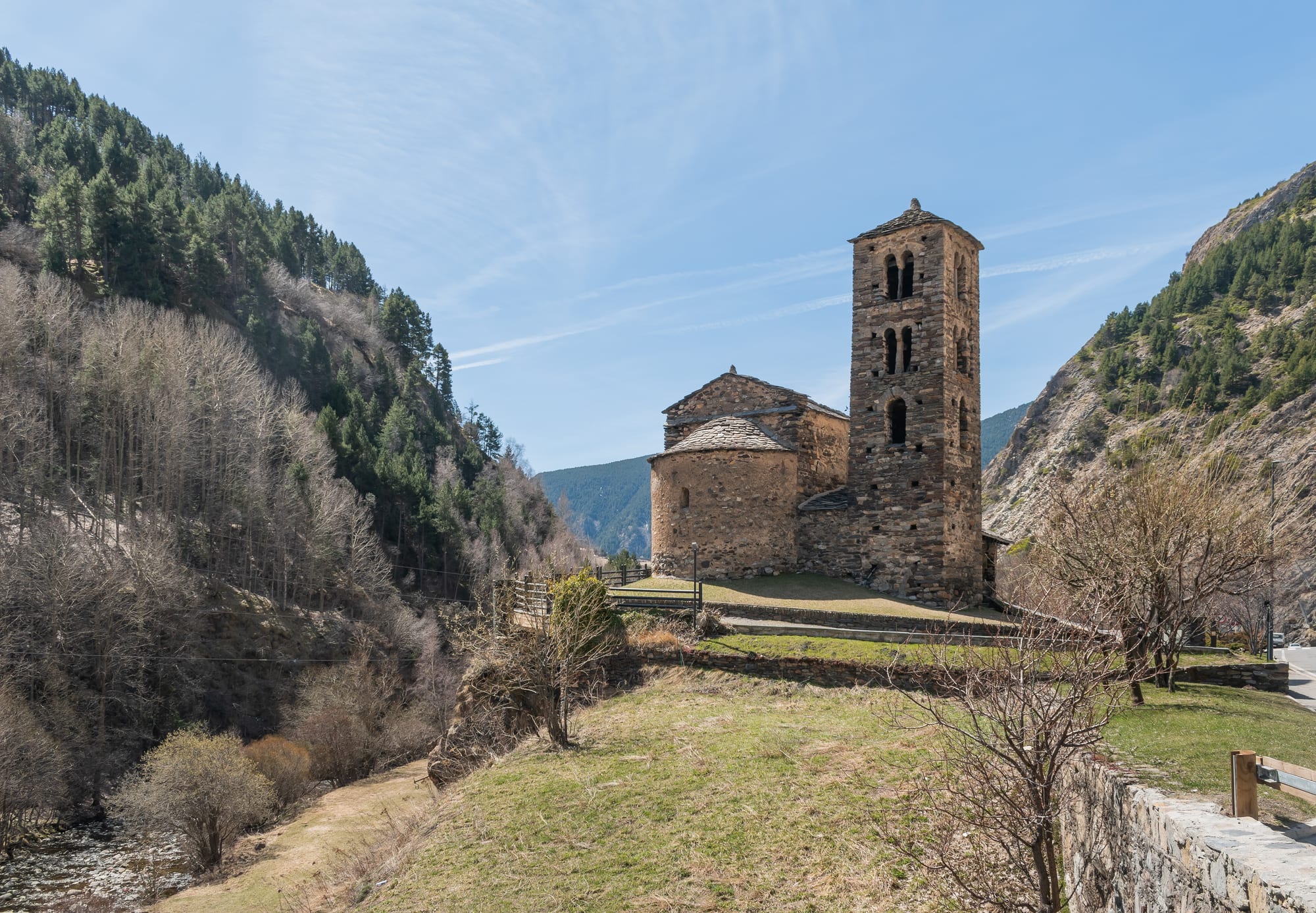
Standing on a rock above the road from Canillo to France, Sant Joan de Caselles is the church people picture when they think of Romanesque Andorra: a plain nave, a square Lombard-style bell tower, and a porch added in the 16th or 17th century, all in grey stone against the mountains.
Inside is a rare survival — a large 12th-century stucco image of Christ in Majesty, with frescoes of the Calvary scene around it, and a fine 16th-century altarpiece of the life of Saint John.
5. Vall d'Incles
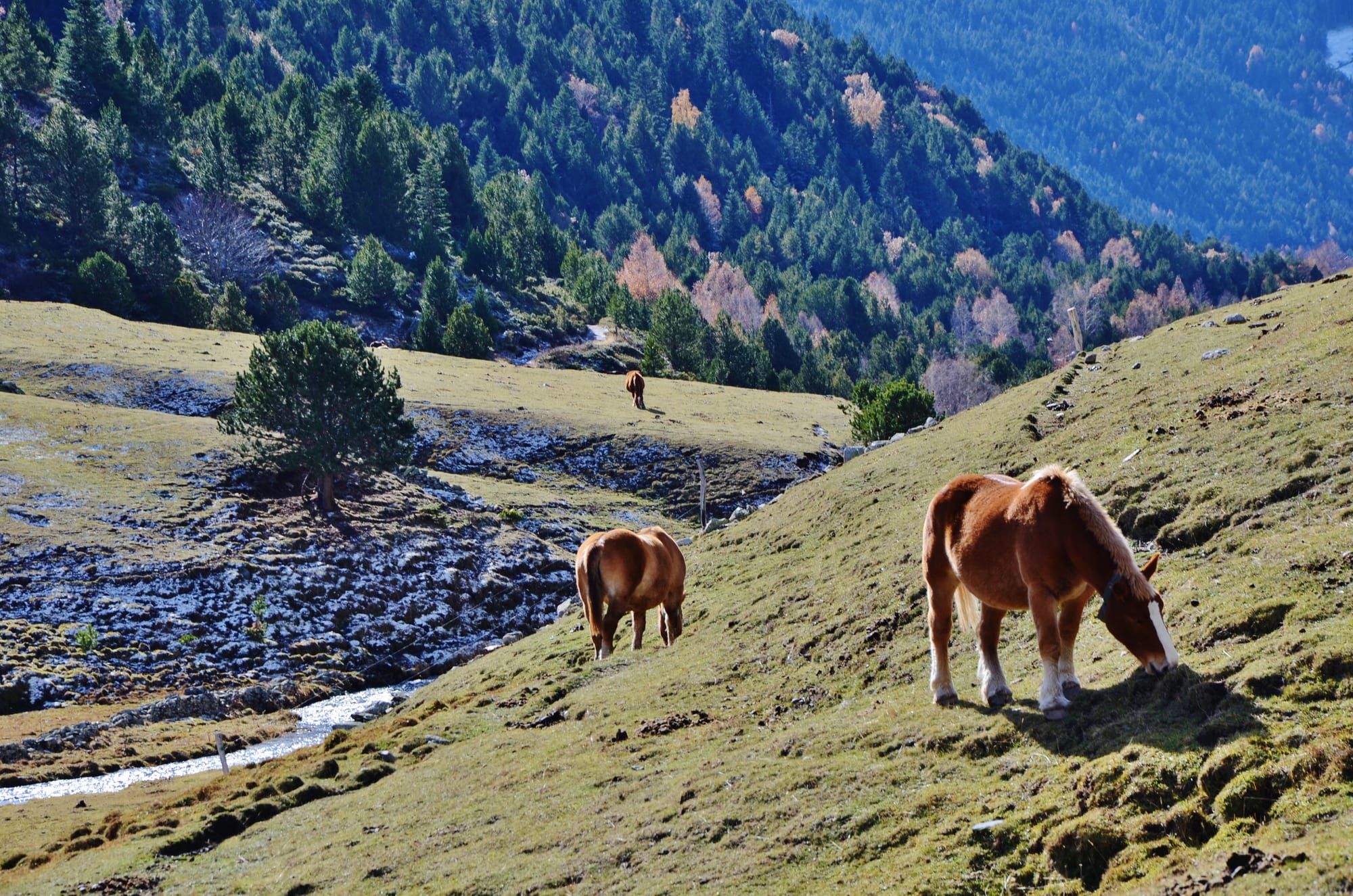
Vall d'Incles is the easiest beautiful place to reach in Andorra: a flat-bottomed green valley with a clear stream, grazing horses, and pine slopes rising sharply on both sides. It is one of the most accessible of the high valleys.
From the valley head, trails climb to a string of glacial tarns — the Estanys de Juclar, whose main lake is the largest in the country — making it the standard starting point for a day in the high mountains.
6. The high lakes and the Tristaina cirque
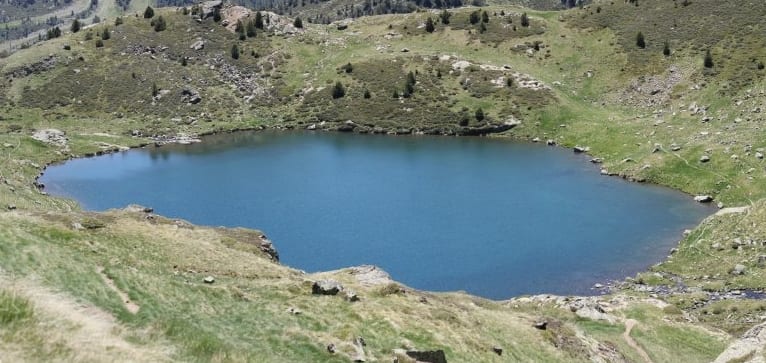
Andorra's ridges are dotted with small glacial lakes, and reaching them is the main summer walking objective. The best-known cluster is the Estanys de Tristaina, lakes in a rock cirque below Pic de Tristaina at the top of the Ordino-Arcalís valley, linked by a circuit that starts high enough to feel alpine straight away.
Others — the Juclar lakes above Incles, the Pessons lakes on the Grandvalira side — take longer but follow the same pattern: a marked trail, a hard climb, and a sheet of cold water under bare peaks.
7. Caldea and the hot springs of Escaldes
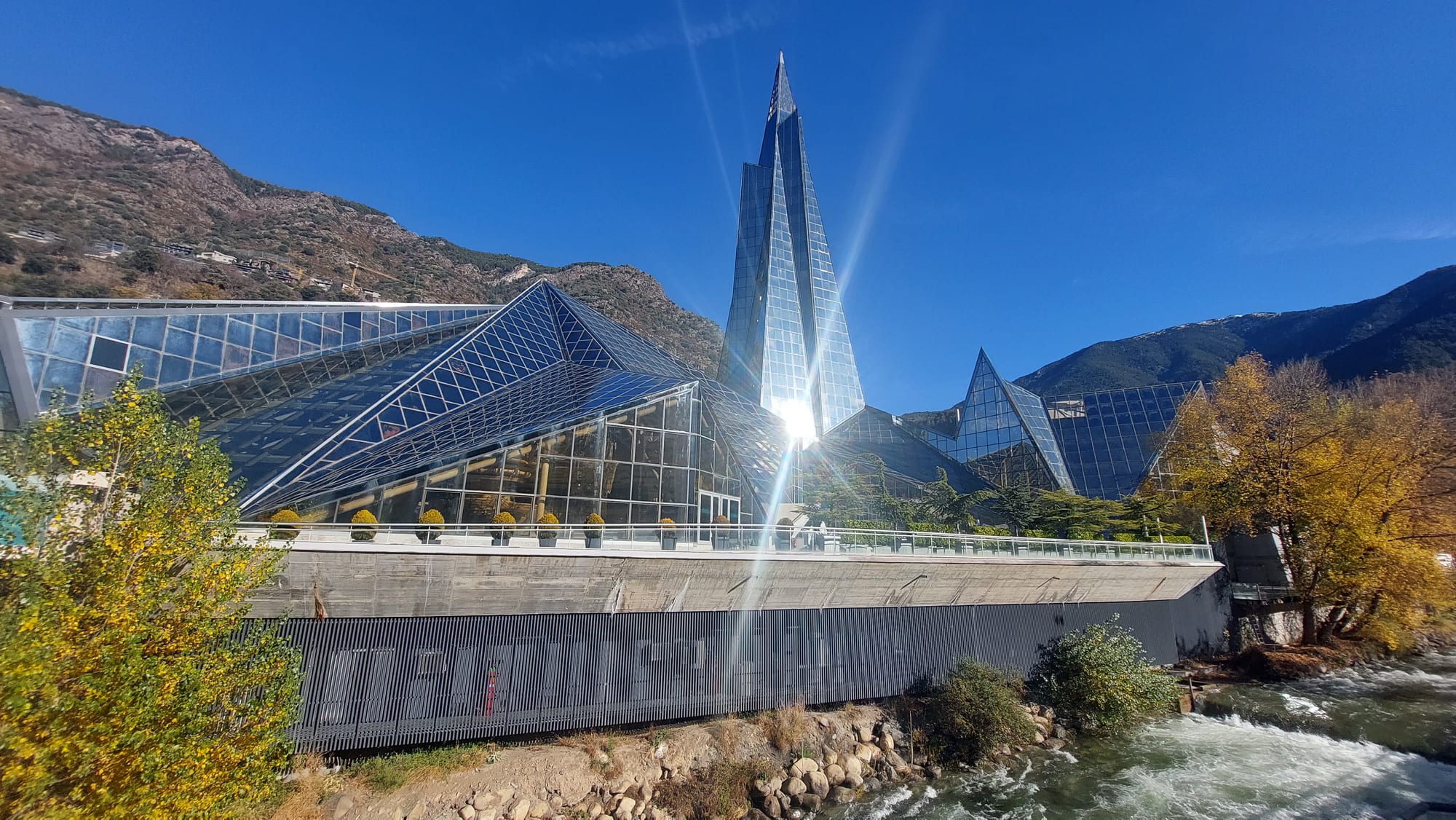
The town of Escaldes-Engordany, now more or less joined to the capital, is built over thermal springs, and Caldea, finished in 1994, puts them to use in a large modern spa under a landmark glass spire, at 80 metres Andorra's tallest building, with indoor and outdoor pools, lagoons, and steam rooms looking out at the mountains.
It is the obvious thing to do on a bad-weather day or after a long walk, and its scale (it is one of the largest spas in Europe) makes it a sight in its own right.
8. The village of Ordino
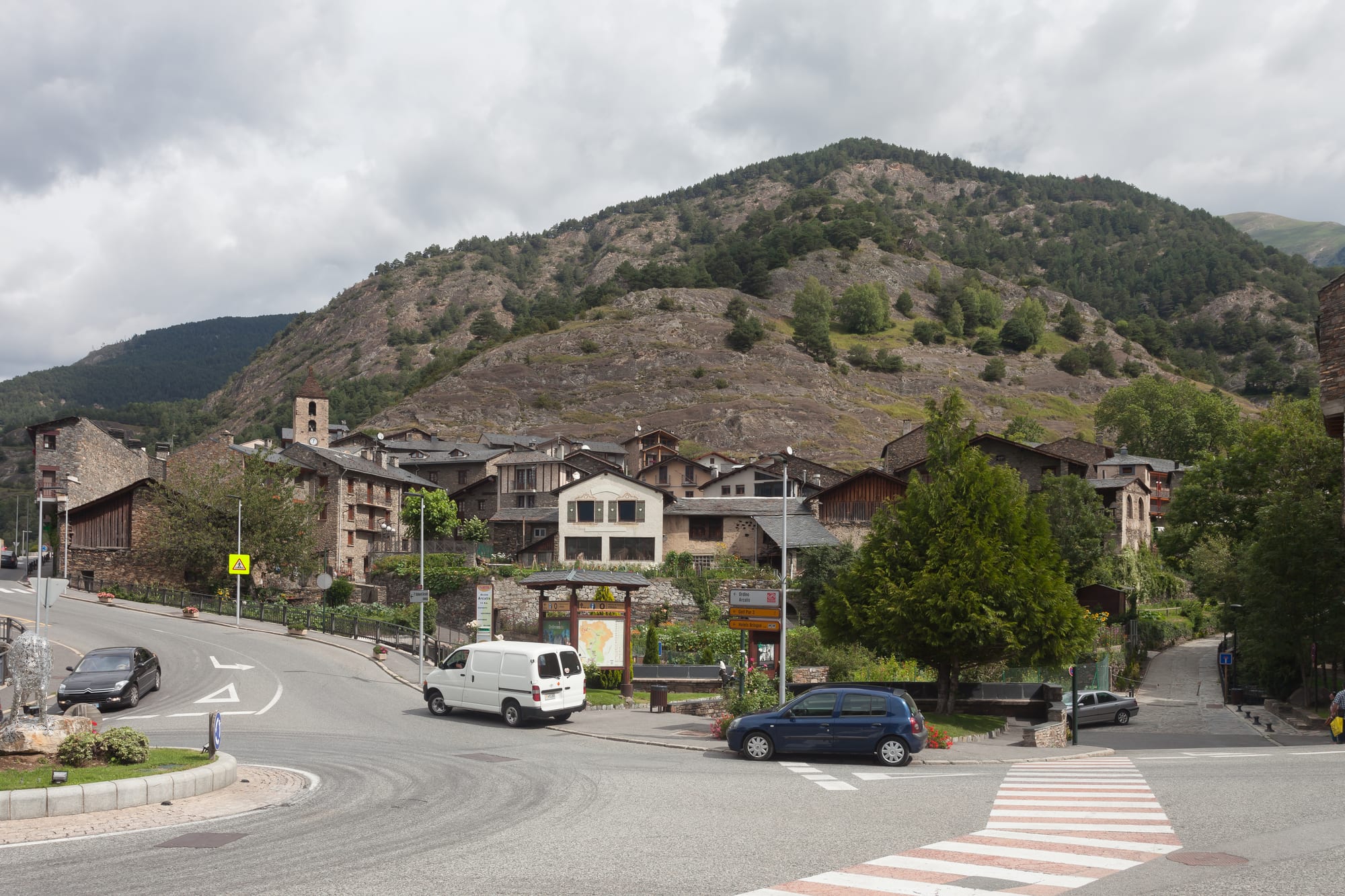
Ordino, in the north, is the parish that kept its character: a small centre of stone houses and cobbled lanes around the church, with two grand old family mansions — Casa d'Areny-Plandolit and Casa Rossell — bought by the state in 1972 and opened as museums of how the country's leading families lived between the 17th and 19th centuries.
The whole Ordino parish was named a UNESCO Biosphere Reserve in 2020, and in 2023 UN Tourism named Ordino a Best Tourism Village. It is also the road head for the Tristaina lakes, the Sorteny nature park (the largest nature area in Andorra), and the Ordino-Arcalís ski slopes.
9. The Pont de la Margineda
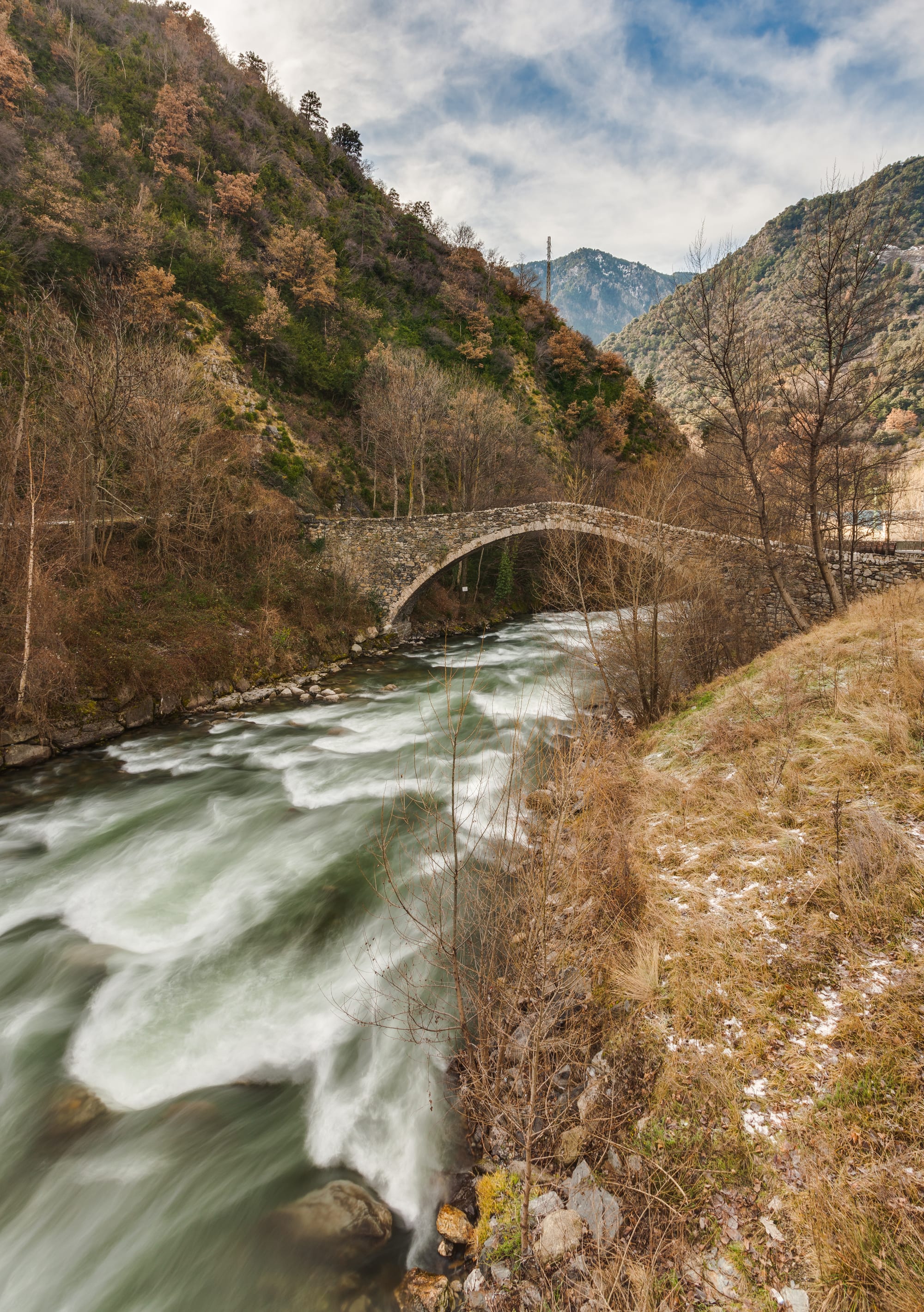
On the southern edge of the built-up valley, near Santa Coloma, the Margineda bridge carries an old cobbled track over the Gran Valira river in a single high stone arch; the whole bridge is about 33 metres long. It was built in the 14th or 15th century, on the old royal road that linked Sant Julià de Lòria with Andorra la Vella.
It takes ten minutes to see, but it is a good reminder of how recent Andorra's prosperity is: within living memory this was a hard, isolated place, and packhorse bridges like this were the infrastructure.
Andorra is small enough to explore from one base — the capital, Encamp, or Ordino — with everything within reach by bus or a short drive. Give it two or three days and it turns out to have a good deal more than its reputation suggests.