History · Belize
Belize: The Maya Coast and the Baymen
A Maya heartland, a logwood-cutters' foothold that Spain never dislodged, the last British colony on the American mainland, and a nation Guatemala still partly claims
By Worldlore Editorial · 30 September 2026
A small country of many peoples
Belize is the least populous country on the American mainland — about 400,000 people in an area a little larger than Wales — and the only country in Central America where English is the official language. It is also one of the most mixed: Kriol, Spanish-speaking Mestizo, three Maya peoples, Garifuna, German-speaking Mennonites, and more, most of them arriving within the last two centuries. That patchwork is the product of the country's odd history: a corner of the Maya world that Spain claimed but never settled, occupied instead by English woodcutters who were told they could take the timber but not govern the land.
A short history
- c. 1500 BCE – 900 CE
Maya Belize
Cities such as Caracol, Lamanai and Xunantunich flourish; Caracol defeats Tikal in 562.
- 16th–17th c.
Spain claims, does not settle
The forested, reef-guarded coast is left largely alone.
- 17th–18th c.
The Baymen
English buccaneers and settlers cut logwood, later using enslaved African labour.
- 1763–1786
Treaties
Spain concedes the right to cut wood but bans forts, farms and government.
- 10 September 1798
Battle of St George's Caye
The settlers repel a Spanish fleet.
- 1862
British Honduras
The settlement is formally made the colony of British Honduras.
- 1847 onward
New arrivals
Refugees from the Caste War, and Garifuna from the south, reshape the population.
- 1950
The nationalist movement
The People's United Party, led by George Price, begins the push for independence.
- 21 September 1981
Independence
Belize becomes sovereign, with a British garrison staying to deter Guatemala.
The Maya
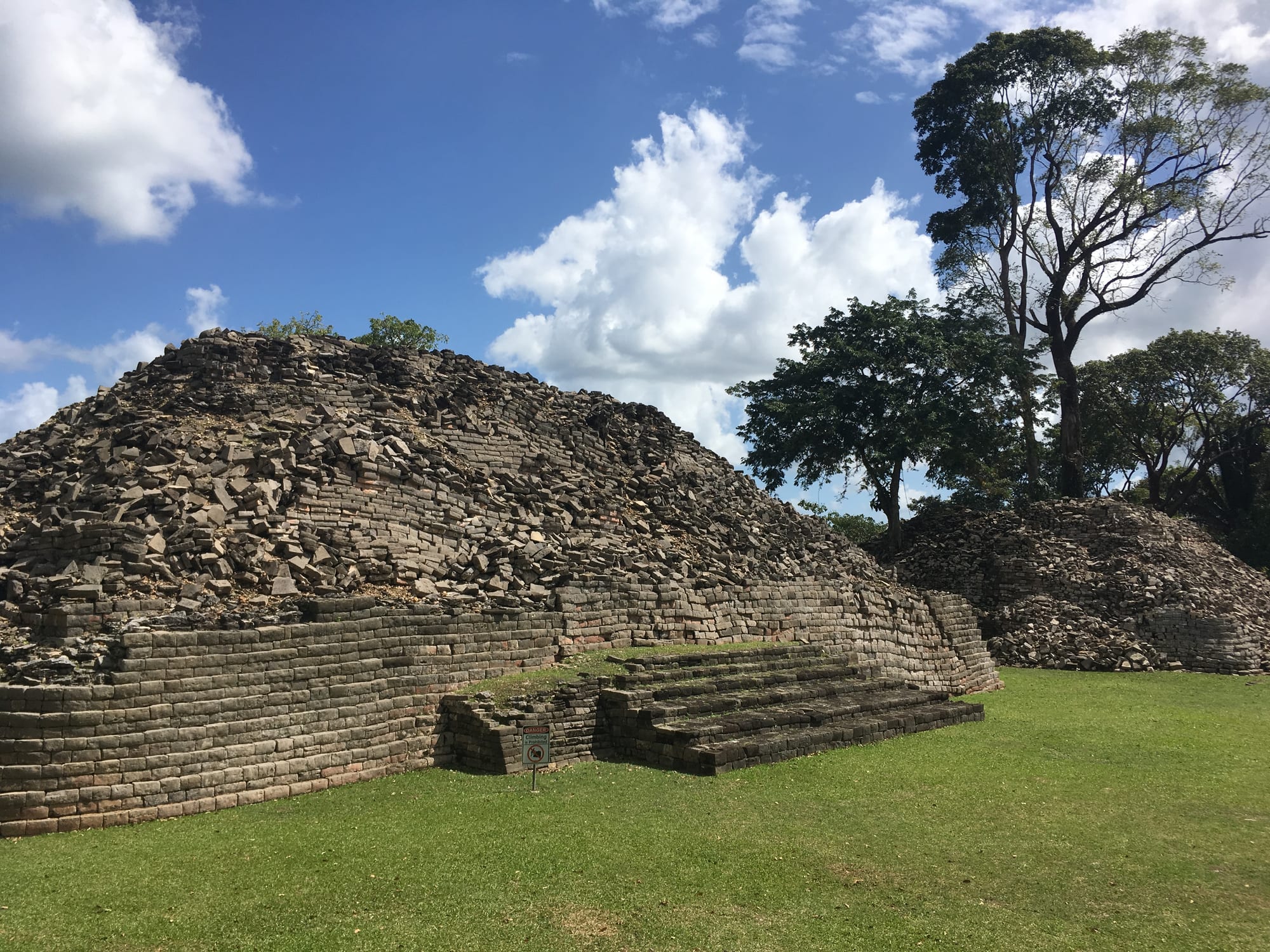
Belize was part of the Maya world for three millennia, and at times a central part of it. In the Classic period its lowland forests held large cities: Caracol, which in 562 CE defeated the superpower of Tikal and may have grown to more than 100,000 people; Lamanai, occupied continuously for some 3,000 years, into the Spanish era; Xunantunich in the west and Altun Ha near the coast. Maya farmers worked the land intensively with raised fields and terraces. Even after the Classic collapse, Maya communities in the north held out against the Spanish for generations.
Spain claims it, England takes the wood
Spain included the territory in its American claims but never occupied it — there was no gold, the forest was thick, the Maya were hostile, and the barrier reef made the coast lethal to shipping. From the 17th century that gap was filled by English and Scottish buccaneers who came ashore to cut logwood, a tree that yielded a prized textile dye, and stayed. They brought enslaved Africans to do the felling and hauling. Spain attacked and expelled these "Baymen" again and again, but a run of 18th-century treaties settled on a strange compromise: the British could cut logwood and later mahogany, but were forbidden to build forts, plant crops, or set up a government.
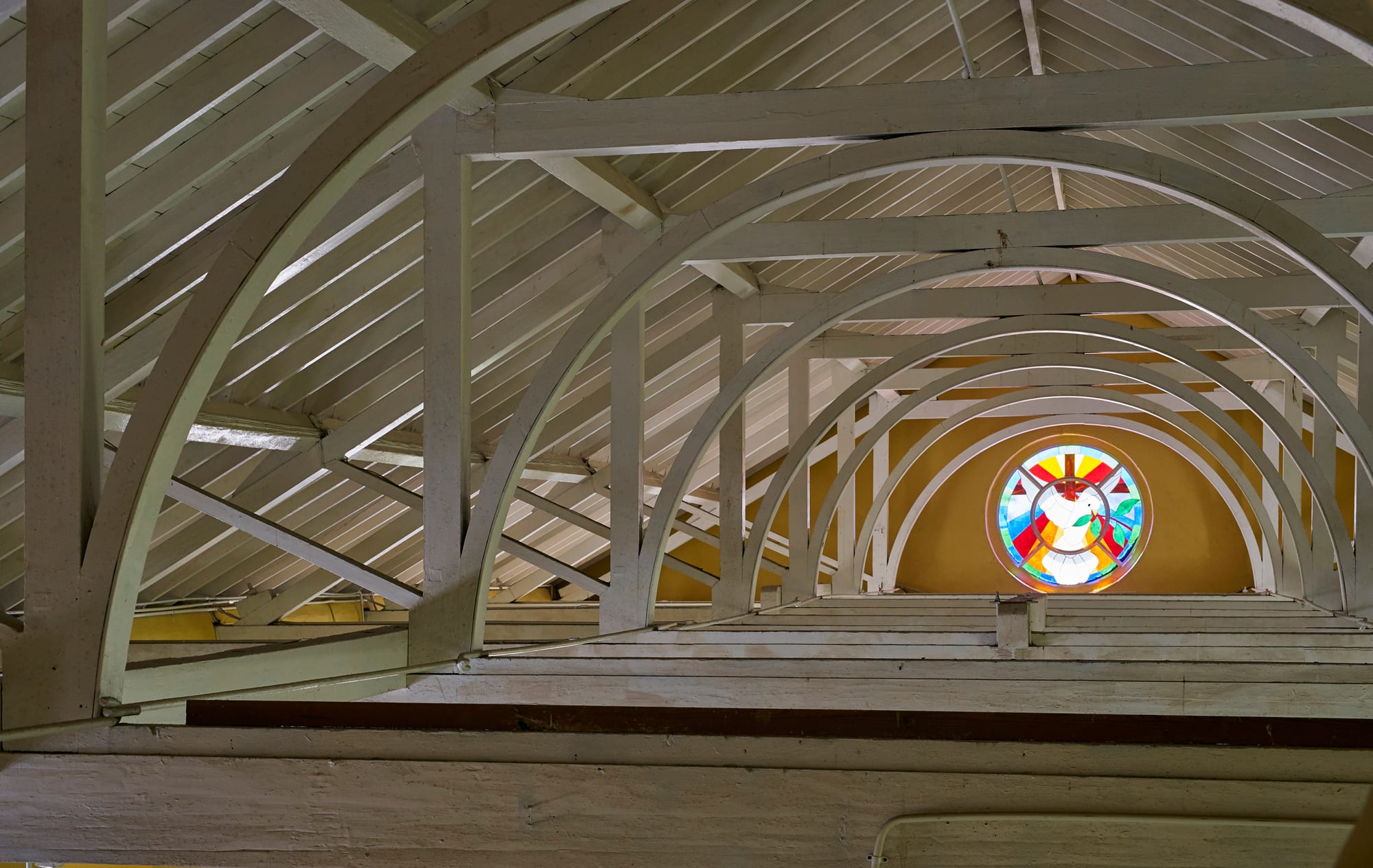
In 1798 Spain made a final attempt to clear the settlement. A fleet from Yucatán attacked the cayes off the coast and was driven off at the Battle of St George's Caye, with the settlers, the Royal Navy sloop HMS Merlin, and the enslaved woodcutters fighting together. The date is a national holiday, and the image of masters and slaves side by side became a founding story — a comforting one that later Belizeans have questioned.
A colony of woodcutters
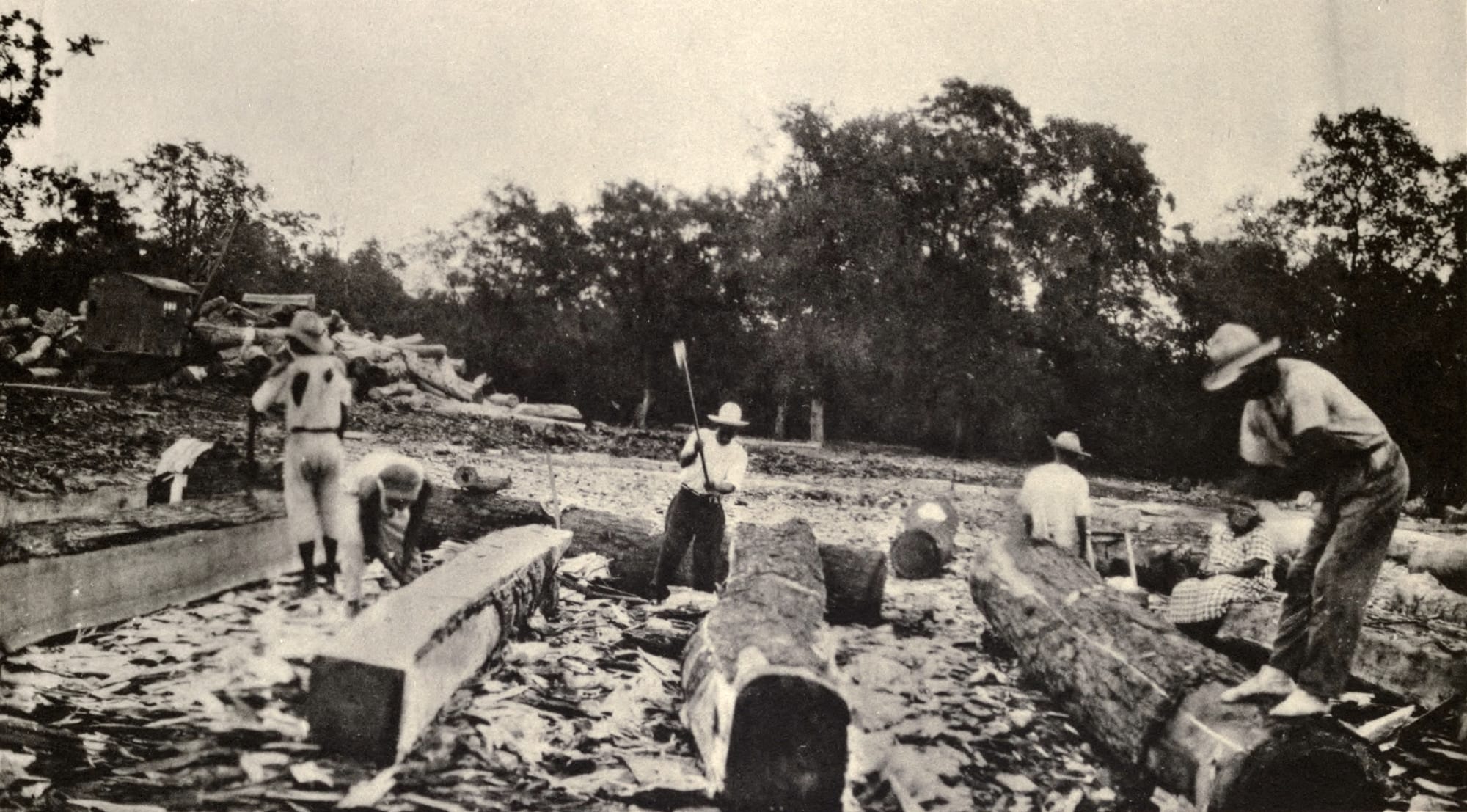
From the late 18th century mahogany replaced logwood as the chief export, and it stayed the backbone of the economy for well over a century. The trade was controlled by a handful of firms — one company eventually owned about half of all privately held land — and the freed population, after slavery ended in the 1830s, stayed tied to the forest camps by debt. Meanwhile the country filled up: Mestizo and Maya refugees fleeing the Caste War of Yucatán settled the north and west from 1847; Garifuna people, exiled by the British from St Vincent decades earlier, settled the southern coast; later came East Indians, Chinese, Confederate exiles, and, in the 1950s, Mennonite farmers.
The settlement was formally made the colony of British Honduras in 1862, and a Crown colony in 1871. Its poverty was brutally exposed by a hurricane that flattened Belize City in 1931 and by the governor's devaluation of the colonial dollar in 1949 in defiance of the local Legislative Council — the spark for the nationalist movement.
Independence, and Guatemala
The People's United Party, founded in 1950 and led for decades by George Cadle Price, campaigned for self-government and then independence. Universal suffrage came in 1954, internal self-government in 1964, and the colony was renamed Belize in 1973. The obstacle was Guatemala, which had claimed the territory since the 19th century — arguing that Britain never built a promised road to the Caribbean — and threatened to invade. Belize became independent anyway, on 21 September 1981, but Guatemala refused to recognise it until 1991, and the main British military force stayed until 1994 to deter an attack.
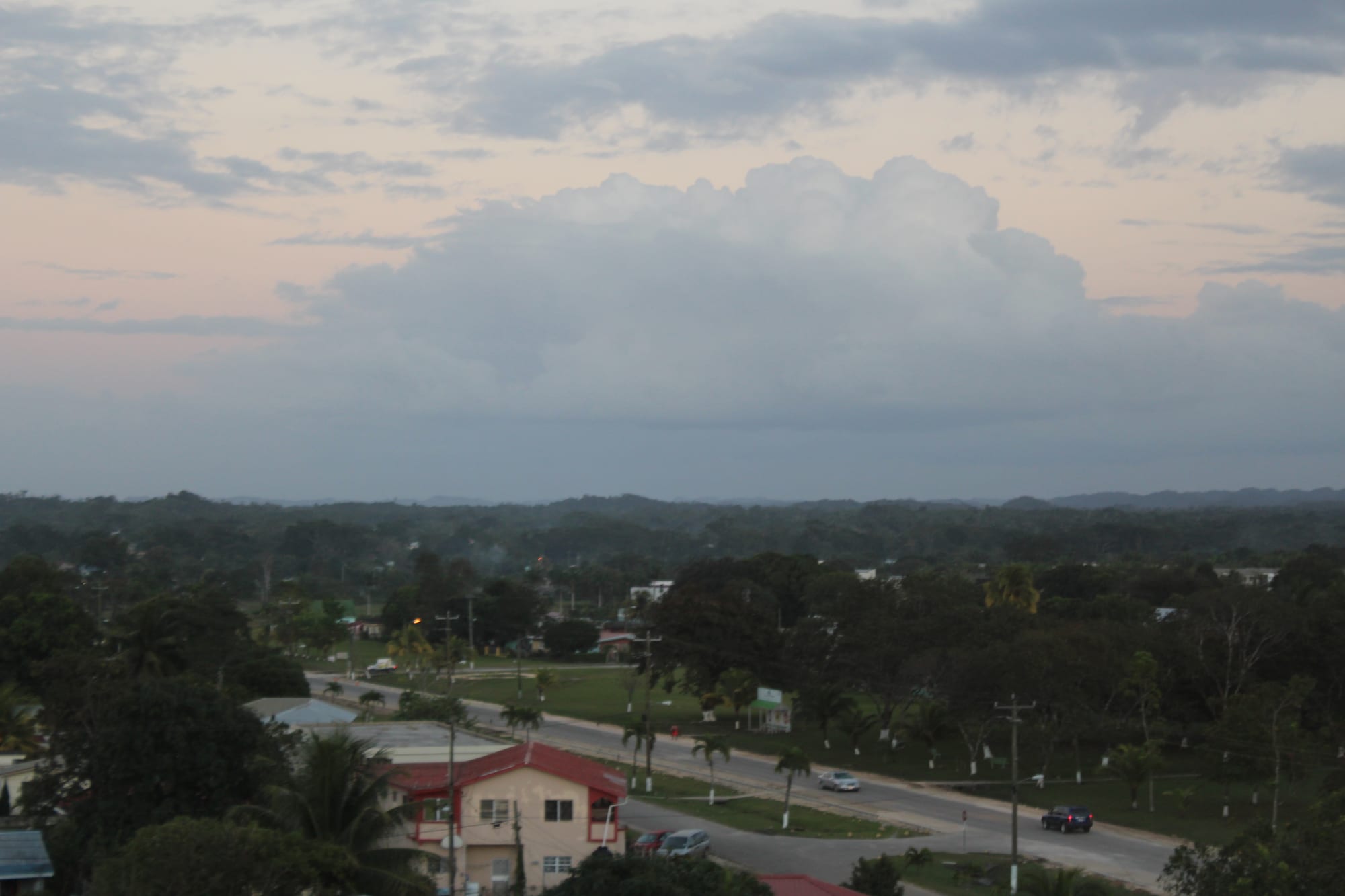
The capital had already moved inland to Belmopan in 1970. Independent Belize alternated peacefully between its two main parties, and shifted its economy from timber to sugar, citrus, bananas and, above all, tourism built on the reef and the Maya ruins. The Guatemalan claim has been referred, by agreement, to the International Court of Justice, where oral hearings are scheduled for 2027. Guatemala's claim covers roughly 53 per cent of Belize's territory.
What Belize keeps
Belize exists because a stretch of Maya coast fell between two empires: claimed by Spain, held loosely by Britain, and never quite made into a proper colony until late. The result is a small, English-speaking, extraordinarily diverse country on a Central American isthmus of Spanish-speaking neighbours — one of which still, on paper, claims more than half of it.