Attractions & Natural Wonders · Bhutan
Bhutan: Ten Attractions and Natural Wonders
A monastery glued to a cliff 900 metres above the valley floor, fortress-monasteries at every river junction, and a Himalayan kingdom that measures itself in happiness
By Worldlore Editorial · 30 September 2026
The last Himalayan kingdom
Bhutan is a small Buddhist kingdom in the eastern Himalayas, between India and Tibet, that stayed closed to the outside world until the 1970s and still limits tourism through a daily "Sustainable Development Fee". It never had a colonial period; its identity — the dress code, the architecture, the monastery-fortresses called dzongs — is deliberately maintained. The scenery is pure high Himalaya: deep forested valleys, terraced rice, and snow peaks.
The ten below are almost all in the accessible western valleys — Paro, Thimphu, Punakha, Phobjikha — with Bumthang in the centre. Travel is by winding mountain road, and most visitors travel with a licensed Bhutanese operator and guide. Spring and autumn are the prime seasons.
1. Paro Taktsang (the Tiger's Nest)
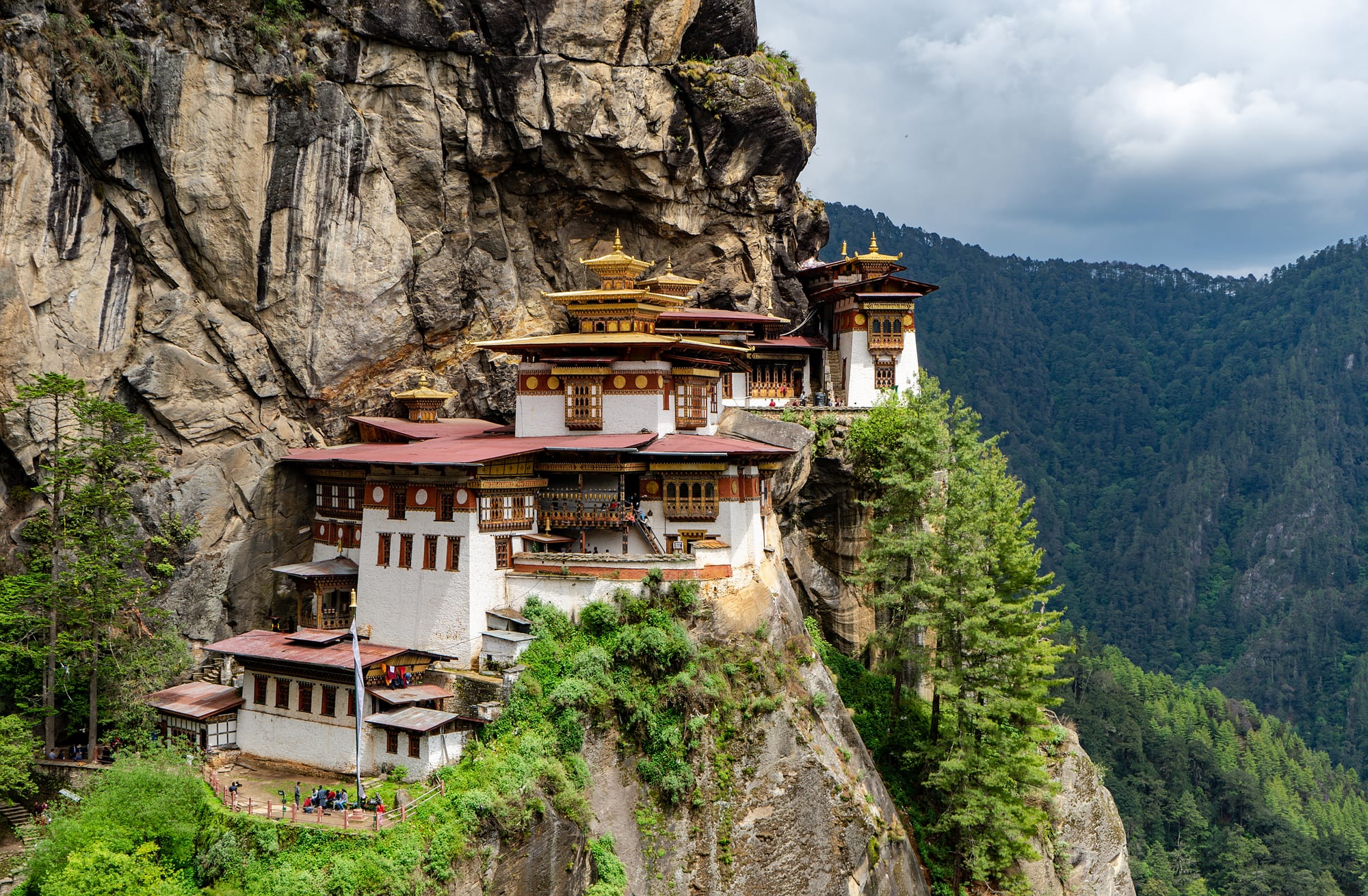
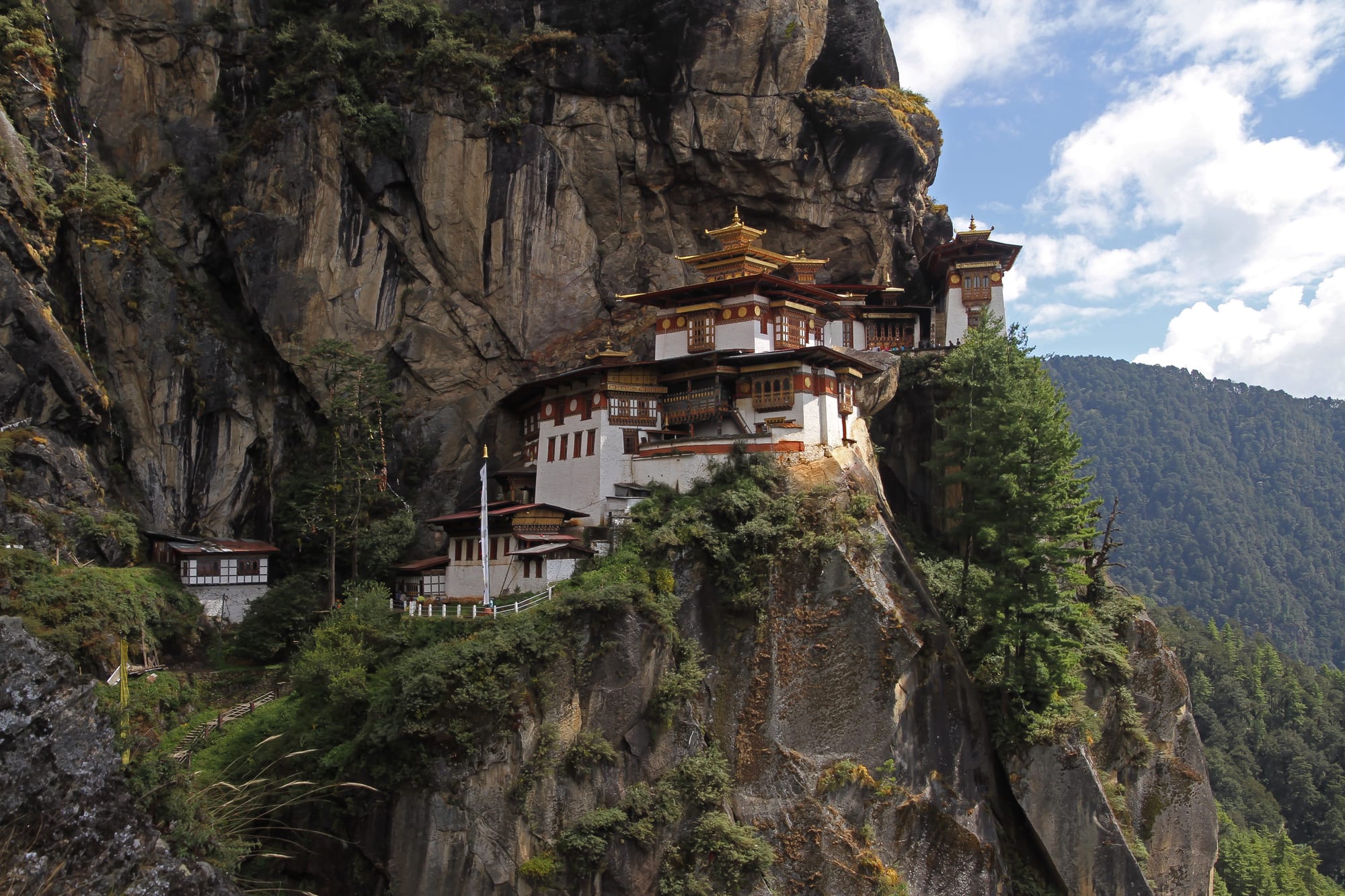
The Tiger's Nest is Bhutan's defining image: a cluster of monastery buildings apparently growing out of a cliff face high above the Paro valley. It is built around a cave where Guru Rinpoche, revered for spreading Buddhism in Bhutan, is said to have flown in on the back of a tigress and meditated. The current buildings date from 1692 and were carefully rebuilt after a 1998 fire.
Getting there is a steady climb of several hours through blue-pine forest and prayer flags, with a cafeteria at the viewpoint partway up. It is the one walk almost every visitor does, usually near the end of a trip once acclimatised.
2. Punakha Dzong
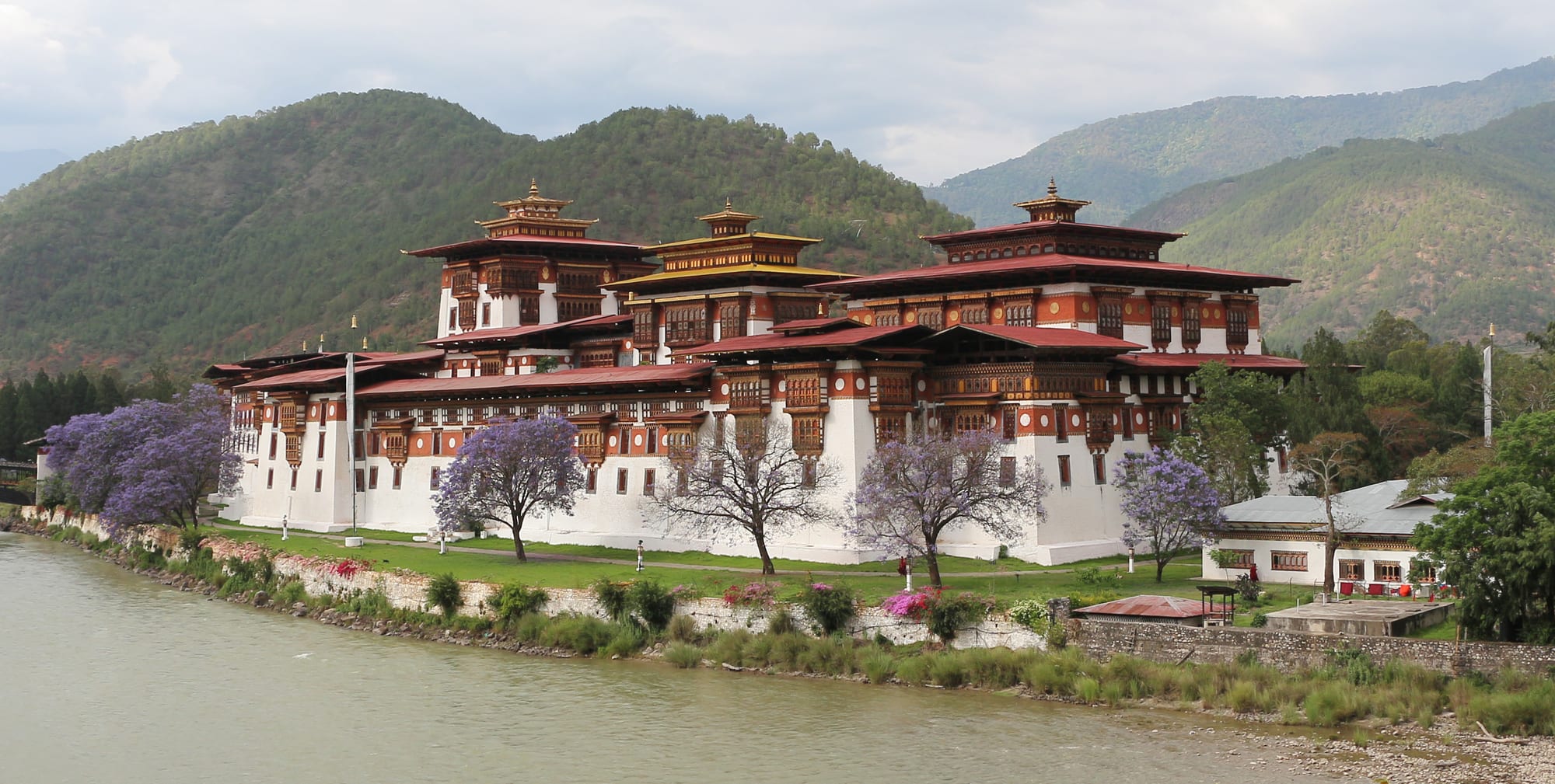
Built in 1637–38 at the meeting of two rivers, Punakha Dzong is the most beautiful of Bhutan's fortress-monasteries: whitewashed walls, a soaring central tower, and courtyards with intricately painted galleries and a huge sacred fig tree. It was the country's capital until 1955, is the winter home of the chief abbot, has been the site of every royal coronation since 1907, and hosted the present king's wedding in 2011.
In spring the riverbanks below the walls turn purple with jacaranda. It is a few hours' drive from Thimphu over the Dochula pass.
3. The Dochula Pass
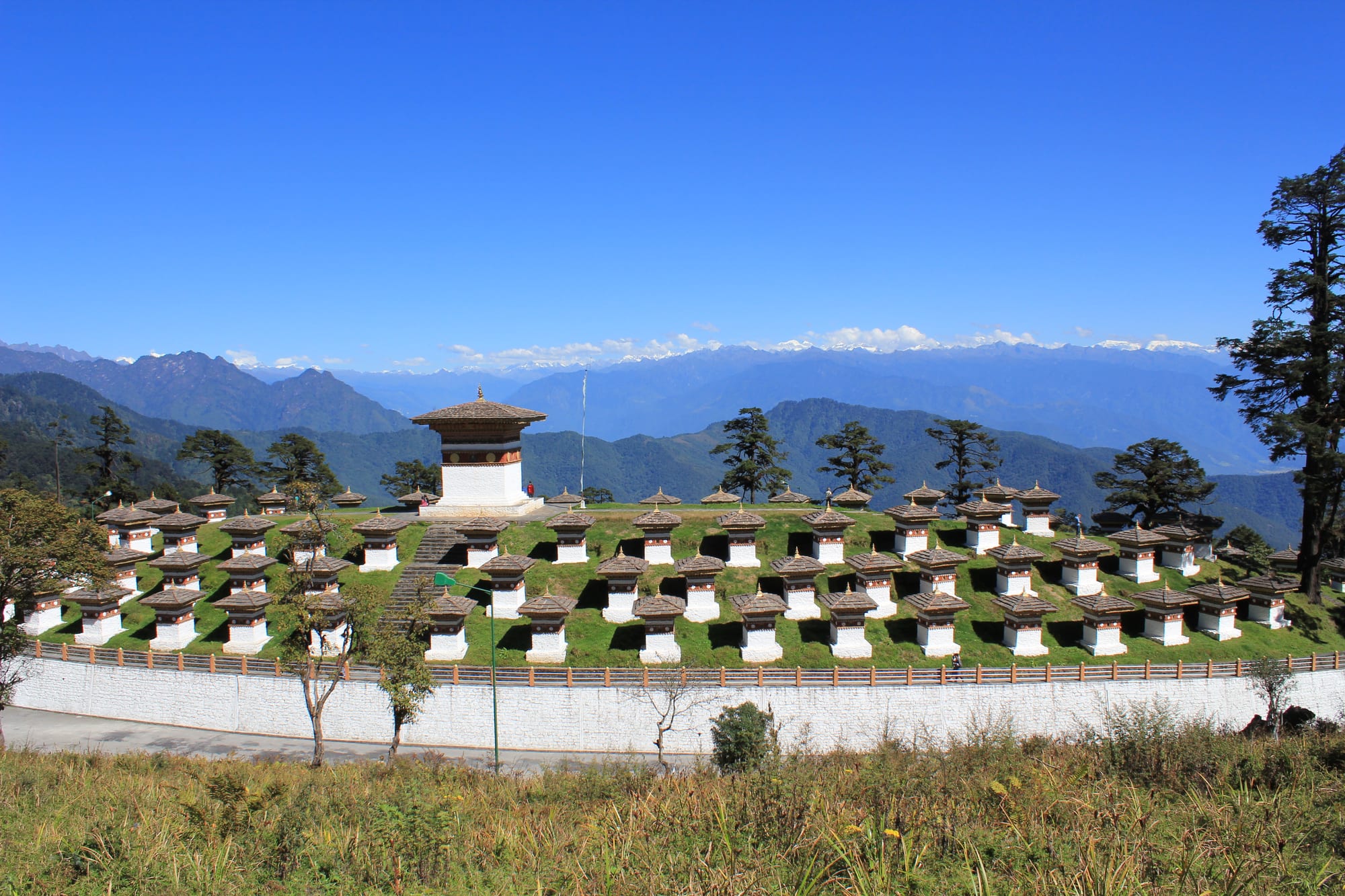
On the road between Thimphu and Punakha, the Dochula pass tops out at 3,100 metres, and on a clear morning it offers the best roadside Himalayan panorama in western Bhutan — a wall of 7,000-metre peaks in a country where mountaineering is banned. A cluster of 108 memorial chortens, built by the queen mother in 2004 for soldiers killed in 2003, crowns the col, and a nearby temple honours the fourth king.
Mornings are clearest; by afternoon the peaks are usually behind cloud. There is a café and, in season, rhododendron forest in bloom below the pass.
4. Rinpung Dzong, Paro
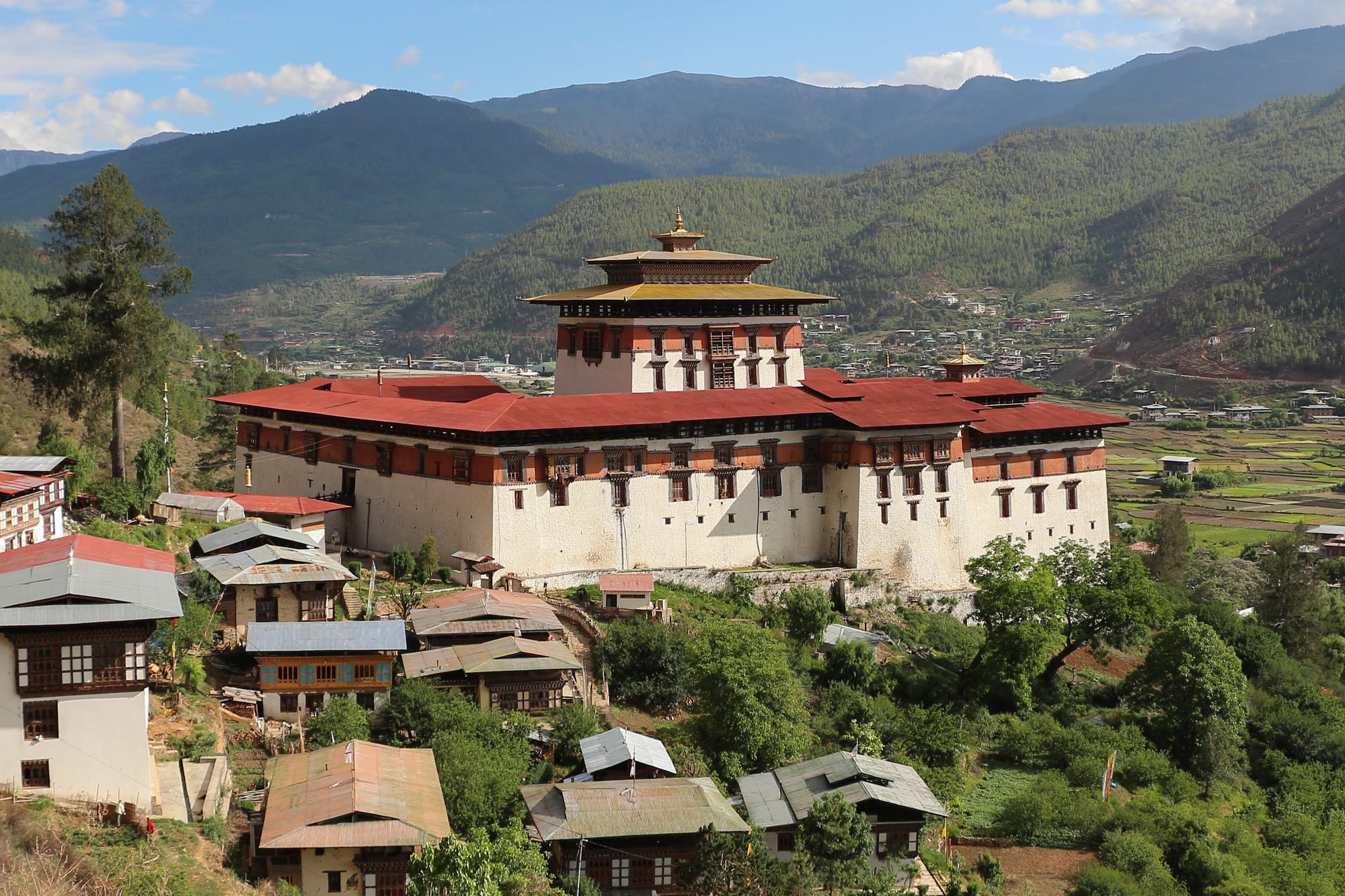
Every Bhutanese valley of any size has its dzong — a combined monastery, fortress, and district administration — and Paro's, Rinpung Dzong ("fortress on a heap of jewels"), is the one most visitors see first. Built in 1646, it has whitewashed battered walls, a fine central tower, and a watchtower above it that now holds the National Museum.
Its spring festival, the Paro Tsechu, is one of the biggest in the country, with days of masked religious dances and the pre-dawn unfurling of a giant applique thangka.
5. Thimphu and Tashichho Dzong
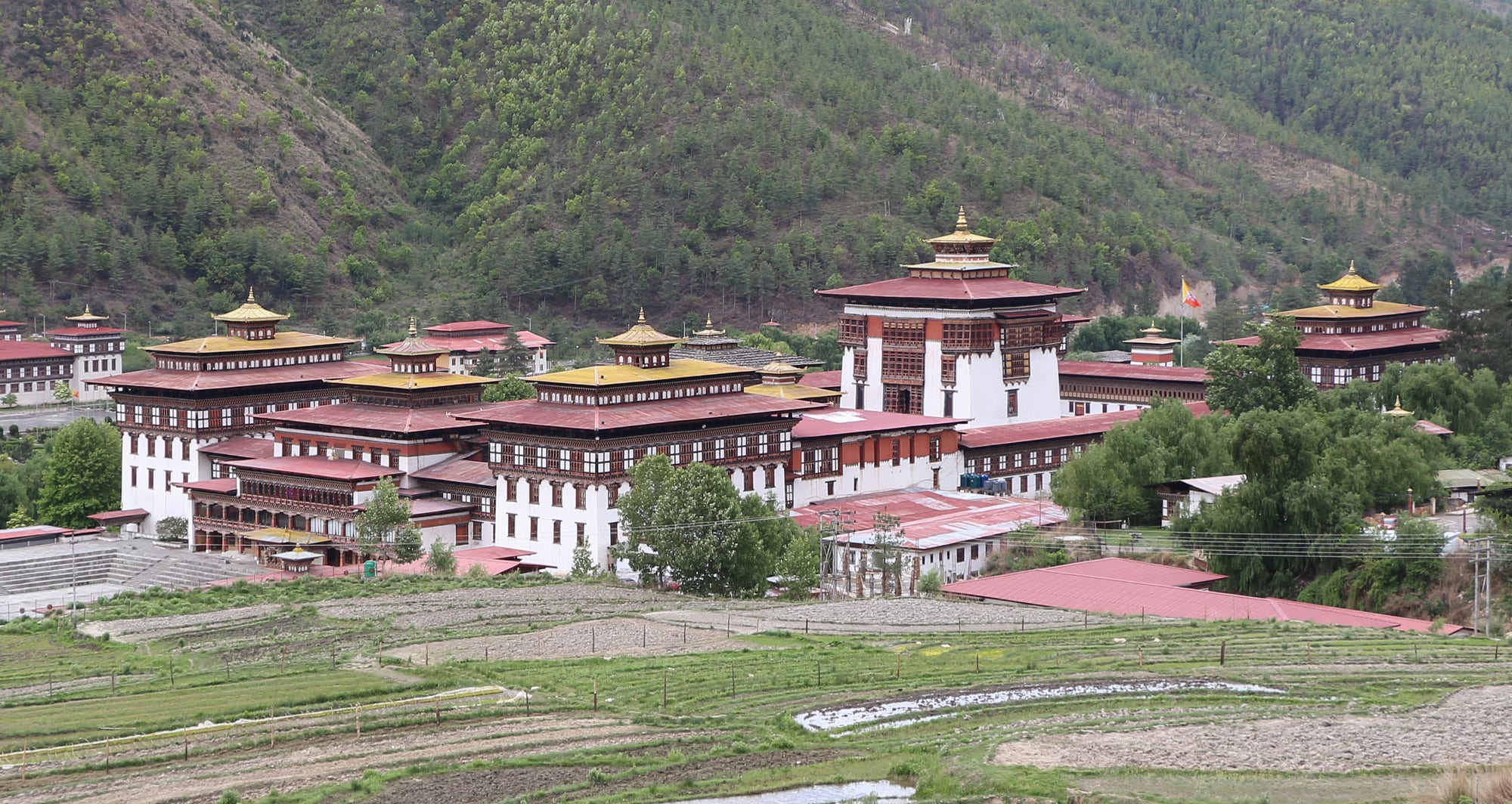
Thimphu is one of only two national capitals with no traffic lights (the other is Ngerulmud in Palau); traffic police direct the main junctions instead. Its dzong, Tashichho, rebuilt in the 1960s in traditional style, houses the throne room, several ministries, and the summer residence of the chief abbot and the central monk body.
Around town: the weekend market, the giant prayer wheels of the National Memorial Chorten, the folk heritage museum, and the takin preserve for Bhutan's odd-looking national animal.
6. The Buddha Dordenma
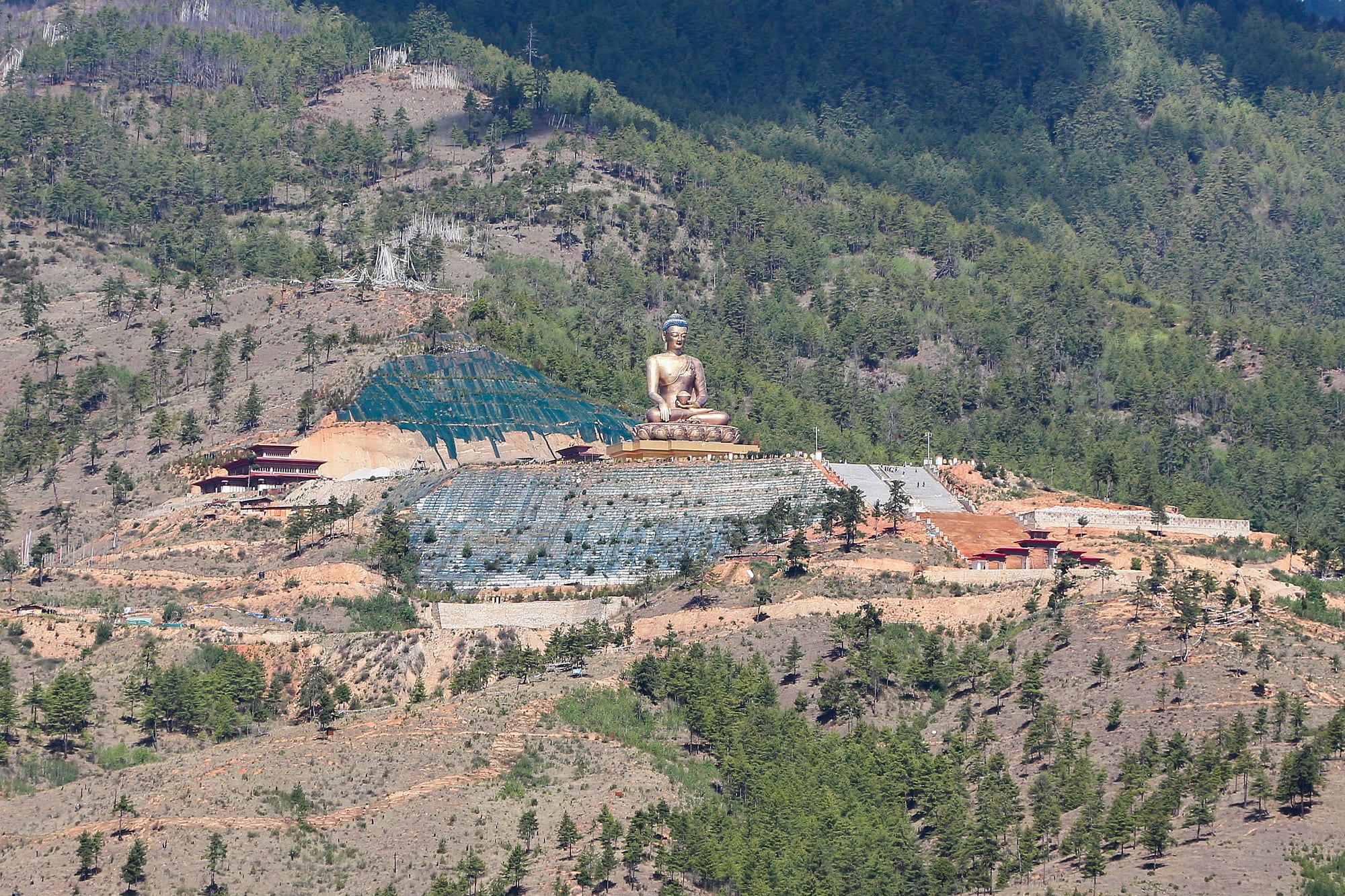
On a ridge at the southern entrance to Thimphu sits one of the largest Buddha statues in the world: a 51-metre bronze figure, gilded, seated on a throne-hall that itself holds 125,000 smaller cast Buddhas. It was completed in 2015 with foreign sponsors, marking the centenary of the monarchy and said to fulfil old prophecies.
The terrace around it is the best viewpoint over the Thimphu valley, and the approach road passes through forest and a fleet of prayer flags.
7. The Phobjikha Valley
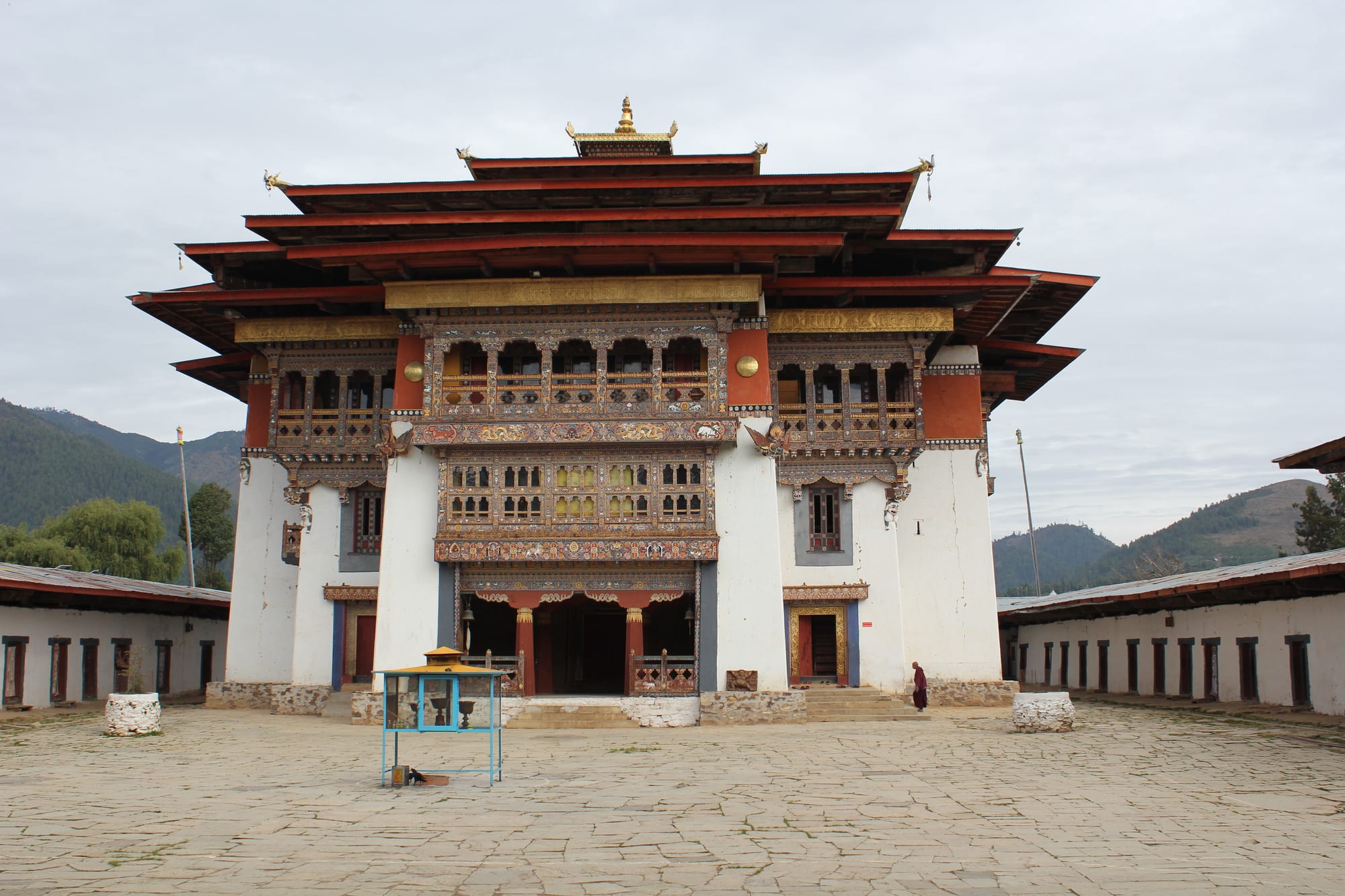
Phobjikha (also called Gangtey) is a wide, U-shaped glacial valley at the edge of the Black Mountains, kept deliberately undeveloped — no overhead power lines, so as not to endanger the birds. Black-necked cranes migrate here from the Tibetan plateau each winter, roosting in the marshy valley floor from late October to about mid-February.
The 17th-century Gangtey Monastery sits above the valley, and the gentle "Gangtey Nature Trail" runs down through it.
8. Kyichu Lhakhang
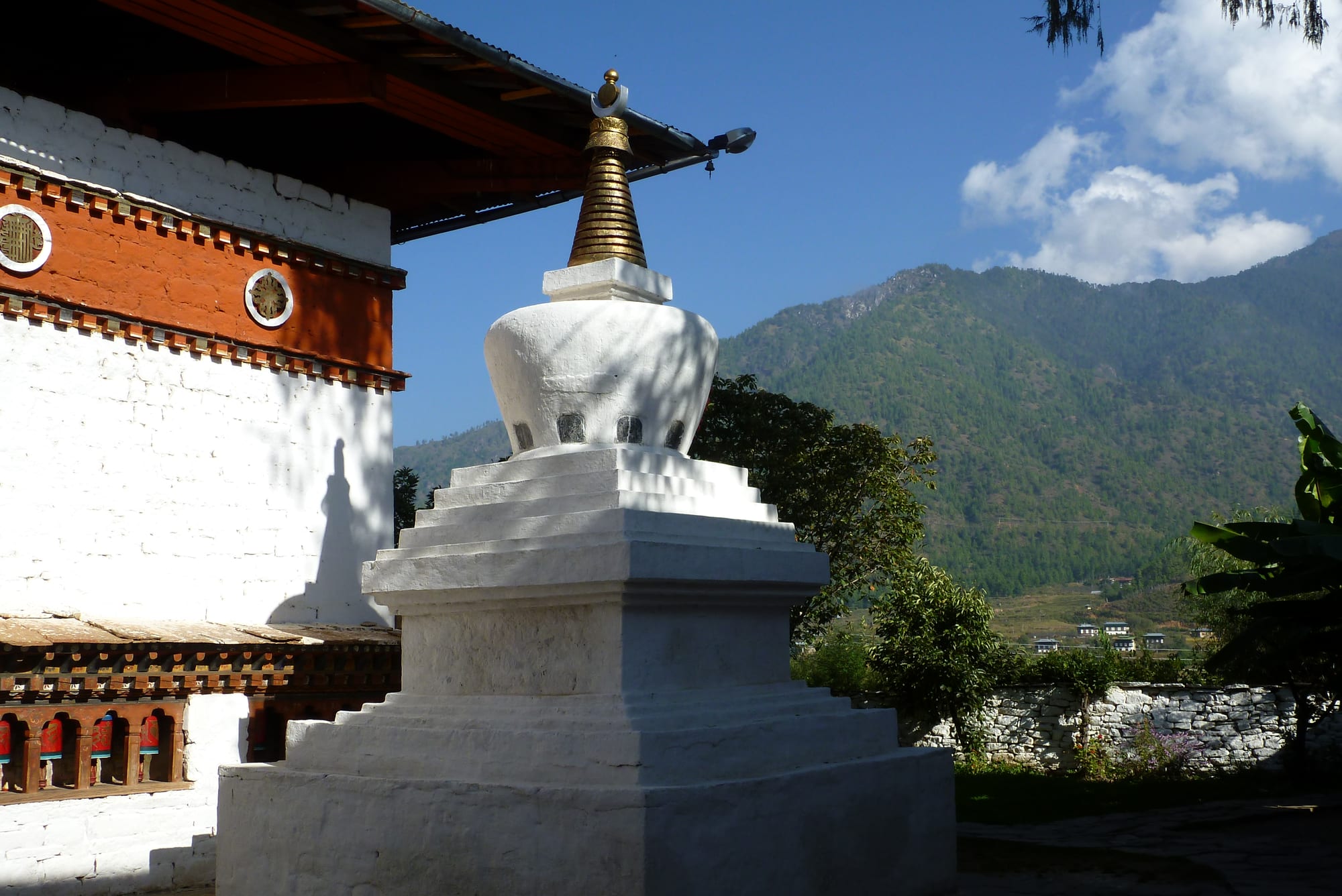
Kyichu Lhakhang, on the floor of the Paro valley, is one of a set of 108 temples said to have been built in a single day by the Tibetan king Songtsen Gampo in the 7th century to pin down a giant demoness. The oldest hall is small, dark, and heavy with butter lamps and centuries of devotion; a second temple was added by Queen Kesang Choden in 1971.
Two orange trees in the courtyard are said to fruit year-round. It is an easy stop on the way to or from the Tiger's Nest.
9. Bumthang
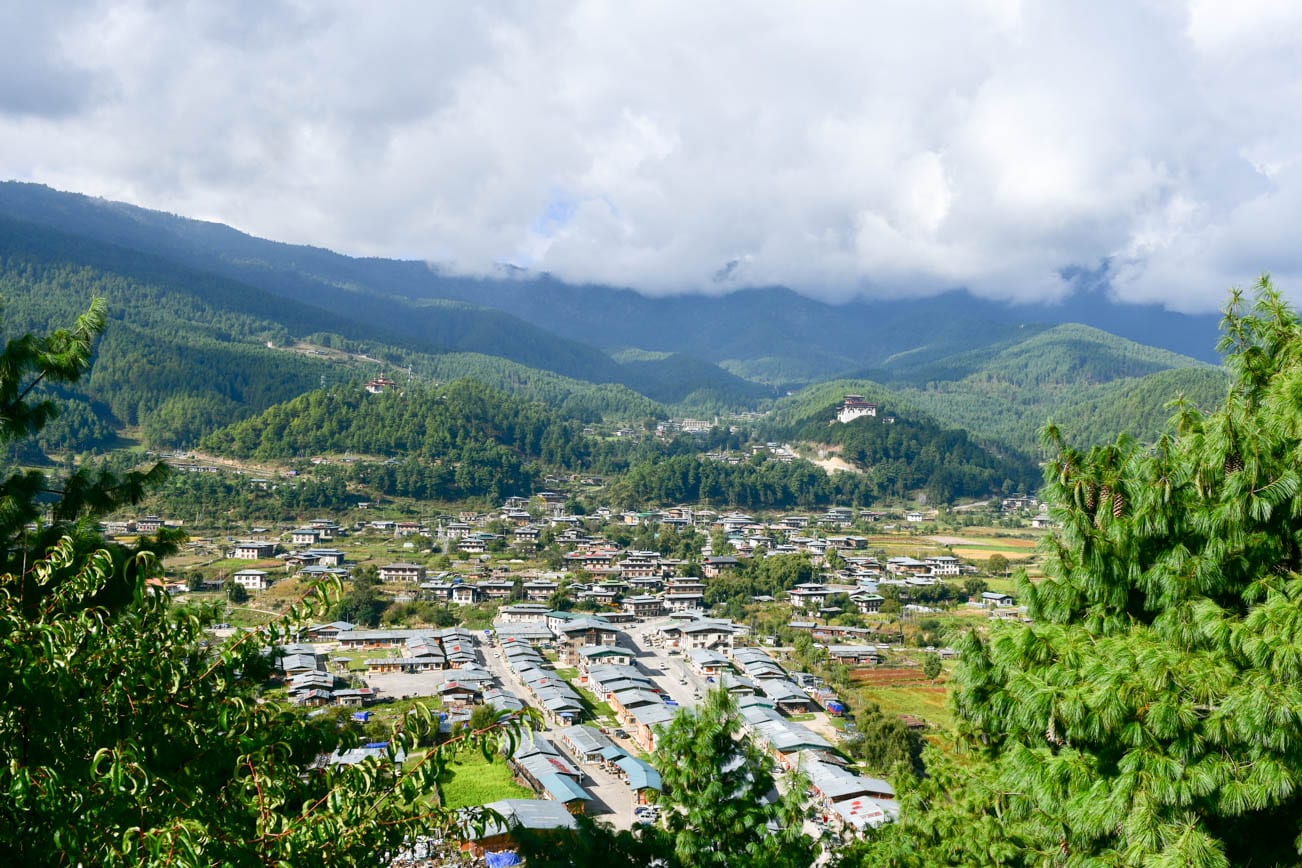
Bumthang, a group of four high valleys in the centre of the country, is one of the places where Buddhism first took root in Bhutan and is dense with old temples — Jampey Lhakhang, Kurjey Lhakhang, the "burning lake" of Mebar Tsho where a treasure- revealer is said to have dived holding a lamp that stayed lit. The main town, Jakar, sits below its own dzong.
It is a long drive east from Punakha (or a short domestic flight to Bathpalathang), and it is where a western Bhutan trip usually turns around.
10. The festivals (tsechu)
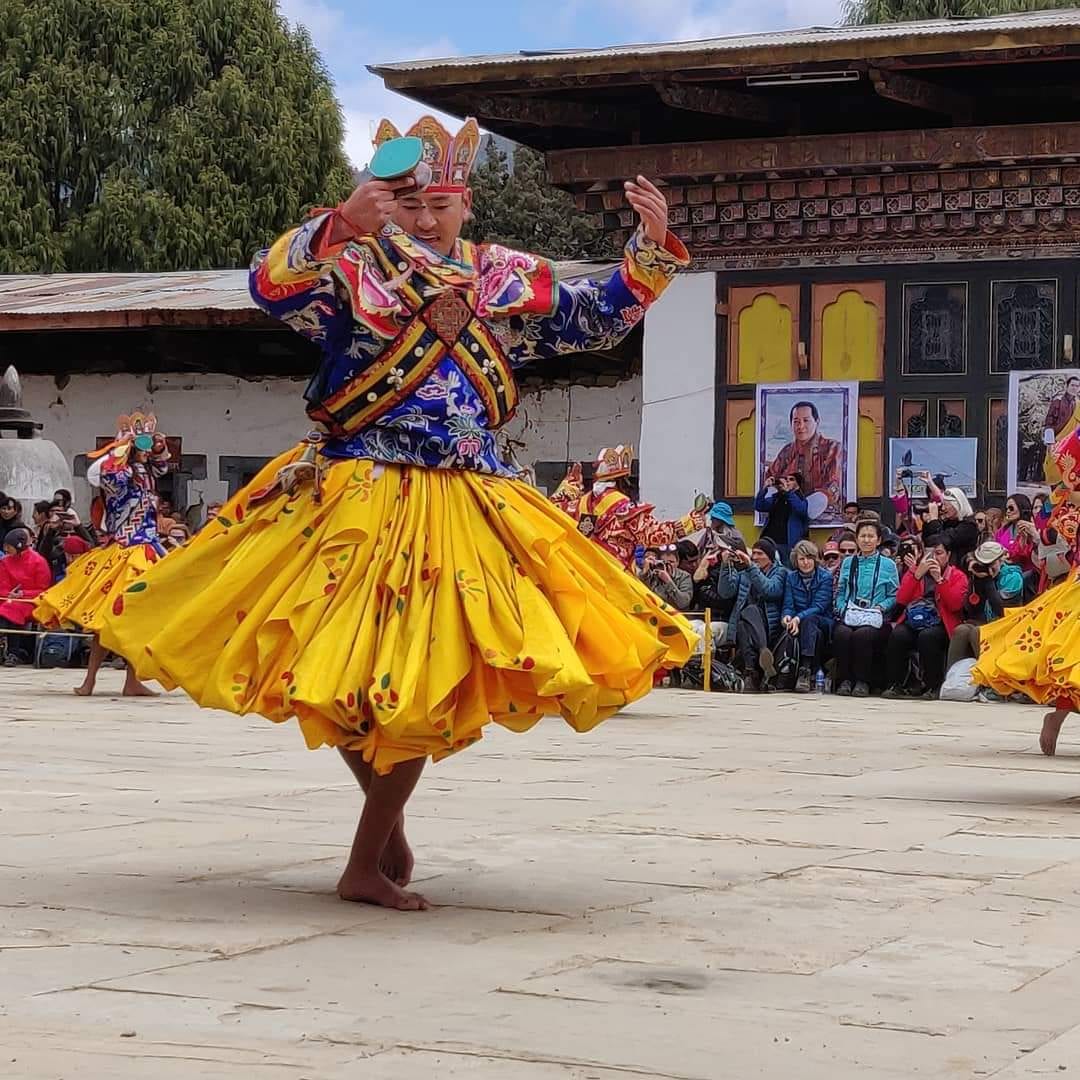
Bhutan's religious festivals, or tsechu, are the best way to see the country's culture in full: days of masked dances (cham) performed by monks in the dzong courtyards, telling stories of the triumph of Buddhism, plus crowds in their finest kira and gho, blessing ceremonies, and, at the big ones, the dawn unrolling of a giant embroidered thangka.
Paro (spring) and Thimphu (autumn) host the largest; the Gangtey crane festival and the Bumthang tsechus are smaller and more intimate. Dates follow the lunar calendar, so plan around them.
Bhutan is a guided, structured trip by design, and a week to ten days covers the western valleys and Bumthang comfortably — with the Tiger's Nest saved for last.