Food · British Virgin Islands
British Virgin Islands: Food and the National Dish
A cornmeal-and-fish staple shared with its Caribbean neighbours, a British Royal Navy rum recipe first bottled on Tortola, and a cocktail created at a beach bar on Jost Van Dyke
By Globeway Editorial · 30 September 2026
A sailing territory's everyday table
The British Virgin Islands are best known internationally as a yachting and sailing destination, and the food here follows the same pattern found across the English-speaking Caribbean: fish and other seafood caught close to shore, cornmeal and rice as the everyday starch, and a British colonial layer over an African and West Indian foundation. What sets the BVI apart is less the food itself than two specific contributions to Caribbean drinking culture that came directly from these small islands.
The signature dish: fish and fungi
Fish and fungi is the dish most associated with the BVI, and fungi is counted as part of the territory's national dish. Fungi (sometimes written funghi) is a firm cornmeal-and-okra paste, part of the same wider Caribbean family as Antigua's fungee and Barbados's cou-cou, served alongside fish that has been stewed or fried, usually seasoned simply with onion, tomato and local herbs. As with similar dishes across the region, it isn't unique to the BVI alone, but it is the dish locals and visiting food writers point to first when asked what to eat here.
Dishes to know
Five more to recognise across the territory:
- Callaloo soup — a soup of leafy greens (often dasheen or taro leaf) with
crab and okra, found with local variations right across the Caribbean.
- Conch — fritters, chowder or salad, from the large marine snail fished
around the islands' reefs.
- Roti — a flatbread wrapped around curried meat or vegetables, reflecting
the Indo-Caribbean influence found throughout the wider region.
- Johnnycake — a fried bread, a common side to fried fish and a breakfast
staple across the Leeward Islands.
- Whelks — the West Indian top shell, a sea snail gathered from rocky
shores and cooked in stews and other dishes much like conch.
Rum with a Royal Navy history
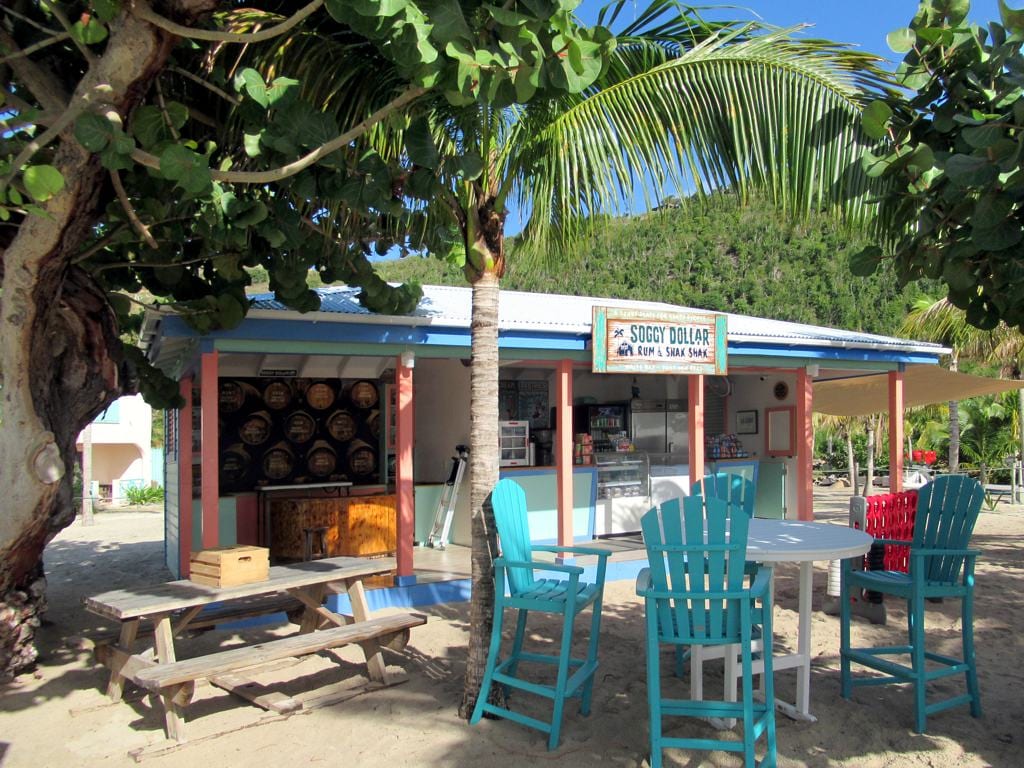
The Painkiller — rum, pineapple and orange juice, and cream of coconut, topped with grated nutmeg — was created in the 1970s at the Soggy Dollar Bar on White Bay, Jost Van Dyke, a beach bar whose name is said to come from boaters who swam ashore and paid with wet, "soggy" money. Pusser's later trademarked the name and recipe, and the cocktail has become one of the best-known drinks of the Caribbean, still served at the bar where it started.
Eating as a traveller
Seafood is the highlight and usually landed nearby. Vegetarians will find the options more limited outside resort restaurants, since fungi's usual partner is fish and most everyday dishes lean on meat or seafood stock. Because the territory relies heavily on imported goods, eating out — especially at marinas and resorts catering to the yachting crowd — tends to be more expensive than on some neighbouring islands.
What to take from the table
Fish and fungi is the dish to try, but a Painkiller at the Soggy Dollar Bar, reached from a boat anchored off White Bay, is the experience most people actually remember from the British Virgin Islands.